
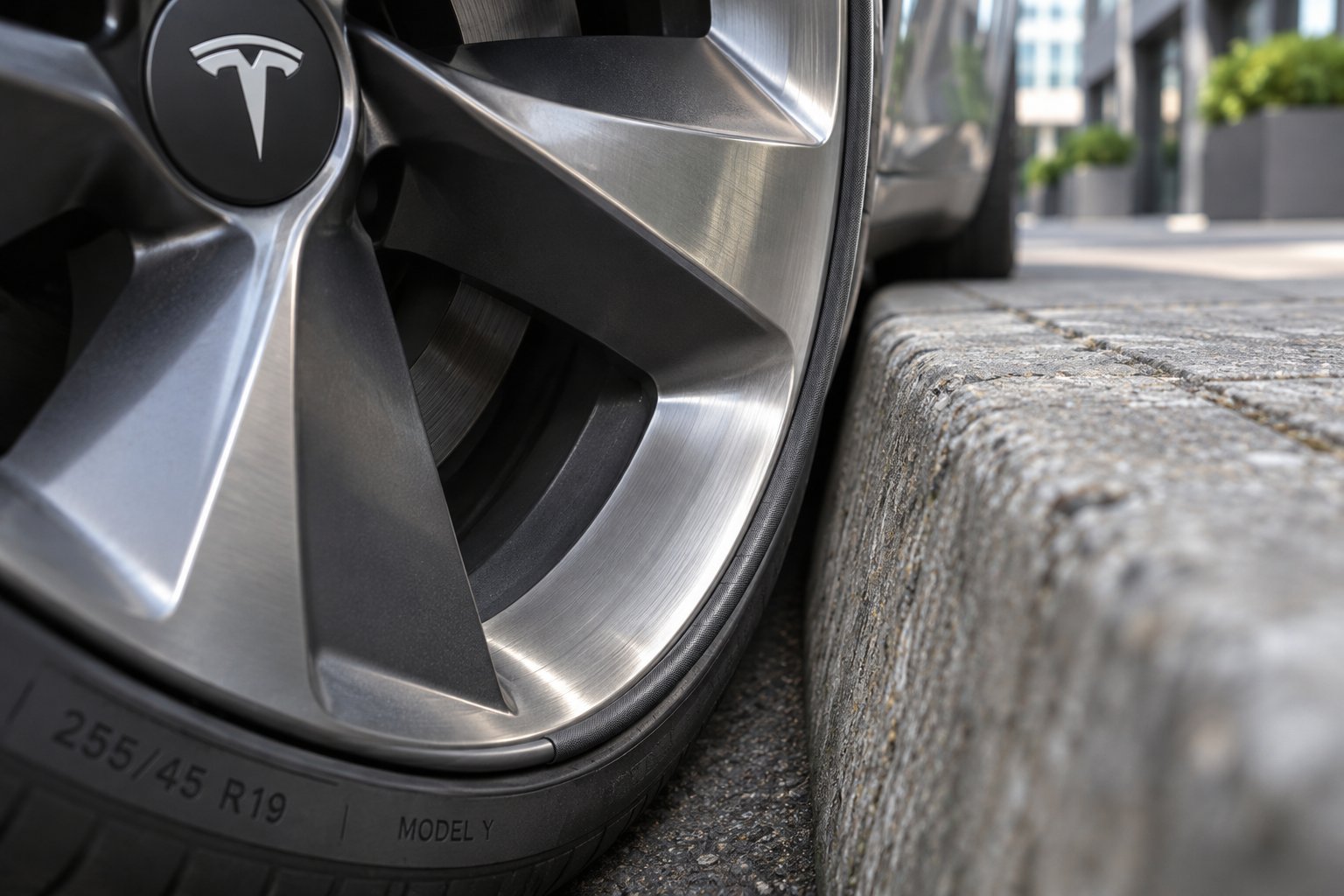
What Are Tesla Model Y Rim Protectors
Imagine pulling into a tight parking spot, hearing that sickening scrape of alloy against concrete, and watching a fresh silver scar appear on your wheel. For Tesla Model Y owners, that single curb kiss can mean a repair bill north of $400 — or an entire wheel replacement pushing past $800. It is a frustratingly common scenario, and it is exactly the problem rim protectors are designed to solve.
What Exactly Are Rim Protectors
In simple terms, rim protectors are aftermarket accessories that attach to the outermost lip of your wheel. They create a sacrificial barrier — a buffer zone — between the alloy surface and anything it might contact, whether that is a parking curb, a pothole edge, or stray road debris. When impact happens, the protector absorbs the hit instead of the wheel itself.
Tesla Model Y rim protectors are cosmetic, preventive accessories — not structural modifications — that bond to or clip onto the outer rim edge, shielding the alloy from curb rash and minor impacts before they cause permanent damage.
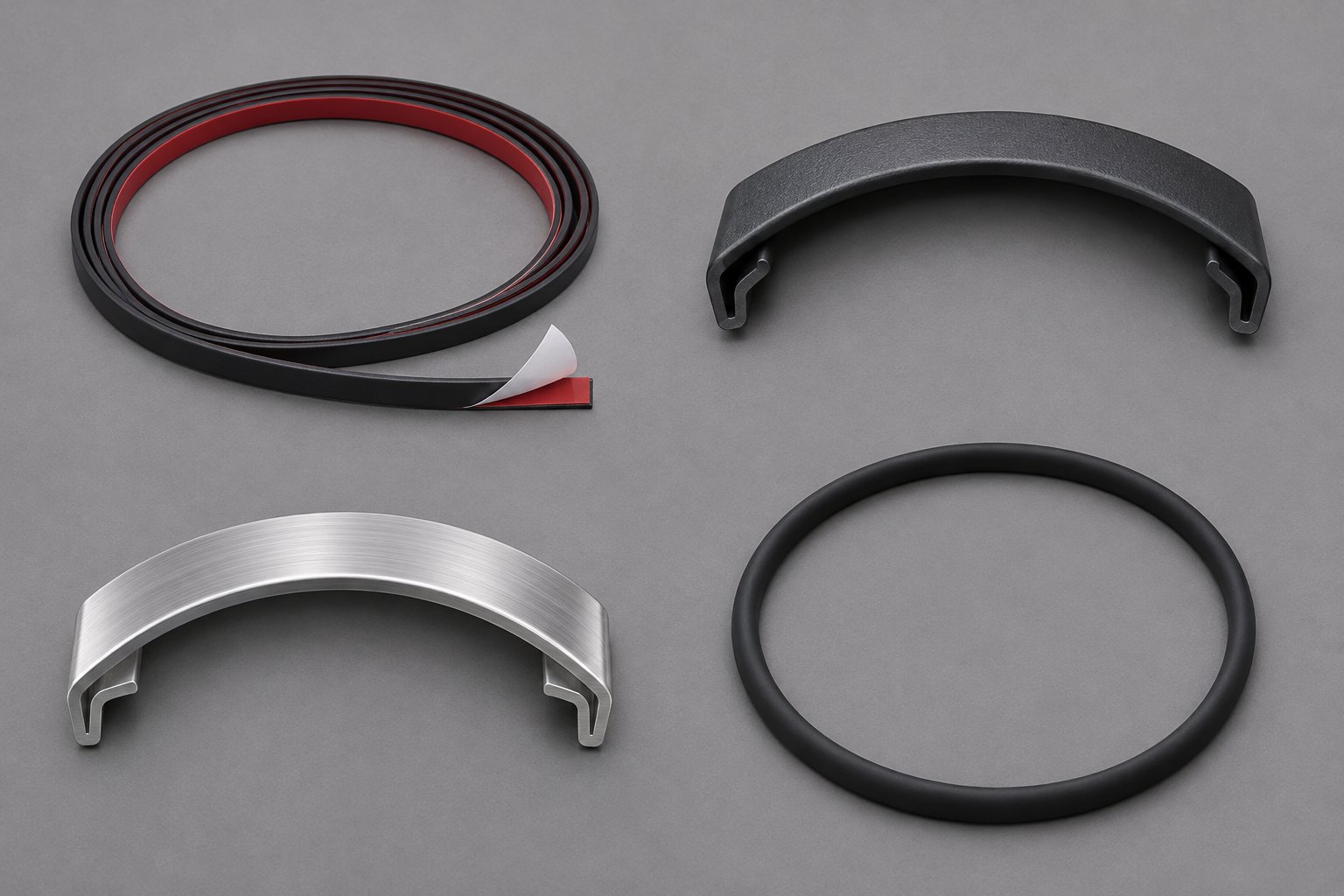
You will find them in several forms. Adhesive strips use automotive-grade tape to bond directly to the rim lip. Clip-on guards use a mechanical or magnetic grip to clasp around the edge without any adhesive. Snap-in systems wedge between the tire bead and the rim flange for a nearly seamless fit. Each style targets the same goal: keep your alloy looking factory-fresh.
These accessories are purely preventive. They will not fix existing curb rash, and they do not alter your wheel's structural integrity. Think of them the way you would a screen protector on a phone — a thin, replaceable layer that takes punishment so the expensive surface underneath does not have to.
Why Tesla Model Y Owners Are Searching for Them
The Model Y is one of the best-selling vehicles in the world, and its owner community is fiercely protective of aesthetics. Tesla's flush wheel designs — from the 19-inch Gemini to the 20-inch Induction and 21-inch Uberturbine options — look stunning, but they also leave the rim edge dangerously exposed. Low-profile tires shrink the rubber sidewall that would normally cushion a curb encounter, and the factory spoke patterns sit nearly flush with the outer lip. As one engineering analysis noted, the sidewall on these wheels extends just 10 to 15 millimeters past the rim face — barely enough to clear a standard curb.
OEM replacement wheels are expensive, professional repair averages around $150 per wheel, and Tesla's warranty does not cover curb damage. Meanwhile, a full Tesla Model S/3/X/Y wheel rim protector set typically costs a fraction of a single repair. That math alone explains the surge of interest. Whether you are shopping for a Tesla rim protectors Model Y 19 inch setup for your Gemini wheels or a Tesla Model Y rim protector 20 inch kit for Inductions, the goal is the same: spend a little now to avoid spending a lot later.
This guide takes a brand-neutral, educational approach. Rather than pushing a single product, it walks through every protector type, material, fitment consideration, and installation method so you can make a genuinely informed decision — something the crowded product-page results for this search simply do not offer.
Why Tesla Model Y Wheels Are Especially Vulnerable to Curb Rash
Every car with alloy wheels can suffer curb rash. So why does the Model Y show up at wheel repair shops so disproportionately often? The answer is not driver error — it is a combination of design choices and vehicle characteristics that stack the odds against the rims. Understanding these factors is the first step in deciding whether a tesla model y rim protector deserves a spot on your upgrade list.
Low-Profile Tires and Reduced Sidewall Protection
Your tire's sidewall — the vertical strip of rubber between the tread and the rim lip — is the wheel's first and most natural line of defense. When a curb makes contact, a tall sidewall can absorb or deflect the hit before the alloy is ever touched. A thin sidewall offers almost no such cushion.
The 19-inch Gemini wheels that ship on most Long Range Model Y builds wear tires with a relatively generous sidewall height. That extra rubber buffer is one reason owners of tesla rim protectors model y 19 inch gemini setups sometimes question whether they even need a guard. The protection is not bulletproof, but it helps.
Move up to the 20-inch Induction wheels, and the math changes. The overall tire diameter stays close to the same, but a larger wheel means a shorter sidewall — less rubber standing between the curb and the alloy. The 21-inch Überturbine wheels on Performance variants push this even further, leaving only a narrow band of tire sidewall as protection. As TNA Wheels explains, a lower-profile tire transmits more impact harshness and gives the rim significantly less protection against curb and pothole damage. In practical terms, the margin for error shrinks with every inch of added wheel diameter.
Vehicle Weight and Wide Wheel Lip Design
Here is a detail most owners overlook: the Model Y is heavy. Its battery pack alone weighs approximately 1,700 pounds — more than some entire subcompact cars. When you factor in the rest of the vehicle, a fully loaded Model Y tips the scales well above comparable gas-powered SUVs. That extra mass matters because physics does not care about aesthetics. When a 4,600-plus-pound vehicle nudges a curb, even at walking speed, the force transferred to the rim is substantially greater than it would be from a lighter car.
Tesla's wheel designs amplify the exposure. The Induction and Überturbine wheels feature wide, pronounced rim lips — partly for aerodynamic efficiency, partly for that signature clean look. A wider lip means a bigger target. And because the spokes sit nearly flush with the outer edge, there is no recessed geometry to hide the lip behind.
Regenerative braking adds another subtle layer. Most Model Y owners rely on regen for the majority of their deceleration, which means the brake pedal gets used less frequently during low-speed maneuvering — exactly the scenarios where you are inching toward a curb. The transition between regen slowing and the final gentle brake application can feel different from a traditional car, and that unfamiliarity contributes to misjudged distances near curbs.
Turning Radius and Parking Scenarios
Picture your typical urban parking routine: a cramped parking garage, a tight parallel spot on a narrow street, a drive-through lane with raised concrete curbs on both sides. These are curb-proximity events, and Model Y owners encounter them constantly. The vehicle's turning radius — roughly 39.8 feet curb-to-curb — is respectable for a midsize SUV but not particularly tight. In confined spaces, that radius means more multi-point maneuvers and more passes past curb edges.
Tesla's cameras are helpful, but they do not show the exact position of the rim lip relative to a curb in real time. Many owners report that curb rash happens not during dramatic mistakes but during mundane, slow-speed parking moves where the wheel drifts just an inch too close. As RimTech Pro notes, curb rash is the single most common issue they see on Model 3 and Model Y vehicles — and even careful drivers are not immune.
When you combine all three factors, the vulnerability picture becomes clear:
- Reduced sidewall buffer — Larger wheel sizes progressively shrink the rubber cushion that shields the alloy from curb contact.
- Greater impact force — The Model Y's battery-driven weight and wide wheel lip design mean even gentle curb touches transfer significant energy to the rim.
- Frequent curb-proximity situations — Urban parking, tight garages, and the vehicle's turning radius create repeated opportunities for minor contact.
Each of these factors is manageable on its own. Stacked together, they explain why tesla rim protectors model y searches have surged — and why choosing the right type of protector matters more than simply slapping on the first option you find.
Types of Rim Protectors for Tesla Model Y Compared Side by Side
Knowing your wheels are vulnerable is one thing. Picking the right shield is another. The rim protector market breaks down into four distinct categories, and each one takes a fundamentally different approach to keeping your alloy intact. Some bond permanently. Others snap on and off. A few wedge into the tire-wheel junction itself. The best tesla model y rim protectors for your specific situation depend on how you drive, where you park, and how much installation effort you are willing to invest.
Here is how each type works — and where it falls short.
Adhesive-Based Rim Guards
This is the entry point for most owners. Adhesive rim guards are thin strips or continuous rings made from flexible material — usually TPU or rubber — that bond directly to the outer wheel lip using automotive-grade 3M or equivalent double-sided tape. You clean the rim surface, peel the backing, press the strip into place, and let it cure.
The appeal is obvious: they are inexpensive, widely available, and come in a broad palette of colors. Want to match your Midnight Silver Metallic finish or add a contrasting accent? You will likely find an option. The low profile means they sit nearly flush with the rim edge, adding only a millimeter or two of visible thickness.
Pros
- Budget-friendly — typically the least expensive option per wheel
- Wide color selection to match or accent any Model Y wheel finish
- Low profile that blends visually with the rim edge
- No special tools required for DIY installation
Cons
- Adhesive can peel or lift over time, especially in extreme heat or cold
- Surface preparation is critical — any residual tire shine, wax, or oil causes failure
- Difficult to reposition once applied; removal may leave adhesive residue
- Limited impact absorption compared to thicker mechanical systems
Adhesive strips work best as a first line of defense against light scuffs and low-speed brushes. They are not designed to absorb a hard curb hit — think of them as a buffer for the everyday parking nudge rather than a crash barrier. As AlloyGator's comparison analysis points out, adhesive film does not have the rigidity to absorb a true lateral impact, and its estimated lifespan ranges from roughly 6 to 18 months depending on conditions.
Clip-On and Magnetic Rim Cases
Imagine a phone case for your wheel — that is the concept behind clip-on and magnetic rim protectors. Products like the MagBak Tesla Model Y rim protector use mechanical clips, spring tension, or magnetic attachment to clasp around the outer rim edge without any adhesive contact. You position the guard, press or click it into place, and it grips the lip through friction or magnetic force.
The biggest advantage here is removability. Unlike adhesive guards, clip-on systems can be taken off, repositioned, or swapped between wheels without leaving residue or damaging the finish. For owners who lease their Model Y or plan to sell it down the road, that clean removal is a meaningful benefit.
Pros
- Fully removable and repositionable without residue
- Cleaner, more finished appearance on many wheel designs
- No surface prep or cure time — install and drive immediately
- Reusable if you swap wheels seasonally
Cons
- Typically the highest price point among rim protector types
- Limited size compatibility — not every brand fits every Model Y wheel variant
- May shift or rotate under a direct curb impact
- Magnetic versions add slight weight to the outer rim edge
Clip-on guards occupy a middle ground: more protection than adhesive strips, less permanence than snap-in systems. They suit owners who value flexibility and are willing to pay a premium for it. The key trade-off? A hard enough impact can dislodge them, meaning the wheel behind the guard may still take damage in a serious curb strike.
Snap-In Alloy Guard Systems
This is the heavy-duty category. Snap-in protectors — the AlloyGator system being the most widely recognized example — wedge between the tire bead and the rim flange. They do not rely on adhesive or clips. Instead, the guard physically seats into the gap where the tire meets the wheel, creating a rigid barrier that sits flush with the rim lip.
The result is the most durable and secure attachment method available. Because the protector is mechanically locked in place by the tire itself, it cannot peel, shift, or pop off during a curb strike. It absorbs contact the way a bumper absorbs a fender tap — by being a solid, sacrificial structure positioned exactly where impacts occur. AlloyGator notes that this is the only protector type offering true mechanical protection at the moment of impact, with durability measured in years rather than months.
Pros
- Strongest impact protection — absorbs genuine curb strikes, not just light scuffs
- No adhesive required; stays locked in place by tire pressure
- Sits flush with the rim for a factory-integrated appearance
- Can last several years under normal driving conditions
Cons
- Professional installation is often recommended — the tire must typically be partially or fully dismounted
- Must be removed and reinstalled during tire changes or rotations
- Higher upfront cost, especially when factoring in installation labor
- Fewer color and style options compared to adhesive guards
For owners who want set-it-and-forget-it protection and are comfortable paying for professional fitment, snap-in systems offer the highest level of rim defense. They are particularly worth considering if you are running 20-inch Induction or 21-inch Uberturbine wheels, where the reduced sidewall leaves the alloy most exposed.
Rubber Wheel Bands
The simplest option on the market. Rubber wheel bands are elastic rings — essentially thick rubber gaskets — that stretch over the rim lip and sit in place through tension alone. No adhesive, no clips, no tire removal. You pull them on by hand, and they grip the edge.
Sounds easy? It is. But that simplicity comes with trade-offs. Rubber bands offer minimal impact protection because the material is soft and thin. They can roll or slip out of position during driving, and UV exposure degrades natural rubber relatively quickly. Aesthetically, they tend to look like exactly what they are — a rubber band wrapped around a wheel — which clashes with the Model Y's clean design language.
Pros
- Lowest cost option available
- Easiest installation — no tools, adhesive, or professional help needed
- Removable and replaceable in seconds
Cons
- Minimal actual curb protection due to thin, soft material
- Prone to slipping, rolling, or stretching out over time
- Degrades quickly under UV exposure and temperature cycling
- Least polished appearance — noticeable and often unflattering on premium wheels
Rubber bands can serve as a temporary measure — say, during a road trip through an area with tight street parking — but they are not a long-term rim protection solution for most Model Y owners who care about both function and aesthetics.
Full Comparison at a Glance
Choosing between these four categories is easier when you see them side by side. The table below breaks down every key factor so you can match the right rim protector to your priorities.
| Feature | Adhesive-Based Guards | Clip-On / Magnetic Cases | Snap-In Alloy Guard Systems | Rubber Wheel Bands |
|---|---|---|---|---|
| Attachment Method | 3M or equivalent double-sided tape | Mechanical clips or magnetic grip | Wedged between tire bead and rim flange | Elastic tension stretched over rim lip |
| Typical Material | TPU, rubber, or PVC | ABS plastic, nylon, or aluminum | Nylon or reinforced polymer | Natural or synthetic rubber |
| Ease of Installation | DIY — moderate (surface prep required) | DIY — easy (no prep needed) | Professional recommended (tire manipulation involved) | DIY — very easy (stretch and fit) |
| Removability | Removable but may leave residue | Fully removable, no residue | Removable during tire service | Fully removable instantly |
| Approximate Price Range | $ (budget-friendly) | $$$ (premium) | $$ – $$$ (mid to high, plus possible labor) | $ (lowest cost) |
| Best Use Case | Everyday parking scuff prevention on a budget | Owners wanting removable, reusable protection | Maximum durability for high-risk wheel sizes | Temporary or short-term coverage |
Every protector type addresses the same fundamental problem — curb contact — but they solve it at very different levels of commitment, cost, and effectiveness. The right choice ultimately depends on which Model Y wheel you are protecting, how much installation hassle you are willing to accept, and whether you need a guard that survives years of daily abuse or just gets you through a season.
What many owners overlook, though, is that the material inside these protectors matters just as much as the attachment method. Two adhesive strips can look identical on the outside yet perform completely differently depending on whether they are made from TPU, ABS plastic, or aluminum — a distinction that shapes durability, UV resistance, and real-world impact performance in ways the product photos never reveal.
How Material Choice Affects Durability and Protection Level
Two protectors can share the same shape, the same color, and the same attachment method — yet one survives three winters while the other cracks after six months. The difference almost always comes down to what they are made of. Material is the invisible variable that separates a genuine tesla model y 19 inch rim protector from a decorative ring that looks protective but crumbles on first contact.
Understanding the three main material families helps you filter marketing claims from real-world performance.
ABS Plastic and Nylon Protectors
ABS — short for Acrylonitrile Butadiene Styrene — is a rigid, impact-resistant thermoplastic you have probably encountered without realizing it. LEGO bricks, motorcycle helmets, and automotive dashboard trim all use it. In rim protectors, ABS provides a hard shell that deflects contact rather than absorbing it. That rigidity holds its shape well and maintains color consistency over time, which is why you will find ABS in many clip-on and snap-in designs.
Nylon variants offer a bit more flexibility. They bend slightly under load before returning to form, giving them a modest advantage in situations where the curb contact is more of a sustained scrape than a sharp hit. Both materials resist UV degradation reasonably well — they will not yellow or become brittle after a single summer — but they share one limitation: under a severe enough impact, they crack rather than deform. A hard strike can split an ABS guard clean through, leaving you with a broken protector and potentially a scratched rim underneath.
For owners shopping for a tesla model y 19 inch wheel rim protector on Gemini wheels, ABS and nylon guards are a solid middle ground. The Gemini's taller sidewall already provides some natural buffer, so the protector does not need to absorb extreme forces on its own.
TPU and Rubber Options
Where ABS deflects, thermoplastic polyurethane absorbs. TPU is a flexible, rubber-like polymer that deforms on impact and then springs back to its original shape — imagine pressing your thumb into a firm gel pad. That elasticity makes it exceptionally effective at dissipating curb contact energy across a wider area rather than concentrating it at a single point.
Research into TPU composites has shown that even after prolonged UV aging, TPU retains significantly higher tensile strength and elongation than many comparable polymers, particularly when UV-resistant fillers are incorporated during manufacturing. This matters for a component that sits on the outermost edge of your wheel, baking in direct sunlight for hours at a time.
TPU is increasingly the go-to material for adhesive-strip style protectors because it conforms to slight curvature variations in the wheel lip. No two rim sections are perfectly identical at the microscopic level, and a rigid material may leave tiny gaps where adhesive cannot fully bond. TPU flexes into those imperfections, creating a tighter seal and a more secure hold.
Standard rubber protectors function similarly in principle but degrade faster. Natural and basic synthetic rubbers are more susceptible to UV-driven hardening and cracking — a process you have probably seen on old windshield wipers or garden hoses. If you are choosing between TPU and rubber at a similar price point, TPU is almost always the longer-lasting option.
Aluminum Alloy Trim Protectors
At the premium end of the spectrum, some manufacturers offer rim protectors machined or extruded from aluminum alloy. The appeal is immediate: they look and feel like an extension of the wheel itself, with a metallic finish that blends seamlessly with the Model Y's factory alloy. Durability under impact is excellent — aluminum will dent and scratch before it cracks, absorbing energy progressively rather than failing catastrophically.
The trade-off, however, is one most product pages quietly omit: galvanic corrosion. When two dissimilar metals remain in prolonged contact — aluminum protector against a magnesium-aluminum alloy wheel, for example — an electrochemical reaction can develop, especially in the presence of moisture and road salt. As AlloyGator's winter maintenance analysis details, salt is hygroscopic, meaning it attracts and retains moisture, maintaining a conductive film on metal surfaces that accelerates corrosion at any point where the protective finish is compromised. An aluminum protector pressing against a wheel lip through an entire winter of salted roads could, paradoxically, cause the very damage it was meant to prevent.
If you live in a mild climate with minimal road salt exposure, aluminum protectors can be a visually stunning choice — particularly on a tesla model y 21 rim protector setup where the ultra-low-profile tire leaves the guard prominently visible. In salt-heavy northern regions, proceed with caution and inspect the contact surface regularly.
Functional Protection vs. Aesthetic Trim — A Distinction That Matters
Here is a critical distinction no competitor currently makes clear: not every product marketed as a "rim protector" is actually engineered to absorb curb impact. Some are aesthetic trim pieces — decorative rings designed to enhance the wheel's appearance with chrome, carbon-fiber-look, or color-accent finishes. They may sit on the rim lip, but their material thickness and attachment method are not built to withstand lateral force from a curb strike.
Before you buy, ask a simple question: is this product designed to be sacrificial? A genuine protector is meant to take damage so the wheel does not. A trim piece is meant to look good — and it may crack, peel, or shatter on first real contact.
The quickest way to tell the difference is material thickness and construction. Functional protectors typically measure 3mm or more in profile height and use impact-rated materials like nylon, reinforced ABS, or high-durometer TPU. Trim pieces tend to be thinner, use softer plastics or chrome-plated finishes, and prioritize visual appeal over energy absorption.
Here is a scannable summary of each material family's strengths and weaknesses:
- ABS / Nylon — Rigid, color-stable, UV-resistant, but can crack under severe impact. Best for clip-on and snap-in designs on moderately exposed wheels.
- TPU — Flexible, impact-absorbing, excellent UV longevity, conforms to wheel curvature. Ideal for adhesive-strip protectors and high-exposure wheel sizes.
- Rubber — Budget-friendly and flexible, but degrades faster under UV and temperature cycling. Suitable for short-term or temporary use.
- Aluminum Alloy — Premium metallic finish, progressive dent absorption, but carries galvanic corrosion risk in salt-heavy climates. Best in mild environments on visually prominent wheel setups.
Material determines how long your protector lasts, how well it handles real impacts, and whether it ages gracefully or becomes an eyesore. It is the factor most buyers overlook — and the one that separates a protector you forget about for years from one you are peeling off in frustration after a single season. The next decision, equally important, is making sure whatever material you choose actually fits your specific wheel size and profile.
Choosing the Right Rim Protector by Wheel Size
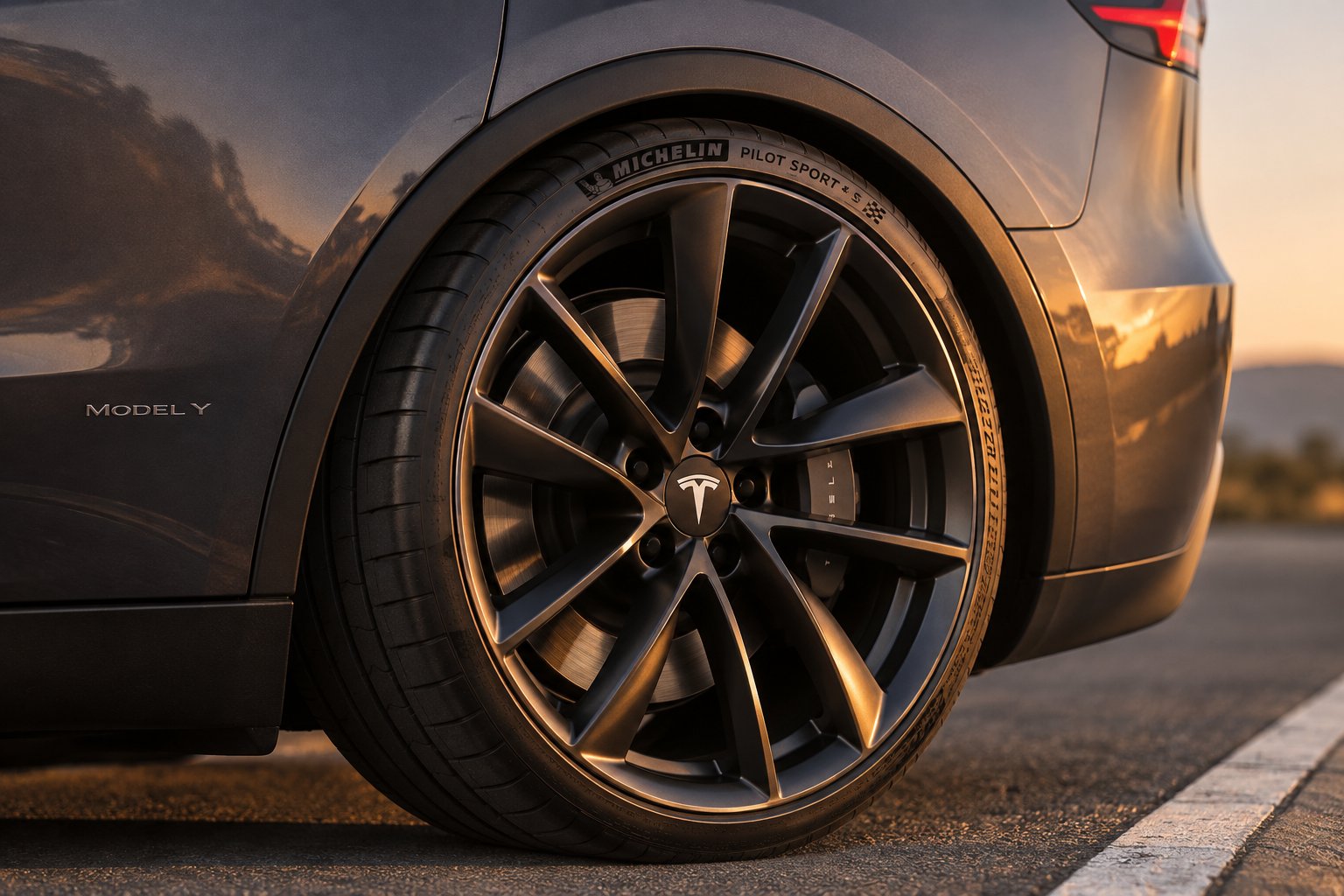
Material matters — but even the best TPU strip or snap-in nylon guard becomes useless if it does not physically fit your wheel. The Model Y ships with several distinct wheel options across model years, and each one has a different rim width, lip profile, and tire sidewall height. A protector engineered for a 19-inch Gemini will not seat properly on a 21-inch Uberturbine, and forcing a mismatch can cause the guard to shift, gap, or detach entirely.
Your wheel size is not just a preference — it is the single most important fitment variable. Here is how to match the right protector to each factory configuration.
19-Inch Gemini Wheels and Protector Fit
The 19-inch Gemini is the workhorse wheel for Model Y Long Range builds, and it is arguably the most forgiving when it comes to curb exposure. The factory tire — a 255/45R19 — has an aspect ratio of 45, meaning the sidewall height is 45% of the tire's 255mm tread width. That works out to roughly 115mm of rubber standing between the rim lip and the ground. Compared to the larger wheel options, that is a generous buffer.
Does that mean you can skip protection entirely? Not necessarily. The Gemini's rim measures 19 x 9.5J with a 45mm offset, and its outer lip still protrudes beyond the tire sidewall at certain angles — particularly near the valve stem area and spoke transitions. If you park in urban environments regularly, that lip is still making close passes at curb edges.
The good news for owners shopping for a tesla model y rim protector 19 inch setup is that nearly every protector brand on the market offers a 19-inch SKU. This is the most common Model Y wheel size, so product availability and color selection are at their broadest. Both adhesive strips and snap-in systems fit this size well. The Gemini's spoke geometry is relatively straightforward — no deep concavity or extreme flange angles — which means most guards seat cleanly without custom trimming.
One caveat for 2025+ Model Y Juniper owners: Tesla introduced a new 18-inch base wheel option alongside the refreshed 19-inch Gemini. The 18-inch wheel runs a 235/55R18 tire with an even taller sidewall (roughly 129mm), providing the most natural curb protection of any factory setup. If you are driving on these 18-inch wheels, a tesla model y juniper rim protector is still a valid investment — but the urgency is lower than on any other size in the lineup. Just confirm the protector's listed diameter matches your actual wheel before ordering.
20-Inch Induction Wheels and Sizing Considerations
Step up to the 20-inch Induction wheels and the risk profile shifts noticeably. The factory tire is a 255/40R20, with an aspect ratio of 40. That drops the sidewall to approximately 102mm — about 13mm less rubber shielding compared to the 19-inch Gemini. Thirteen millimeters may not sound dramatic on paper, but when you are inching past a parking curb at two miles per hour, it is the difference between a near-miss and a fresh scratch.
The Induction wheel itself is a 20 x 9.5J with a 45mm offset, and its design features a wider, more pronounced rim lip than the Gemini. That broader lip creates a larger contact surface for curb strikes — and it also means fit tolerance for protectors is tighter. A guard designed for a generic 20-inch wheel may not account for the Induction's specific flange curvature, resulting in visible gaps or misalignment that looks worse than no protector at all.
When evaluating rim protectors for this size, pay close attention to two things. First, verify that the product listing specifically names the Tesla Model Y 20-inch Induction wheel — not just "fits 20-inch wheels" as a generic claim. Second, check the protector's profile height. On a low-sidewall tire, a guard that sits too tall above the rim lip can interfere with the tire bead area or look disproportionately bulky. Ideally, you want a protector that rises no more than 5-7mm above the rim edge, enough to absorb a curb brush without dominating the wheel's visual profile.
Adhesive-based guards remain an option here, but the reduced sidewall makes this a wheel size where snap-in systems start to justify their higher cost. The Induction wheels are a popular upgrade that owners tend to keep long-term, so investing in a more durable protector pays dividends over multiple seasons.
21-Inch Uberturbine Wheels and Performance Variants
If there is a single wheel size where rim protection delivers its highest return on investment, this is it. The 21-inch Uberturbine wheels on the Model Y Performance are visually striking — and operationally the most exposed to curb damage in the entire Tesla lineup.
The numbers tell the story. The front tires are 255/35R21 with a sidewall height of just 89mm. The rears are 275/35R21 at roughly 96mm. That is a 22% reduction in sidewall protection compared to the 19-inch Gemini setup. Every millimeter of lost rubber buffer translates directly to increased alloy exposure. And because the tesla model y performance rim protector market serves a staggered wheel setup — 9.5J fronts and 10.5J rears — you may need two different protector sizes for a complete set. Not every brand accommodates staggered fitments, so check before you buy.
The Uberturbine's rim lip is the widest and most visually prominent of any factory Model Y wheel. It sits almost entirely outside the tire sidewall, presenting maximum surface area to any curb encounter. And because Performance owners tend to push their vehicles harder — spirited driving, track days, aggressive cornering — the wheels also face higher rotational forces that can stress a poorly secured protector.
For 21-inch wheels, snap-in alloy guard systems are the strongest recommendation. Their mechanical lock between tire bead and rim flange means they will not shift under the forces that Performance driving generates. Adhesive guards can work as a budget alternative, but understand that the thinner sidewall and wider lip create conditions where adhesive bond failure is more likely over time. Clip-on systems are an option if you want removability, though fewer manufacturers offer verified 21-inch compatibility.
One practical reality: the 21-inch protector market is simply smaller. Fewer brands produce guards specifically engineered for this diameter, and color options tend to be more limited than what you will find for 19 or 20-inch setups. If finding an exact color match matters to you, start your search early and be prepared to check multiple suppliers.
Quick-Reference Fitment Guide
The table below maps each factory Model Y wheel to its key dimensions and the protector considerations that matter most.
| Wheel Size | Rim Dimensions | Factory Tire | Sidewall Height (Approx.) | Recommended Protector Type | Key Fitment Notes |
|---|---|---|---|---|---|
| 18-Inch (Juniper Base) | 18 x 8.5J, 35.5mm offset | 235/55R18 | ~129mm | Adhesive strips or snap-in | Tallest sidewall; lowest curb-rash risk. Confirm 18-inch-specific protector availability — most brands focus on 19"+. |
| 19-Inch Gemini | 19 x 9.5J, 45mm offset | 255/45R19 | ~115mm | Adhesive strips or snap-in | Widest product selection. Straightforward spoke geometry suits most protector designs without trimming. |
| 20-Inch Induction | 20 x 9.5J, 45mm offset | 255/40R20 | ~102mm | Snap-in preferred; adhesive viable | Wider rim lip requires Induction-specific fitment. Check protector profile height — keep it under 7mm above the rim edge. |
| 21-Inch Uberturbine | Front: 21 x 9.5J (40mm offset) Rear: 21 x 10.5J (52mm offset) |
Front: 255/35R21 Rear: 275/35R21 |
Front: ~89mm Rear: ~96mm |
Snap-in strongly recommended | Staggered setup — front and rear may need different protector sizes. Fewest brand options at this diameter. |
Notice the pattern: as wheel diameter goes up, sidewall goes down, and the case for a robust protector grows stronger. The 18 and 19-inch owners have breathing room to choose based on budget and convenience. The 20-inch Induction crowd sits in a transitional zone where quality starts to matter more than price. And the 21-inch Uberturbine owners face a straightforward calculation — the cost of a proper snap-in guard is a fraction of the wheel repair bill they are almost certainly going to encounter without one.
Selecting the right size and type, though, is only half the equation. A perfectly matched protector still fails if the installation is rushed, the surface is contaminated, or the alignment is off by even a few millimeters — details that separate a professional-looking result from a guard that peels off on the drive home from the garage.
How to Install Rim Protectors on a Tesla Model Y
A protector that fits your wheel perfectly and uses the ideal material still ends up in your trash can if the installation goes sideways. And for most owners, installation is exactly where things fall apart. Product pages show a polished "before and after" but skip the messy middle — the surface prep, the alignment tricks, the temperature window that makes or breaks an adhesive bond. The result? Peeling edges within weeks, crooked seams, or guards that detach on the first highway run.
Whether you are applying adhesive-based tesla model y wheel rim protectors or fitting a mechanical snap-in system, the steps below give you everything you need to get it right on the first attempt.
Surface Preparation Before Installation
This is the step most people rush through — and it is the single biggest reason rim protectors fail prematurely. Every attachment method benefits from a clean surface, but adhesive-based guards are especially unforgiving. Any invisible film of tire shine, road grime, wax, or oil sitting on the rim lip will prevent the tape from forming a molecular bond with the alloy. The protector might feel secure when you press it on, but give it a week of temperature cycling and highway vibration, and it will start lifting at the edges.
Here is how to prep properly:
- Wash the wheel lip thoroughly — Use automotive-specific soap (not dish soap, which can leave its own residue) and a soft brush to scrub the outer rim edge. Focus on the flat lip surface where the protector will sit. Rinse completely.
- Dry the surface — Use a clean microfiber towel and allow the wheel to air-dry for several minutes. Any trapped moisture under the adhesive will create bubbles and weaken the bond over time.
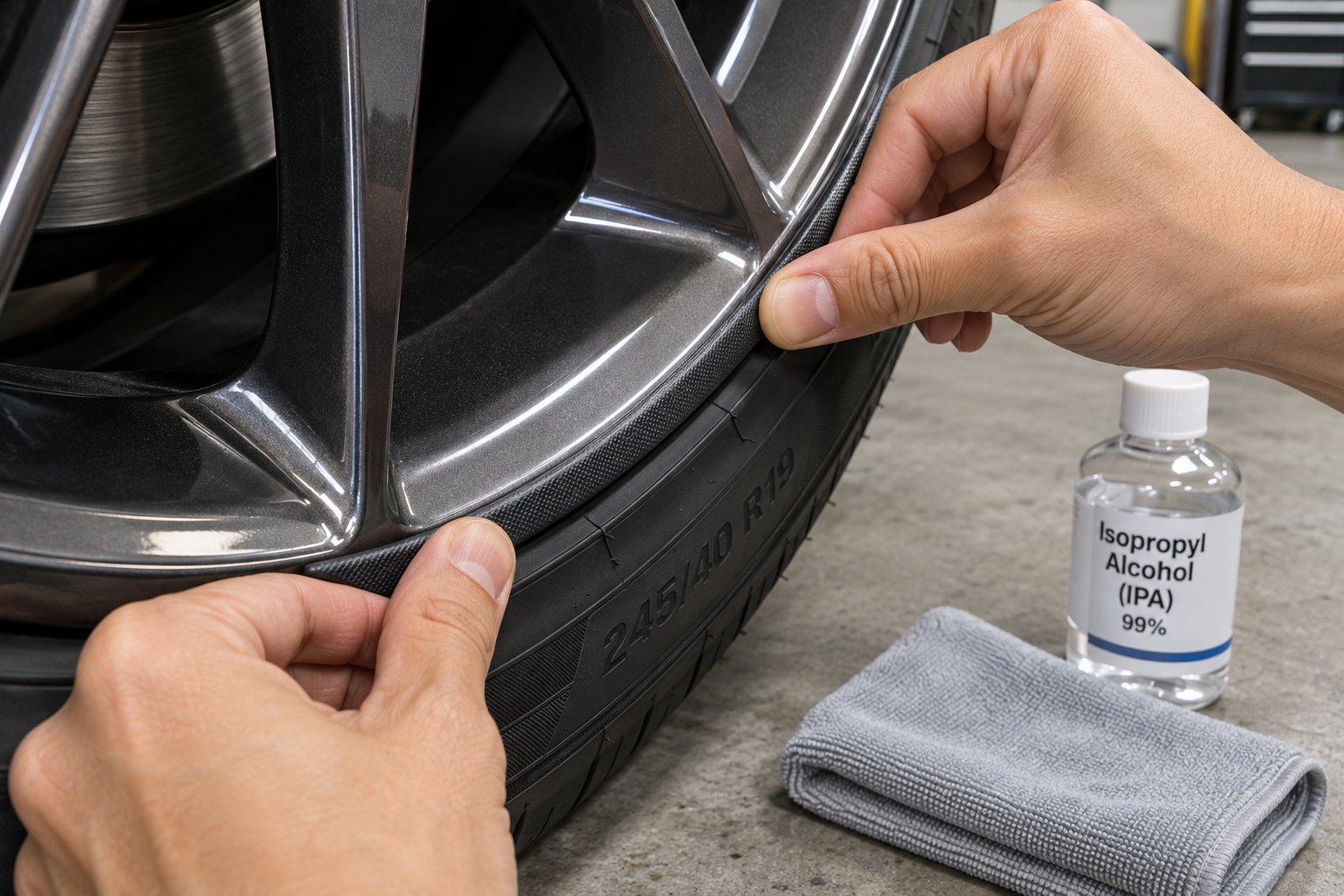
- Wipe with isopropyl alcohol (70% concentration or higher) — This is the critical degreasing step. Soak a lint-free cloth or prep pad in IPA and wipe the entire rim lip, working around the full circumference. This removes wax residue, tire dressing overspray, and natural skin oils from previous handling. Let the alcohol evaporate fully — about 60 seconds in moderate conditions.
- Address factory coatings on new wheels — Brand-new or recently refinished wheels often carry a protective clear coat or packing wax that feels smooth but creates a slippery substrate for adhesive. A second IPA wipe, or a light pass with a clay bar, helps strip this layer without damaging the finish.
Temperature matters more than most owners realize. Adhesive-based protectors rely on pressure-sensitive tape — typically 3M VHB or equivalent — that requires a specific activation window. Installation guides from T-Launch recommend keeping ambient temperature between 65-86°F (18-30°C) for optimal bonding. Install in cold weather and the adhesive stays stiff, never fully conforming to the wheel surface. Install in extreme heat and the tape can become too pliable, shifting before it sets. A climate-controlled garage is ideal; a shaded driveway on a mild day works fine.
Step-by-Step Adhesive Protector Installation
With a properly prepped surface, the actual application becomes straightforward — as long as you follow the sequence. Rushing this part or eyeballing the alignment leads to the crooked seams and uneven gaps that make protectors look like an afterthought rather than a clean upgrade.
- Locate the valve stem — This is your alignment reference point. Starting your first protector segment at the valve stem gives you a consistent landmark and ensures the seam (where the strip ends meet) lands in a predictable, less visible location.
- Peel back 3-4 inches of adhesive backing — Do not remove the entire backing at once. Exposing too much adhesive invites dust contamination and makes repositioning impossible. Work in small sections.
- Press the first segment firmly against the rim lip — Align the protector's inner edge flush with the transition where the lip meets the wheel face. Apply firm, even thumb pressure — roughly 15-20 pounds of force — to activate the adhesive bond.
- Work around the circumference in small increments — Peel another few inches of backing, press into place, and repeat. Maintain consistent pressure and keep the protector flush against the rim contour. Do not pull or stretch the material to make it fit — stretching thins the adhesive layer and creates stress points that peel first.
- Close the seam carefully — When you reach the starting point, trim any excess with a sharp utility blade rather than overlapping. Overlapped seams create a raised bump that catches on curbs and peels backward. A clean butt joint — where both ends meet flush without overlapping — looks better and holds longer.
- Apply final pressure around the entire circumference — Use a firm roller (a small wallpaper roller or even the flat side of a credit card) to press the full length of the protector one more time. This eliminates air pockets and maximizes adhesive contact area.
- Allow a 24-hour cure time before moisture exposure — Park the car and leave it. No car washes, no rain driving, no pressure-washing the wheels. The adhesive needs a full day to reach its rated bond strength. Driving is fine — just avoid water contact on the rim edges during the cure window.
Three mistakes account for the vast majority of adhesive protector failures on Tesla wheels:
- Applying over tire dressing residue — Even a thin film of silicone-based tire shine on the rim lip will prevent adhesion. If you have used tire dressing recently, add an extra IPA wipe specifically targeting the lip-to-sidewall transition zone where overspray collects.
- Installing in cold weather — Below 50°F (10°C), most pressure-sensitive adhesives simply will not activate properly. The bond feels firm initially but fails within days as the tape never fully conforms to the metal surface.
- Misaligning segments at the seam — A crooked seam is not just cosmetic — it creates a stress concentration point where peeling begins. Take your time at the start and end of the strip, and trim precisely.
The most common installation mistake is skipping the isopropyl alcohol wipe. A wheel that looks clean to the naked eye almost always carries an invisible layer of tire dressing overspray, road film, or handling oils that silently sabotages adhesive bond strength.
Clip-On and Snap-In Installation Tips
Mechanical protectors follow a completely different logic. There is no adhesive to activate, no cure time to respect, and no surface prep beyond basic cleanliness. The challenge instead is physical fitment — making sure the guard seats evenly, clears the tire sidewall, and stays locked under driving forces.
Clip-on systems are the simpler of the two. Position the first clip at the valve stem (again, your reference landmark), press it onto the rim lip until it clicks or snaps into place, and work around the wheel spacing each clip evenly. Most clip-on tesla rim protector model y kits include between 8 and 12 attachment points per wheel. Even spacing prevents the guard from wobbling or developing a loose section that vibrates at speed. After all clips are seated, run your finger along the inner edge to confirm the protector sits flush against the lip with no gaps — and check that it does not press into the tire sidewall, which could cause rubbing noise or premature sidewall wear.
Snap-in systems — like the AlloyGator design — require a more involved process. The protector wedges into the narrow channel between the tire bead and the rim flange, which means the tire needs to be partially or fully deflated to create enough clearance. Strictly Auto Parts' installation guide details the full procedure: jack the vehicle, deflate the tire completely, spray the rim-tire junction with a lubricant or mild soapy water, and then work the protector into the gap between the bead and flange using firm hand pressure. Stainless steel clips lock the segments in place, and the protector is trimmed to length before both ends are joined with a connecting clip. Once seated, the tire is re-inflated to spec, and the air pressure itself presses the protector firmly into its final position.
This process takes roughly 30-45 minutes per wheel and requires a jack, tire pressure gauge, lubricant, and a cutting tool. It is absolutely doable at home if you are comfortable with basic tire work. That said, if you are installing tesla rim protectors model y 20 inch snap-in guards on Induction or Uberturbine wheels — where the lower-profile tire leaves less room for error — professional installation at a tire shop is worth considering. Many shops can add snap-in protectors during a routine tire rotation or seasonal swap at minimal extra labor cost.
Regardless of which attachment method you choose, one post-installation habit makes a meaningful difference: inspect the protectors during your first few car washes. Run a finger around each wheel's rim edge and feel for any lifted sections, shifted clips, or loosened adhesive. Catching a minor issue early — and pressing a lifted edge back down or re-seating a clip — takes thirty seconds. Ignoring it means replacing the entire guard a month later.
Getting the installation right protects your investment in the protectors themselves. But no installation, however perfect, eliminates every concern. There are real trade-offs to adding material to your wheel's outer edge — from subtle weight distribution shifts to aesthetic compromises — and understanding those trade-offs upfront prevents unpleasant surprises down the road.
Potential Drawbacks and Risks Worth Knowing
Every product page sells the upside. Glossy photos of flawless wheel edges, bold claims about "total curb protection," and five-star reviews from day-one buyers who have not yet faced a New England winter. What you rarely see is an honest accounting of the compromises. And there are compromises — some minor, some worth serious thought before you commit.
Transparency here is not meant to talk you out of a rim protector for tesla model y wheels. It is meant to make sure you go in with open eyes, realistic expectations, and a clear sense of what these accessories can and cannot do once they are mounted on your car.
Effects on Tire Balancing and TPMS Sensors
Anything you attach to a wheel changes its weight distribution. That is basic physics. The real question is whether the change is large enough to matter — and for most protectors, the answer is no.
A typical set of adhesive-strip or clip-on guards adds somewhere between 40 and 100 grams of total mass spread around the circumference of each wheel. Because that weight is distributed relatively evenly across the full 360-degree rim lip, it does not create a significant imbalance at any single point. You are unlikely to feel steering vibration, shimmy at highway speed, or notice any change in ride quality. Your existing wheel balance — set during tire mounting — should remain well within tolerance.
Heavier protectors shift the math. Thick ABS snap-in systems or aluminum alloy guards can exceed 100 grams per wheel, and if the segments are not evenly distributed (say, a heavier joining clip sits opposite a lighter section), a mild imbalance can develop. The practical advice? After installing any protector that feels substantial in hand, drive at highway speed for a few minutes and pay attention. Any new vibration through the steering wheel or seat that was not there before installation warrants a quick rebalance at your tire shop — a five-minute, low-cost fix.
TPMS sensors are a separate concern that sounds worrying but is functionally irrelevant for most designs. Tesla's tire pressure monitoring sensors sit inside the wheel, mounted on the valve stem assembly. Rim protectors attach to the outer lip — the opposite side of the wheel from the sensor. There is no physical contact, no signal interference, and no pathway for the protector to affect pressure readings. Unless you are installing a protector that somehow blocks or presses against the valve stem itself — which would indicate a serious fitment problem — your TPMS will continue reporting accurately as if nothing changed.
Aesthetic Trade-Offs and Visibility
Here is the uncomfortable truth most product photos are carefully angled to avoid: rim protectors are visible. They add a ring of material around your wheel edge that was not there when the car left the factory. Whether that ring blends in or sticks out depends entirely on how well it matches your wheel's finish — and how picky your eye is.
Color matching is the biggest variable. A matte black protector on a gloss black Induction wheel will look slightly different in direct sunlight, even if the shade appears identical indoors. Silver-toned guards on machined-finish Uberturbine wheels face the same challenge — the protector's surface texture and reflectivity rarely replicate polished alloy perfectly. From ten feet away, most quality guards disappear into the wheel profile. From three feet away, or in harsh overhead lighting, the added ring becomes noticeable.
Some owners lean into the contrast intentionally — a red or blue accent ring against dark wheels can look sharp if that is the aesthetic you want. Others prefer stealth. If a discreet appearance matters to you, choose a protector color that sits within the same tonal family as your wheel finish, and lean toward matte finishes over gloss. Matte surfaces scatter light rather than reflecting it, which minimizes the visible "seam" between protector and alloy.
Profile height also plays a role. A guard that rises 5-7mm above the rim lip is more visible in profile than one that sits just 2-3mm proud. On tesla rim protectors model y 21 inch Uberturbine wheels, where the ultra-thin sidewall already draws the eye toward the rim edge, even a subtle protector stands out more than it would on a 19-inch Gemini with its taller tire buffer.
Warranty and Protection Limitations
Two warranty questions come up repeatedly, so let's address both directly.
First, does installing a rim protector void your Tesla warranty? Generally, no. Tesla's Parts, Body & Paint Repair Limited Warranty covers Tesla-branded accessories purchased and installed through Tesla. Aftermarket accessories like rim protectors are not Tesla products, so they fall outside that warranty's scope — but installing them does not void your vehicle's New Vehicle Limited Warranty either. The Magnuson-Moss Warranty Act prevents manufacturers from voiding a warranty simply because you installed an aftermarket part. The caveat: if damage to the wheel or tire is directly caused by the protector or its installation — say, a poorly fitted snap-in guard that gouges the rim flange during mounting — that specific damage would not be covered.
Second, and more importantly, what are the protection limits? Rim protectors do not repair existing curb rash. Applying a guard over an existing scratch or gouge hides the damage visually but does nothing to restore structural integrity or prevent moisture from reaching exposed alloy underneath. If your wheels already have damage, repair first, then protect the restored surface.
These guards are also not invincible shields. They are engineered to absorb minor, low-speed contact — the parking lot brush, the gentle curb nudge during a three-point turn. A hard, direct curb hit at speed will damage the protector and potentially the wheel beneath it. As independent testing has confirmed, protectors reduce damage frequency and severity from everyday encounters but do not eliminate risk entirely. Setting that expectation honestly prevents the kind of disappointment that leads to negative reviews from owners who expected miracles from a $50 accessory.
A 2026 tesla model y performance rim protector on a 21-inch Uberturbine wheel will handle the same slow-speed parking scrapes that a budget strip handles on a 19-inch Gemini. What neither will do is save your alloy from a 15 mph curb strike. The protector is a safety net, not a force field.
Rim Protectors: Pros and Cons at a Glance
Weighing the full picture — benefits against trade-offs — gives you the clearest foundation for deciding whether these accessories belong on your Model Y.
Pros
- Genuine curb rash prevention — Absorbs minor, low-speed curb contact that causes the majority of cosmetic wheel damage
- Significant cost savings — A full protector set costs a fraction of a single professional wheel repair or OEM replacement
- Preserves resale and lease-return value — Wheels stay pristine underneath, and removable options leave no trace
- Multiple attachment options — Adhesive, clip-on, snap-in, and rubber band styles accommodate different budgets and preferences
- DIY-friendly installation — Most types require no professional help or specialized tools
Cons
- Visible addition to the wheel profile — Even well-matched protectors are noticeable under close inspection or certain lighting
- Adhesive degradation over time — Stick-on guards can peel, lift, or lose bond strength under UV exposure and temperature cycling
- Not effective against high-speed impacts — Severe curb strikes will overwhelm any protector and still damage the alloy beneath
- Potential for false confidence — Some owners park less carefully after installation, increasing the risk of impacts the guard cannot handle
- Weight and balance considerations — Heavier protectors (aluminum, thick ABS) may require a wheel rebalance after installation
- Cannot repair existing damage — Guards are preventive only and should not be applied over untreated curb rash
None of these drawbacks are deal-breakers for the right owner in the right situation. They are simply the honest trade-offs that come with any aftermarket accessory — and knowing them upfront puts you in a far better position than discovering them after a strip peels off on the highway or a hard curb hit cracks a guard you expected to be indestructible.
Physical rim guards, of course, are not the only way to keep your wheels looking factory-fresh. Several complementary and alternative protection methods exist — from ceramic coatings and paint protection film to smarter driving techniques — and understanding how they stack up against physical guards helps you build a complete defense strategy rather than relying on a single layer.
Alternative Rim Protection Methods Beyond Physical Guards
Physical rim protectors handle the blunt-force reality of curb contact — but curbs are not the only threat your Model Y's wheels face daily. Brake dust slowly etches into the clear coat. Road salt eats at exposed alloy. UV radiation fades finishes over time. And tiny stone chips accumulate so gradually that you do not notice until the wheel looks five years older than the rest of the car.
A comprehensive wheel protection strategy layers multiple defenses rather than depending on a single product. Think of it the way you would protect a phone: a case handles drops, but a screen protector catches scratches the case cannot reach. The best rim protectors for tesla model y wheels solve the curb problem beautifully — but pairing them with complementary treatments addresses everything else the curb guard was never designed to stop.
Here is how each alternative method works, where it excels, and where it falls short compared to a physical guard.
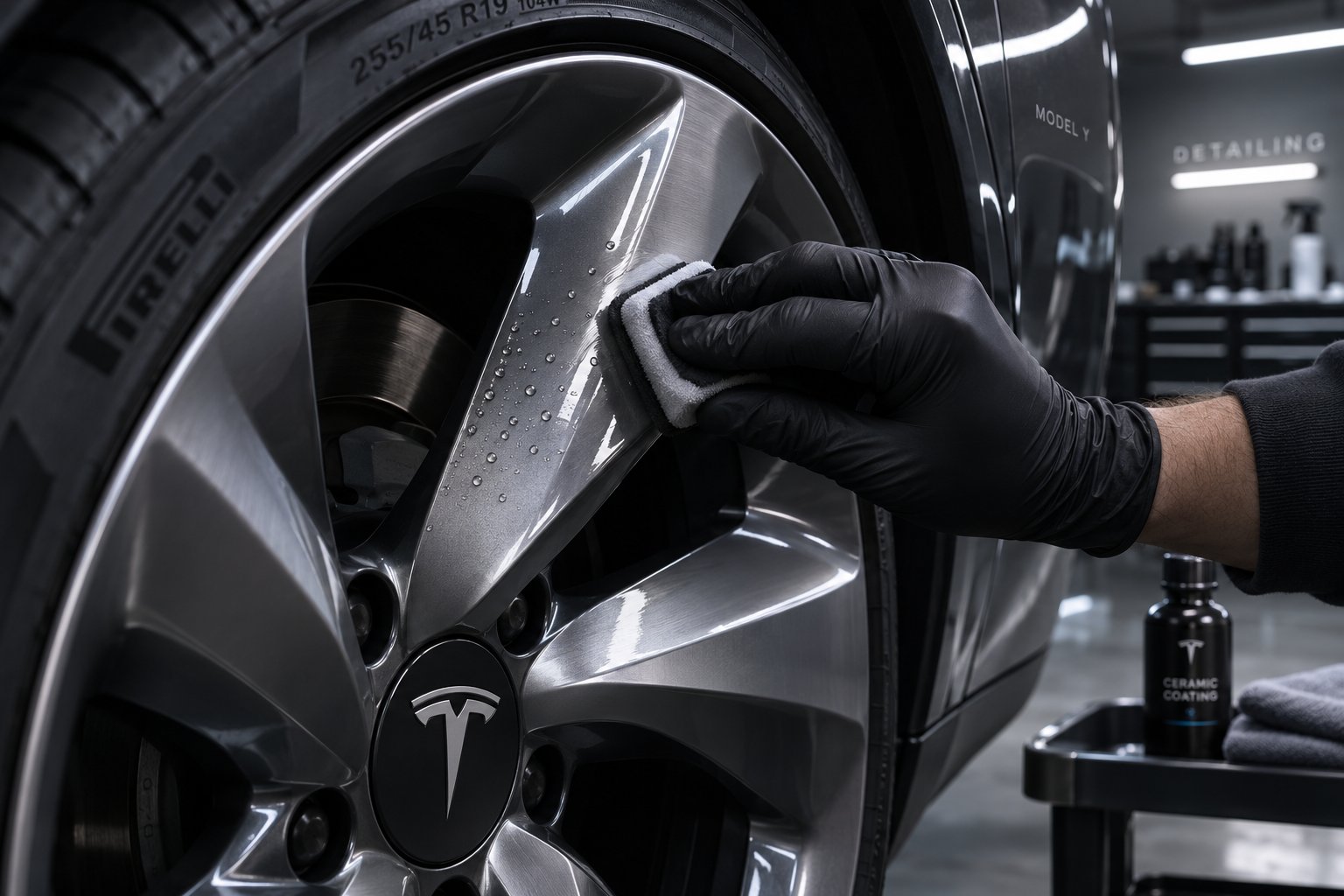
Ceramic Wheel Coating
Ceramic coating has become a staple of automotive paint care, and it works just as effectively on wheels. The technology is straightforward: a liquid polymer — typically based on silicon dioxide (SiO2) — is applied to the wheel surface, where it chemically bonds with the clear coat and cures into a semi-permanent, glass-like layer. That layer is hydrophobic, meaning water beads aggressively and rolls off rather than sitting on the surface and leaving mineral deposits behind.
For Model Y owners, the practical benefits on wheels are significant. Brake dust — that fine, dark powder that builds up relentlessly on any EV's front wheels — contains metallic particles that bond to unprotected alloy and etch into the finish if left too long. A ceramic-coated wheel resists that bond. Dust still accumulates, but it washes off with far less effort and far less abrasion. The coating also provides UV protection, slowing the oxidation and fading that dull a wheel's factory shine over seasons of sun exposure.
What ceramic coating does not do is absorb impact. A coated wheel that brushes a curb will scratch just as easily as an uncoated one — the ceramic layer is measured in microns, not millimeters. As Chemical Guys explains, ceramic coating functions as a chemical shield against environmental and contamination threats, not a physical barrier against road hazards. It protects against what lands on your wheel and stays there — not against what hits the rim edge at speed.
That distinction makes ceramic coating an ideal complement to physical protectors rather than a replacement. A snap-in guard handles the curb strikes. The ceramic layer handles everything else — brake dust etching, chemical staining, water spotting, and UV degradation. Together, they cover fundamentally different threat categories that no single product addresses alone.
Application is manageable at home with consumer-grade SiO2 products. Clean the wheel thoroughly, apply the coating with a microfiber applicator one wheel at a time, allow it to flash, and buff off the residue. Work in shade on a cool surface — direct sunlight causes premature curing that leads to uneven coverage. Entry-level ceramic products typically last about a year before reapplication, while professional-grade multi-layer systems can protect for up to five years with proper pH-balanced maintenance washing.
Paint Protection Film for Wheels
If ceramic coating is the chemical shield, paint protection film is the physical one — just not in the way a rim protector is. PPF is a transparent urethane layer, typically 150 to 200 microns thick, that adheres directly to the wheel's painted or clear-coated surface. It is the same technology used on hoods and bumpers to prevent rock chips, scaled down and adapted for the complex geometry of a wheel face.
On a Model Y wheel, PPF protects against rock chips from road debris, light scratches from automated car wash brushes, and minor scuffs from careless handling during tire changes. Many premium films feature a self-healing top coat — minor surface scratches disappear when exposed to heat from sunlight or warm water. The film is optically clear, so it preserves the OEM appearance of your Induction or Uberturbine wheels without adding any visible color or texture change.
The challenge is installation complexity. Flat body panels are relatively simple to wrap — a wheel is not. Spokes, curves, lug nut recesses, and the rim lip itself create compound surfaces that require precise cutting, careful stretching, and patient fitting. Air bubbles and lifted edges are common with DIY attempts. Professional installation is the realistic path for most owners, and the labor cost reflects the difficulty — expect it to be meaningfully higher than a flat-panel PPF job of equivalent surface area.
PPF also shares ceramic coating's core limitation when it comes to curbs: it is far too thin to absorb a curb strike. A tesla model y 2026 rim protector wedged between the tire bead and rim flange provides millimeters of sacrificial material. PPF provides microns. It handles surface-level threats beautifully but is not engineered for the lateral forces a curb encounter generates. Think of PPF as armor for the wheel's face and ceramic coating as armor for its chemistry — neither one replaces a physical curb guard on the rim edge.
Powder Coating and Refinishing
Here is where the conversation shifts from prevention to restoration. Powder coating is not a protective treatment you apply to pristine wheels to keep them that way — it is a refinishing process that repairs wheels that have already been damaged and gives them a fresh, durable finish.
The process involves stripping the wheel down to bare alloy, repairing any curb rash or surface gouges with filler, and then applying a dry powder (typically a polyester or epoxy-polyester blend) that is electrostatically charged so it adheres evenly to the metal surface. The wheel is then baked in an oven at around 400°F (200°C), which melts the powder into a smooth, continuous coating significantly harder and more durable than conventional spray paint.
The result is a wheel that looks factory-fresh — or better, since powder coating is available in finishes and colors the factory does not offer. Satin black, bronze, gunmetal, gloss white — if you have ever wanted to change the look of your Model Y's wheels while repairing existing damage, powder coating accomplishes both goals in one process.
What it does not do is prevent the next curb rash. Powder coating is tougher than factory paint, but it is still a surface finish measured in thousandths of an inch. A curb strike will gouge through it the same way it gouges through OEM clear coat. For owners sitting on a tesla model s 3 x y wheel rim protector set purchase decision, the smart play is to repair and powder coat first, then install protectors over the restored surface. You fix the past and guard the future in one workflow.
Cost varies by region and finish complexity, but a full set of four wheels typically runs between $400 and $800 for strip, repair, and coat — roughly the same as replacing a single OEM Tesla wheel. That math makes powder coating a compelling option for anyone with existing damage on multiple wheels.
Preventive Driving Techniques
Every physical product and coating discussed in this guide is a response to the same root cause: the wheel got too close to something hard. The most effective — and completely free — rim protection method is simply not letting that happen.
Easier said than done? Absolutely. But a few practical habits dramatically reduce curb contact frequency, especially when combined with the tools the Model Y already gives you.
Use Tesla's camera system aggressively when parking. The surround-view cameras and ultrasonic sensors (on pre-refresh models) show obstacles around the vehicle, but they do not pinpoint your rim lip's exact position relative to a curb edge. Develop the habit of switching to the side repeater camera view when pulling into spots with raised curbs. The side view gives a much better perspective on wheel-to-curb distance than the rear camera alone.
Approach curbs at wide angles. Most curb rash happens when a wheel slides laterally along a curb during a tight parallel park or a sharp turn into a parking spot. Approaching at a wider angle — swinging the front end further out before turning in — reduces the chance of the rear wheel tracking into the curb edge. It feels counterintuitive at first, but a wider arc keeps the wheels further from the curb during the critical turning phase.
Adjust your mirrors for curb visibility. Before any tight parking maneuver, tilt the passenger-side mirror downward temporarily to catch the rear wheel and its proximity to the curb. Many Tesla owners forget this simple trick because they rely solely on the camera feed — but a mirror gives real-time, depth-accurate perspective that a flat screen cannot replicate.
Practice awareness of wheel offset. The Model Y's wheels sit at a specific offset from the body panels. When you look at the driver-side mirror and see the curb approaching the car's body line, the wheel lip is actually several inches further inboard — but the tire bulge may be even with or slightly beyond the fender. Developing a mental model of where your rims actually sit relative to what you see from the driver's seat takes practice, but it is the single most effective long-term habit for avoiding curb rash entirely.
How Alternative Methods Compare to Physical Rim Guards
Each of these methods addresses a different slice of the wheel protection problem. No single approach covers every threat. Here is how they stack up:
- Ceramic wheel coating — Excels at chemical and environmental protection (brake dust, UV, water spotting). No curb impact protection. Best used as a complementary layer alongside physical guards. DIY-friendly with consumer-grade products.
- Paint protection film (PPF) — Protects the wheel face against rock chips, light scratches, and surface scuffs. No curb impact protection on the rim edge. Professional installation recommended due to complex wheel geometry. Preserves OEM appearance.
- Powder coating and refinishing — Restores damaged wheels to like-new condition with a durable finish. Does not prevent future curb rash. Best paired with protectors after the restoration is complete. Cost-effective compared to OEM wheel replacement.
- Preventive driving techniques — Addresses the root cause of curb rash by reducing curb contact frequency. Free, no installation, no trade-offs. Requires habit development and is not foolproof — even careful drivers misjudge occasionally.
- Physical rim protectors — Directly absorbs curb contact at the point of impact. Does not protect the wheel face or resist chemical contamination. The only method that provides a sacrificial barrier at the rim edge where damage actually occurs.
The most thorough protection setup for a Model Y combines two or three of these methods. A snap-in or adhesive rim guard handles curb contact. A ceramic coating handles brake dust and environmental wear. And attentive parking habits reduce the number of impacts the guard ever needs to absorb in the first place. Together, tesla wheel rim protectors model 3/y/s/x owners often pair with ceramic treatments create a layered defense that keeps wheels looking showroom-fresh far longer than any single product could alone.
With a clear picture of every available protection method — physical, chemical, restorative, and behavioral — the remaining question is practical: which specific products deserve your attention, and how do you narrow the field from dozens of options down to the one that fits your wheel, your budget, and your priorities?
Top Rim Protector Brands for Tesla Model Y Compared
Every other search result for this topic is a product page selling you one brand. That is fine if you have already made your decision — but not particularly helpful if you are still trying to figure out which brand actually fits your wheel, matches your attachment preference, and delivers on its claims. This section does what no competitor currently offers: an editorial, side-by-side look at the major players in the tesla model y rim protector space so you can compare before you commit.
Major Rim Protector Brands for Tesla Model Y
The market has matured significantly over the past two years. Several brands now offer protectors specifically engineered for Tesla wheel geometries rather than generic "universal fit" rings repackaged with a Tesla label. Each takes a slightly different approach to attachment, material, and sizing — and those differences matter more than most product listings let on.
Here is how the most recognized brands compare across the factors that actually affect your buying decision:
| Brand | Attachment Type | Compatible Wheel Sizes | Material | Notable Feature |
|---|---|---|---|---|
| CUTIM | Adhesive / Clip-on (varies by model) | 19", 20", 21" (Tesla-specific SKUs) | ABS / Aluminum alloy (varies by design) | Collection organized by wheel size, profile, and attachment method — useful for comparing multiple configurations in one place |
| MagBak | Magnetic / Mechanical clip | 19", 20" (verify 21" availability) | ABS plastic with magnetic elements | Tool-free magnetic attachment allows quick removal and repositioning without adhesive residue |
| AlloyGator | Snap-in (wedged between tire bead and rim flange) | Multiple sizes including 19", 20", 21" | Reinforced nylon | The original snap-in system — professional installation recommended but offers the strongest mechanical lock |
| EVAAM | Adhesive-based | 19", 20" (verify current Tesla-specific listings) | ABS plastic | Wide color selection aimed at matching Tesla factory finishes |
| EVBASE | Adhesive / Clip-on (varies by model) | 19", 20", 21" (verify Juniper compatibility) | ABS / Aluminum alloy | Multiple finish options including matte and gloss variants for different wheel aesthetics |
| Teslaunch (T-Launch) | Adhesive-based | 19", 20" (verify 21" availability) | ABS plastic | Detailed installation guides and troubleshooting resources included with product |
| BASENOR | Clip-on / Snap-on | 19", 20" (Juniper-specific and 2020-2025 SKUs) | ABS plastic | Separates Juniper and pre-refresh fitments explicitly — helpful for avoiding generation mismatch |
A note on this table: Specifications, available sizes, and product lines change frequently. The details above reflect publicly available information as of late 2026, but you should always verify current compatibility on each brand's website before ordering — especially if you drive a tesla model y 2026 19 gemini rim protector setup or a Juniper variant, where fitment differences from pre-refresh models can cause issues.
How to Narrow Down Your Options
Seven brands and dozens of individual SKUs can feel overwhelming. The good news is that three simple questions eliminate most of the noise and point you toward the right shortlist.
Question 1: How important is removability? If you lease your Model Y, plan to sell it within a few years, or simply want the freedom to swap protectors seasonally, magnetic and clip-on systems — like those from MagBak or BASENOR — deserve priority. They come off cleanly without residue or surface damage. If you are a long-term owner who wants to install once and forget about it, snap-in systems from AlloyGator or adhesive guards from CUTIM, EVAAM, or Teslaunch are the more practical path.
Question 2: What is your budget tolerance? Adhesive-based guards are the most affordable entry point. They protect against everyday parking contact at the lowest upfront cost, and brands like EVAAM and Teslaunch keep pricing accessible. Snap-in systems cost more — both for the product itself and potentially for professional installation labor — but they last significantly longer and handle harder impacts. Magnetic systems tend to carry the highest per-unit price, reflecting their reusability and tool-free design.
Question 3: Which wheel size are you protecting? This is where the field narrows fastest. A tesla model y 20 inch wheel rim protector needs to match the Induction wheel's specific lip width and flange curvature — not just any generic 20-inch ring. And if you are running 21-inch Uberturbine wheels, your options shrink further because fewer brands manufacture guards at that diameter. Always confirm that the product listing names your exact wheel variant, not just the inch size.
For owners who want to browse multiple protector designs organized by these exact variables — wheel size, profile height, and attachment method — CUTIM's rim protectors collection serves as a useful starting point. Their catalog is structured to let you filter across different configurations, which saves time compared to hunting through individual product pages across half a dozen different storefronts.
Regardless of which brand you lean toward, keep expectations grounded. Rim protectors do not repair existing curb damage. They do not guarantee protection against every curb impact. And they are not a substitute for attentive parking habits. What they do — reliably and affordably — is absorb the minor, low-speed contact that causes the vast majority of cosmetic wheel damage on Tesla vehicles.
The single most important buying decision is not brand — it is verified fitment. Confirm your exact Model Y generation, wheel size, and wheel variant before comparing price, color, or attachment method. A perfectly reviewed protector that does not fit your specific wheel is worse than no protector at all.
Here is your actionable checklist for making the final call:
- Identify your wheel size and generation — 18", 19" Gemini, 20" Induction, or 21" Uberturbine, and whether your Model Y is a 2020-2024 build or a 2025+ Juniper refresh
- Decide on your attachment preference — Adhesive for low cost and simplicity, clip-on or magnetic for removability, snap-in for maximum durability
- Set a realistic budget — Factor in installation labor if you are considering snap-in systems, and remember that a full protector set still costs a fraction of a single OEM wheel replacement
- Prioritize verified fitment over brand loyalty — Cross-reference the product listing against your specific wheel dimensions and check owner forums or reviews from drivers with your exact setup
- Layer your protection — Pair physical guards with ceramic coating for the wheel face and mindful parking habits for the best overall defense
Your Model Y's wheels are one of its most visually defining features — and one of its most expensive components to repair. A well-chosen, properly installed rim protector will not make them indestructible, but it will quietly absorb the everyday bumps and brushes that turn pristine alloy into an expensive repair appointment. Spend thirty minutes matching the right guard to your wheel now, and you will likely never need to spend $800 fixing a curb strike later.
Frequently Asked Questions About Tesla Model Y Rim Protectors
1. Do rim protectors actually work on a Tesla Model Y?
Yes, rim protectors provide a sacrificial barrier that absorbs minor, low-speed curb contact — the type of impact responsible for the vast majority of cosmetic wheel damage. Independent testing confirms they reduce both damage frequency and severity during everyday parking encounters. However, they are not designed to withstand high-speed or severe curb strikes. Snap-in systems like AlloyGator offer the strongest mechanical protection, while adhesive strips handle lighter scuffs on a budget. For Tesla owners comparing options across different wheel sizes and attachment methods, collections like CUTIM's rim protectors lineup (https://www.cutimauto.com/collections/tesla-wheel-rim-protectors) organize products by fitment to simplify the decision.
2. Will installing rim protectors void my Tesla warranty?
No, installing aftermarket rim protectors does not void your Tesla New Vehicle Limited Warranty. Under the Magnuson-Moss Warranty Act, a manufacturer cannot void a warranty simply because an aftermarket part was installed. The only exception is if the protector or its installation process directly causes damage to the wheel — for instance, a snap-in guard that gouges the rim flange during mounting. Tesla's Parts, Body & Paint Repair Limited Warranty specifically covers Tesla-branded accessories, so aftermarket guards fall outside that particular coverage but do not jeopardize your broader vehicle warranty.
3. What is the best type of rim protector for Tesla Model Y 20-inch Induction wheels?
For 20-inch Induction wheels, snap-in alloy guard systems are the strongest recommendation because the lower-profile 255/40R20 tire provides roughly 13mm less sidewall protection than the 19-inch Gemini setup. This reduced rubber buffer makes durable protection more valuable. Adhesive guards remain a viable budget option, but ensure the product specifically names the Induction wheel — generic 20-inch rings may not match the Induction's wider rim lip and flange curvature. Look for protectors with a profile height of 5-7mm above the rim edge for the best balance of protection and aesthetics.
4. Can I install Tesla Model Y rim protectors myself at home?
Most adhesive and clip-on rim protectors are designed for straightforward DIY installation with no specialized tools. The key to success is thorough surface preparation: wash the wheel lip with automotive soap, dry completely, and wipe with 70%+ isopropyl alcohol to remove all residue. Install adhesive types in temperatures between 60-86 degrees Fahrenheit and allow 24 hours of cure time before water exposure. Snap-in systems require tire deflation and more involved fitting, so many owners opt for professional installation during a routine tire rotation. Regardless of type, starting at the valve stem as your alignment reference point helps ensure an even, professional-looking result.
5. Do rim protectors affect tire balance or TPMS sensors on a Tesla Model Y?
Lightweight protectors adding 40-100 grams distributed evenly around the wheel circumference are unlikely to cause any noticeable balance issues. Heavier options — thick ABS snap-in guards or aluminum alloy protectors exceeding 100 grams per wheel — may warrant a quick rebalance if you notice new steering vibration at highway speeds. As for TPMS sensors, they mount inside the wheel on the valve stem assembly, while rim protectors attach to the outer lip on the opposite side. There is no physical contact or signal interference between the two, so your tire pressure readings will remain accurate after installation.