
What Are Rim Protectors and Why the Debate
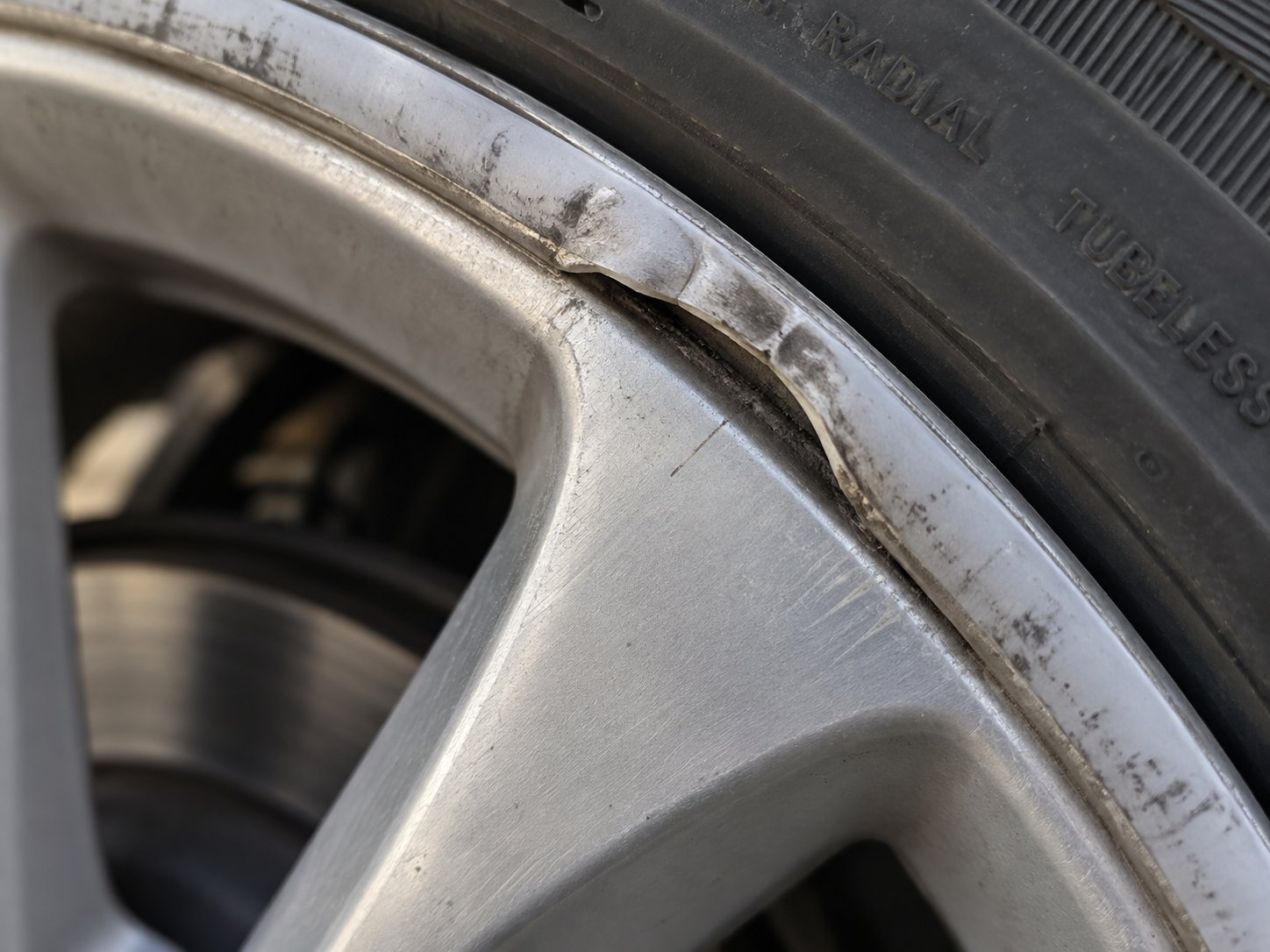
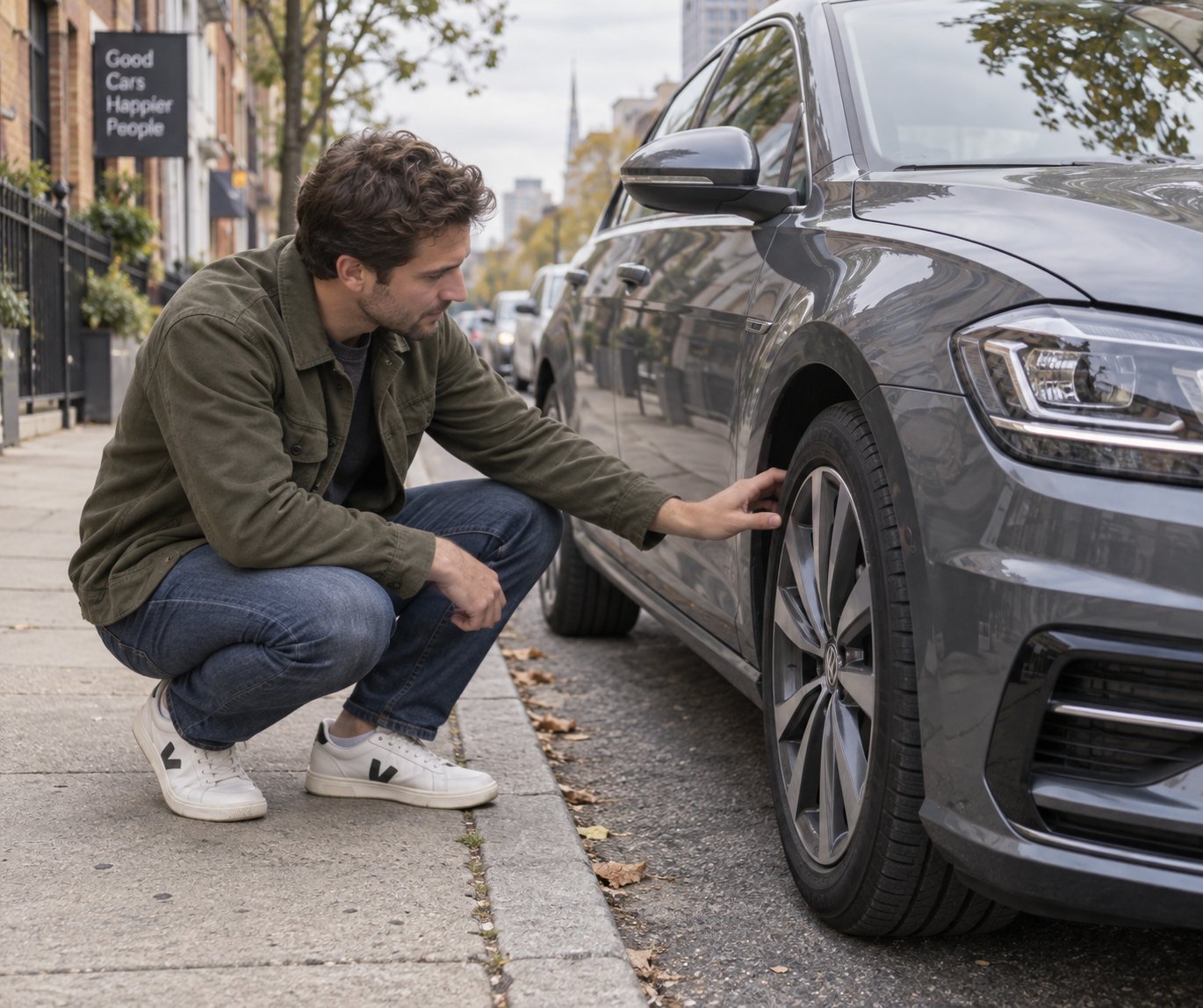
You just pulled into a tight parking spot, heard that unmistakable grinding sound, and felt your stomach drop. A quick glance confirms it — fresh curb rash carved into your alloy wheel. The next question is almost automatic: could a rim protector have saved you from this? And more importantly, do rim protectors actually work, or are they little more than decorative trim that gives you false peace of mind?
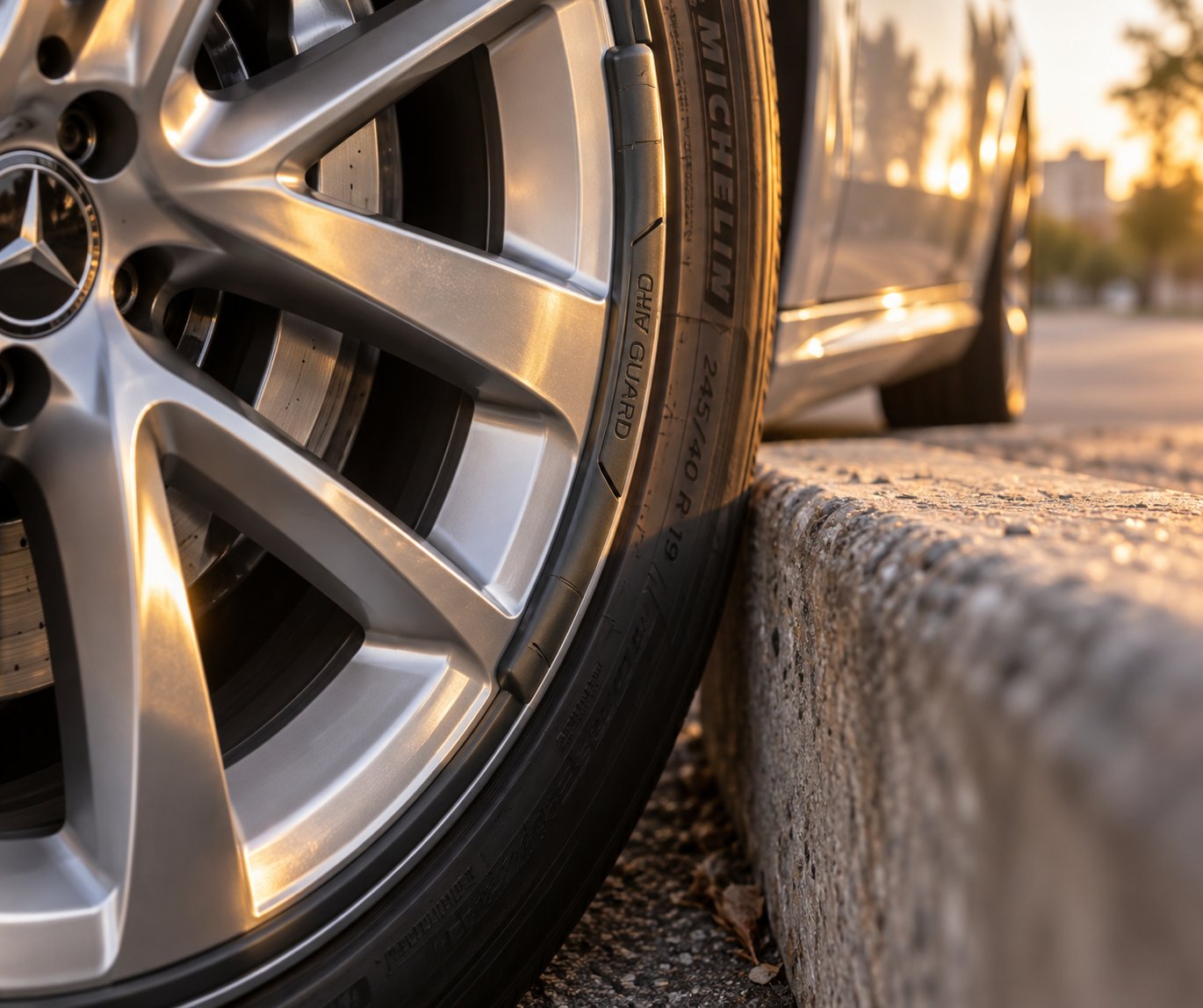
A rim protector is any device, strip, or integrated feature designed to shield the outermost edge of an alloy wheel from curb impacts. Think of it as a sacrificial barrier — something that takes the hit so the wheel itself doesn't have to. They come in many forms, from peel-and-stick rubber strips to precision-machined aluminum rings, and even raised ribs molded directly into certain tires.
Here's why the debate gets murky. Most of the information available online comes from sources with a stake in the answer. Repair shops benefit when you skip protection and come back for refinishing. Protector manufacturers obviously want you to buy their product. Tire retailers may push options that happen to carry higher margins. Each perspective holds some truth, but none tells the whole story. This guide cuts through that noise with an independent, type-by-type evaluation — no product to sell, no repair bill to justify.
Why Drivers Are Asking This Question Now
Several trends are colliding at once. Professional curb rash repair now runs $75 to $300 per wheel depending on severity, and specialty finishes like diamond-cut or multi-coat push costs even higher. Meanwhile, large-diameter wheels paired with low-profile tires have gone mainstream. Those shorter sidewalls look aggressive, but they leave the rim edge dangerously exposed — less rubber between the rim and the road means less natural cushioning against curbs and potholes. Add the booming EV market, where premium alloy wheels often come standard and OEM replacements carry steep price tags, and you'll understand why wheel rim protectors are getting more attention than ever.
What Counts as a Rim Protector
Before diving into effectiveness, it helps to know what you're actually choosing between. The term "rim protector" covers a surprisingly broad range of products. Adhesive strips stick directly onto the wheel lip. Clip-on and bead-fit rings are installed around the rim edge, sometimes requiring tire removal. Certain tire manufacturers even build protection rims into the sidewall itself, molding a raised rubber rib near the bead area. Each type differs in material, installation complexity, and the level of defense it provides.
Rim protectors range from under $20 DIY adhesive strips to professional-grade aluminum guards costing several times more — and their effectiveness varies just as dramatically by type, material, and installation quality.
That wide spectrum is exactly why a blanket "yes" or "no" answer falls short. The real question isn't whether rim protectors work in general — it's which type works for your specific wheels, your driving environment, and your budget. And that requires a closer look at every option on the market.
Every Type of Rim Protector Explained
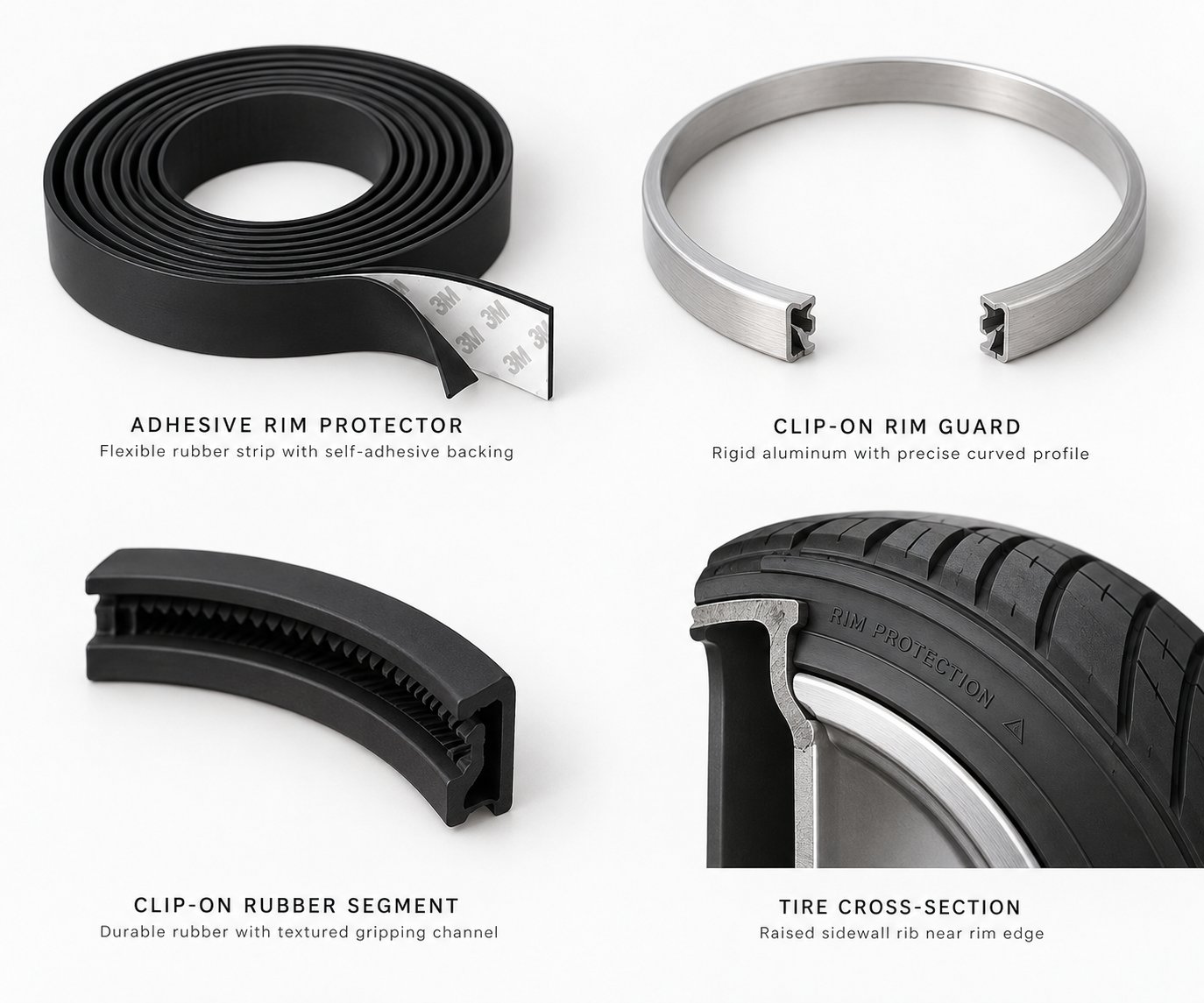
Not all rim protectors are built the same way — and picking the wrong type for your wheels is one of the fastest ways to waste money or end up with a product that peels off after a month. The market breaks down into four distinct categories, each with its own installation method, material profile, and level of protection. Here's what separates them.
Adhesive Strip Protectors
These are the entry point for most drivers. Sometimes called rim trim protectors, adhesive strips are thin bands of flexible polymer or rubber that stick directly onto the outer lip of your wheel using a built-in adhesive backing. You clean the rim edge, peel the liner, press the strip into place, and you're done — no tools, no tire removal, no shop visit.
The appeal is obvious: they're cheap, widely available, and can be installed in under 30 minutes for all four wheels. Most come in basic color options like black, silver, or red, and they sit flush enough to add a subtle accent line around the wheel edge. Material-wise, you'll typically find flexible PVC, silicone-based rubber, or soft thermoplastic compounds designed to absorb light contact without cracking.
The trade-off? Adhesive strips rely entirely on their bond with the wheel surface. That bond is only as strong as the surface preparation and the environmental conditions it faces — a factor that becomes critical over time, as you'll see later in this article.
Clip-On and Bead-Fit Ring Protectors
Imagine a continuous ring that wraps around the entire circumference of your wheel, sitting right along the vulnerable outer edge. That's the basic concept behind clip-on and bead-fit protectors — but the two subtypes install very differently.
Bead-fit rings are installed during tire mounting. The protector ring sits between the tire bead and the wheel flange, locked in place by the tire's own pressure against the rim. This creates a secure, semi-permanent fit that won't shift or rattle during driving. The downside is that installation requires removing the tire, which means a trip to a tire shop and the associated labor cost.
Clip-on guards, by contrast, snap directly onto the rim lip without any tire removal. Small retention clips or tension-fit designs grip the wheel edge, making them a middle ground between the simplicity of adhesive strips and the security of bead-fit rings. They're easier to install at home, though fitment varies — a loose clip-on guard can vibrate, shift, or even detach at highway speeds if the sizing isn't precise.
Aluminum vs. Rubber Clip-On Guards
Within the clip-on category, material choice creates a significant split in performance and price. Aluminum alloy guards are rigid, durable, and often anodized for corrosion resistance. They resist deep scrapes effectively and can last five or more years in typical conditions. Many manufacturers offer color-matched anodized finishes, letting you blend the protector with your wheel's appearance or add a contrasting accent. Sets typically run between $50 and $100.
Rubber guards are the flexible, budget-friendly alternative. Priced around $15 to $30 per set, they absorb minor bumps well and dampen vibration slightly. Installation is generally more forgiving since the material flexes to accommodate slight variations in wheel lip dimensions. However, rubber guards degrade faster under UV exposure, tend to dry out and crack within two to three years, and offer limited color options — mostly black or gray.
The core distinction comes down to this: aluminum wheel guards act like hard armor that deflects and resists damage, while rubber wheel rim guards act like a cushion that absorbs lighter impacts. Neither approach is universally better — it depends on what kind of contact your wheels actually encounter.
Tyre-Integrated Rim Protector Ribs
This category is fundamentally different from every aftermarket add-on. Certain tire manufacturers — particularly in the premium and performance segments — mold a raised rubber lip directly into the tire sidewall near the bead area. This small rib extends slightly beyond the wheel edge, creating a built-in buffer that takes the initial scrape before the alloy can make contact with a curb.
You don't install these separately. They come as part of the tire itself, which means protection is always present and perfectly aligned with the wheel. Tire rim protectors of this type are especially common on low-profile tires designed for large-diameter wheels, precisely because those setups leave rims most exposed.
The limitation? Not every tire model in a given size includes this feature. You may need to choose a specific brand or product line to get the integrated rib, and even then, the protection is modest — a few millimeters of raised rubber offers a meaningful first line of defense against light curb scrapes, but it won't stop a forceful impact any more than an aftermarket strip would. Still, for drivers who want passive protection without sticking or clipping anything to their wheels, tires with a rim protector rib are worth seeking out.
Quick-Reference Comparison
With four distinct categories and multiple material options within them, it helps to see everything side by side. The table below captures the key differences so you can compare wheel trim protectors and tire rim protectors at a glance.
| Type | Installation Method | Typical Material | Ease of DIY Install |
|---|---|---|---|
| Adhesive Strip Protectors | Peel-and-stick directly onto wheel lip | Flexible PVC, silicone rubber, or thermoplastic | Very Easy — no tools required |
| Bead-Fit Ring Protectors | Installed during tire mounting (between bead and flange) | Nylon composite or reinforced polymer | Difficult — requires tire removal at a shop |
| Clip-On Guards (Aluminum) | Snap or tension-fit onto rim lip | Anodized aluminum alloy | Moderate — precise sizing needed |
| Clip-On Guards (Rubber) | Snap or tension-fit onto rim lip | EPDM or silicone-based rubber | Easy — flexible material is forgiving |
| Tyre-Integrated Rim Protector Ribs | Built into tire sidewall during manufacturing | Molded rubber (part of tire compound) | N/A — comes with the tire |
Each of these options sits at a different point on the spectrum of cost, durability, and protection level. But knowing what they are is only half the equation — the real question is how each one actually performs when your wheel meets a curb. That comes down to physics, impact angles, and the honest gap between marketing claims and real-world results.
The Science Behind How Rim Protectors Prevent Damage
Picture your wheel rolling toward a concrete curb at five miles per hour during a parallel parking attempt. The outermost edge of the rim — usually just a few millimeters of exposed alloy — is about to meet a surface far harder than itself. What happens in that fraction of a second determines whether you drive away clean or with a fresh gouge carved into your wheel. A rim edge protector changes that equation, but understanding exactly how requires a quick look at the forces involved.
How Impact Absorption Works
When an alloy wheel strikes a curb, the contact point is remarkably small. Force equals pressure multiplied by area, so a tiny contact patch means enormous pressure concentrated on one narrow strip of metal. That's why even a gentle bump can leave a visible scratch — the energy has nowhere to spread.
A rim guard works by doing two things simultaneously. First, it acts as a sacrificial buffer. The protector material — whether rubber, polymer, or aluminum — absorbs the initial impact energy before it reaches the alloy surface. The protector gets scuffed, dented, or scraped instead of your wheel. Second, it distributes the force across a wider area. Instead of a curb edge meeting a bare wheel edge at a single point, the protector spreads the contact zone, reducing peak pressure on any one spot.
Think of it like a phone case. Drop your phone without a case, and the corner of the glass takes the full hit. Add a case with a raised lip, and that lip absorbs the shock while spreading the impact energy around the edge. Rim guards follow the same principle — they create a raised barrier that intercepts contact and dissipates force before the alloy underneath is affected.
There's an important distinction here between two very different types of curb encounters. Low-speed scrapes — the kind that happen during parking maneuvers, tight turns into driveways, or slow-rolling approaches to a curb — generate relatively modest forces applied at shallow, angled contact. This is the scenario every wheel guard is engineered to handle. The protector catches the curb first, slides or compresses against it, and the wheel edge stays untouched.
Higher-speed curb strikes are a different story entirely. Hitting a curb at 15, 20, or 30 miles per hour generates forces that can bend alloy, crack spokes, and destroy tires. No adhesive strip or clip-on ring is built to absorb that kind of energy. These impacts overwhelm the protector entirely — the curb protector may shear off, compress flat, or simply transfer the force straight through to the rim beneath it. Protectors are parking lot armor, not highway crash barriers, and setting that expectation early saves a lot of disappointment.
What the Evidence Shows
So do these products actually deliver on the physics? The honest answer is yes — with clear boundaries. Rim protectors are effective at reducing or preventing cosmetic damage from the most common type of curb contact: low-speed, angled scrapes during everyday parking. This is the type of curb rash that accounts for the vast majority of wheel damage drivers encounter. A quality curb protector in good condition will intercept that contact reliably, sparing the alloy from scratches, scuffs, and paint loss along the wheel edge.
However, protection is not absolute. Industry repair specialists consistently note that rim guards reduce damage frequency and severity but do not eliminate risk entirely. A protector that's slightly misaligned, partially lifted, or facing a direct head-on strike against a sharp curb edge can still allow damage to reach the wheel. The realistic expectation is risk reduction, not risk elimination.
Here's where it helps to see the practical breakdown. The scenarios below separate the situations where rim guards genuinely shine from those where they hit their limits:
- Protectors perform well: Low-speed parallel parking scrapes against flat-faced curbs
- Protectors perform well: Slow, angled contact when turning too close to a curb edge
- Protectors perform well: Repeated light brushes in tight urban parking garages
- Protectors perform well: Rolling contact where the wheel slides along the curb at walking speed
- Protectors fall short: Direct, perpendicular impacts at moderate or high speed
- Protectors fall short: Striking sharp or broken curb edges that concentrate force into a narrow point
- Protectors fall short: Pothole impacts that stress the inner barrel and spokes rather than the outer lip
- Protectors fall short: Impacts forceful enough to bend or crack the wheel structure itself
The pattern is clear. Rim guards excel at exactly the type of damage most drivers actually face — the slow-speed parking scrape that leaves an ugly mark on an otherwise perfect wheel. They're a genuine line of defense for cosmetic preservation, and for many car owners, that's precisely the protection worth paying for. Where they fall short is against forces that go beyond surface-level cosmetic contact and into structural territory.
This distinction matters because it shapes how much value you actually get from a protector — and it raises a harder question. If these products work within their intended range, what causes them to fail prematurely or underperform even in low-speed situations? The answer often has less to do with the curb and more to do with the protector itself.
Real-World Limitations and When Rim Protectors Fail
Every protector eventually meets a situation it can't handle — and sometimes the failure has nothing to do with the curb. Rim protector damage often starts quietly: a lifted edge here, a discolored section there, a subtle wobble you don't notice until the guard is halfway off the wheel. Understanding these failure modes before they happen is what separates a driver who gets lasting value from one who ends up peeling off ruined strips after six months.
Adhesive Failure and Environmental Factors
Stick-on protectors live and die by their bond with the wheel surface. That bond is under constant assault from the environment. Extreme heat — the kind you'll find in a sun-baked parking lot in Phoenix or Dallas — softens adhesive compounds and allows the strip to slowly creep along the rim. Extreme cold does the opposite, making adhesive rigid and brittle until it cracks and loses grip entirely. Repeated cycles between the two accelerate the breakdown even faster.
Car washes introduce another threat. High-pressure water jets aimed at wheel edges can work under a strip's edge, gradually lifting the bond from one section outward. Automatic tunnel washes with spinning brushes are especially aggressive — the brushes catch any protruding edge and peel it back like a sticker. Even hand washing can cause problems if you direct a pressure nozzle straight at the wheel lip.
The single biggest factor in adhesive longevity, though, is surface preparation. A wheel that wasn't properly degreased and dried before installation will fail early — almost guaranteed. Brake dust, road film, wax residue, and even fingerprint oils create a barrier between the adhesive and the alloy. As one installation guide puts it: skipping surface prep causes the vast majority of adhesive-related issues. Upgrading to VHB-grade 3M tape (rated to 300 degrees Fahrenheit) helps in hot climates, but no adhesive can compensate for a dirty surface underneath.
When a stick-on protector detaches while driving, it becomes road debris — a hard strip of polymer or rubber bouncing along the highway. That's not just an inconvenience; it's a hazard for vehicles behind you and a quick way to lose your investment entirely.
Aesthetic Degradation Over Time
Imagine spending $80 on a set of color-matched protectors, only to have them turn yellow and chalky within a year. It happens more often than you'd expect, especially with budget PVC strips exposed to UV radiation. Sunlight breaks down polymer chains over time, causing discoloration, surface cracking, and a matte haze that looks nothing like the glossy finish you started with.
Brake dust compounds the issue. Wheels generate a constant shower of fine metallic particles from the brake pads, and that dust settles differently on the protector surface than on the wheel itself. Over weeks and months, you'll notice a visible line where the protector meets the alloy — one shade on the guard, a different shade on the wheel. Instead of blending seamlessly, the protector starts drawing attention to itself for all the wrong reasons.
Rubber guards face their own version of this problem. They tend to dry out, lose elasticity, and develop hairline cracks along the outer face — especially on the side of the wheel that faces the sun most often. What began as a smooth, protective rim surface gradually becomes a rough, degraded strip that makes your wheels look neglected rather than protected.
For owners of premium or diamond-cut alloy wheels, cheap protectors can actually make the overall appearance worse than leaving the rims bare. A yellowed strip on a polished wheel is more conspicuous than a minor scuff, which defeats the entire purpose of installing protection in the first place.
The False Sense of Security Problem
Here's a paradox that rarely gets discussed. Drivers who install rim protectors sometimes become less careful around curbs — and that behavioral shift can backfire badly.
The psychology is straightforward. You invest in a wheel edge protector, and suddenly curbs feel less threatening. You park a little closer. You cut turns a little tighter. You stop using your side mirrors to gauge clearance because you figure the guard will absorb whatever happens. Over time, those small habit changes add up. Instead of occasional light contact that the protector handles easily, you start generating harder hits at steeper angles — exactly the kind of impacts that overwhelm even quality guards.
A protective rim strip is designed to shield against incidental contact, not deliberate curb-riding. Treating it like invincible armor invites the very damage it can't prevent. The drivers who get the most value from rim protectors are the ones who still drive as though their wheels are unprotected — using the guard as a last-resort safety net rather than a license to park recklessly.
Compatibility Issues with Modern Wheel Designs
Not every protector fits every wheel, and modern wheel designs are making compatibility trickier. The issue comes down to lip profile — the shape and depth of the outermost edge where the protector needs to sit.
Flush-face wheels, where the spokes extend nearly to the outer edge, leave very little lip for a clip-on or adhesive guard to grip. Deep-dish wheels have the opposite geometry: a pronounced lip that can accommodate most protector types but may require longer adhesive strips or wider guards to cover the exposed edge properly. Recessed-lip designs — common on many OEM wheels — fall somewhere in between, and fitment depends heavily on the specific protector's dimensions.
Low-profile tire setups add another layer of complexity. When the tire sidewall barely extends beyond the wheel edge, there's minimal natural clearance for an aftermarket protector to sit without interfering with the tire bead or rubbing against the sidewall during turns. Some tyre rim protector damage actually comes from the protector itself pressing against the tire under compression, causing uneven wear on the sidewall rubber.
Universal-fit protectors are the biggest gamble here. A strip marketed as fitting "all 17-to-21-inch wheels" may technically wrap around the circumference, but the lip depth, edge curvature, and spoke clearance vary enormously across that range. Vehicle-specific protectors — engineered for exact wheel dimensions — sidestep most of these compatibility headaches, which is why they tend to stay in place longer and look cleaner once installed.
Signs Your Protector Has Failed or Needs Replacement
Catching a failing protector early prevents both aesthetic damage and the safety risk of a strip detaching on the highway. Run through this checklist during your regular wheel cleaning routine:
- Visible gaps: Any section where the protector has pulled away from the wheel surface, even slightly, indicates adhesive breakdown or clip fatigue.
- Lifting edges: Corners or ends of the strip that curl outward are magnets for car wash brushes and high-pressure water — they'll peel further with every wash.
- Discoloration or yellowing: UV-degraded material has lost structural integrity alongside its color. If it looks chalky or brittle, it won't absorb impacts effectively.
- Wobbling or rotating sections: Clip-on guards that shift when you press on them have lost their retention grip. A guard that moves on the rim isn't protecting anything — it's just decorating.
- Cracking or dry-rot: Hairline cracks in rubber or PVC mean the material has hardened past its useful life. It will shatter on the next impact rather than flex and absorb.
- Corrosion beneath the protector: Moisture trapped between the guard and the wheel can cause oxidation on the alloy surface underneath. If you spot discoloration or bubbling on the rim near the protector's edge, remove the guard and inspect immediately.
A protector in any of these conditions isn't just ineffective — it can mask developing problems on the protective rim surface beneath it. Replacing a worn guard promptly costs far less than repairing the hidden damage that accumulates when you ignore the warning signs.
These real-world limitations don't mean rim protectors aren't worth considering. They mean the purchase price is only part of the investment — ongoing awareness and timely replacement matter just as much. And for many drivers, the question that surfaces next is whether that total investment still makes financial sense compared to simply repairing or replacing a damaged wheel after the fact.
Cost Comparison: Car Rim Protectors vs. Wheel Repair vs. Replacement
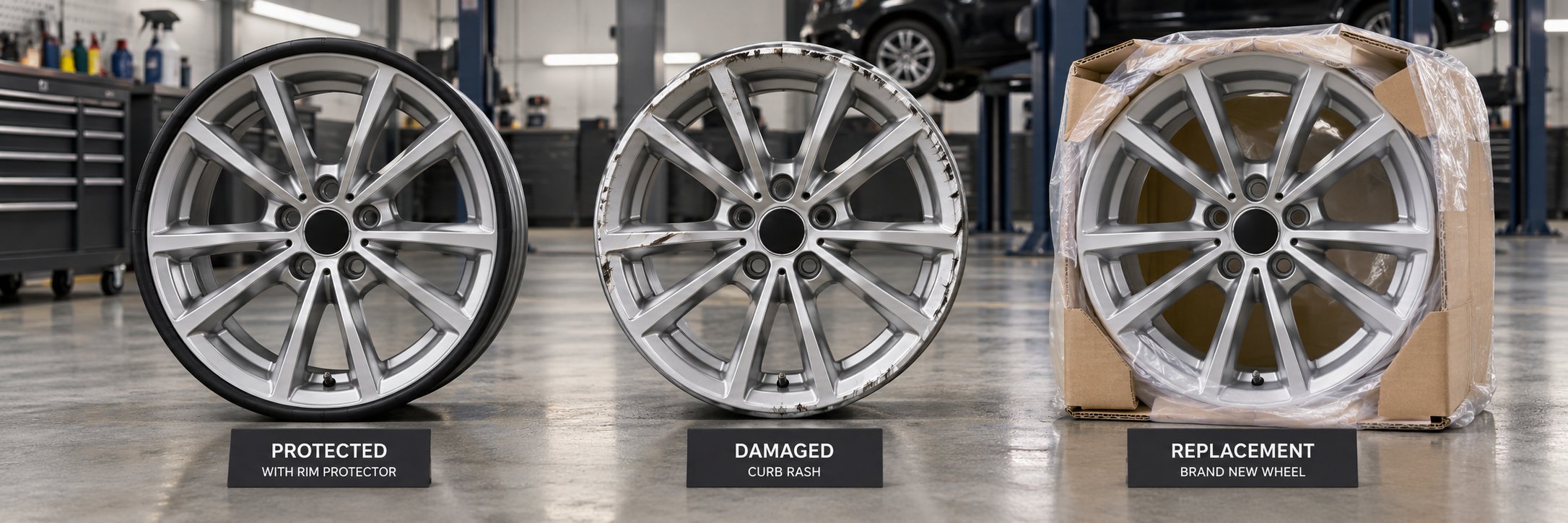
Knowing how rim protectors perform is one thing. Knowing whether they actually save you money is another — and that's the calculation most drivers never do before making a decision. The financial equation is surprisingly straightforward once you line up the three options side by side: prevent the damage with a car rim protector, repair the damage after it happens, or replace the wheel entirely. Each path carries a different price tag, a different level of durability, and a different set of trade-offs.
Rim Protector Price Ranges by Type
The cost of protection varies dramatically depending on which category you choose. Adhesive strip protectors sit at the bottom of the price ladder — you'll typically find a full four-wheel set for under $20 to around $30, making them the most accessible entry point for drivers testing the concept for the first time. The trade-off, as covered earlier, is shorter lifespan and adhesive vulnerability.
Rubber clip-on guards occupy the mid-range. A quality set generally runs between $15 and $30, though thicker or vehicle-specific rubber options can push slightly higher. These offer better retention than adhesive strips and a modest step up in durability, usually lasting two to three years before UV exposure and weather cycling degrade the material.
Aluminum alloy guards represent the premium tier. Expect to spend roughly $50 to $100 per set, depending on the finish quality, color-matching options, and whether the design is universal or vehicle-specific. Anodized aluminum resists corrosion, maintains its appearance for five or more years, and handles deeper scrapes without deforming. For drivers protecting expensive alloy wheels, the higher upfront cost often makes the most sense per year of service.
Bead-fit ring protectors and tire-integrated ribs don't always have a separate line-item cost. Bead-fit rings typically add $30 to $60 for the hardware, plus the labor cost of tire mounting. Tires with built-in rim protector ribs simply cost whatever that specific tire model costs — you're choosing a tire feature, not buying an add-on.
Professional Alloy Wheel Repair Costs
When curb rash does happen, professional repair is the most common fix — and it's where costs can surprise you. A standard curb rash refinish on a single painted alloy wheel typically runs $75 to $150, covering sanding, filling, repainting, and clear-coating the damaged area. That's for one wheel — and most drivers don't curb just one.
The finish type on your wheel is where costs escalate quickly. Clear-coated painted wheels are the simplest and cheapest to repair. Polished or chrome-look finishes require specialized techniques that push the price higher. Diamond-cut (machined) wheels — increasingly common on premium and performance vehicles — demand CNC lathe work to recut the face, and that process typically costs $150 to $300 or more per wheel. Each recut also removes a thin layer of aluminum, meaning there's a limit to how many times a diamond-cut wheel can even be repaired before the finish is no longer restorable.
Other variables stack on top. Wheel diameter matters: a 22-inch wheel costs substantially more to refinish than a 16-inch wheel due to increased labor and material. Geographic location plays a role too — shop rates in major metro areas can run 30 percent higher than in smaller markets for the exact same repair. Consult local repair shops for current pricing in your area, as these figures reflect general U.S. ranges rather than fixed rates.
One detail that often gets overlooked: many drivers don't repair a single curb rash incident in isolation. They live with the first scrape, then the second, and by the time they visit a shop, they're paying to refinish two or three wheels at once. A single visit can easily exceed $300 to $500 for multiple wheels — a figure that makes even premium auto wheel rim protectors look like a bargain in hindsight.
Full Wheel Replacement as the Last Resort
When damage goes beyond cosmetic — structural cracks, severe bends, or damage to the mounting face — repair may not be safe or even possible. That's when you're looking at full wheel replacement, and the numbers can be eye-opening.
OEM replacement wheels from a dealership vary widely by brand, but premium and performance vehicles carry the steepest prices. A single factory alloy wheel for a luxury sedan or performance SUV can run $400 to $800 or more. EV-specific wheels — particularly those designed for aerodynamic efficiency on brands like Tesla, Rivian, or BMW's electric lineup — often command premium pricing because of their unique sizing, proprietary designs, and limited aftermarket alternatives.
Even sourcing genuine OEM take-off or reconditioned wheels (a more cost-effective route than dealer pricing) still typically runs well above what any car rim protector set costs. And if your vehicle uses a staggered setup with different front and rear wheel sizes, replacing a single damaged wheel means finding an exact match — not just any wheel in the right diameter.
This is the context that makes the prevention-versus-cure math so compelling. A set of quality protectors costing $50 to $100 that prevents even one curb rash incident has already paid for itself compared to a single $150 repair. Prevent two incidents over the product's lifespan, and the return on investment becomes difficult to argue against.
The Full Cost Comparison at a Glance
The table below puts every option — protection, repair, and replacement — into a single view so you can compare the financial picture across approaches.
| Option | General Cost Range | Durability | Best For |
|---|---|---|---|
| Adhesive Strip Protectors | $15 - $30 per set | 1 - 2 years before adhesive weakens | Budget-conscious drivers wanting basic scratch prevention |
| Rubber Clip-On Guards | $15 - $30 per set | 2 - 3 years before UV degradation | Daily drivers seeking easy installation and moderate protection |
| Aluminum Clip-On Guards | $50 - $100 per set | 5+ years with proper maintenance | Premium wheel owners wanting long-term, durable protection |
| Bead-Fit Ring Protectors | $30 - $60 + installation labor | Lasts until next tire change | Drivers wanting secure, hidden protection during tire service |
| Curb Rash Repair (per wheel) | $75 - $300+ | Permanent (until next incident) | Single-incident cosmetic damage on painted or clear-coated wheels |
| Diamond-Cut Refinish (per wheel) | $150 - $300+ | Permanent but limited re-repairs | Machined-finish wheels with surface scratches or scuffs |
| OEM Wheel Replacement (per wheel) | $200 - $800+ | Full new wheel lifespan | Structural damage, severe bends, or unrepairable cosmetic damage |
For owners of premium or specialty wheels, even mid-range car rim protectors can pay for themselves after preventing a single curb rash incident — making them one of the most cost-effective forms of vehicle maintenance available.
The financial case is clear for drivers who park near curbs regularly, live in dense urban areas, or own vehicles with expensive-to-repair finishes. But money isn't the only variable in the equation. Smart spending on protection works best when it's paired with smart driving habits — and there are proven techniques that reduce curb contact whether or not you have a guard installed.
Prevention Techniques That Work With or Without Protectors
A rim protector is a safety net — but the best safety net is one you rarely need. The drivers who keep their wheels looking factory-fresh aren't just relying on guards and strips. They're combining physical protection with deliberate habits behind the wheel. And here's the thing: even if you never install a single protector, these techniques alone can dramatically cut the number of curb encounters your wheels face over the life of your vehicle.
Parking and Driving Techniques That Prevent Curb Rash
Most curb rash happens during three predictable maneuvers: parallel parking, right turns at intersections, and pulling into angled parking spaces. Adjusting your approach to each one eliminates the majority of wheel-to-curb contact before it starts.
Use your mirrors and cameras — actively. Your passenger-side mirror shows the curb's position relative to your rear wheel in real time. Tilt it slightly downward before you start parking and watch the gap as you reverse. If your vehicle has a 360-degree surround-view camera, switch to the overhead perspective before every parallel parking attempt. The bird's-eye view shows exactly where your wheels sit relative to the curb edge — no guessing, no grinding. Many modern vehicles, especially EVs, ship with sophisticated camera and parking sensor systems that most drivers rarely use to their full potential. Those sensors detect objects near your bumpers, but they also give you audible feedback as you approach curbs. Use them every time, not just when the space looks tight.
Approach curbs at shallow angles. The worst scrapes happen when you turn sharply toward a curb while still rolling. Instead, straighten your wheels before closing the final distance. During parallel parking, pull forward past the space, reverse in at a gentle angle, and then straighten the wheel before making any lateral adjustments. This pull-forward-then-straighten technique keeps your rear wheels tracking predictably rather than cutting inward toward the curb.
Leave adequate clearance. There is no rule that says your tires need to touch the curb. Six to eight inches of clearance is plenty for a legal parking position in most jurisdictions. If you're worried about being too far from the curb, remember: a slightly wider gap looks invisible to passersby, but a fresh gouge on a polished alloy wheel is impossible to miss.
Account for off-tracking on right turns. Your rear wheels don't follow the same path as your front wheels — they cut inside the arc, tracking closer to the curb than the front of the car suggests. This is called off-tracking, and it's the reason so many right-turn curb scrapes catch drivers by surprise. Swing slightly wider than feels natural on tight right turns, especially at intersections with raised curbs. Your back wheels will thank you.
Tyre Selection as Built-In Protection
One of the most effective forms of rim defense doesn't attach to the wheel at all — it comes built into the tire. Several major manufacturers mold a raised rubber flange into the sidewall near the bead area, and this small lip extends just beyond the wheel edge to act as a first-contact buffer against curbs.
You'll see this feature marketed under brand-specific names. Michelin labels it "Rim Protector," Continental uses "Rim Guard," and Pirelli calls it "Rim Protection." The terminology varies, but the concept is the same: tires that protect rims passively, without any aftermarket installation or maintenance. When you're shopping for replacements, check the tire sidewall markings or product specifications for these designations — they indicate the presence of the raised rib.
Tires with rim protector ribs are especially valuable on low-profile setups (40- or 45-series sidewalls) where the short sidewall leaves the alloy edge almost fully exposed. The rib doesn't add much height — a few millimeters — but that small extension is enough to intercept light curb scrapes before they reach the wheel. Think of it as having rim guards on tires without the hassle of separate products or adhesive concerns.
The trade-offs are worth knowing. Not every tire model in a given size includes this feature, so you may need to prioritize specific brands or product lines. These tyres with rim protection sometimes cost $10 to $20 more per tire than equivalent models without the rib, though the premium is modest when spread across the tire's full lifespan. And like any rim protector, the built-in lip handles light contact well but won't save you from a hard, direct impact. Still, for drivers who want continuous, maintenance-free protection that never peels, cracks, or yellows, choosing the right tire is one of the smartest moves available.
Assessing Existing Wheel Damage Before Adding Protectors
Here's a step that most installation guides skip entirely — and it's arguably the most important one. Before you attach any protector to your wheels, you need to know what's underneath. Applying a guard over undiagnosed structural damage doesn't just waste money; it hides a problem that could compromise your safety.
Not all curb damage is cosmetic. Surface scratches and paint scuffs are one thing. Cracks, bends, and compromised bead seats are something else entirely. The following checklist walks you through a proper inspection so you can determine whether your wheels are ready for protection — or need repair first.
- Clean the wheel thoroughly. Brake dust and road grime mask damage. Wash each wheel with a non-acidic wheel cleaner and dry it completely before inspecting. You can't assess what you can't see.
- Run your finger along the entire rim lip. Feel for any rough spots, raised burrs, or depressions that indicate material loss or deformation. Cosmetic scratches will feel like shallow texture changes; structural gouges will feel deep, sharp, or uneven.
- Inspect for cracks using a flashlight at an angle. Hold a bright flashlight at a shallow angle to the rim surface and look for hairline cracks radiating from any damaged area. Cracks — even small ones — are structural failures. A cracked wheel should never receive a protector; it needs professional evaluation and likely replacement.
- Check for bends or flat spots on the rim edge. Spin the wheel slowly and watch the rim lip from the side. A bent section will appear as a wobble or deviation from the circular profile. Bends affect tire seating and can cause slow air leaks, vibration, and uneven tire wear.
- Monitor for slow air leaks at the bead area. If your tire pressure drops consistently over days or weeks without a visible puncture, the bead seat — the area where the tire meets the rim — may be damaged. Spray soapy water along the bead line and watch for bubbles. A leaking bead seat means the rim surface is compromised at exactly the point where a protector would sit.
- Look for deep gouges exposing raw aluminum. Minor scratches through paint or clear coat are cosmetic and repairable. Gouges deep enough to expose bare, uncoated aluminum invite corrosion — especially in climates with road salt. Treat exposed metal before installing any protector, as trapping moisture between a guard and raw aluminum accelerates oxidation.
Always inspect and repair structural wheel damage before installing any protector — a guard applied over a cracked or bent rim masks a safety hazard that no amount of curb protection can fix.
If your wheels pass every step on this checklist, they're ready for whichever protector type suits your needs. If they don't, address the underlying damage first. A reputable wheel repair shop can distinguish cosmetic issues from structural ones and recommend the appropriate fix — whether that's a simple refinish or a full replacement.
With sound wheels and smart habits in place, the remaining question isn't whether protection works — it's which specific approach matches your car, your driving environment, and your priorities. That decision depends on factors unique to every driver, and a structured framework makes it far easier to get right.
A Decision Framework for Choosing the Right Rim Protector
You've seen how each protector type works, where the limitations lie, what the costs look like, and how driving habits factor in. All of that information is useful — but it still leaves a practical gap. Which option is right for you? Or do you even need one at all? The answer depends entirely on your specific situation, and a structured framework makes the decision far clearer than browsing product listings and hoping for the best.
When Rim Protectors Are Worth It
Some driving scenarios practically demand wheel protection. If any of the following descriptions match your daily reality, a quality wheel protector is likely to deliver meaningful value — both financially and in terms of peace of mind.
City driving with frequent parallel parking. Urban environments are where curb rash happens most. Tight spaces, unfamiliar streets, time pressure, and high curbs create a daily gauntlet for your wheel edges. If you park on the street regularly — especially in dense neighborhoods where spots are tight and curbs are unforgiving — rim protectors for cars pay for themselves quickly. Even one prevented scrape per year justifies the investment.
Premium alloy wheels with expensive repair costs. Own diamond-cut, polished, or multi-coat finished wheels? Repair costs for these finishes run $150 to $300 or more per wheel, and diamond-cut surfaces can only be recut a limited number of times. The math is simple: a $50 to $100 set of aluminum guards costs less than a single refinish. When the wheels are the expensive part, protecting them becomes the obvious move.
Leased vehicles with return-condition penalties. Lease agreements are notoriously strict about wheel condition. Returning a car with curbed alloys typically triggers charges that far exceed the cost of prevention. As industry sources note, leased vehicles returned with wheel damage — including dents, scratches longer than 50 mm, or fading paint — face penalty fees that make a set of protectors look like pocket change. Removable options like adhesive strips are particularly well-suited here, since they can be taken off before return without leaving marks or modifications that violate lease terms.
EV owners with brand-specific wheels. Electric vehicles frequently ship with proprietary wheel designs optimized for aerodynamics and range. These OEM wheels often carry premium replacement prices due to unique sizing, limited aftermarket availability, and specialized finishes. If you drive a Tesla, Rivian, Polestar, or similar EV with factory alloys that would cost $400 to $800+ per wheel to replace, wheel guards for cars aren't a luxury — they're practical insurance.
New car owners who want to preserve resale value. Fresh, undamaged wheels contribute noticeably to a vehicle's perceived condition at resale or trade-in. Installing protectors from day one keeps the alloy pristine underneath, and you can remove them before selling to reveal wheels that look showroom-new. It's a low-cost way to protect a high-visibility detail that buyers notice immediately.
When Rim Protectors Are NOT Worth It
Not every driver benefits equally, and there are clear situations where spending money on protectors adds little practical value. Being honest about these scenarios saves you money and avoids the frustration of buying a product that doesn't serve your needs.
Steel wheels with hubcaps. If your vehicle runs steel wheels covered by plastic hubcaps, the alloy edge isn't exposed in the first place. Curb contact damages the hubcap — a replaceable, inexpensive part — rather than the wheel itself. Adding a protector to a steel wheel is solving a problem that doesn't exist. Replace a scuffed hubcap for $20 to $40 instead.
Already heavily damaged rims that need repair first. This point can't be overstated. Slapping a wheel guard for cars over existing cracks, deep gouges, or bent sections is cosmetic camouflage at best and a safety risk at worst. The protector hides the damage without fixing it, and trapped moisture between the guard and exposed aluminum accelerates corrosion. Handle the repair first, then protect the restored surface.
Vehicles driven primarily on highways with minimal curb exposure. If your daily routine is highway commuting with a home garage at both ends, your wheels rarely encounter curbs at all. The primary threat to your rims in this scenario is potholes and road debris — neither of which rim protectors address. Your money is better spent on quality tires or a pothole damage warranty.
Drivers who plan to replace wheels soon anyway. Upgrading to aftermarket wheels next season? Don't invest in protectors for wheels you're about to swap out. Wait until the new set is installed, then evaluate whether the replacement wheels justify protection based on their cost and finish type.
Extremely tight-clearance wheel setups. Some aggressive wheel and tire combinations leave virtually no gap between the tire sidewall, fender, and wheel lip. Adding even a few millimeters of protector thickness can cause rubbing against suspension components during turns or over bumps. If your setup is already pushing clearance limits, a protector may create more problems than it solves.
Choosing the Right Type for Your Situation
If you've landed in the "worth it" category, the next step is matching your specific circumstances to the right protector type. Rather than guessing based on price or appearance, walk through this four-step decision process. Each step narrows the field until the best option becomes clear.
- Assess your wheel type and condition. What material are your wheels — alloy, forged aluminum, or steel? What finish — painted, polished, diamond-cut, or matte? And critically, are they in sound structural condition right now? Run through the damage checklist from the previous section. Your wheel type determines which protectors are compatible, and your finish type determines how much you stand to lose from unprotected curb contact. Diamond-cut and polished finishes justify higher-end guards; standard painted alloys may be fine with mid-range options.
- Evaluate your typical driving and parking environment. Be honest about your daily reality. Do you parallel park on narrow city streets multiple times a week? Navigate tight parking garages with raised curbs? Or do you mostly pull into wide suburban driveways and spacious lot spaces? High-frequency curb exposure calls for durable, secure protectors like aluminum clip-ons or bead-fit rings. Occasional exposure may only warrant adhesive strips or tire-integrated ribs — lower cost, adequate for lighter duty.
- Determine your budget and aesthetic tolerance. Every protector changes the look of your wheel to some degree. Adhesive strips add a visible band around the rim edge — subtle in matching colors, conspicuous in contrasting ones. Aluminum guards create a slightly raised profile. Some drivers find protectors enhance the wheel's appearance; others feel they detract from a clean factory look. Decide what you're willing to see on your wheels daily, then match that tolerance to a product type. Budget-wise, remember the comparison table from the cost section — spending $50 to $100 on aluminum guards that last five years costs roughly the same annually as replacing $20 adhesive strips every year or two.
- Match these factors to the protector type. With your wheel type, driving environment, budget, and aesthetic preference defined, the choice usually narrows itself. City drivers with premium wheels and higher budgets land on aluminum clip-on guards or bead-fit rings. Budget-conscious drivers with standard alloys in moderate-risk environments do well with quality adhesive strips. Drivers who want zero maintenance and are due for new tires should look at models with integrated rim protector ribs. Lease drivers benefit most from removable adhesive options that leave no trace. There's no universal "best" — there's only the best match for your variables.
The best rim protector is the one matched to your specific wheels, driving habits, and budget — there is no universal answer, and anyone claiming otherwise is selling a product rather than solving your problem.
This framework turns an overwhelming product landscape into a manageable decision. You're not choosing blindly from dozens of options — you're filtering based on factors unique to your situation. And once that filter is set, the final step is knowing which specific products in your chosen category actually deliver on their promises.
Best Rim Protectors Worth Considering
Your decision framework has narrowed the field — you know your wheel type, your driving environment, your budget, and how much aesthetic compromise you're willing to accept. The missing piece is knowing which specific products actually deliver within each category. Not every rim guard on the market deserves your attention, and sorting the best car rim protectors from the forgettable ones comes down to a handful of factors that separate reliable protection from wasted money.
Top Rim Guards by Category
The table below highlights standout options across every major protector type, giving you a starting point for each category rather than a one-size-fits-all recommendation. You'll notice the strongest performers share a common trait: they're designed with a specific use case in mind rather than trying to be everything to everyone.
| Product / Type | Material | Best For | Key Advantage |
|---|---|---|---|
| CUTIM Tesla Wheel Rim Protectors | Durable alloy / engineered polymer | Tesla owners (Model 3, Model Y, Model S, Model X) | Vehicle-specific fitment designed for exact Tesla wheel dimensions — no universal guesswork |
| Aluminum Alloy Clip-On Guards (various brands) | Anodized aluminum alloy | Premium alloy wheels on SUVs and performance cars | Rigid impact resistance, corrosion-resistant finish, 5+ year lifespan |
| Rubber Clip-On Guards | EPDM or silicone-based rubber | Budget-conscious daily drivers with standard alloys | Flexible installation, forgiving fit on varied lip profiles, low cost |
| Adhesive Strip Protectors | Flexible PVC or thermoplastic | Lease vehicles, first-time users, temporary protection | No-tool installation, removable without wheel damage, widest color range |
| Bead-Fit Ring Protectors | Nylon composite or reinforced polymer | Drivers who want hidden, secure protection installed during tire service | Locked in place by tire bead pressure — won't shift, rattle, or detach |
| Tires with Integrated Rim Protector Ribs (Michelin, Continental, Pirelli) | Molded sidewall rubber | Drivers wanting zero-maintenance, built-in defense | No separate product to install, maintain, or replace — protection comes with the tire |
A few patterns stand out. The best wheel rim protectors in each category succeed because they're engineered for a defined purpose. CUTIM's Tesla Wheel Rim Protectors illustrate this perfectly — rather than offering a universal strip that might fit a Tesla wheel, they're built to match exact Tesla wheel dimensions, guarding the wheel edge from daily parking damage with a precision fit that universal options can't replicate. Tesla drivers benefit from that purpose-built approach because their OEM wheels often feature unique lip profiles and sizing that generic guards struggle to accommodate.
The same principle applies across the board. Aluminum guards from reputable manufacturers outperform generic no-brand alternatives because they invest in precise dimensional engineering and quality anodizing. Bead-fit rings work best when matched to specific wheel-and-tire combinations. Even adhesive strips perform noticeably better when the manufacturer specifies exact wheel diameter and lip depth compatibility rather than advertising a vague "fits all 16- to 22-inch wheels" claim.
What to Look for When Shopping
Regardless of which category you've chosen, a short checklist of purchasing criteria separates a wheel rim guard that lasts from one that disappoints. Keep these factors front and center when comparing products:
- Material durability: Does the product use UV-stabilized compounds, anodized metals, or automotive-grade adhesives? Budget materials degrade faster and cost more over time through frequent replacement.
- Color-match options: A protector that clashes with your wheel finish draws the wrong kind of attention. Look for products offering black, silver, graphite, and brand-specific color matches — especially if your wheels have a distinctive factory finish.
- Installation method: Match the installation complexity to your comfort level. Adhesive strips require only clean hands and patience. Clip-on aluminum guards may need careful sizing and alignment. Bead-fit rings require a tire shop visit. Choose what you'll actually execute properly — a poorly installed premium guard protects less than a correctly installed budget strip.
- Warranty coverage: Reputable manufacturers back their products with at least a one-year warranty against defects, adhesive failure, or premature degradation. A product sold without any warranty is a product the manufacturer isn't confident in.
- Vehicle-specific fitment: This is the single most reliable predictor of long-term performance. Protectors designed for your exact wheel model fit tighter, look cleaner, and stay in place longer than universal alternatives. Whenever a vehicle-specific option exists for your car — whether that's a Tesla, BMW, Audi, or any other brand — it's almost always the smarter purchase.
The emphasis on vehicle-specific design keeps surfacing for a reason. Universal products attempt to cover hundreds of wheel profiles with a single design, which inevitably means compromises in fit, retention, and appearance. A protector engineered for one specific wheel eliminates those compromises entirely. You're not adapting a generic product to your car — you're installing something built for it from the start.
With the right product identified and purchased, only one question remains: does the full picture — the science, the limitations, the cost math, the driving habits, and the product selection — actually add up to a clear verdict? The answer is more definitive than you might expect.
The Final Verdict on Whether Rim Protectors Are Worth It
Eight sections of evidence, cost breakdowns, failure analysis, and real-world driving advice all point toward a single question: do rim protectors actually justify the purchase? The answer is yes — with conditions that matter more than the word itself.
The Honest Verdict on Rim Protectors
Rim protectors work for exactly what they're designed to do: preventing cosmetic damage from low-speed curb contact. That grinding parallel parking scrape, the slow-rolling brush against a raised curb in a tight garage, the angled contact when you cut a right turn a few inches too close — these are the everyday encounters that leave ugly marks on otherwise perfect alloy wheels. A quality wheel protector in good condition intercepts that contact reliably, absorbing or deflecting the force before it reaches your alloy surface.
They are not miracle shields. A direct hit at 15 miles per hour will overwhelm any adhesive strip, rubber guard, or aluminum ring on the market. Pothole damage, structural impacts, and high-speed curb strikes operate in a different category entirely — one that no aftermarket rim protector car accessory is engineered to handle. Expecting otherwise leads to disappointment and, worse, the kind of reckless parking behavior that creates the very damage protectors can't prevent.
Effectiveness hinges on three variables working together. First, choosing the right type — a decision shaped by your wheel profile, driving environment, and budget. A vehicle-specific aluminum guard on a Tesla Model Y delivers a fundamentally different level of protection than a universal adhesive strip stretched around a deep-dish aftermarket wheel. Second, proper installation. Surface prep shortcuts, incorrect sizing, and sloppy alignment undermine even the best product before it faces its first curb. Third, realistic expectations. Treat a rim protector like a car wheel guard that handles incidental contact — not a bumper that invites deliberate abuse.
When all three variables align, the value proposition becomes hard to dispute. Professional curb rash repair starts at $200 per wheel at shops like AZ Rim Repair in Mesa, and diamond-cut refinishing pushes well beyond that. A single prevented incident pays back the cost of most protector sets several times over. For drivers who park near curbs regularly — and that includes the vast majority of urban and suburban car owners — the math consistently favors prevention.
The broader picture reinforces this conclusion. Alloy wheel repair costs continue climbing. Large-diameter wheels with low-profile tires keep exposing more rim edge to curb contact. EV manufacturers keep equipping vehicles with proprietary wheels that carry steep replacement prices. Every one of these trends makes wheel protectors more relevant, not less. The question is no longer whether they work — it's whether you've matched the right product to your situation.
Key Takeaways and Next Steps
This article covered a lot of ground — protector types, impact physics, failure modes, cost comparisons, driving techniques, and decision frameworks. Distilling everything into actionable steps gives you a clear path forward, whether you decide to buy today or simply keep these principles in mind for the future.
- Rim protectors work for low-speed curb scrapes but not hard impacts. They're engineered as sacrificial buffers for the everyday parking contact that causes the vast majority of curb rash. Accept this boundary and you'll never be disappointed by what a protector delivers. Every dollar spent on protection is insurance against the cosmetic damage you're most likely to encounter — not a guarantee against every possible wheel threat.
- Vehicle-specific protectors outperform universal options. A guard designed for your exact wheel dimensions fits tighter, stays in place longer, and looks cleaner than a generic strip trying to accommodate hundreds of different wheel profiles. Whenever a purpose-built option exists for your vehicle, it's the stronger investment. Tesla owners, for example, can explore CUTIM's Tesla Wheel Rim Protectors — guards engineered specifically for Tesla wheel dimensions that eliminate the fitment compromises inherent in universal designs.
- Combine protectors with careful driving techniques for the best results. Physical protection and smart habits aren't competing strategies — they're complementary layers. Use your mirrors, cameras, and parking sensors to maintain curb clearance. Approach at shallow angles. Leave a six-to-eight-inch gap when parallel parking. The protector catches the rare contact that slips through your technique; your technique ensures the protector rarely needs to do its job.
- Fix structural damage before installing protectors. A guard applied over a cracked, bent, or leaking wheel is a bandage over a safety hazard. Run through the inspection checklist — clean, feel, examine under angled light, check for slow leaks — and address anything beyond cosmetic scratches before adding protection. Sound wheels underneath are non-negotiable.
- The cost of quality protectors is typically a fraction of a single wheel repair. A $50 to $100 set of aluminum guards that prevents even one curb rash incident has already returned its value compared to repair costs that start at $75 per wheel and climb sharply for specialty finishes. Over a five-year ownership period, the cumulative savings from avoided repairs can easily reach several hundred dollars — money that stays in your pocket instead of going to a refinishing shop.
For drivers who've read this far and recognize their situation in the "worth it" column — city parking, premium wheels, leased vehicles, or EVs with expensive OEM alloys — the next step is straightforward. Identify your wheel type and condition, choose the protector category that matches your needs using the decision framework above, and prioritize vehicle-specific fitment over universal products. Tesla drivers looking for a direct path from research to action can start with CUTIM's purpose-built Tesla rim protectors, which offer the kind of exact-dimension engineering that keeps guards secure and wheels protected through daily parking demands.
For everyone else — highway commuters, steel-wheel drivers, or anyone planning a wheel upgrade soon — the prevention techniques alone are worth adopting. Good parking habits cost nothing and protect every set of wheels you'll ever own, regardless of whether a guard is installed.
Rim protectors are a smart, low-cost investment for anyone who parks near curbs regularly — especially owners of premium wheels where repair costs far exceed the price of prevention.
The debate around whether rim protectors work has always been clouded by bias — sellers overpromising, repair shops dismissing, and generic advice ignoring the nuances that actually determine outcomes. The reality is more practical than any of those perspectives suggest. Choose the right type, install it properly, drive as if your wheels are still exposed, and inspect periodically for wear. Do those four things, and a rim protector does exactly what it should: keep your wheels looking the way they did the day you bought them.
Frequently Asked Questions About Rim Protectors
1. Do rim protectors actually prevent curb rash?
Yes, rim protectors are effective at preventing cosmetic damage from low-speed, angled curb contact — the most common cause of curb rash during parallel parking and tight turns. They act as a sacrificial buffer that absorbs the scrape instead of your alloy wheel. However, they cannot stop damage from direct, high-speed impacts that generate enough force to bend or crack alloy. Effectiveness also depends on choosing the correct type for your wheel profile and ensuring proper installation with thorough surface preparation.
2. What type of rim protector is best for my car?
The best type depends on your wheel finish, driving environment, and budget. Aluminum clip-on guards offer the strongest long-term protection and suit premium alloy wheels in urban settings. Adhesive strips are ideal for lease vehicles or first-time users due to easy, tool-free installation and removal. Bead-fit rings provide hidden, secure protection installed during tire service. Tires with built-in rim protector ribs deliver zero-maintenance defense. Vehicle-specific protectors — like CUTIM's Tesla Wheel Rim Protectors for Tesla owners — consistently outperform universal-fit options because they match exact wheel dimensions.
3. How long do rim protectors last before needing replacement?
Lifespan varies significantly by material. Adhesive strip protectors typically last one to two years before the bond weakens from heat cycling, UV exposure, and car washes. Rubber clip-on guards hold up for roughly two to three years before UV degradation causes cracking and dry rot. Aluminum alloy guards are the most durable, lasting five or more years with basic maintenance thanks to corrosion-resistant anodized finishes. Bead-fit ring protectors last until your next tire change. Regular inspection for lifting edges, discoloration, wobbling, or cracking helps you catch failures early.
4. Are rim protectors worth the money compared to wheel repair?
For most drivers who park near curbs regularly, rim protectors offer a strong return on investment. A quality set of aluminum guards costs $50 to $100 and can last five-plus years. A single curb rash repair on a standard painted wheel runs $75 to $150, while diamond-cut refinishing costs $150 to $300 or more per wheel. Preventing even one incident covers the protector's purchase price. For owners of premium, diamond-cut, or EV-specific wheels — where OEM replacements can reach $400 to $800 per wheel — the cost-benefit math heavily favors prevention.
5. Can I install rim protectors myself or do I need a professional?
Most rim protector types are designed for DIY installation. Adhesive strips require only a clean wheel surface and about 30 minutes for all four wheels — no tools needed. Rubber and aluminum clip-on guards snap onto the rim lip at home, though precise sizing is important for a secure fit. The exception is bead-fit ring protectors, which must be installed during tire mounting at a tire shop since the ring sits between the tire bead and the wheel flange. Regardless of type, thorough surface cleaning and degreasing before installation is critical for long-term performance.