
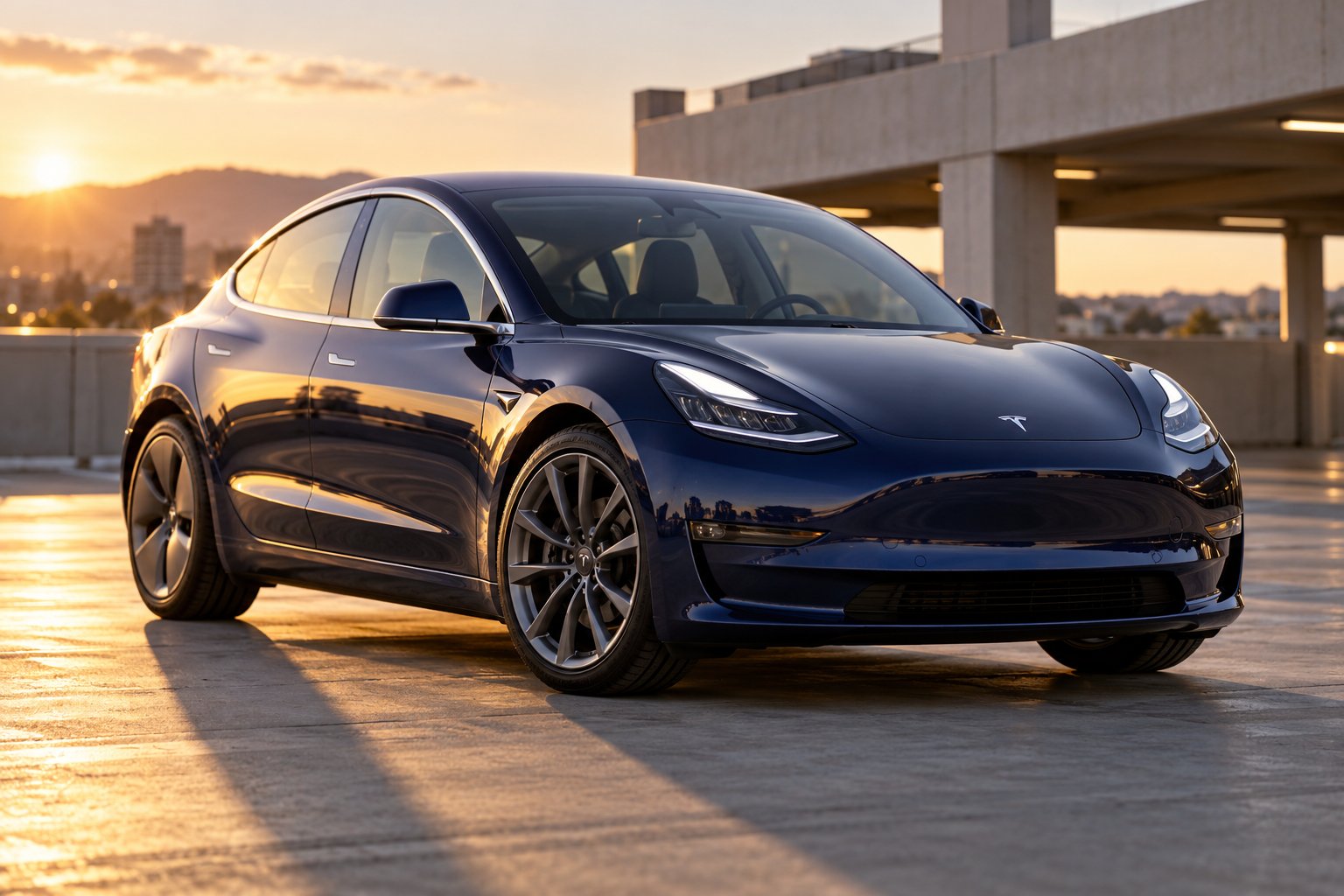
The Tesla Model 3 Wheel Size Decision That Affects Everything
You're staring at the Tesla configurator, card in hand, and a single checkbox stops you cold: 18-inch or 19-inch wheels? It feels like a cosmetic choice — pick the one that looks better and move on. But choosing between Tesla Model 3 18 vs 19 inch wheels quietly reshapes your ownership experience in ways that compound over tens of thousands of miles. We're talking measurable range differences, hundreds of dollars in future tire costs, noticeable changes to ride comfort, and even how well your car survives pothole season. This article breaks it all down with real engineering context and owner-reported data instead of vague forum opinions.
Why This Wheel Decision Matters More Than You Think
Wheel diameter isn't just an aesthetic spec — it directly controls four variables that affect how your Model 3 drives and what it costs to maintain. Larger wheels add unsprung mass, which forces the motor to work harder during acceleration and limits how much energy regenerative braking can recapture. A shorter tire sidewall (the rubber between the rim and the road) means less cushion to absorb bumps, so road noise and harshness climb. The contact patch changes too — a wider, flatter footprint increases rolling resistance, pulling more energy from your battery every mile. And aero covers on the 18-inch setup reduce aerodynamic drag in a way bare sport wheels simply can't match. These factors stack over years of ownership, influencing everything from electricity costs to how often you're shopping for replacement tires. Resources like ebinity and other EV ownership tools have helped bring this kind of granular data to a wider audience, and the community is better for it.
Pre-Refresh vs Highland Model 3 Wheel Options
If you're shopping today, it helps to know which generation you're looking at. Pre-refresh Model 3 cars (2017-2023) came with the classic 18-inch Aero wheels or 19-inch Sport wheels (also called Stilettos), both sharing an 8.5-inch width and a +40 mm offset. The refreshed Highland Model 3 (2024+) replaced those with the 18-inch Photon and 19-inch Nova designs, shifting the offset to +38 mm while keeping the same 8.5J width and square setup. Tire sizes stayed consistent across generations — 235/45R18 for the smaller wheel and 235/40R19 for the larger — so much of the range and comfort analysis applies regardless of which Model 3 you own. Features like tesla smart preconditioning help both setups perform better in cold weather, and tire choices such as the Michelin CrossClimate 2 remain popular across both generations.
Here's what this guide will evaluate head-to-head so you can make a confident, data-backed decision:
- Range impact — how many real-world miles each wheel size costs you per charge
- Ride quality — comfort, road noise, and pothole resilience
- Cost of ownership — tire replacement pricing and frequency over 50,000 miles
- Aesthetics — curb appeal, customization options, and the cover-on vs cover-off debate
- Seasonal flexibility — winter tire availability and dual-wheel-set strategies
There is no single "right" answer here. The best wheel size depends entirely on your climate, driving habits, and priorities. What matters is making the choice with your eyes open — and that starts with understanding the engineering trade-offs most buyers never consider.
How We Ranked These Three Tesla Model 3 Wheel Options
Opinions on wheel size are everywhere — forums, YouTube comments, parking lot conversations at Supercharger stations. The problem? Most of those opinions start and end with "I like how mine look." That's fine for casual chat, but it's not a framework you should trust with a decision that affects your range, your wallet, and your daily comfort for years. So instead of ranking these three options by gut feeling, we built a scoring system rooted in measurable physics and real ownership costs.
How We Evaluated Each Wheel Option
Every wheel configuration in this article — 18-inch Aero with stock covers, 18-inch with premium aftermarket covers, and 19-inch Sport (or Nova) — was assessed against five criteria. Think of these as the lenses through which we filtered every claim, data point, and owner report:
- Real-world range impact — We relied on Tesla's own configurator estimates and cross-referenced them with owner-reported efficiency data. Range differences between the 18-inch and 19-inch setups are not theoretical; they show up in kWh-per-mile consumption figures trip after trip.
- Ride comfort and road noise levels — Sidewall height directly governs how much road texture reaches the cabin. We weighted this heavily because most Model 3 owners drive their cars daily, not on track days.
- Total cost of ownership over 50,000 miles — This includes tire replacement frequency, price per set, and the cumulative electricity cost of any range penalty. A few cents per mile adds up faster than most buyers expect.
- Aesthetic appeal and customization potential — Looks matter, and we gave them fair weight. We also considered how easily each option can be personalized with aftermarket accessories.
- Seasonal versatility — Winter tire availability, pothole resilience, and the practicality of swapping between setups all factor in. Owners in northern climates or areas with rough roads — imagine dodging craters along older expressway corridors or toll roads where pavement quality can vary wildly — know this category is not optional.
Each criterion carries roughly equal weight in our final assessment, though individual owners will naturally prioritize some over others. The goal isn't to declare one option universally superior — it's to give you enough clarity to match the right wheel to your specific driving life.
The Physics Behind Wheel Size and Efficiency
Why would a single inch of extra wheel diameter reduce your driving range? It sounds minor, but the physics are anything but. Three forces work against you when you move to a larger wheel, and they compound in an EV in ways that gas car owners rarely notice.
Rotational mass. A 19-inch alloy wheel is heavier than its 18-inch counterpart — typically by two to four pounds per corner for OEM Tesla wheels. That added weight sits at the outermost edge of a spinning component, which amplifies the energy needed to accelerate it. Your motor has to push harder every time you pull away from a stoplight. On the flip side, heavier wheels also reduce the efficiency of regenerative braking because the system must overcome greater rotational inertia before it can start converting kinetic energy back into stored charge. ClearWatt's analysis of EV wheel efficiency found that even small changes in rotational mass — just 2-3% in energy terms — can translate to 10-20 real-world miles of lost range on some vehicles.
Sidewall stiffness and rolling resistance. The 19-inch setup uses a 235/40R19 tire compared to the 18-inch's 235/45R18. That shorter sidewall (40 vs 45 aspect ratio) means less rubber flexing with each rotation. Sounds like a good thing for handling — and it is, marginally. But stiffer sidewalls also increase rolling resistance, which is the energy your car spends just to keep the tires turning at a constant speed. In stop-and-start driving, this penalty stacks quickly.
Aerodynamic drag. This one is specific to the 18-inch Aero wheel advantage. The flat plastic covers that ship with the 18-inch setup smooth airflow around the wheel arch, reducing turbulence at speed. Open-spoke 19-inch Sport or Nova wheels look fantastic, but they churn air like paddle wheels. At highway speeds — where aerodynamic drag becomes the dominant force — this difference matters. ClearWatt's real-world testing suggests aero covers alone can deliver roughly a 4% boost in everyday driving efficiency, and their broader data indicates each inch of wheel size adds approximately a 5% range reduction.
It's worth emphasizing that these numbers apply specifically to the OEM wheel and tire combinations Tesla ships from the factory. Aftermarket wheels can shift the equation significantly — a lightweight forged 19-inch wheel, for example, might weigh less than a stock cast 18-inch Aero. But for buyers choosing between Tesla's own configurator options, the physics consistently favor the smaller wheel for efficiency.
With the scoring framework and the underlying physics laid out, the real question becomes: how do these trade-offs actually play out when you're behind the wheel every day? That's where the individual wheel reviews tell the full story.
Best Overall Value
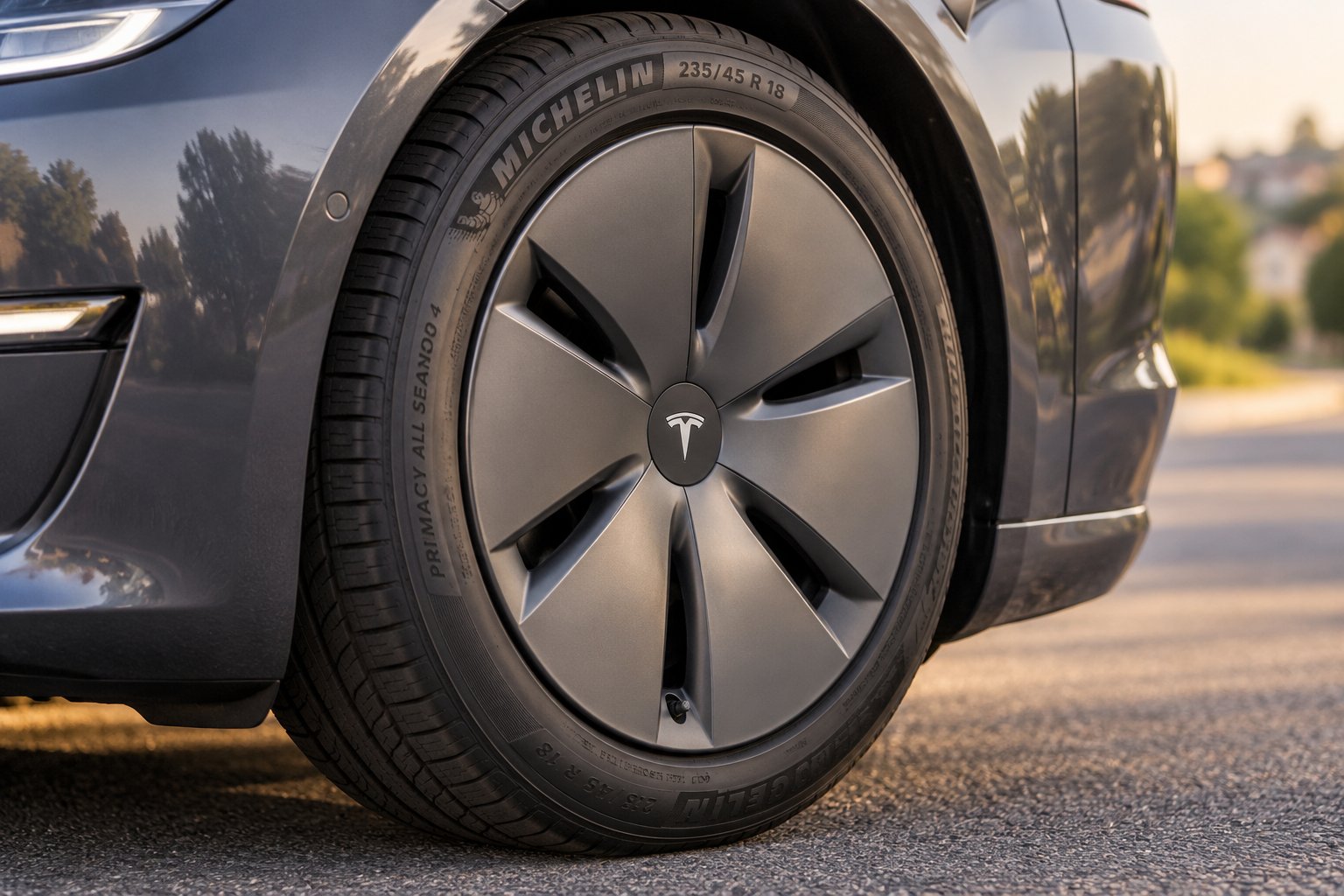
If you could only optimize for one thing on a Tesla Model 3, range would be the smart pick — and no configuration delivers more of it than the 18-inch Aero wheels (or Photon wheels on the Highland refresh) with their aerodynamic covers snapped into place. This is the setup Tesla engineered as its efficiency baseline, and the real-world data backs up the engineering intent convincingly. But range is only part of the story. The 18-inch platform also wins on ride comfort, tire costs, and cold-climate flexibility — making it the strongest all-around value for the majority of owners.
Range Advantage and Real-World Efficiency Gains
The 18-inch Aero wheels with covers installed deliver the highest EPA-rated range of any Model 3 configuration, full stop. Tesla's own configurator shows a consistent gap between the two wheel sizes: depending on the trim, the 19-inch option shaves roughly 10 to 15 miles off the estimated range compared to the 18-inch setup. Over thousands of charging cycles, that difference translates into real electricity dollars.
Where does the advantage come from? Mostly aerodynamics. Those flat plastic covers smooth airflow around the wheel well, cutting the turbulence that open-spoke designs generate at speed. Independent testing by Car and Driver found a 3.4% average efficiency improvement with aero covers across 50, 70, and 90 mph test runs — worth roughly 10 extra miles on a full charge. Owner loop tests documented in Tesla Motors Club forums have confirmed similar gains, with one Model 3 owner logging up to 10 additional miles of range over consistent 100-mile loops simply by keeping the covers on.
The benefit scales with speed, too. At 50 mph, the aero cover advantage is modest — around 0.8%. By 70 to 90 mph, you're getting the full 3-4% improvement. If your daily routine includes highway commuting, that's where the 18-inch setup earns its keep trip after trip. For long-haul drivers planning routes between Supercharger stops — whether crossing remote stretches of the Interstate or pulling into nj rest stops turnpike stations along the Northeast corridor — those extra miles per charge can mean the difference between a comfortable buffer and an anxious final 5%.
Ride Comfort and Road Noise Performance
Imagine rolling over a patched section of highway. With the 18-inch setup running 235/45R18 tires, there's 45% of the tire's width dedicated to sidewall height — a generous cushion of rubber between the rim and the road. The 19-inch alternative drops that to a 40-series sidewall, removing roughly 12 millimeters of shock-absorbing rubber per tire. Sounds minor on paper. You'll notice it immediately behind the wheel.
That taller sidewall on the 18-inch tire flexes over potholes, expansion joints, and rough pavement instead of transmitting every imperfection straight into the cabin. The result is a noticeably quieter and more composed ride during everyday driving. One long-term owner on CleanTechnica described the 18-inch Aero setup with Michelin CrossClimate tires as "incredibly comfortable," noting that the combination handled hard cornering, braking, and acceleration with confidence while still filtering road texture effectively. Tesla software updates like 2025.45.8 continue to refine regenerative braking and suspension behavior, but no software tweak can add sidewall rubber that isn't there.
Noise deserves its own mention. Smooth aero covers don't just reduce aerodynamic drag — they also cut wheel-well wind noise at highway speeds. The turbulent air that creates drag simultaneously generates sound, so covering those open spokes delivers a quieter cabin as a secondary benefit. Owners who remove their aero covers for aesthetics often report a slight but perceptible increase in road noise, especially between 60 and 75 mph.
Winter Tire Availability and Seasonal Flexibility
This is where the 18-inch wheel pulls even further ahead for anyone living north of the Sun Belt. Winter tire options in the 235/45R18 size are significantly more plentiful and affordable than their 19-inch equivalents. You'll find dedicated winter compounds from virtually every major manufacturer — Nokian Hakkapeliitta, Bridgestone Blizzak, Continental VikingContact, and Pirelli Ice Zero — all readily available and competitively priced. The 19-inch 235/40R19 winter tire market is thinner, with fewer choices and higher price tags.
For owners who prefer simplicity over seasonal swaps, all-season tires shine in the 18-inch size as well. The Michelin CrossClimate 2 has become the community favorite here — offering strong wet and light snow performance while lasting impressively long on Model 3s. One owner documented over 53,000 miles on a set of CrossClimate+ tires mounted on 18-inch Aero rims, averaging just $12 per 1,000 miles in tire cost. That kind of longevity is difficult to match on a 19-inch setup, where the lower-profile tires tend to wear faster and cost more per set.
The 18-inch wheel also offers a practical advantage when shopping for a used Model 3. If you're browsing tesla cpo inventory or private sales, 18-inch Aero-equipped cars are the most common configuration — which means replacement parts, tire options, and wheel cover accessories are all easier to source.
Pros
- Best range of any Model 3 wheel configuration with aero covers installed
- Lowest tire replacement costs — more affordable per set and longer tread life
- Most comfortable ride thanks to taller 45-series sidewall
- Widest winter tire and all-season tire selection in 235/45R18
- Superior pothole and rough-road resilience — less risk of bent rims
- Reduced cabin noise at highway speeds with covers on
Cons
- Less aggressive appearance with stock plastic covers — often perceived as the "base" option
- Stock aero covers can develop a slight rattle or pop off over rough impacts
- Bare wheels underneath look plain if you remove covers without an aftermarket replacement
- Some owners feel the aesthetic signals "economy" rather than "performance"
Best for: Long-distance commuters who charge less often, cold-climate owners who need affordable winter tire options, budget-conscious buyers focused on total cost of ownership, and anyone who values a smooth daily ride over visual aggression.
The 18-inch Aero wheel is the pragmatist's choice — and a remarkably good one. But what if you love the efficiency and comfort of the 18-inch platform yet want it to look sharper than a plastic hubcap allows? That's exactly where a growing category of aftermarket accessories enters the conversation.
Best Style Upgrade on a Budget
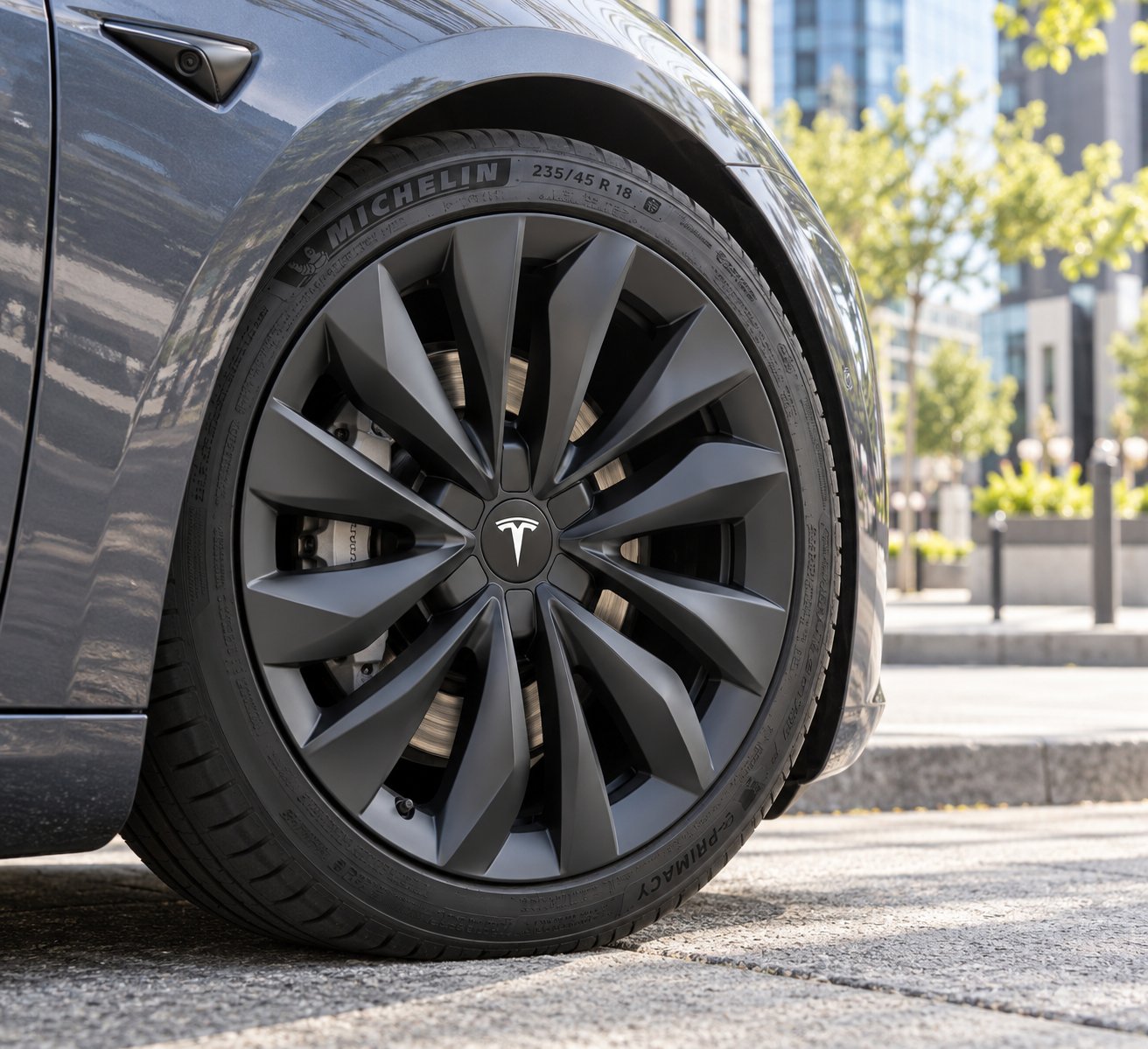
Experienced Tesla Model 3 owners tend to land on the same realization: the 18-inch wheel platform is objectively the smarter foundation — but the stock plastic Aero covers hold it back visually. What if you could keep every efficiency and comfort advantage of the smaller wheel while giving the car the kind of presence that turns heads in a parking garage? That's exactly the proposition behind swapping stock Aero covers for premium aftermarket wheel covers, and it's quickly become one of the most popular modifications in the Model 3 community.
The Aero Covers On vs Off Debate Solved
If you've spent any time on Tesla forums, Reddit threads, or owner groups, you've seen this argument play out hundreds of times. One camp insists the stock Aero covers look cheap and removes them on day one, revealing the bare alloy wheel underneath. The other camp argues that removing them sacrifices a measurable efficiency benefit — and they're right. Car and Driver's controlled testing confirmed a 3.4% average efficiency gain with covers installed, and stripping them off throws that advantage away for a wheel that, frankly, looks unfinished without them.
Here's the issue neither side acknowledges: it's a false binary. Aftermarket wheel covers offer a genuine third path — improved aesthetics that maintain edge coverage, smooth airflow around the wheel arch, and a more intentional appearance than either bare alloy or factory plastic. You're not choosing between ugly-but-efficient and clean-but-wasteful. You're upgrading the weakest link in the 18-inch package without touching any of its strengths.
Think about it practically. You wouldn't settle for a plain phone case just because it protects the screen, and you wouldn't run without one because the options at the gas station look bad. You'd find a premium case that does both. Aftermarket wheel covers apply the same logic to your Model 3 — and unlike a phone case, the right set can genuinely transform the car's visual profile from every angle.
Why Premium Wheel Covers Are the Enthusiast's Secret
Quality aftermarket covers can replicate the visual impact of 19-inch Sport or Nova wheels — or go further with designs Tesla doesn't offer at all. Some mimic multi-spoke performance patterns. Others use turbine-inspired geometries or matte-black finishes that give the Model 3 a custom look without requiring a trip to a wheel shop. The range of styles has exploded over the past couple of years, driven by dedicated Tesla accessory brands that engineer covers specifically for Model 3 wheel dimensions.
CUTIM, for example, offers a lineup of Tesla-specific wheel covers and hub caps designed to snap directly onto Model 3 18-inch wheels with precise fitment. Their covers target owners who want the upgraded look of larger wheels without the associated cost, range penalty, or ride comfort trade-off — essentially filling the exact gap this section addresses. The snap-on design means you can install them in minutes at home, with no special tools required, and swap them off just as easily if you run a dedicated winter tire set or need to access the wheel for service.
Curb rash protection is another practical advantage that often gets overlooked in the style conversation. Both 18-inch and 19-inch OEM wheels are susceptible to scrapes — anyone who's parallel-parked in tight urban spaces or misjudged a drive-through lane knows the sinking feeling of hearing alloy grind against concrete. Even something as routine as pulling into a slightly raised parking spot at an autopark honda dealership lot can catch a rim edge if you're not careful. A full-coverage aftermarket wheel cover acts as a sacrificial shield, absorbing light curb contact that would otherwise leave a permanent scar on your alloy. HALOBLK's buyer research identified curb-rash protection as one of the top three purchase triggers for aftermarket covers — right alongside better appearance and lower cost than replacing wheels entirely.
The cost math seals the deal. Upgrading from 18-inch to 19-inch wheels through Tesla's configurator adds $1,500 or more to the purchase price — and that's before you account for higher tire replacement costs over the life of the car. A quality set of aftermarket wheel covers typically runs between $150 and $350, depending on the design and brand. You get the visual transformation for roughly 10-20% of the OEM upgrade cost, while keeping every range, comfort, and tire-longevity advantage the 18-inch platform provides. Even factoring in a replacement set down the road, the total spend stays well below the 19-inch alternative.
That said, not every aftermarket cover is created equal. Cheap no-name sets may use flimsy clips that rattle at speed, fit poorly enough to expose rim edges, or crack after a single winter. The fitment issue is particularly important — Tesla's wheel bolt patterns and hub bore dimensions vary slightly between pre-refresh and Highland models, so a cover engineered for one generation may not seat correctly on the other. Look for brands that specify exact model-year compatibility, use reinforced retention systems, and provide clear installation instructions. Streamwaze forums and Tesla-specific accessory communities are solid resources for vetting cover quality before you buy, since owners tend to document long-term durability with photos and mileage updates.
Pros
- Sport-wheel aesthetics at 18-inch prices — visual transformation for a fraction of the 19x3 or 19-inch OEM upgrade cost
- Retains the full range and ride comfort advantages of the 18-inch tire and wheel package
- Protects alloy wheel edges from curb rash and parking scrapes
- Easy to swap seasonally — pull them off for winter tire sets, snap them on for summer
- Significantly cheaper than upgrading to OEM 19-inch wheels and tires
- Wide variety of designs available from Tesla-focused brands like CUTIM
Cons
- Quality varies widely between brands — cheap covers can rattle, crack, or fit poorly
- Does not change ride dynamics, handling feel, or steering response compared to bare 18-inch wheels
- Purists and modification enthusiasts may prefer genuine OEM wheels or forged aftermarket rims
- Fitment must be verified for specific model year and wheel generation
Best for: Owners who want the look of an upgraded wheel without sacrificing range or comfort, those who removed their stock Aero covers and want a better-looking alternative, budget-conscious customizers who prefer to invest their savings elsewhere — like a new york 1mph speeding penalty they'd rather not pay — and anyone who parks in tight urban environments where curb rash is a constant threat.
The premium wheel cover route is the closest thing to having it all on the 18-inch platform: efficiency, comfort, protection, and style in one package. But some owners simply don't want a cover — they want the real thing. For those buyers, the 19-inch Sport and Nova wheels make a compelling case of their own, provided you walk in with clear eyes on the trade-offs.
Best for Sporty Aesthetics
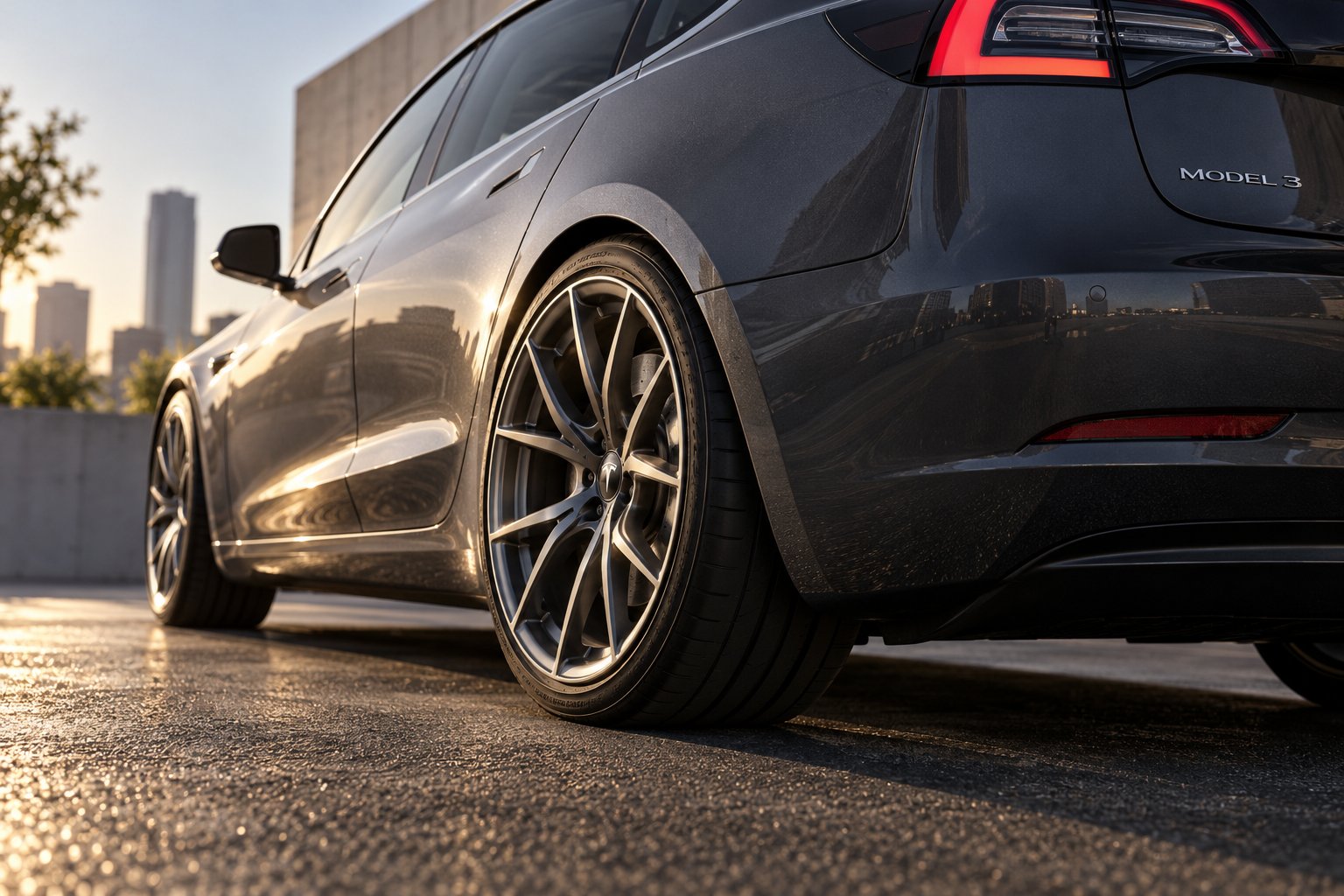
There's a reason Tesla charges a premium for the 19-inch option and features it in nearly every marketing image: these wheels look genuinely impressive. Whether you're considering the pre-refresh Sport wheels (sometimes called Stilettos) or the Highland's redesigned Nova wheels, the visual impact is immediate and undeniable. If appearance is your top priority and you're willing to accept measurable trade-offs in other areas, the 19-inch setup makes a case that no wheel cover can fully replicate.
Curb Appeal and the Sport Wheel Visual Impact
Stand ten feet from a Model 3 on 18-inch Aeros, then walk over to one sitting on 19-inch Sport wheels. The difference hits you before you consciously register why. The larger rim fills the wheel well more aggressively, leaving a thinner band of visible tire sidewall that gives the car a lower, wider, more planted stance. The multi-spoke design catches light in a way that flat plastic covers never will, and the overall proportions shift from "efficient commuter" to "sports sedan" with that single change.
For the Highland refresh, Tesla's Nova wheel design pushes the aesthetic further with sharper angles and a more sculpted face that complements the car's updated front-end styling. Both generations share the same visual advantage — less rubber, more metal, and a presence that photographs well from every angle. Many buyers configure the 19-inch option specifically because they plan to keep the car for years and want to enjoy the way it looks every time they walk toward it in a parking lot. That emotional value is real, even if it doesn't show up on a spreadsheet.
Performance Feel and Handling Characteristics
Beyond aesthetics, the 19-inch wheel delivers a subtle but perceptible change in how the Model 3 communicates with the driver. The shorter 235/40R19 sidewall is stiffer than the 235/45R18, which means less tire flex during hard cornering. You'll notice slightly more responsive turn-in, a firmer sense of connection through the steering wheel, and marginally reduced body roll when pushing through sweeping highway on-ramps or winding backroads.
Is the difference dramatic? Honestly, no — not for the vast majority of daily driving. The Model 3's chassis, suspension geometry, and electric powertrain dynamics dominate the driving experience far more than an inch of wheel diameter. In a spirited back-to-back comparison, an attentive driver will feel the 19-inch setup is a touch more communicative mid-corner. During a routine commute, that distinction fades almost entirely. Community comparisons — similar in spirit to a tesla model y speed range test where owners isolate one variable at a time — confirm that the handling delta is real but modest, best appreciated by drivers who actively seek steering feedback rather than those who prioritize cushioned comfort.
One handling note worth mentioning: the stiffer sidewall does improve braking feel slightly. Under hard deceleration, there's less tire squirm, so pedal response feels more linear. Track-day enthusiasts and spirited-driving fans will appreciate this, even if it's a marginal gain on public roads.
The Range and Comfort Trade-Offs You Should Know
Here's where the honest conversation begins. The 19-inch wheels cost you range on every single drive — not dramatically, but consistently. Tesla's configurator shows roughly a 10- to 15-mile reduction in estimated range when selecting the 19-inch option over the 18-inch Aero setup, depending on the trim and battery configuration. That gap widens at highway speeds. At 80mph (to put that in perspective, 80mph to kmh converts to roughly 129 km/h — a common cruising speed on many American interstates), aerodynamic drag scales with the square of velocity, and the open-spoke design of Sport and Nova wheels generates meaningfully more turbulence than covered 18-inch Aeros. Over a year of highway commuting, that efficiency penalty adds up to real dollars at the Supercharger or on your home electricity bill.
Ride comfort takes a hit as well. That shorter sidewall absorbs less. Every expansion joint, patched section of asphalt, and frost heave transmits more directly into the cabin. Owners who switch from 18-inch to 19-inch frequently describe the ride as "firmer" or "busier" — not punishing, but noticeably less isolated from the road surface. On smooth, well-maintained highways, the difference is subtle. On deteriorating urban roads or rural routes with uneven surfaces, it's impossible to ignore.
Tire costs deserve a frank discussion too. The 235/40R19 size is inherently more expensive per set than the 235/45R18 — typically $150 to $300 more for a comparable brand and compound. Lower-profile tires also tend to wear faster because the stiffer sidewall transfers more stress to the tread surface, so you may find yourself replacing them sooner. Some owners have reported needing new tires as early as 25,000 to 30,000 miles on 19-inch setups, compared to 35,000 to 45,000+ miles on the 18-inch platform. Over 50,000 miles, that can mean an entire extra tire purchase — a cost that rarely enters the conversation at the configurator screen. It's also worth noting that improper mounting of low-profile tires is a more common source of a tesla tire installation error at general shops unfamiliar with Tesla's TPMS sensors and hub-centric fitment requirements, so sticking with experienced Tesla service centers or tire shops is advisable.
Winter readiness is the final weak point. The 235/40R19 winter tire market is noticeably thinner than the 18-inch equivalent. Fewer models are available, pricing runs higher, and inventory can be spotty heading into the season. Owners in northern climates who choose 19-inch wheels often end up buying a separate set of 18-inch winter wheels anyway — effectively paying for two complete wheel-and-tire packages.
Pros
- Best factory aesthetics — fills the wheel wells for a premium, aggressive stance
- Sportier handling feel with slightly more responsive steering and firmer cornering
- No plastic covers needed — the wheel design speaks for itself
- Improved braking feel due to reduced sidewall flex
- Strong visual alignment with Tesla's marketing imagery and performance identity
Cons
- Measurable range reduction of roughly 10-15 miles per charge versus 18-inch Aero with covers
- Harsher ride quality on rough or uneven road surfaces
- More expensive tire replacements — higher per-set cost and shorter tread life
- Limited and costly winter tire options in 235/40R19
- Greater vulnerability to curb rash and pothole damage with less sidewall protection
- Increased road noise at highway speeds compared to covered 18-inch wheels
Best for: Owners who prioritize appearance above all other factors, mild-climate drivers on well-maintained roads, those who value sporty steering feedback during spirited driving, and buyers who view the visual upgrade as a non-negotiable part of the ownership experience.
The 19-inch Sport and Nova wheels are the right choice for the right owner — someone who understands the trade-offs and considers them a fair price for the aesthetic and dynamic upgrade. But how do all three options actually stack up when you lay the numbers side by side? A direct comparison table reveals just how far the cost and performance gaps stretch over real-world ownership mileage.
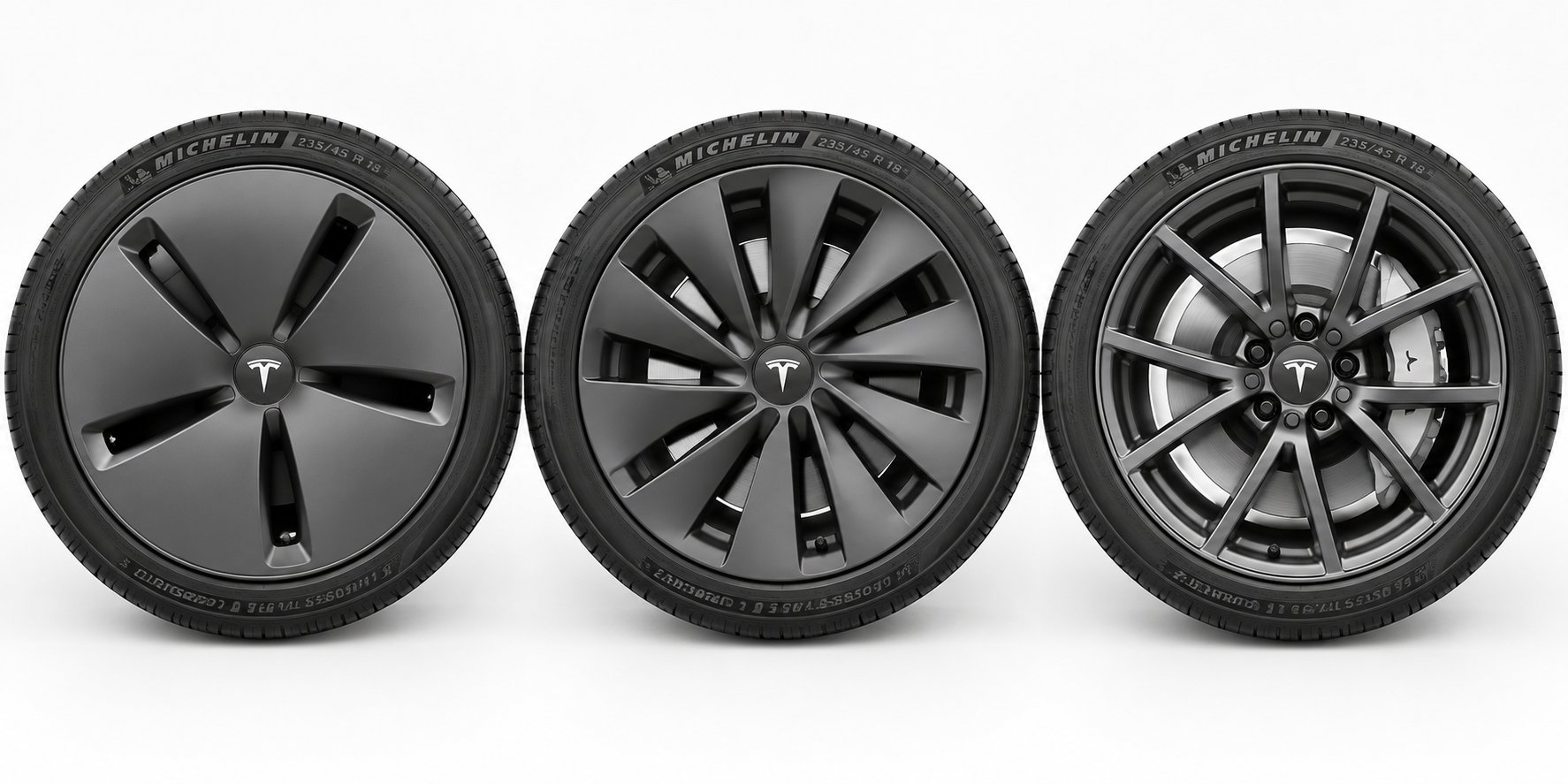
Side-by-Side Comparison of All Three Wheel Options
Numbers scattered across individual reviews are useful — numbers stacked in a single table are decisive. Everything discussed so far about range, comfort, tire costs, and aesthetics comes down to how the three Model 3 wheel configurations actually compare when you lay the data side by side. This section consolidates those findings into two quick-reference tables and introduces a seasonal strategy that experienced owners swear by.
Total Cost of Ownership Over 50,000 Miles
Most buyers fixate on the upfront price difference at the configurator. The real gap reveals itself over years of tire replacements, efficiency losses, and charging costs. The table below estimates what each setup actually costs across 50,000 miles of driving — the kind of mileage many Model 3 owners hit within three to four years.
| Cost Category | 18-Inch + Premium Covers | 18-Inch Aero (Stock Covers) | 19-Inch Sport / Nova |
|---|---|---|---|
| Upfront Wheel/Tire Cost at Purchase | Included (base) + $150–$350 for covers | Included (base) | +$1,500 configurator upgrade |
| Tire Replacement Cost Per Set | $650–$850 | $650–$850 | $800–$1,100 |
| Expected Tire Replacements (50K mi) | 1 set (avg tread life ~38,000–45,000 mi) | 1 set (avg tread life ~38,000–45,000 mi) | 1–2 sets (avg tread life ~25,000–30,000 mi) |
| Projected Range-Loss Electricity Cost | ~$10–$20 (minimal aero penalty vs stock covers) | $0 (baseline — best efficiency) | ~$60–$95 (3–5% efficiency penalty over 50K mi) |
| Estimated Total 50K-Mile Ownership Cost | $810–$1,220 | $650–$850 | $2,860–$4,295 |
A few notes on these figures. Tire prices reflect mid-range to premium brands like Michelin, Continental, and Goodyear in the correct OEM sizes (235/45R18 and 235/40R19). The electricity cost estimate assumes an average rate of $0.15 per kWh and accounts for the 3–5% efficiency difference that independent testing has documented between covered 18-inch and open-spoke 19-inch configurations. Home charging through a dedicated NEMA 14-50 outlet — the most popular Level 2 setup among Tesla owners — keeps that per-kWh rate low, but Supercharger-heavy drivers will see the gap widen since DC fast charging typically costs two to three times as much per kilowatt-hour.
The bottom line is striking. Over 50,000 miles, the 19-inch Sport wheel setup can cost roughly $2,000 to $3,400 more than the 18-inch Aero baseline — and more than double the 18-inch-with-premium-covers configuration. That's not pocket change. It's a new set of tires, a year of insurance premiums, or a solid chunk toward your next vehicle.
Range, Comfort, and Style Ratings at a Glance
Cost tells half the story. The other half is how each option performs day to day. The ratings below use a 1-to-5 scale (5 being the best) across seven categories that matter most to Model 3 owners, drawn from the engineering analysis and owner data covered throughout this article.
| Category | 18-Inch + Premium Covers | 18-Inch Aero (Stock Covers) | 19-Inch Sport / Nova |
|---|---|---|---|
| Range Efficiency | ★★★★☆ (4/5) | ★★★★★ (5/5) | ★★★☆☆ (3/5) |
| Ride Comfort | ★★★★★ (5/5) | ★★★★★ (5/5) | ★★★☆☆ (3/5) |
| Road Noise | ★★★★☆ (4/5) | ★★★★★ (5/5) | ★★★☆☆ (3/5) |
| Visual Appeal | ★★★★☆ (4/5) | ★★☆☆☆ (2/5) | ★★★★★ (5/5) |
| Winter Readiness | ★★★★★ (5/5) | ★★★★★ (5/5) | ★★☆☆☆ (2/5) |
| Curb Rash Protection | ★★★★★ (5/5) | ★★★★☆ (4/5) | ★★☆☆☆ (2/5) |
| Overall Value | ★★★★★ (5/5) | ★★★★☆ (4/5) | ★★★☆☆ (3/5) |
Notice how the 18-inch platform dominates nearly every functional category. The 19-inch Sport wheel wins decisively on visual appeal — that's its superpower, and it's a legitimate one. But the moment you weigh cost, comfort, range, and seasonal practicality alongside aesthetics, the 18-inch configurations pull ahead consistently. The premium cover variant edges out the stock Aero in overall value because it closes the visual gap without surrendering the platform's inherent advantages.
Seasonal Wheel Strategy for Serious Owners
Here's a tactic that rarely surfaces in standard wheel comparison articles but is common among seasoned Tesla owners in four-season climates: running two dedicated wheel-and-tire sets and rotating them with the weather.
The strategy is simple. Keep a set of 18-inch wheels with winter or all-weather tires — something like the Nokian Hakkapeliitta R5 EV or the Michelin CrossClimate 2 — mounted and ready for the cold months. Then swap to your preferred summer setup: 19-inch Sport wheels for maximum curb appeal, or 18-inch wheels with premium covers for the best blend of efficiency and style. The swap takes about 20 minutes with a floor jack, and each set lasts roughly twice as many calendar years since it only sees half the mileage annually.
This approach solves several problems at once. You never compromise winter safety by running summer-focused tires into November. You protect your expensive 19-inch wheels from road salt, freeze-thaw potholes, and the general abuse cold-weather driving inflicts. And you actually save money long-term because both tire sets wear more slowly — much like how maintaining separate systems for specific tasks extends the life of each. EV owners already think this way about charging infrastructure (you wouldn't rely solely on Superchargers when a home NEMA 14-50 setup handles daily needs far more efficiently), and the same logic applies to wheels.
Storing a second set is the only real barrier. A garage corner, a basement shelf, or even a tire hotel service at your local shop handles it. The upfront cost of a second set of mounted wheels — typically $800 to $1,200 for a set of basic 18-inch steel or alloy wheels with winter tires — pays for itself within two to three seasonal cycles through extended tire life and avoided emergency replacements from running the wrong rubber in harsh conditions.
With the data consolidated and the strategies mapped, the final question becomes the most personal one: which of these three paths actually matches the way you drive, where you live, and what you value most behind the wheel?
Final Verdict and the Right Wheels for Your Tesla Model 3
You've seen the efficiency data, the cost breakdowns, and the comfort ratings. You know the physics behind why wheel size matters on an EV more than on any gas car you've owned. The only question left is personal: which option fits your life? Rather than crowning a single winner — because there genuinely isn't one — here's a decision framework that matches each wheel configuration to the owner it serves best.
Which Wheel Option Matches Your Driving Profile
- Choose 18-inch Aero wheels with stock covers if maximum range per charge and the lowest possible ownership cost are your non-negotiables. You commute long distances, you charge at home, and you'd rather put the savings toward a future tesla battery replacement cost fund or your next vehicle. You live in a climate where potholes, frost heaves, or rough pavement are facts of life, and you'd rather not worry about bending a rim every spring. Comfort and quiet matter to you more than turning heads at the grocery store.
- Choose 18-inch wheels with premium aftermarket covers if you want the best balance of style, range, and value — the closest thing to having it all on a Model 3. You care about how your car looks but refuse to pay thousands extra for the privilege or sacrifice real-world efficiency. You like the idea of swapping covers seasonally, protecting your alloy from curb damage, and customizing the car's appearance for a fraction of the 19-inch upgrade price. This is the sweet spot for owners who think practically but still want their car to look sharp.
- Choose 19-inch Sport or Nova wheels if aesthetics and driving feel are your top priorities and you accept the trade-offs with open eyes. You live somewhere warm with well-maintained roads, you don't stress about a 10- to 15-mile range reduction, and the higher tire costs are a line item you're comfortable budgeting for. The way the car looks every time you walk toward it matters to you — and that's a perfectly valid reason to choose this option. Just don't be surprised by the tire bill at 25,000 miles.
Notice how each recommendation starts with your priorities, not with a spec sheet. That's intentional. Two owners in the same zip code with the same Model 3 trim can make opposite choices and both be right — because one optimizes for cost per mile while the other optimizes for the feeling they get pulling into a driveway. Whether you're evaluating a brand-new build, shopping a tesla trade in, or exploring aftermarket upgrades on a car you've driven for years, the framework stays the same: match the wheel to the way you actually use the car.
Our Overall Recommendation
For the majority of Tesla Model 3 owners — the ones who commute daily, charge at home, drive through at least one real winter, and plan to keep the car for 50,000 miles or more — the 18-inch wheel platform is the strongest foundation by a wide margin. It wins on range, comfort, noise, tire cost, seasonal flexibility, and pothole resilience. The only category where it falls short is visual impact, and that gap closes dramatically when you replace the stock plastic covers with a quality aftermarket set.
That combination — 18-inch wheels plus premium covers — scores highest in our overall value rating for good reason. You retain roughly 97% of the Aero cover's aerodynamic benefit while gaining a look that rivals or exceeds the 19-inch Sport wheel's curb appeal, depending on the design you choose. You protect your rims from everyday scrapes. And you save potentially $2,000 to $3,400 over 50,000 miles compared to the 19-inch path. Owners exploring this route can browse Tesla-specific options from dedicated brands like CUTIM, whose covers are engineered to complement Model 3 wheel dimensions across both pre-refresh and Highland generations while adding practical curb rash protection — a small investment that pays dividends in preserved resale value alone.
The smartest Tesla owners don't default to the most expensive wheel option on the configurator. They optimize their wheel setup for their climate, their driving style, and their budget — then let the savings compound over years of ownership.
Your Model 3 is already one of the most efficient vehicles on the road. The wheel decision determines whether you amplify that efficiency or quietly erode it, one mile at a time. Choose with data, drive with confidence, and remember: the best wheel for your Tesla is the one that matches the life you actually live — not the one that looked best in a marketing render.
Frequently Asked Questions About Tesla Model 3 18 vs 19 Inch Wheels
1. How much range do you lose with 19-inch wheels on a Tesla Model 3?
Tesla's own configurator typically shows a 10- to 15-mile range reduction when selecting 19-inch wheels over the 18-inch Aero setup with covers. Independent testing by Car and Driver confirmed roughly a 3.4% efficiency advantage for the 18-inch aero covers, which translates to about 10 extra miles on a full charge. The penalty grows at highway speeds because open-spoke 19-inch wheels generate more aerodynamic drag. Over 50,000 miles of ownership, this efficiency gap can add $60 to $95 in extra electricity costs — and more if you rely heavily on Supercharger pricing rather than home charging through a NEMA 14-50 outlet.
2. Are 18-inch or 19-inch wheels better for ride comfort on a Model 3?
The 18-inch wheels with 235/45R18 tires deliver a noticeably smoother and quieter ride. The taller 45-series sidewall provides roughly 12 millimeters more shock-absorbing rubber per tire compared to the 19-inch 235/40R19 setup. This extra cushion filters out potholes, expansion joints, and rough pavement far more effectively. Owners who switch from 18-inch to 19-inch frequently describe the larger wheels as firmer and busier over imperfect road surfaces. If daily commuting comfort and reduced cabin noise are priorities, the 18-inch platform is the clear winner.
3. How much more expensive are 19-inch tires compared to 18-inch on a Tesla Model 3?
A set of 235/40R19 tires typically costs $800 to $1,100 for mid-range to premium brands, while equivalent-quality 235/45R18 tires run $650 to $850 per set. Beyond the per-set price difference, 19-inch tires tend to wear faster — many owners report needing replacements at 25,000 to 30,000 miles versus 38,000 to 45,000 miles on the 18-inch setup. Over 50,000 miles of driving, the total cost difference can reach $2,000 to $3,400 when you factor in the 19-inch configurator upgrade fee, extra tire replacements, and increased electricity consumption.
4. Can aftermarket wheel covers make 18-inch Tesla wheels look like 19-inch Sport wheels?
Yes, quality aftermarket wheel covers can closely replicate the visual impact of 19-inch Sport or Nova wheels — and some offer unique designs Tesla doesn't provide at all. Brands like CUTIM engineer covers specifically for Model 3 18-inch wheel dimensions, offering snap-on installation that takes minutes without special tools. These covers typically cost $150 to $350 per set, compared to the $1,500-plus configurator upgrade for 19-inch wheels. They also add curb rash protection while preserving the 18-inch platform's range, comfort, and tire cost advantages. The key is choosing a reputable brand with reinforced retention clips and verified model-year compatibility.
5. Should I get a separate set of winter wheels for my Tesla Model 3?
Running two dedicated wheel-and-tire sets is a popular strategy among experienced Tesla owners in four-season climates. You keep 18-inch wheels with winter tires like the Nokian Hakkapeliitta R5 EV for cold months, then swap to your preferred summer setup — whether 19-inch Sport wheels or 18-inch wheels with premium covers. Each set lasts roughly twice as many calendar years since it only sees half the annual mileage. The upfront cost of a second set of mounted 18-inch wheels with winter tires is typically $800 to $1,200, and it pays for itself within two to three seasonal cycles through extended tire life and improved cold-weather safety.