
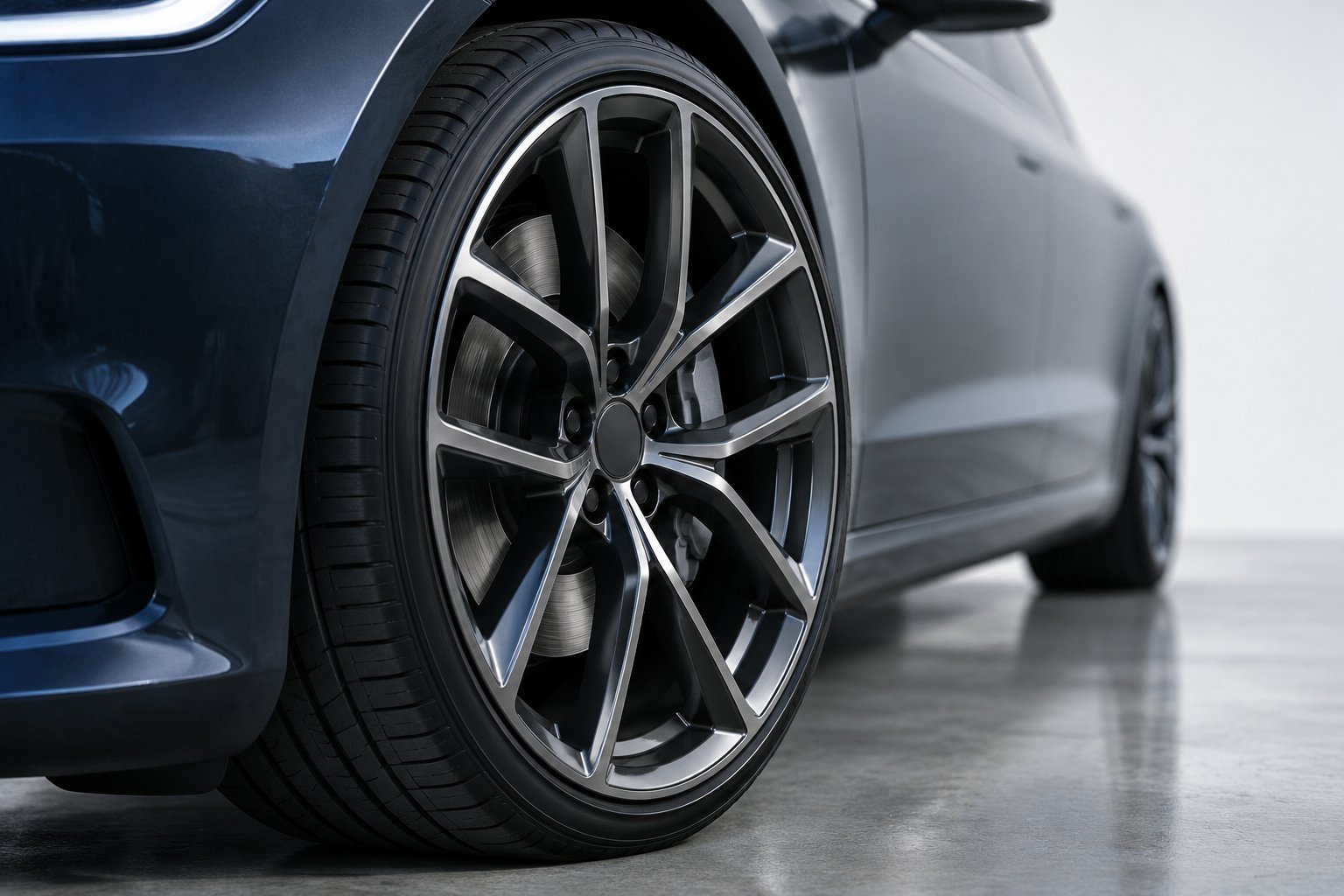
What Tesla Wheels Are and Why Fitment Matters
What are Tesla wheels? Tesla wheels are the factory and aftermarket rims made for the Model 3, Model Y, Model S, Model X and Cybertruck. Whether a given wheel works on your car depends on its fitment specs: diameter, width, offset, bolt pattern, center bore, load rating, brake clearance and compatibility with the car's tire pressure sensors (TPMS).
Last verified: November 14, 2026
What Counts as Tesla Wheels and Rims
The term covers two groups. Factory wheels come on the car or are sold as Tesla parts. Aftermarket Tesla rims come from outside manufacturers and are built to bolt onto the same hubs. A wheel from either group has to match the same specs to fit, so this guide checks both the same way.
Why Tesla Wheel Fitment Trips Up Buyers
Say you spot a used set listed as "fits Tesla." Which Tesla, and which year? On many cars that question barely matters. On a Tesla it matters a lot. Tesla updates its lineup often. The Model 3 got the Highland redesign, the Model Y was refreshed, and the six-seat Model Y L now has its own entry in wheel shop menus. Its factory 19-inch setup is staggered, which means the rear wheels are wider than the fronts. The bolt pattern is not the same on every model. TPMS sensors changed type between generations, so wheels from an older car may carry sensors a newer car can't read. EVs are also heavy, so the wheels and tires both need a load rating that meets the factory spec.
How This Guide Sources Every Spec
When you search for Tesla wheels, most of the results are store catalogs sorted by model. They show what's for sale but rarely explain why a spec matters. This guide covers every model on one page and ties each spec to a primary source: the Tesla owner's manual, Tesla's online shop, fueleconomy.gov for EPA range figures, and the federal tire standard (FMVSS) definitions used in Tesla's wheel and tire glossary. If a source doesn't confirm a value, the guide leaves it out. The guide answers these questions:
- What are the factory wheel names, and which model and generation used each one?
- What bolt pattern does each Tesla wheel use?
- How do offset and width affect clearance?
- What load rating does a heavy EV need?
- How does wheel size change EPA range?
- What do cast, flow-formed and forged construction get you for the money?
- Which TPMS sensors work with your car?
- How do you work out, step by step, whether a wheel will fit?
Most owners know a wheel by its name long before they know its offset, so the guide starts with the names.
Decoding Tesla Factory Wheel Names by Model and Generation
Have you ever seen a used set listed as "Uberturbines, great shape" and wondered which car they came off? Tesla gives each factory wheel design a name, and owners, sellers and shops use those names as shorthand. The table below matches each name in our sources to its model, generation and diameter. If only Tesla's online shop or configurator can confirm a wheel, the row says so and doesn't guess.
| Wheel name | Model | Generation | Diameter | Standard or optional | Source |
|---|---|---|---|---|---|
| Aero | Model 3 | Pre-Highland (2017-2023) | 18-inch | Standard on non-Performance trims | Model 3 fitment chart |
| Sport | Model 3 | Pre-Highland | 19-inch | Optional | Retailer listings. The fitment chart labels this size "Stiletto." |
| Uberturbine | Model 3 | Pre-Highland | 20-inch | Standard on Performance | Retailer listings. Confirm with Tesla. |
| Photon | Model 3 | Highland (2024+) | 18-inch | Standard on most trims | Model 3 fitment chart |
| Nova | Model 3 | Highland | 19-inch | Optional on Long Range | Model 3 fitment chart |
| Performance | Model 3 | Highland | 20-inch, staggered | Standard on Performance | Model 3 fitment chart |
| Gemini | Model Y | Pre-refresh | 19-inch | Standard | Teslarati wheel test |
| Induction | Model Y | Pre-refresh | 20-inch | Optional | Retailer listings. Confirm with Tesla. |
| Uberturbine | Model Y | Pre-refresh | 21-inch | Standard on Performance | Teslarati wheel test |
| Tempest | Model S | 2021 refresh onward | 19-inch | Standard | Tesla configurator. Confirm in Tesla's shop. |
| - | Model Y | Refreshed | - | - | Check Tesla's online shop |
| - | Model X | - | - | - | Check Tesla's online shop |
| - | Cybertruck | - | - | - | Check Tesla's online shop |
Tesla Model 3 Wheels by Generation
The Highland redesign brought new names. Photon took over from Aero at 18 inches, Nova arrived at 19 inches, and the Performance wheel sits at 20 inches. On paper the non-Performance sizes look the same across generations, but they aren't identical. The fitment chart lists the pre-Highland 18-inch and 19-inch wheels as 8.5 inches wide with a +40 mm offset. Photon and Nova are 8.5 inches wide with a +38 mm offset. The Highland Performance wheel is staggered: 20 x 9.0 inches in front and 20 x 10.0 inches in the rear. A listing that says "Tesla Model 3 wheels, 18-inch" could be either generation, so ask the seller which one it is.
Tesla Model Y Wheels Before and After the Refresh
Pre-refresh Tesla Model Y wheels came in three names: Gemini at 19 inches, Induction at 20 inches and Uberturbine at 21 inches on the Performance trim. In one owner's scale test, the 21-inch Tesla Uberturbine wheels weighed 64.8 pounds in front and 68.6 pounds in the rear with tires mounted, and the rears were slightly wider. For the refreshed Model Y and the Model Y L, take names and sizes straight from Tesla's online shop. This guide will add those rows once Tesla's listings confirm them.
Model S, Model X and Cybertruck Factory Wheels
Tesla Model S wheels are easier to sort out, because Tempest is the standard 19-inch design on the refreshed car. Our sources don't confirm Model X or Cybertruck wheel names, so check the part listing in Tesla's online shop before trusting any name a seller uses.
Why do the names matter at all? Most people shopping for used factory wheels search by name, and sellers write their listings the same way. Names can still mislead you. Tesla Uberturbine wheels exist on both the Model 3 (20-inch) and the Model Y (21-inch), so the same name covers two different wheels. Whether a wheel fits comes down to its measurements, starting with the hub.
A matching name does not guarantee a cross-model fit. One fitment guide notes that Model 3 wheels are generally not interchangeable with Model Y without modifications.
Tesla Bolt Pattern, Center Bore and Lug Specs
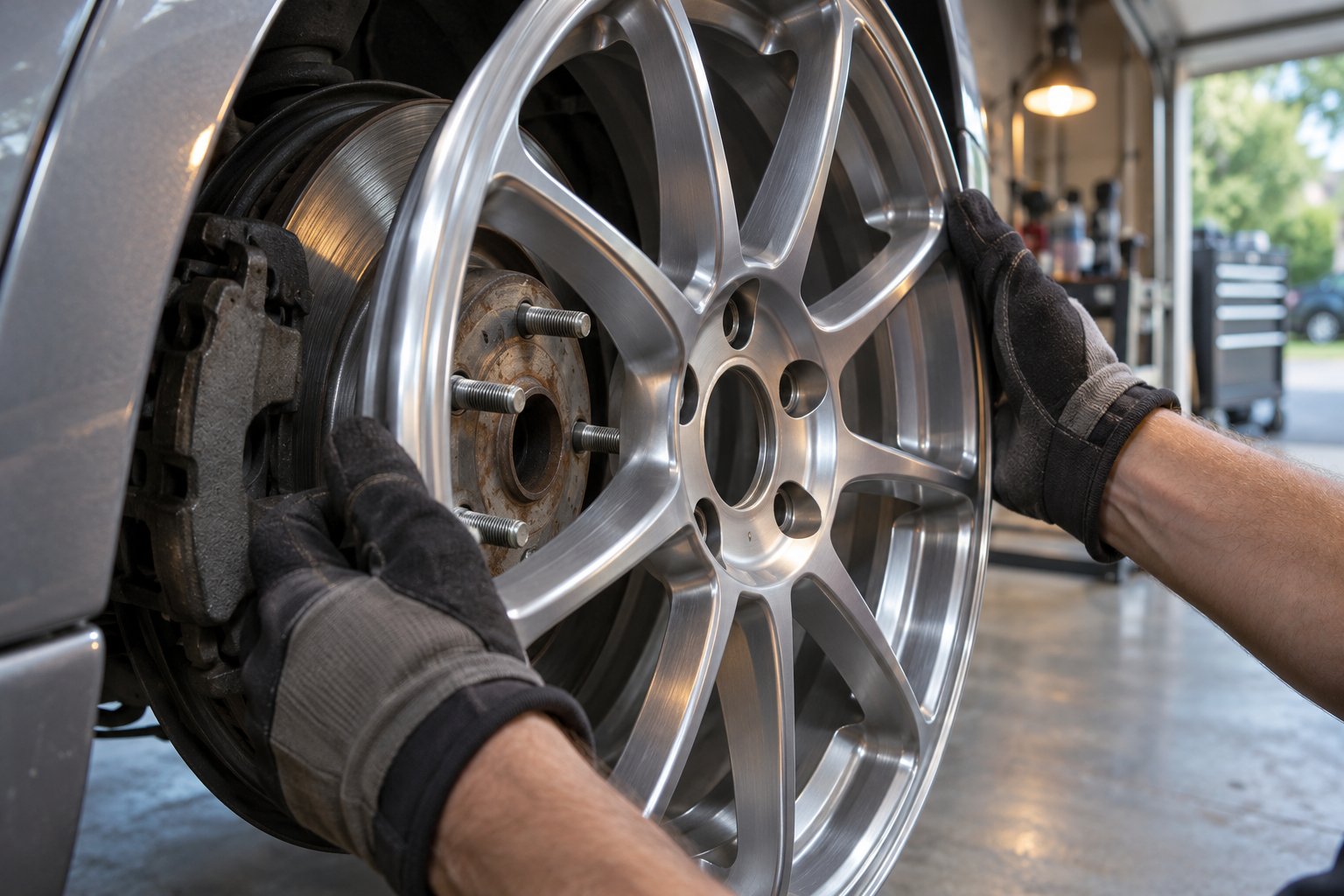
Picture holding a new wheel up to your car's hub. Before offset or tire size comes into it, three numbers decide whether the wheel can bolt on at all: the bolt pattern, the center bore and the lug thread. If any one of them is wrong, nothing else on the spec sheet matters.
Tesla Bolt Pattern by Model
The bolt pattern, also called PCD, gives the number of lug studs and the diameter of the circle they sit on. A 5x114.3 wheel has five holes on a 114.3 mm circle. You'll notice the Tesla wheel bolt pattern is not the same across the lineup:
| Model | Bolt pattern | Center bore | Lug thread | Source |
|---|---|---|---|---|
| Model 3 (2017-2023) | 5x114.3 | 64.1 mm | M14x1.5 | Model 3 wheel guide |
| Model 3 Highland | 5x114.3 | 64.1 mm | M14x1.5 | Retailer listings. Confirm with Tesla. |
| Model Y (pre-refresh and refreshed) | 5x114.3 | 64.1 mm | M14x1.5 | Retailer listings. Confirm with Tesla. |
| Model S and Model X | 5x120 | 64.1 mm | M14x1.5 | Most retailer listings. Confirm in your owner's manual. |
| Cybertruck | 6x139.7 | Confirm with Tesla | Confirm with Tesla | Retailer listings |
The Model S and Model X are where retailer pages disagree. Most listings give 5x120, and at least one gives 5x114.3. Both can't be right, so some retailer pages list it wrong. Check the value against Tesla's documentation for your car's year before you order.
Center Bore and When Hub-Centric Rings Are Needed
The center bore is the hole in the middle of the wheel that slides over the hub. On a hub-centric wheel, that tight fit carries the centering work, and the lug nuts only clamp. Factory wheels have a bore that matches the hub exactly. Many aftermarket wheels are bored larger so one design can fit several cars. For example, a wheel with a larger bore than a 64.1 mm hub needs a hub-centric ring sized to close that gap. Without the ring, only the lug nuts center the wheel. A loose bore fit can let the wheel sit slightly off center and cause vibration. A bore smaller than the hub won't mount at all.
Lug Nuts and Tesla Center Caps on Aftermarket Wheels
On the pre-Highland Model 3, the factory lug nuts use a 21 mm hex and 14x1.50 thread, torqued to 129 lb-ft, according to the same wheel guide. Reusing them on a new wheel works only if two things match:
- Seat type. The nut's contact surface (conical, ball or flat) must match the wheel's lug holes. A mismatched seat touches only a thin ring of metal and can work loose. Confirm the factory seat type with Tesla or the wheel maker rather than assuming it.
- Thread engagement. A thicker mounting pad leaves less stud for the nut to grip. Ask the wheel maker to confirm full engagement with factory nuts.
Some aftermarket makers design around Tesla hardware. T Sportline, for instance, says its Model 3 wheels take the factory lug nuts, center caps and tire pressure sensors.
Tesla center caps clip into a recess in the wheel face, which is a different measurement from the center bore. One wheel maker's center cap guide lists three dimensions that must suit the cap: the recess diameter, the lip the clips grab and the depth. Ohm advertises Tesla center cap compatibility without explaining what that means. With any seller, ask them to state the recess dimensions and confirm they match the factory cap for your model.
A wheel that passes these three checks will bolt on. Whether it clears the suspension, the fenders and the brake calipers depends on offset, width and load rating.
Offset, Brake Clearance and Load Rating Explained
Imagine a new set that bolts on perfectly. Then you turn the wheel to full lock and hear the tire rub the liner. Or you find out later that the new tires are rated to carry less weight than the ones they replaced. Clearance and load specs are what prevent both problems. Tesla's owner's manual explains these terms in general language. This section applies them to real Tesla cars, using the factory Model Y figures from Tesla's Model Y owner's manual as the example.
| Wheel | Location | Wheel size | Offset | Tire size | Minimum load index | Minimum speed index |
|---|---|---|---|---|---|---|
| 18-inch | Front/Rear | 18 x 8.5J | 35.5 mm | 235/55R18 | 104 XL | H |
| 19-inch | Front/Rear | 19 x 9.5J | 45 mm | 255/45R19 | 104 XL | H |
| 20-inch | Front/Rear | 20 x 9.5J | 45 mm | 255/40R20 | 101 XL or 104 XL | H |
| 21-inch Performance | Front | 21 x 9.5J | 40 mm | 255/35R21 | 98 XL | W |
| 21-inch Performance | Rear | 21 x 10.5J | 52 mm | 275/35R21 | 103 XL | W |
Specs can differ by model, model year and market, so check these numbers against the manual for your own car.
Offset, Width and the Measuring Rim
Offset is the distance in millimeters between the wheel's centerline and the face that bolts to the hub. A higher positive offset pulls the wheel inward, toward the suspension. A lower offset pushes it outward, toward the fender. In the table, the 19-inch and 20-inch wheels share a 45 mm offset, while the 18-inch wheel uses 35.5 mm. If an aftermarket wheel's offset or width is far from the factory figure, the tire can rub on the inside or the outside, so compare the two numbers together.
Width is the "9.5J" part of the wheel size, and it limits which tires will mount correctly. The federal tire standard, FMVSS No. 139, defines the measuring rim as the rim a tire is mounted on when its dimensions are checked. The standard also requires tire makers to publish the list of rims each tire size can use. Before you pair a tire with a wheel, confirm that the wheel's width appears on that list for the tire size you want.
Brake Clearance on Performance Wheels
Performance trims have larger brakes, and a smaller wheel, or one with a different spoke profile, may not clear the calipers. Owners looking at Tesla Model 3 Performance wheels or a downsized winter set run into this most often. Our sources don't state a minimum wheel size for Performance brakes, and you shouldn't assume one. Check Tesla's guidance for your trim, and get the wheel maker to confirm caliper clearance for your exact car and year in writing.
Load Ratings and XL Tesla Tires
FMVSS No. 139 defines load rating as the maximum load a tire is rated to carry at a given inflation pressure. The maximum load rating is the load rating at the tire's maximum permissible inflation pressure. The load index on the sidewall is a number code for the weight each tire can support. An extra load (XL) tire is built to carry higher loads at higher inflation pressure than the matching standard tire. Every factory Model Y size calls for XL tires. The manual lists its load indexes as minimums and says to replace tires with tires of the same load range. A heavy EV leaves little margin, so choose tires at or above the factory load index and speed rating. Also ask the wheel maker for the wheel's load rating and confirm it meets or exceeds the factory specification.
Does Tesla have special tires? Some Tesla tires are made specifically for its cars. Tesla co-develops tires with major tire makers and marks them with a T on the sidewall: T0 for the first version, then T1, T2 and so on. Tesla says the acoustic foam inside its Tesla-designed tires cuts road noise by 6 dB at 200 Hz. It also says Tesla-approved aftermarket tires may lack that foam, which could mean up to 10% more noise, vibration and harshness. Any tire you buy still has to meet the load and speed ratings in your manual.
Staggered Setups and What They Change
The 21-inch Model Y Performance setup is staggered. It runs 255 mm tires in front and 275 mm tires in the rear, on wheels with different widths and offsets. Because the two axles use different sizes, you can't rotate the tires front to rear. Each axle wears at its own rate, and you'll usually replace tires in pairs instead of as a set of four.
Read these markings before you buy:
- Tire size (for example 255/45R19): width in mm, aspect ratio, R for radial construction, and rim diameter in inches.
- Load index and XL or SL: at or above the factory minimum, in the same load range.
- Speed rating: at or above factory. H means 130 mph and W means 168 mph.
- DOT tire identification number: the last four digits give the week and year the tire was made. For example, 1712 means the 17th week of 2012.
- Maximum load and maximum inflation pressure: the maximum pressure is not for normal driving. Use the pressures on the label on the door pillar.
- T mark: shows that the tire is Tesla-designed and which version it is.
- M+S or the mountain-snowflake symbol: M+S marks an all-season tire, and the mountain-snowflake symbol marks a tire that meets the federal snow traction test.
- Wheel markings: diameter and width (such as 19 x 9.5J), offset, bolt pattern and load rating. If the load rating isn't stamped on the wheel, ask the seller for it in writing.
A wheel and tire that pass every check on this list are safe to run on your car. The list won't tell you how many miles per charge a 21-inch wheel costs compared with a 19-inch one, or how much more of the road you'll feel through a thinner sidewall.
How Wheel Size Changes Range, Ride and Noise
When you choose a bigger wheel in Tesla's configurator, the range figure usually drops. How much does it drop, and why? The EPA publishes a separate rating when a wheel option changes the result, so its listings are the best place to start.
Tesla Model 3 18 Inch vs 19 Inch Wheels on EPA Range
| Model and trim | Wheel option | EPA range | Source |
|---|---|---|---|
| Model 3 Long Range RWD (2025) | Standard wheel (no size given in the listing name) | 363 miles | fueleconomy.gov, figures as listed on Oct 16, 2026 |
| Model 3 Long Range RWD (2025) | 19-inch wheels (listed as "Long Range RWD-I") | 346 miles | fueleconomy.gov, figures as listed on Oct 16, 2026 |
| Model Y Standard RWD (2026) | 18-inch | 321 miles | fueleconomy.gov comparison, figures as listed on Oct 16, 2026 |
| Model Y Standard RWD (2026) | 19-inch | 303 miles | fueleconomy.gov comparison, figures as listed on Oct 16, 2026 |
On these two cars, 19 inch Tesla wheels cost 17 miles of rated range on the Model 3 and 18 miles on the Model Y. Treat the Model 3 pair with some caution, because its smaller-wheel entry doesn't name a wheel size. The gap can also be smaller. One accessory retailer reports EPA ratings for the Model Y L of 332 miles on 19-inch wheels and 328 miles on 20-inch wheels. Check those numbers on fueleconomy.gov before you rely on them.
What about the 20-inch Model 3 Performance wheel, or Tesla 21 inch wheels on the Model Y Performance? None of the listings checked for this guide separates those trims by wheel size, so there is no EPA figure to quote. Look up your exact trim on fueleconomy.gov rather than estimating.
A bigger wheel option rarely changes just one thing. It usually comes with a wider tire, a different rubber compound, a heavier assembly and a wheel face that moves air differently. The EPA rating measures all of these effects together.
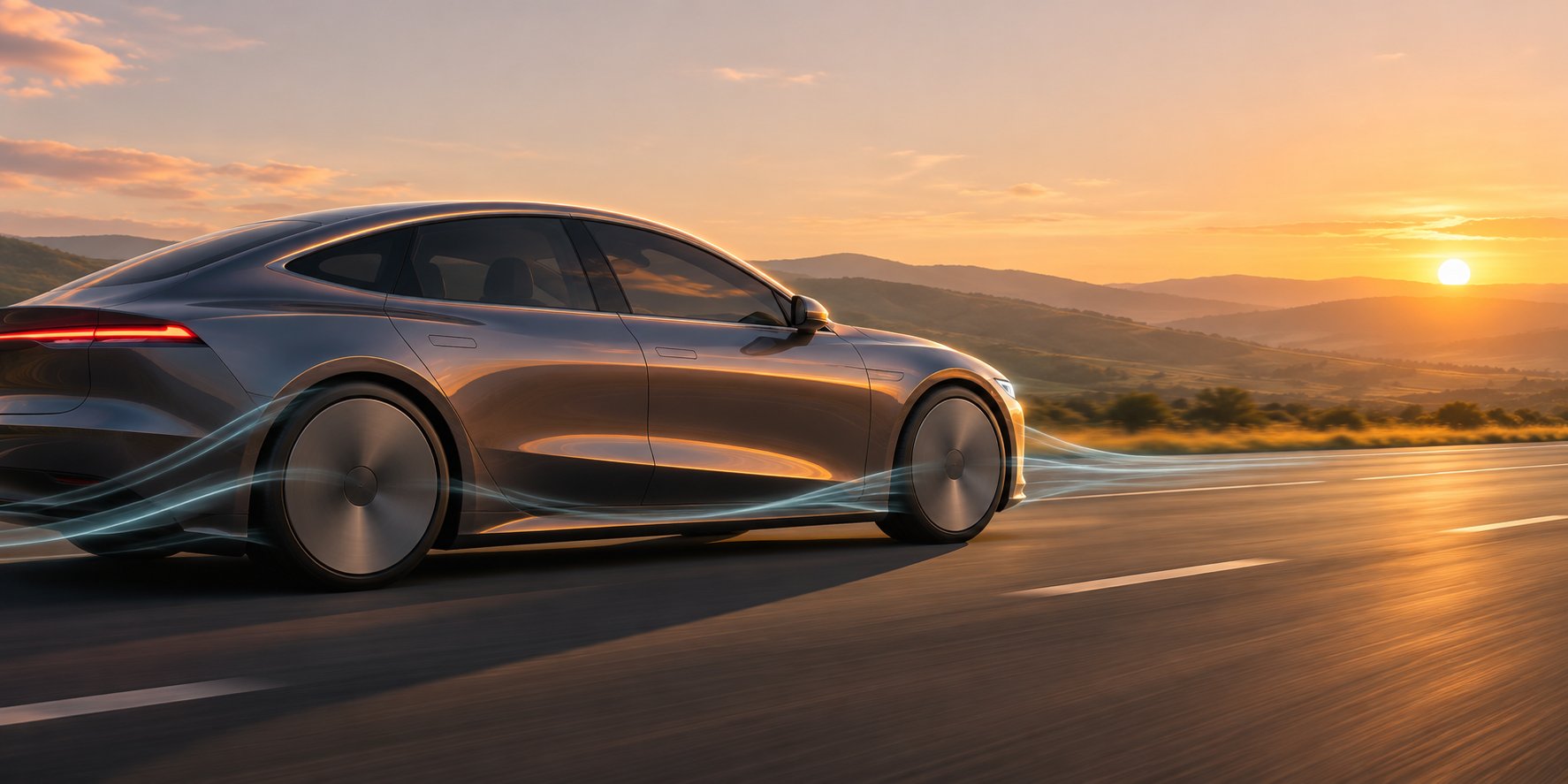
What Tesla Aero Wheel Covers Actually Do
Early Tesla Model 3 18 inch wheels came with snap-on plastic covers that close off most of the spoke openings. A flatter wheel face creates less turbulence than an open-spoke design. Car and Driver tested a Model 3 Long Range Dual Motor back to back on a closed oval at 50, 70 and 90 mph. Across those speeds, the covers cut energy use by an average of 3.4 percent. At 70 mph, consumption fell from 318 to 310 Wh per mile, and the calculated range rose from 253 to 260 miles. The largest gap was at 90 mph: 424 Wh per mile without the covers and 405 with them.
That was one car tested under controlled conditions, and it still shows that Tesla aero wheel covers have a measurable effect. Some retailers claim their own wheels or covers improve range. Treat those claims as unverified unless the seller can show test data collected the same way: the same car, on the same day, back to back.
Ride Comfort, Road Noise and Overall Diameter
A taller sidewall gives the tire more room to absorb a bump. The German auto club ADAC put sensors under the driver's seat and found that tires with taller sidewalls cushioned impacts much better. A thin sidewall also leaves less rubber between the rim and the edge of a pothole. The sources for this guide don't measure road noise by wheel size. The documented factor is the tire itself, such as the foam liners covered in the previous section.
Overall diameter is the rim plus two sidewalls. Carmakers keep it nearly the same across wheel options so the speedometer, ABS and stability control all read the correct speed. A tire that is taller than the original makes the speedometer read low. The car calculates distance from wheel rotation, so the trip meter and the Wh-per-mile figure behind your range estimate drift by the same amount.
A wheel's weight is part of that combination of factors, and weight depends on how the wheel is made.
For range, use EPA figures for your exact trim and wheel, not marketing copy.
Cast, Flow-Formed and Forged Tesla Wheels Compared
Why would one set of 19-inch wheels cost almost twice as much as another set that looks nearly the same? In most cases the difference is how the wheels were made. If you shop for Tesla aftermarket wheels, you'll see this in Martian's lineup. Martian is a wheel brand that sells only EV wheels, and it prices its flow-formed wheels from $1,395 per set and its forged wheels from $2,600 per set. The extra money pays for a different manufacturing process, which changes the wheel's strength and weight and how much of its design can be customized.
| Construction type | Process | Typical price signal | Strength and weight notes | Suited use |
|---|---|---|---|---|
| Cast | Molten aluminum, usually A356 alloy, is poured into a mold | Martian has no cast tier. Cast is generally the lowest-cost option. | Has thicker sections, so it is the heaviest of the three. Strength is adequate, but cast wheels bend or crack more easily under heavy loads. | Daily driving. Offers the widest choice of styles and finishes. |
| Flow-formed (also sold as spin-formed or rotary forged) | Starts as a cast wheel. The barrel is then heated, spun and pressed by rollers. | From $1,395 per set (Martian) | The barrel ends up thinner, denser and more even in thickness. Lighter than cast, heavier than forged. | Daily drivers who want less weight without paying forged prices |
| Forged | A solid aluminum billet, usually 6061 alloy, is heated and shaped under high pressure | From $2,600 per set (Martian) | Tight grain structure. Strongest of the three and usually the lightest. | Track days, frequent rough roads, custom offsets |
Cast Tesla Alloy Wheels as the Baseline
Casting is the simplest of the three processes. Molten aluminum is poured into a mold and cools into the shape of the wheel. One wheel retailer's construction comparison points out that casting is affordable and lets makers offer many designs and finishes. The drawback is thickness. Cast metal needs thicker sections to be strong enough, so cast wheels weigh more and bend or crack more easily under heavy loads. For normal driving, cast Tesla alloy wheels are strong enough as long as they carry the correct load rating.
What Flow-Forming Changes
Flow-forming starts with a cast wheel. The barrel is the wide outer section where the tire sits. It is heated and spun while rollers press on it, which stretches and compresses the metal. As a result, the barrel comes out thinner and denser than a fully cast one, and its thickness is more even. The wheel usually weighs less than a cast wheel, though more than a forged one. The face and spokes are still cast. Sellers also call this process spin-forming or rotary forging. If a listing uses a term you don't recognize, ask the seller to explain exactly how the wheel is made.
When Forged Tesla Performance Wheels Make Sense
Forging doesn't use a mold. A solid aluminum billet is heated and pressed into shape under very high pressure. The pressure gives the metal a tighter grain structure, which makes the wheel stronger and lets the maker use less material. The specialized equipment and labor make forged wheels expensive. Custom forged wheels can also be made to a specific offset or bolt pattern.
Who actually needs them? Forged Tesla performance wheels can be worth it if you do track days, where cornering loads and brake heat are high. They can also make sense if you often drive on broken pavement, where a hard pothole hit can bend a weaker wheel. Most commuters don't need forged wheels. A well-made cast or flow-formed wheel with the right load rating handles daily driving without trouble. Whichever type you choose, the wheel still has to pass the load rating, offset and brake clearance checks covered earlier.
Unsprung Weight in Plain Terms
Unsprung weight is any part of the car the springs don't hold up, such as the wheels, tires, brakes and some suspension parts. When you drive over a bump, a lighter wheel and tire can move up and back down faster. That lets the suspension follow the road more closely. The wheel is also rotating mass: the motor has to get it spinning, and the brakes have to slow it down. These effects are real but small in daily driving on a heavy EV, and a few pounds per corner is hard to notice on a commute. No construction type guarantees a specific gain in range, acceleration or handling. For range, use the EPA figures from the previous section.
Construction type matters only if you buy aftermarket. Many owners skip the aftermarket and look for a used set of factory wheels, often from another Tesla. A used set like that works only if the wheels and the pressure sensors inside them match your car's model and model year.
Model Year Carryover, TPMS and Winter Sets for Tesla OEM Wheels
Say a neighbor is selling the factory wheels off a 2019 Model 3, and you drive a 2022. It's the same model with the same bolt pattern, so the wheels should work, right? Maybe not. T Sportline splits its Model 3 and Model S wheel listings by model year without saying why. The difference our sources confirm is the tire pressure sensor inside the wheel.
Swapping Wheels Between Tesla Models and Generations
The Model 3 and Model Y both use a 5x114.3 bolt pattern, so a Model 3 wheel will bolt onto a Model Y hub. A wheel that bolts on can still be the wrong wheel. Tesla's current Model 3 manual lists an 18 x 8.5J wheel with a 38 mm offset and a 235/45R18 tire. The Model Y figures in the previous section show the same 18 x 8.5J width, but with a 35.5 mm offset, a 235/55R18 tire and a minimum load index of 104 XL. The Model Y tire is about 47 mm (1.85 inches) taller overall. That means a Model 3 wheel and tire would throw off a Model Y's speedometer and range estimate. If you mount Model Y tires on the Model 3 wheels, the diameter matches, but the offset still differs and the wheel's own load rating still has to cover the heavier car. Tesla's Model Y manual sets a stricter rule: when you swap wheels, use only Tesla-approved wheels.
Small changes also show up within a single model. The pre-Highland Model 3 wheels use a +40 mm offset, and the Highland wheels use +38 mm. The bigger risk between generations is the sensor.
TPMS Sensor Types and Pairing
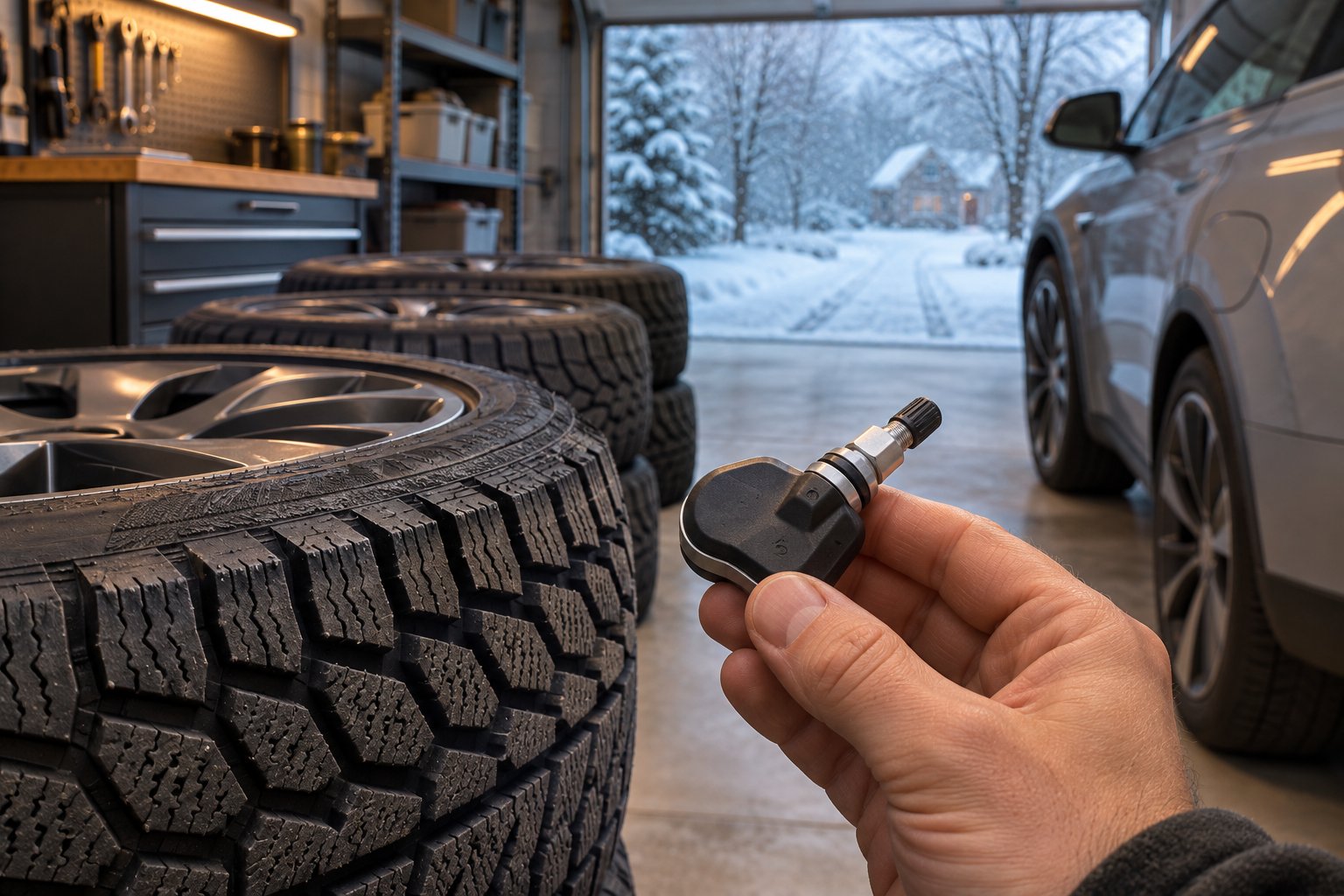
Tesla used 433 MHz radio sensors and then switched to Bluetooth Low Energy (BLE). The sensor supplier tpms.ee dates the switch to late 2020 for the Model 3 and says the two types are not interchangeable. From the outside they look almost identical, but a car built for BLE will never detect a 433 MHz sensor. Tesla's owner's manual doesn't give a changeover date. Before you buy, check your car's build date and ask for the sensor part number.
| Generation | Sensor type (supplier data) |
|---|---|
| Model 3 pre-Highland, built through 2020 | 433 MHz |
| Model 3 pre-Highland, built from late 2020 | BLE |
| Model 3 Highland | BLE |
| Model Y pre-refresh | BLE (confirm on 2020 builds) |
| Model Y refreshed | BLE |
| Model S and Model X, from the 2021 refresh | BLE |
Some cars have no sensors at all. The Model Y manual says certain configurations use indirect TPMS, which estimates pressure loss instead of measuring it. If your car's visualization shows tire pressure values in PSI, it has sensors.
If the sensor types match, a tire shop can move your existing sensors to the new wheels when it mounts the tires. You don't pair them through a menu. The Model Y manual says that after you replace one or more wheels, the car relearns the sensors automatically within two minutes of driving over 15 mph (25 km/h). It also tells you to update the wheel configuration on the touchscreen to match the wheels you installed, because that setting affects range estimates and tire pressure warning levels. After a tire change, reset the tire configuration as well. If a non-Tesla shop repairs or replaces a tire, the sensor may not work until Tesla performs its setup procedure. Cars with indirect TPMS need a manual calibration instead, which takes at least 20 minutes of driving over 15 mph. These steps come from the Model Y manual, so check your own car's manual for differences.
Sizing a Tesla Model 3 Winter Tires Setup
A second set of wheels makes sense if your winters bring snow, ice or road salt. Tesla recommends winter tires for cold temperatures or roads where snow or ice may be present, and it notes that summer performance tires lose traction below 40 degrees F (5 degrees C). With a dedicated winter set, you swap wheels twice a year instead of paying a shop to dismount and remount tires on one set. Your factory wheels also stay out of the salt.
For Tesla Model 3 winter tires, the simplest choice is the factory 18-inch spec: 18 x 8.5J wheels at a 38 mm offset with 235/45R18 tires. Install all four tires at the same time, with the same diameter, brand, construction and tread pattern, and look for the mountain-snowflake symbol. Keep the load index and speed rating at or above the factory spec. On a Performance car, get Tesla to confirm that an 18-inch wheel clears the brakes before you buy. After the swap, reset the tire configuration and select winter tires so regenerative braking recalibrates faster.
What to Check on Used Tesla Wheels for Sale
- Model and generation of origin: ask which car and build year the wheels came from. The wheel name alone won't tell you.
- TPMS type: 433 MHz or BLE, matched to your car. Ask for the sensor part number.
- Load rating: at or above your car's factory spec, especially if the wheels came off a lighter model.
- Curb damage: scuffs on the outer lip are cosmetic. Cracks, or chips where the tire seals against the rim, are a reason to walk away.
- Straightness: ask the seller to spin each wheel on a balancer, which will show a bend before you pay.
- Center cap condition: make sure every cap is there and its clips are intact.
- Tires, if included: Tesla says tread below 5/32 in. (4 mm) shouldn't be used in winter conditions, and it recommends replacing tires every six years. Check the DOT date code.
Used Tesla OEM wheels have specs you can look up, but the set you need may not be for sale when you need it. The other option is aftermarket wheels, and each seller's fitment claims need the same checks.
Where to Buy Aftermarket Tesla Rims and What to Verify
Search for Tesla aftermarket rims and the results mix EV-only wheel brands, Tesla accessory shops, national tire chains and Tesla's own store. Each seller describes fitment differently. One lists sizes and models, another says its wheels work with the factory center caps, and a third talks about range. The table below groups sellers by type and shows what each listing says and what you still have to confirm for your own car.
| Seller type | Example | What the listing states | What to verify |
|---|---|---|---|
| Aftermarket wheel maker | CUTIM, spin-formed aftermarket wheels for Model 3, Y, S and X | Spin-formed alloy wheels in 17-, 18- and 19-inch sizes, listed as suitable for Model 3, Y, S and X | The exact diameter, width, offset, bolt pattern, center bore and load rating for your model, plus brake clearance. One listing covers models with different bolt patterns, so confirm which configuration you will receive. No wheel-and-tire package was verified, so plan to buy tires separately. |
| EV-only wheel brand | Ohm | Tesla center cap compatibility | The cap recess dimensions, and whether they match the factory cap for your model |
| EV-only wheel brand | Martian | Flow-formed sets from $1,395 and forged sets from $2,600 | The spec of the tier you're buying for your model, including its load rating |
| Premium forged and tuning brand | Unplugged Performance | Forged wheels sold alongside Tesla tuning parts | Offset and width for your trim, brake clearance on Performance cars, and load rating |
| Tesla accessory retailer | T Sportline | Store split by model year: 2016-20 and 2021+ for Model 3, and 2012-2020 and 2021+ for Model S. Says its wheels pass FEA and TUV testing, are hub-centric and accept the stock lug nuts. | Which model-year section matches your build date, and that the TPMS type matches your car |
| General tire retailer | Discount Tire | Some pages make claims about how wheel choice affects range | Range claims, checked against fueleconomy.gov for your trim. Also the tire load index. |
| Tesla's online shop | Tesla | Factory wheels listed by model | The generation (pre-Highland or Highland Model 3, pre-refresh or refreshed Model Y) and the TPMS type |
EV-Specific and Tesla Aftermarket Rims Brands
Sellers that focus on Teslas usually design around Tesla hardware. T Sportline says its wheels are machined for the stock lug nuts, work with factory center caps, and come with TPMS sensors in its wheel-and-tire packages. It stocks both the older radio-frequency sensors and the newer BLE type. These are the seller's own claims. A line like "cap compatible" is only useful once the seller gives you the measurements behind it.
Manufacturing terms need the same check. Wheel maker Blaque Diamond describes "rotary forged" and "spun forged" as marketing names for processes similar to flow forming, and it recommends confirming the details with the manufacturer. Ask CUTIM or any other seller whether "spin-formed" means the cast barrel is flow-formed after casting.
Maybe you're shopping for aftermarket wheels for Tesla Model 3 or Model Y because you like the look of Turbine, Crossflow, Photon or Performance-style designs. You can compare designs by eye, but an aftermarket wheel is still not a factory wheel. Its specs come from its own maker, not from the Tesla wheel it looks like.
General Retailers and the Tesla Shop
Tire chains sell wheels for thousands of different cars, so a Tesla is just one entry in their fitment search. If a listing says a wheel improves range, look for EPA data that backs it up. Tesla's shop sells known factory specs, but you still need to pick the right generation.
What to Verify Before Buying Aftermarket Wheels for Tesla Model 3, Y, S or X
- A written spec sheet with diameter, width, offset, bolt pattern, center bore and load rating
- Brake clearance confirmed for your exact trim and year
- Lug seat type and the center cap recess dimensions
- Whether tires and TPMS sensors are included
A seller's answers help most when you check them in an order that catches a deal-breaker early, before finish or price starts to sway you.
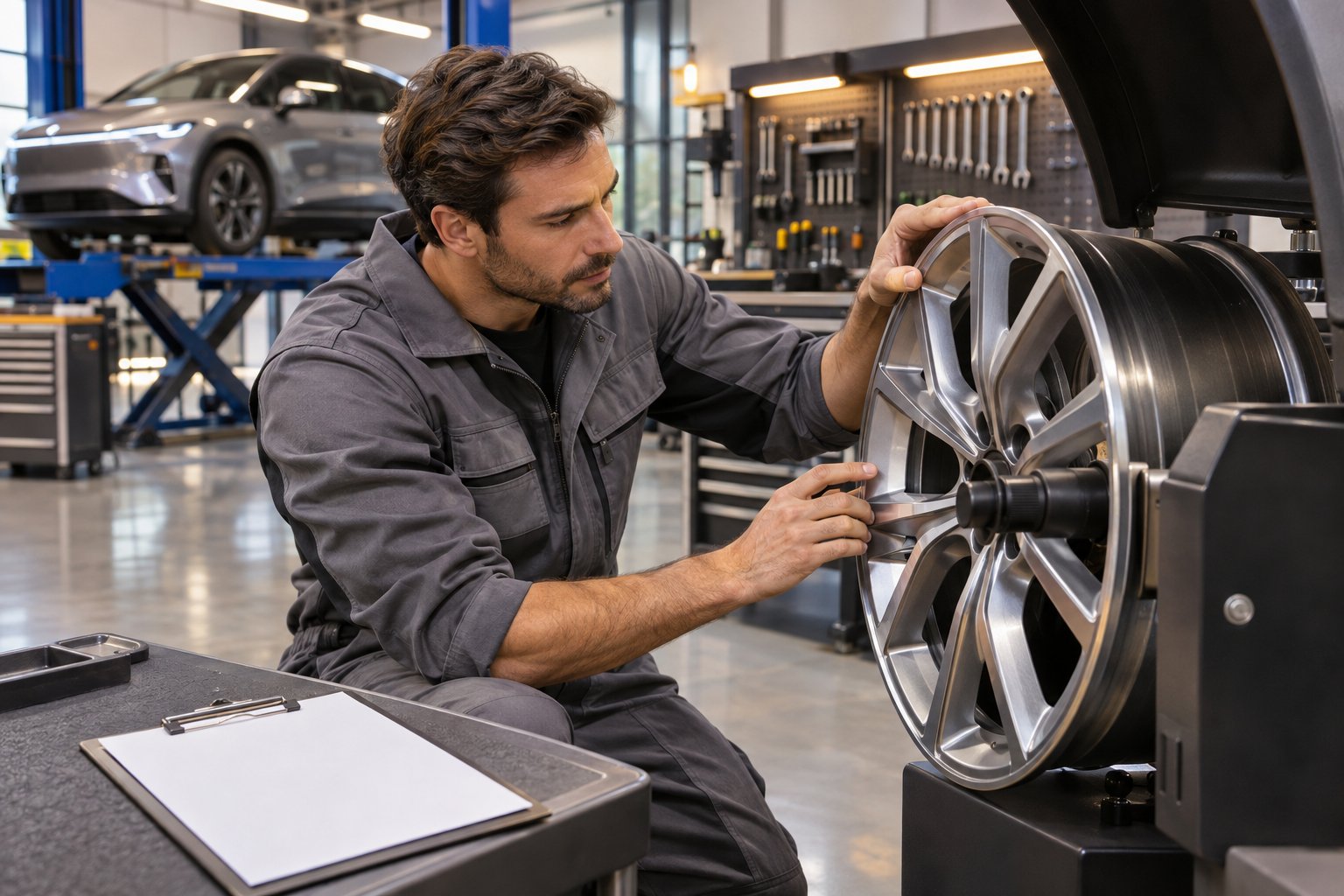
Will These Wheels Fit My Tesla? The Step-by-Step Fit Check
Does that sound like too many specs to keep track of? It gets easier when you check them in a fixed order. Each step below can rule a wheel out, and the first steps take the least effort. That way you won't spend an evening comparing offsets on a set that can't even bolt on. Wheel maker Velgen puts the bolt pattern first for the same reason. The order works the same for factory wheels, used sets and aftermarket rims for Tesla cars.
The Tesla Rim Replacement Fit Check Step by Step
- Confirm your model and generation. Write down the model, trim and build date, and note whether the car is a pre-Highland or Highland Model 3, or a pre-refresh or refreshed Model Y. Every later number depends on this.
- Match the bolt pattern. The Model 3 and Model Y use 5x114.3. For the Model S, Model X or Cybertruck, use the value in Tesla's documentation. The wheel's pattern must match exactly.
- Match the center bore or plan for hub-centric rings. If the wheel's bore is larger than the hub, you need a ring sized to fill the gap. A bore smaller than the hub won't mount.
- Confirm offset and width against the factory figures from Tesla or the wheel maker.
- Confirm the wheel's load rating and choose tires at or above the factory load index, with XL tires where the manual calls for them.
- Check the TPMS type (433 MHz or BLE). Then plan to move your existing sensors or buy matching ones.
- Confirm brake clearance, especially on Performance trims, and get the confirmation in writing.
- Keep the overall diameter close to factory. A taller tire makes the speedometer read low, and a shorter one makes it read high. De Re Tire & Auto gives an example: with about 3 percent more rolling circumference, an indicated 60 mph is actually about 61.8 mph. Your range estimate drifts by the same amount.
Running an Aftermarket Wheel Through the Checklist
Imagine you're looking at the CUTIM listing. It offers spin-formed wheels in 17-, 18- and 19-inch sizes and lists them as suitable for the Model 3, Y, S and X. The listing gets you partway through step 1, because it names models but not generations or trims. Step 2 raises a question right away. The Model 3 and Model Y use a different bolt pattern than the Model S and Model X, so this one listing has to come in more than one configuration. Ask the seller for the written spec of the configuration made for your car: bolt pattern, center bore, width, offset and load rating. The 17-inch option is smaller than any factory size covered in this guide, so check brake clearance on that size first. No wheel-and-tire package was verified, which leaves steps 6 and 8 to you. Buy tires separately in a size that keeps the overall diameter near factory, and plan where your sensors will come from. Hold any other seller's wheels for Tesla cars to the same standard. If an answer is missing, the wheel hasn't passed.
When to Bring in a Wheel Specialist
You can work through most of the list from a spec sheet. A qualified wheel specialist is worth bringing in in these cases:
- Your car is a Performance trim or runs a staggered setup.
- The suspension has been lowered or modified. Velgen notes that lowering springs, coilovers and air suspension all change the available clearance.
- The new tire size isn't on your door-jamb placard. A shop can compare revolutions-per-mile data and check the speedometer against a reliable speed reference.
- The seller's specs are incomplete or don't agree with Tesla's documentation.
Bring the seller's spec sheet and the wheel and tire page from your owner's manual to the appointment. A specialist can catch a mismatch before you order, which is cheaper than returning a full set.
A wheel fits your Tesla only when every spec on this list is confirmed for your exact model and trim.
Frequently Asked Questions About Tesla Wheels
1. What bolt pattern do Tesla wheels use?
The bolt pattern depends on the model. The Model 3 and Model Y use 5x114.3, which means five lug holes on a 114.3 mm circle. That applies to the pre-Highland and Highland Model 3 and to the pre-refresh and refreshed Model Y. Most retailer listings give 5x120 for the Model S and Model X, but at least one says 5x114.3, so check the figure in Tesla's documentation for your car's year. The Cybertruck uses a six-lug 6x139.7 pattern. Retailers commonly list a 64.1 mm center bore and M14x1.5 lug threads for the Model 3, Y, S and X. If an aftermarket wheel's bore is larger than the hub, fit hub-centric rings. Without them, only the lug nuts center the wheel.
2. Do bigger Tesla wheels reduce range?
Usually, yes. On fueleconomy.gov, the 2026 Model Y Standard RWD is rated at 321 miles on 18-inch wheels and 303 miles on 19-inch wheels. The 2025 Model 3 Long Range RWD is rated at 363 miles in its standard listing and 346 miles with 19-inch wheels. Several factors add up to the drop. A larger wheel option tends to come with a wider tire, a different rubber compound, more weight and a wheel face that disturbs more air. Flat wheel faces help. In a back-to-back Car and Driver test, aero covers on a Model 3 cut energy use by an average of 3.4 percent. Look up your exact trim and wheel option on fueleconomy.gov. Treat any seller's range claim as unverified unless it comes with matching test data.
3. Will Model 3 wheels fit a Model Y?
Model 3 wheels will bolt onto a Model Y because both cars use the 5x114.3 pattern, but bolting on doesn't make them a correct fit. The factory 18-inch wheels on both cars are 8.5 inches wide. The Model 3 wheel uses a 38 mm offset, while the Model Y wheel uses 35.5 mm. The Model Y's factory 235/55R18 tire is also about 47 mm taller than the Model 3's 235/45R18, so a Model 3 wheel-and-tire set would throw off the Model Y's speedometer and range estimate. The wheel's load rating must cover the heavier Model Y, and Tesla's Model Y manual says to use only Tesla-approved wheels. Check the tire pressure sensors too. Early Model 3 cars used 433 MHz sensors, and a car built for Bluetooth Low Energy sensors can't read them.
4. Does Tesla have special tires?
Some of them, yes. Tesla co-develops tires with major tire makers and marks them with a T code on the sidewall: T0 for the first version, then T1, T2 and so on. Tesla-designed tires can include an acoustic foam liner, which Tesla says lowers road noise by 6 dB at 200 Hz. Tesla also says approved aftermarket tires may not have the foam and can produce up to 10 percent more noise, vibration and harshness. You don't need a T-marked tire. Any replacement tire must meet or exceed the load index and speed rating in your owner's manual. On many trims, including every factory Model Y size, that means an extra load (XL) tire.
5. What should I verify before buying aftermarket Tesla wheels?
Ask for a written spec sheet for the exact configuration made for your car, covering diameter, width, offset, bolt pattern, center bore and load rating. Then confirm brake clearance for your trim and year, the lug seat type, the center cap recess dimensions, and whether tires and TPMS sensors are included. CUTIM's spin-formed alloy wheels are one example. The listing offers 17-, 18- and 19-inch sizes for the Model 3, Y, S and X. Those models don't all share a bolt pattern, so ask which configuration ships for your car, and ask whether 'spin-formed' means the barrel is flow-formed. No wheel-and-tire package was verified, so budget for tires separately. Review the specs with a qualified wheel specialist before you order.