
What Tesla Mods Are and How They Differ From Accessories
What is a Tesla mod? A Tesla mod is any change an owner makes to a Tesla beyond its factory setup. Mods fall into three groups: stick-on or bolt-on accessories such as floor mats and screen protectors, aftermarket parts such as wheels and suspension that change how the car looks or drives, and paid software upgrades delivered over the air by Tesla.
What Counts as a Tesla Mod
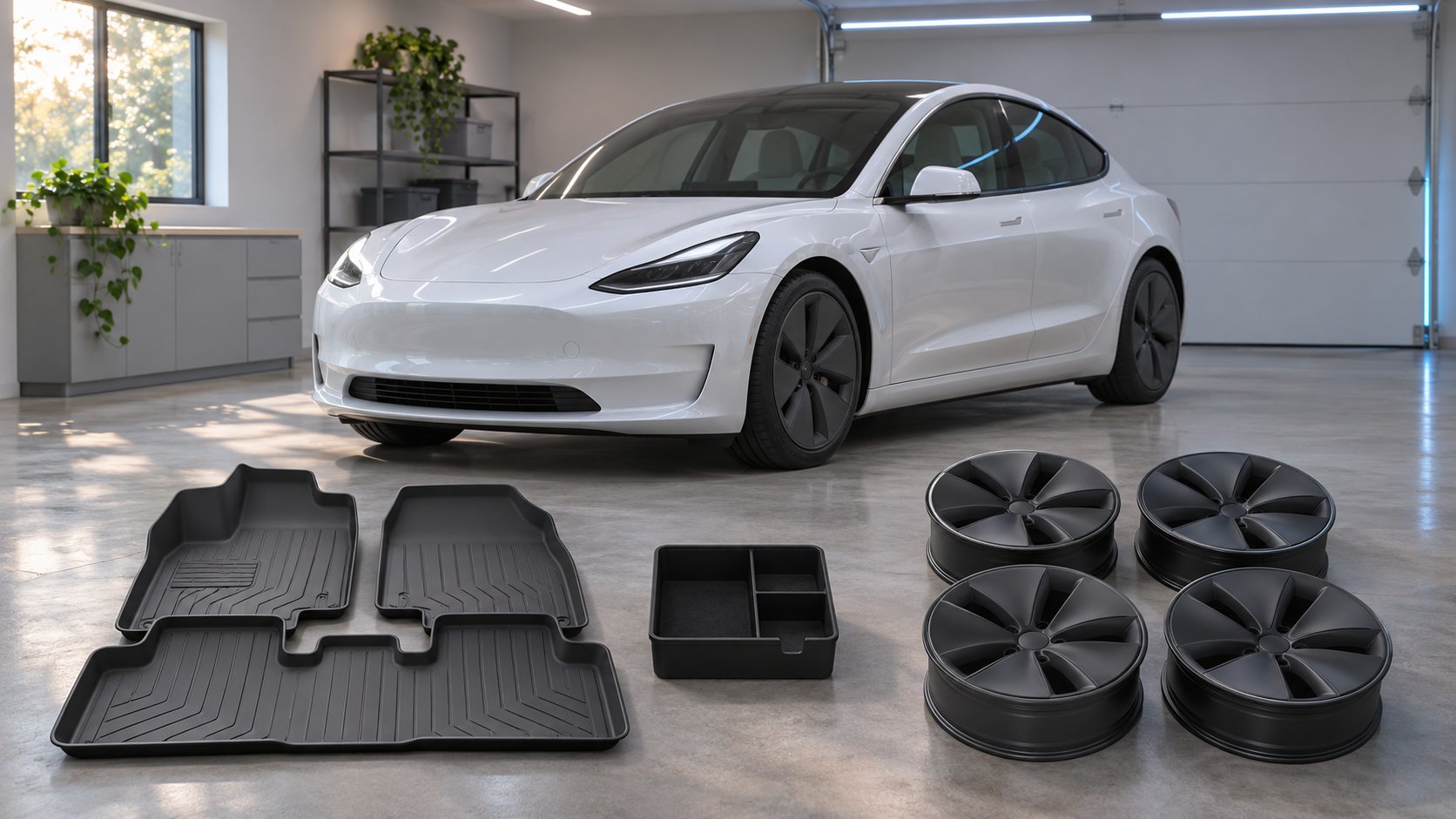
Picture your first week with a new Tesla. You lay down all-weather mats, put a protector on the touchscreen and drop an organizer into the center console. Each of those counts as a Tesla mod, even though none of them changes how the car drives.
The term covers a lot of ground, so it helps to sort changes by what they do:
- Accessories stick on, clip in or bolt on. Floor mats, screen protectors and organizers belong here, and most come off without leaving a mark.
- Aftermarket parts change how the car works or looks. Wheels, suspension and body kits are the usual examples.
- Official software upgrades are features you buy from Tesla. Tesla says its over-the-air upgrades show up in the Tesla app based on your car's configuration. They don't need a service visit and usually install while the car is parked and connected to Wi-Fi.
Accessories, Aftermarket Parts and Official Upgrades Compared
| Category | Who Provides It | Typical Examples | Usually Reversible |
|---|---|---|---|
| Stick-on or bolt-on accessories | Aftermarket sellers or Tesla | Floor mats, screen protectors, console and trunk organizers, seat-back protectors | Yes |
| Aftermarket function or styling parts | Aftermarket makers, installed by the owner or a shop | Wheels and tires, suspension, body kits, side skirts | Depends |
| Official Tesla software upgrades | Tesla, through the Tesla app | Paid features for eligible vehicles, delivered over the air | No |
Most pages that rank for Tesla mods are store catalogs sorted by product. This guide is sorted by the decisions you actually make: your goal, your model and refresh generation, your budget tier, your DIY skill and how much risk you're willing to take.
Why Modded Tesla Owners Need a Different Checklist Than Gas Car Owners
On a gas car, the main question about a mod is fit: does the part bolt on, and does it clear the body? A modded Tesla raises three more questions.
- Range. Wheels, tires and body changes can affect efficiency. On an EV, any change in efficiency shows up directly as miles of range.
- Over-the-air software. Edmunds points out that EV software updates can change throttle and brake response, battery management and even how much range is available. Much of how the car behaves is decided in software, not by the parts bolted to it.
- Integrated electronics. Cameras, sensors and wiring sit inside bumpers, trim panels and the cabin. A part that blocks a camera or taps into a circuit can affect systems far from where you installed it.
That software layer also explains why the most common performance question about a Tesla gets a software answer before a hardware one.
Software Upgrades Versus Hardware Mods for More Performance
Can You Mod a Tesla to Go Faster
Yes, you can make some Teslas quicker, but the main way to do it is through software, not parts. The car's software controls how much power the motors deliver, so the official way to get faster acceleration is a paid Tesla software upgrade such as Acceleration Boost, sold for eligible vehicles.
Tesla says its paid upgrades appear in the Tesla app based on your car's configuration. You buy them with the payment method on file, and they install over the air without a service visit. Which cars qualify and what the upgrade costs can change, so check the Upgrades section of the Tesla app or Tesla's website for your specific car before you plan around it.
Official Software Upgrades Versus Aftermarket Tesla Tuning
On a gas car, tuning usually means reprogramming the engine computer. Third-party Tesla tuning means changing the car's firmware in ways Tesla hasn't approved. This guide doesn't cover how to do that, because the risks are serious:
- Warranty. Tesla can refuse to cover problems linked to the modification. One owner-community guide warns that unofficial firmware can void FSD-related coverage and possibly broader Autopilot coverage.
- Safety. Tesla sets the battery, motor, cooling and braking limits to work together. If you push one past Tesla's tested settings, parts can end up running outside the conditions they were tested for.
- Legal. Unofficial changes may break Tesla's software terms. They can also cause problems with your insurer or with rules on vehicle modifications where you live.
| Approach | What It Changes | Who Installs It | Reversibility | Warranty Risk |
|---|---|---|---|---|
| Official Software Upgrade | Acceleration and power delivery, within limits Tesla sets | Tesla, over the air through the Tesla app | Generally permanent once purchased | Low, since Tesla sells and supports it |
| Hardware Performance Mod | Grip, braking, handling and ride | The owner or a shop | Usually, if you keep the original parts | Medium, since claims on related parts can be questioned |
| Unofficial Firmware Modification | Software behavior outside Tesla's approved settings | A third party, not Tesla | Uncertain | High, since Tesla can deny claims and coverage on affected systems |
What Tesla Aftermarket Performance Parts Actually Change
Aftermarket performance parts for a Tesla change how the car handles and stops. Here's what each type does:
- Wheels and tires change grip and steering feel. Grippier tires help the car use its power in launches and corners.
- Brakes such as upgraded pads and rotors usually aim to resist fade during hard or repeated stops.
- Suspension changes body roll, ride height and how the car responds in turns.
None of these parts increases motor output. Many popular Tesla Model 3 upgrades are in this group. They make the car feel sharper and more controlled, but they don't add power.
On a Tesla, software sets the power ceiling, and hardware only changes how well the car uses that power.
Chassis parts raise a question that software upgrades don't: will the part fit your exact car? On a Tesla, the answer depends on more than the model name.
Fitment by Model and Refresh Generation
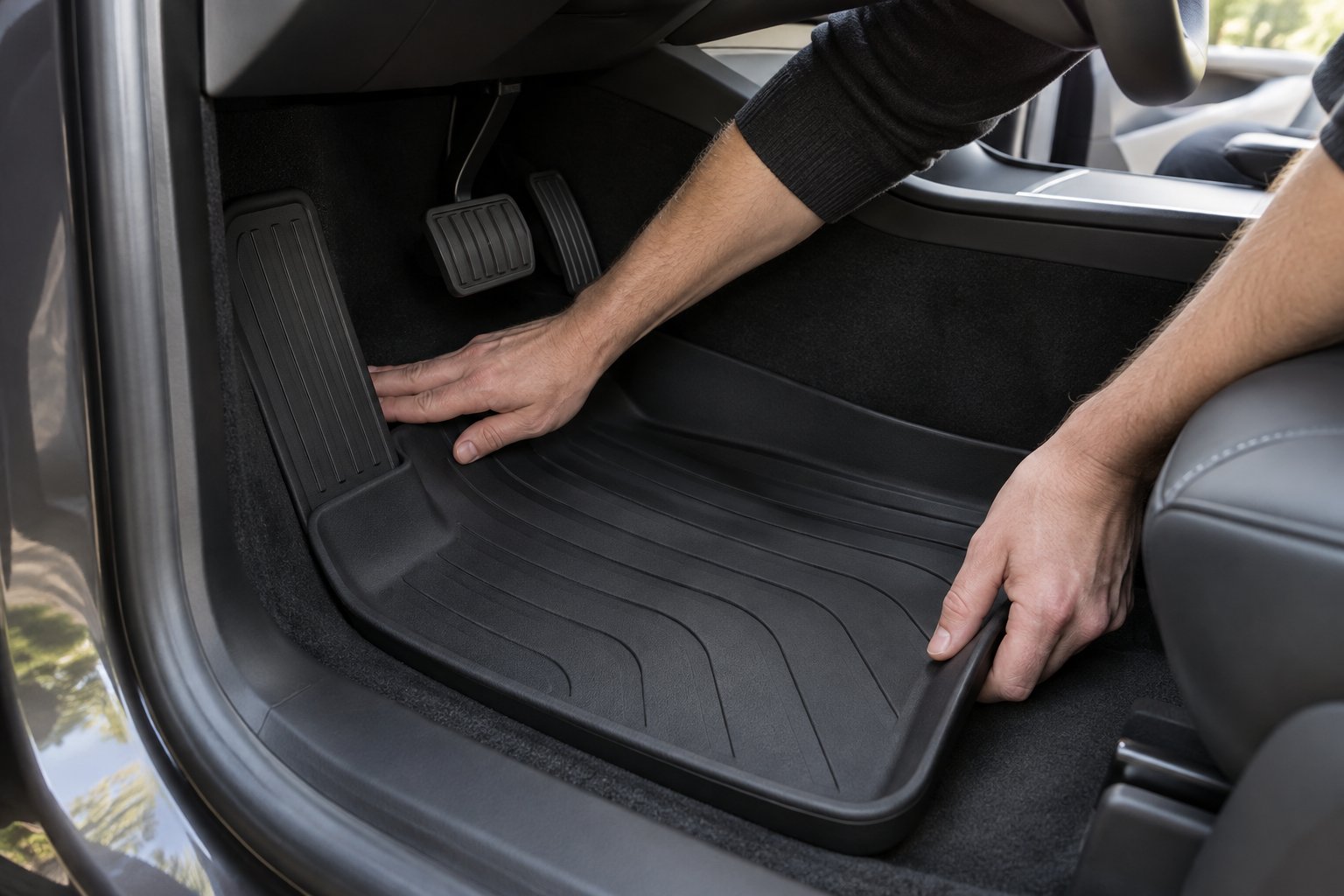
Ever ordered a Model 3 floor mat that left a gap at the footrest? Tesla keeps the same model names through major refreshes, but the panels, trim and cabin layout can change. A part built for one generation may not fit the next, even when the listing only says "Model 3" or "Model Y."
Why Pre-Refresh Tesla Model 3 Parts May Not Fit the Highland
The refreshed Model 3, nicknamed Highland, kept the same basic chassis, but many of the parts you see and touch are new. One Highland fitment guide lists the changes: a reshaped front bumper, new headlights, a different dashboard trim layout, redesigned door panels and revised seats. Highland also added a rear passenger touchscreen and moved the turn signals and gear selector off the steering column stalks.
Tesla Model 3 aftermarket parts that follow a panel's exact shape are the most likely to stop fitting. That group includes front lips, rear spoilers, dash trim, door overlays and seat covers. Floor mats and screen protectors should be Highland-specific. Seat covers need a second look too, because most Highland trims have ventilated front seats, and an older cover can block the airflow. Tesla Model 3 accessories that don't depend on exact contours usually carry over. Phone mounts, USB chargers and flexible cargo organizers fall into this group.
What Changed With the Model Y Juniper Interior and Exterior
From behind, the refreshed Model Y, or Juniper, has a continuous rear light bar where the earlier car had separate taillights. A Juniper fitment guide also points to a front bumper camera, factory ambient lighting and a rear passenger display on the back of the center console. Inside, the front console tray is longer and the footwells have a new shape.
Those interior changes are why Tesla Model Y Juniper interior accessories are sold as their own category. Pre-refresh floor mats, cargo mats, console organizers, under-screen storage and screen protectors were built around shapes that Juniper no longer has. One part did carry over. Juniper kept a turn signal stalk, which Highland dropped, so stalk covers can still fit.
Model S, Model X and Cybertruck Fitment Basics
Tesla's own refresh notes list the Model S and Model X changes:
- New wheel designs: 19 and 21 inches for Model S, 20 and 22 inches for Model X
- Dynamic ambient lighting
- A front fascia camera
- Adaptive headlights
- Retuned air suspension
Model S Plaid also got new front and rear fascias, a front splitter, a carbon fiber spoiler and a restyled diffuser. If you're planning a modded Tesla Model S Plaid, check every pre-refresh aero part before you order it. Tesla says an earlier redesign also changed both cars' interiors and exteriors, so S and X parts span several generations.
The Cybertruck has a stainless steel body and a pickup layout, and it shares little hardware with the other models. Buy only parts made for the Cybertruck.
| Model | Refresh Name | Areas That Changed | Fitment Questions to Ask the Seller |
|---|---|---|---|
| Model 3 | Highland | Front bumper and headlights, dashboard trim, door panels, seats, rear display, stalk controls | Was it designed for Highland or pre-refresh? Are there install photos on a Highland? |
| Model Y | Juniper | Rear light bar, front bumper camera, console tray, footwells, rear display, ambient lighting | Was it built for the Juniper console and floor? Does it clear the front camera? |
| Model S | Refreshed | Wheel designs, ambient lighting, front camera, headlights, air suspension; Plaid fascias and aero | Does it fit the refreshed fascia and the new wheel sizes? |
| Model X | Refreshed | Wheel designs, ambient lighting, front camera, headlights, third-row space | Which wheel size and seating layout does it fit? |
| Cybertruck | Not applicable | Separate body and platform from other models | Is it made specifically for Cybertruck? |
Before you order, find your exact model year and trim on your vehicle registration or in the Tesla app. Then check the listing for each of these:
- Model: Model 3, Model Y, Model S, Model X or Cybertruck
- Refresh generation: pre-refresh or refreshed (Highland, Juniper)
- Trim: for example, Long Range, Performance or Plaid
- Wheel size: needed for rim protectors, covers and tires
- Driver-side configuration: left-hand or right-hand drive, since dash and footwell parts are often mirrored
Fitment tells you whether a part will go on. It doesn't tell you whether the part is worth installing or how easily it comes off again.
How to Judge Any Mod Before You Buy
Have you ever bought a part because it looked great in a photo, then wondered after it arrived whether it was worth it? A quick check before checkout prevents most of that regret. The same five questions work for a screen protector and for a set of lowering springs.
Five Questions to Ask Before Any Tesla Customization
- What problem does it solve? Name the goal, such as keeping mud off the carpet or changing the car's look. If you can't name one, wait.
- Does it fit your model and refresh generation? A listing that only says Model 3 or Model Y isn't enough. Look for pre-refresh, Highland or Juniper by name.
- Can you undo it? A vinyl wrap can be peeled off, but paint is permanent. Adhesive mounts leave the body intact, while drilled mounts leave holes. Clip-in parts go back in the box, and cut-to-fit parts don't.
- How hard is the install? It might take a few minutes by hand, an afternoon with real tools, or a trip to a shop.
- How much warranty risk does it carry? Parts that touch wiring, suspension or sensors get more scrutiny than parts that sit on a surface.
Wrap versus paint shows the reversibility trade-off clearly. Capital One notes that a vehicle wrap can often be done in a day or two and typically lasts about five years. A good paint job can keep the car in the shop for up to a week and last for decades. Paint is the long-term commitment, and a wrap is the change you can take back.
Resale is another reason to favor reversible changes. Jalopnik's comparison of modified and stock sales concludes that a clean, unmodified car usually attracts more buyers unless a buyer wants your exact changes. It suggests keeping the original parts and either including them in the sale or reinstalling them before you sell.
Reversibility Ratings for Common Custom Tesla Mods
The table rates common mod types in general terms. A specific product can rate higher or lower, so read its install instructions before you buy.
| Mod Type | Problem It Solves | Fitment Sensitivity | Reversible | Install Difficulty | Warranty Risk |
|---|---|---|---|---|---|
| Screen protector | Scratches, fingerprints, glare | High | Yes | Low | Low |
| All-weather floor mats | Dirt, water, salt on carpet | High | Yes | Low | Low |
| Center console organizer | Clutter, loose items | High | Yes | Low | Low |
| Vinyl chrome delete | Bright trim the owner dislikes | Medium | Yes | Medium | Low |
| Painted body kit | Styling | High | No | High | Medium |
| Aftermarket wheels | Styling, tire choice | High | Yes, if originals are kept | Medium | Medium |
| Lowering springs | Stance, handling feel | High | Partly | High | High |
| Hardwired electrical add-ons | Added lighting or power | Medium | Partly | High | High |
A body kit rates Medium on warranty risk because drilled mounts and fresh paint change the original body panels. Lowering springs and hardwired add-ons rate higher because they affect systems beyond the part itself.
Matching Tesla Model 3 Upgrades to Your Goal
Not every owner should weigh the five questions the same way. Put them in order based on what you want from the car. That order holds for Tesla Model 3 modifications on either generation and for the other models too.
- Protecting a new car: Put fitment and reversibility first. Protection that misses part of the surface, or marks the surface when removed, defeats its purpose.
- Personalizing it: Put reversibility first, then install difficulty. A wrap or chrome delete changes the look and can be taken off later.
- Improving comfort: Start with the problem you're solving, then check fitment. A loose organizer that rattles or a mat that slides makes the cabin worse.
- Planning for resale: Put reversibility and warranty risk first. A modified Tesla that comes with its original parts and install records is easier to return to stock and easier to explain to a buyer.
Before any Tesla Model 3 upgrade that involves drilling, cutting or wiring, ask whether a clip-in or stick-on option would solve the same problem.
Reversible mods keep your resale and warranty options open, because you can always return the car to the way Tesla built it.
When protection or comfort is the goal, the items that pass these questions are mostly inexpensive and easy to remove. A careful owner should start with those.
Low-Risk Starter Mods by Goal and Budget
Which accessory should you buy first? For most new owners, start with something that protects the car from daily wear and comes off cleanly later. The list below follows that rule. It starts with the items you'll use every day and the ones least likely to cause trouble.
Best First Tesla Model 3 Accessories for New Owners
Lists of the best Tesla Model 3 accessories are usually built around what a store wants to sell. This order ranks items by risk and everyday use, because no public sales data shows what owners actually buy most. The same order works for the Model Y.
- All-weather floor liners (protection). Footwell shapes differ between pre-refresh and refreshed cars, so buy liners made for your generation. Federal guidance from NHTSA says to secure the driver's mat with the car's retention clips, never stack mats, and check that the pedals move freely. Reversible: Yes. Difficulty: Easy.
- Screen protector (protection). Match the exact display. Highland and Juniper also have a rear screen, and front and rear protectors aren't interchangeable. Reversible: Yes, if you follow the maker's removal steps. Difficulty: Easy to moderate, since dust and alignment take patience.
- Center console organizer (organization). The console layout changed during the pre-refresh Model 3 run and again with Highland and Juniper. Reversible: Yes. Difficulty: Easy, because it drops in.
- Door sill protectors (protection). Most stick on with adhesive and are cut to one model's sill shape. Reversible: Yes, but peel the adhesive off slowly. Difficulty: Easy, once the surface is clean.
- Seat-back protectors (protection). Most strap around the front seats and fit loosely across models. Keep the straps away from any airbag label on the seat. Reversible: Yes. Difficulty: Easy.
- Trunk organizers (organization). Sub-trunk sizes vary by generation. One fitment guide notes that a sub-trunk organizer built for the pre-refresh Model 3 doesn't fit the Highland. Reversible: Yes. Difficulty: Easy.
- Tesla screen decoration and interior trim covers (personalization). Trim covers have to match the exact shape of the panel they cover, and Highland changed the dash trim layout. A decorative frame around the display doesn't protect the screen itself. Reversible: Mostly, though many use adhesive. Difficulty: Easy to moderate.
Check your owner's manual before you wipe a bare screen to prepare it for a protector. Tesla's Model Y manual calls for a soft, lint-free cloth and warns against glass cleaners, alcohol-based gels and wet wipes.
Custom Tesla Interior Mods by Budget Tier
These tiers compare items with each other. Actual cost depends on material, how much area the part covers, and whether it's made for one model. Check current prices on the product page.
| Goal | Entry | Mid | Premium |
|---|---|---|---|
| Protection | Screen protector, door sill protectors, seat-back protectors | Model-specific cabin floor liners | Full liner sets that add trunk and frunk coverage |
| Organization | Console tray inserts, trunk side dividers | Sub-trunk organizers | Matching organizer sets for the console, trunk and frunk |
| Personalization | Tesla screen decoration such as bezel frames | Trim covers for single panels | Coordinated trim kits for the dash, console and doors |
A custom Tesla interior usually comes together in stages. Owners often start with entry-tier protection and add trim later. At every tier, you'll also choose between universal fit and a model-specific part.
Universal-Fit Accessories
- Pro: They cost less up front.
- Pro: Some will move with you to your next car.
- Con: Universal mats usually leave gaps at the dead pedal, seat rails and door-side carpet.
- Con: A generic mat that slides around can create the pedal interference risk that safety guidance warns about.
Model-Specific Accessories
- Pro: They follow the footwell, console or screen shape of your generation.
- Pro: They use the car's own anchor points.
- Con: They usually cost more.
- Con: They may not fit if you switch to another model or refresh generation.
Where to Compare Aftermarket Tesla Accessories by Category
Many stores list aftermarket Tesla accessories one product at a time, which makes comparison slow. Browsing by category lets you compare mats with mats and organizers with organizers. A few places to start:
- CUTIM's Tesla accessories collection groups interior, exterior, wheel and digital accessories by category, including organization, protection and personalization items.
- Owner forums and community groups can show install photos on your exact generation.
- Your owner's manual lists the care rules for any screen or surface you plan to cover.
Whichever store you use, confirm fitment for your model and refresh generation on the product page itself. Don't rely on the category title.
Everything above stays inside the cabin, so none of it changes the car's shape or the tires it rides on. Exterior parts and wheels change both, and on an EV those changes can cost range.
Exterior and Wheel Mods and Their Effect on Range
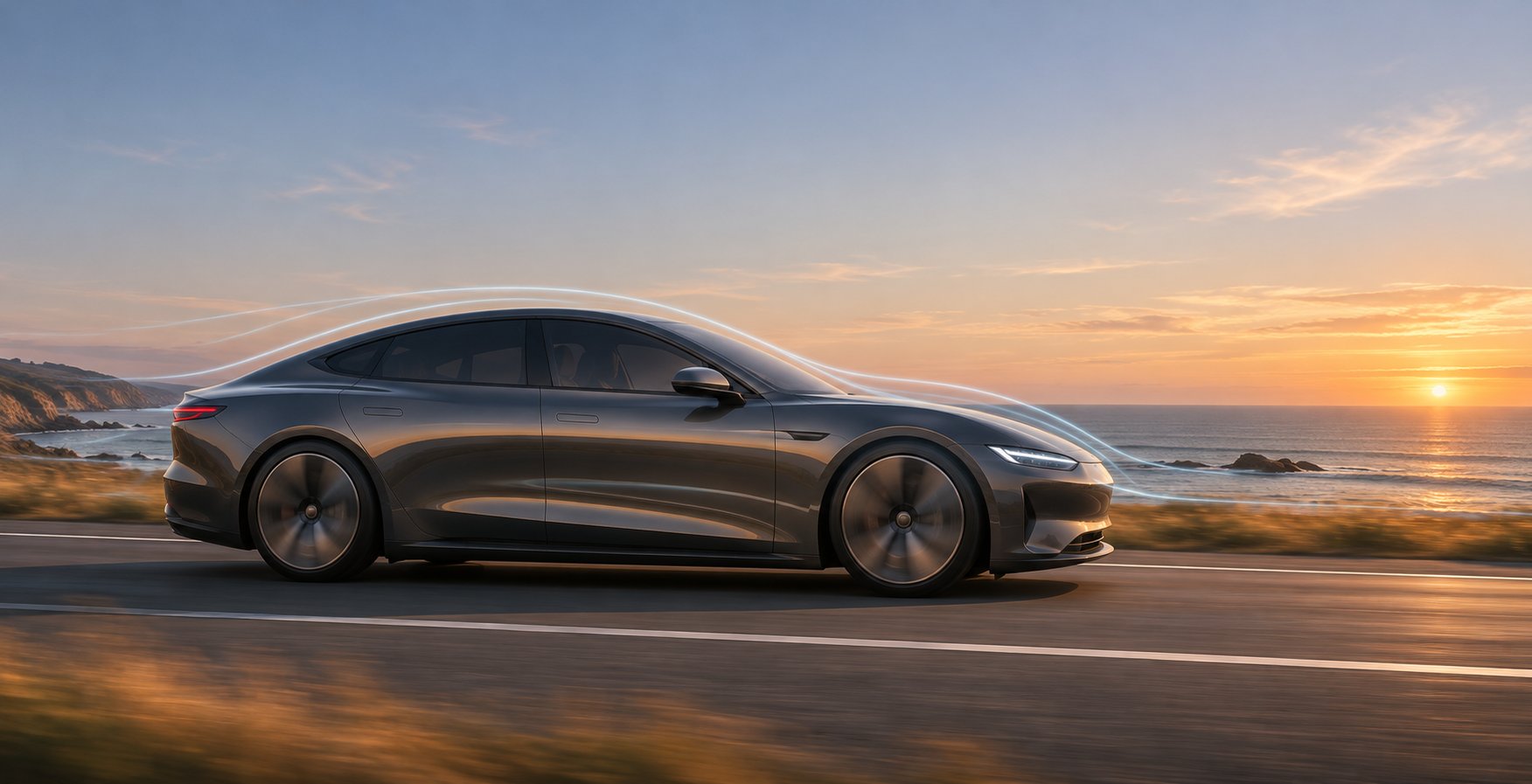
Changing the outside of a Tesla also changes how it moves through the air and how its tires meet the road. Both affect how far you get on a charge. Wheels have clear published evidence. Most styling parts have no reliable figure at all, and this section says so plainly instead of guessing.
Tesla Model 3 Exterior Mods From Side Skirts to Carbon Fiber
Most Tesla exterior accessories fall into a few groups:
- Body kits. Tesla Model 3 body kits usually combine a front lip, side skirts and a rear diffuser. A painted kit held on with screws in drilled holes is hard to undo.
- Tesla side skirts run along the bottom of the car below the doors. Some attach with tape and some with screws.
- Spoilers sit on the trunk lid. An adhesive spoiler comes off more cleanly than a bolted one.
- Carbon fiber accessories such as mirror caps and trim overlays cover existing parts without changing their shape much.
- Chrome delete covers bright trim with vinyl, usually in gloss, satin or matte black. One wrap shop names window trim, badges and mirrors as the usual targets on Teslas. Check your car first. If the trim is already black from the factory, there's nothing to delete.
How Wheels and Aero Covers Affect Range
Larger or wider wheels and tires generally lower efficiency, because they tend to add weight, rolling resistance and drag. You can see the effect in official figures. On many trims, Tesla's online design studio shows a different estimated range for each wheel option, and fueleconomy.gov lists separate EPA ratings for many Tesla trims by wheel size. Look up your own trim there before you buy wheels, and don't rely on a seller's range claim.
The EPA label number comes from dynamometer testing in a lab. The result is then adjusted for real-world factors such as air conditioning, cold weather and fast driving, most often by multiplying it by 0.7. The rating applies to the factory configuration that was tested. Nobody rates your aftermarket setup.
Tesla designs its aero wheel covers to cut drag, so taking them off generally lowers efficiency. Car and Driver tested this on a pre-refresh Model 3 Long Range with 18-inch wheels. On a closed track, the aero cover test found that the covers cut energy use by an average of 3.4 percent across 50, 70 and 90 mph and added up to 10 miles of calculated range. That was one car under controlled conditions, so your results may differ.
A lift kit raises the car into the airflow, which increases frontal area and drag. No reliable published figure exists for lifted Teslas. The same goes for most spoilers and side skirts, so be skeptical when a seller claims they improve efficiency.
| Mod Type | Likely Efficiency Effect | Evidence Source | Reversibility | Fitment Notes |
|---|---|---|---|---|
| Larger or wider wheels and tires | Lower | Tesla range by wheel option; EPA ratings by wheel size | Yes, if you keep the originals | Confirm size and clearance for your model and refresh generation |
| Removing aero wheel covers | Lower | Independent track test on a pre-refresh Model 3; not a Tesla or EPA figure | Yes | Covers match one specific wheel design |
| Lift kit | Lower | No reliable data | Partly | Kits are model-specific; check coil versus air suspension |
| Spoiler | Unclear | No reliable data | Depends on adhesive or drilled mounting | Pre-refresh Model 3 spoilers may not suit the Highland |
| Side skirts | Unclear | No reliable data | Depends on mounting | The listing should name your refresh generation |
| Front lip or painted body kit | Unclear | No reliable data | No, if painted and drilled | Highland and Juniper front bumpers changed; Juniper adds a front camera |
| Carbon fiber overlays | Neutral | No reliable data; the factory shape stays mostly the same | Usually | Overlays must match the exact factory part |
| Chrome delete | Neutral | No reliable data; the body shape doesn't change | Yes, in most cases | Check whether your trim is already black |
Wrap Versus Paint for a Reversible Tesla Model Y Exterior
For a new color on your Tesla Model Y exterior, choosing between vinyl and paint comes down to reversibility. Paint is permanent. A wrap can usually come off, but the same wrap shop notes that clean removal depends on the film's condition and age, the quality of the install and the surface underneath. Vinyl also shows what's below it, so failing clear coat, deep scratches and dents will still be visible. Neither a wrap nor a chrome delete meaningfully protects against rock chips. Paint protection film is made for that. On a Juniper, make sure any film, wrap or lip leaves the front bumper camera clear.
Wheel and body changes can also affect warranty coverage. If a part or its installation damages something nearby, will Tesla still pay for the repair?
Warranty Facts Before Modifying Your Tesla
Often it won't, and US federal law allows that. The law doesn't let Tesla treat one aftermarket part as a reason to cancel your whole warranty, though. Everything below comes from Tesla's own warranty materials and the Federal Trade Commission, not from sellers. It's general information, not legal advice.
Do Tesla Aftermarket Parts Void the Warranty
Tesla's New Vehicle Limited Warranty includes several separate coverages. Two of them are the Basic Vehicle Limited Warranty, which runs 4 years or 50,000 miles, and the Battery and Drive Unit Limited Warranty, which runs 8 years with a mileage limit that depends on model and trim. Tesla's warranty support page makes two statements that matter for mods. The warranty doesn't cover damage caused by third-party vehicle adaptors or chargers, and Tesla isn't responsible for issues caused by improper repair or maintenance at a third-party service center.
For the full list of what isn't covered, Tesla points owners to the Exclusions and Limitations section of the warranty document. Read that section before any Tesla modifications that go beyond stick-on accessories. Tesla says the online copy is for general knowledge only. The warranty that came with your car is the authoritative version. You can also check your coverage in the Tesla app under Specs & Warranty.
What the Magnuson-Moss Warranty Act Protects and What It Does Not
The Magnuson-Moss Warranty Act is the US federal law that governs consumer product warranties. The FTC's guide to auto warranties explains how it applies to cars, and it puts the main rule plainly: "Your warranty stays in effect if you use aftermarket or recycled parts."
Under the FTC's explanation, the law protects you in these ways:
- Installing an aftermarket part doesn't by itself void the warranty.
- The manufacturer must prove the aftermarket part caused the damage before it can deny coverage.
- A dealer can't deny coverage just because someone else did your routine maintenance or repairs.
It doesn't protect you in these cases:
- If a defective part or a bad install damages a covered part, the manufacturer can deny coverage for that part and charge you for the repair.
- If the warranty promises free repairs, the manufacturer can choose where the work is done. For Tesla, warranty service happens at a Tesla Service Center.
These are US federal rules. If you live outside the US, check your country's or province's consumer law.
Warranty Risk Levels for Modifying a Tesla
| Risk Level | Mod Type | Why |
|---|---|---|
| Low | Cosmetic and stick-on accessories | They sit on surfaces and don't connect to any vehicle system. |
| Medium | Wheels and tires | The wrong size, offset or lug torque can put extra strain on covered suspension, steering or brake parts. |
| High | Suspension changes | They change the geometry and loads on covered chassis parts. |
| High | Hardwired electrical work | An electrical fault anywhere on a tapped circuit can be traced back to the splice. |
| High | High-voltage-adjacent work | It sits next to the battery and drive unit, which have their own 8-year coverage. |
| High | Firmware changes | Unapproved software changes how many systems behave at once. |
The FTC recommends keeping records because a claim can be denied without them. The same habit helps with Tesla aftermarket parts:
- Keep receipts and install records. Write down the product, the date, who installed it and any work order or torque spec.
- Photograph the original state. Take pictures of panels, wiring areas and wheels before you start.
- Keep the original parts. You can then put them back before a warranty visit or a sale.
All the high-risk rows change how a system works, not just how the car looks. They can also affect ride, alignment and the car's sensors, so each one needs a closer look before you commit.
Mods to Approach Carefully
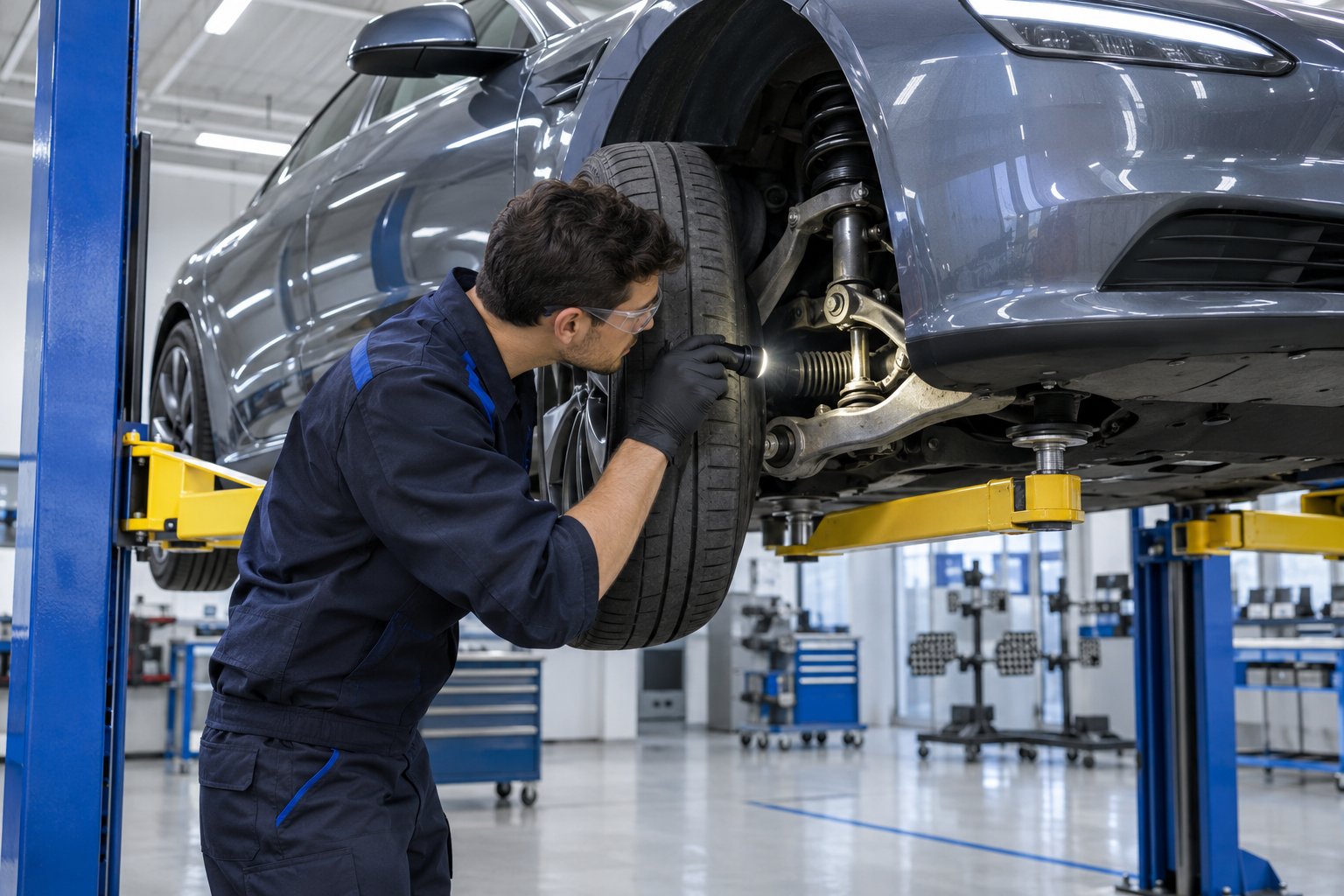
Lowering springs, a spliced-in light strip and a retrofitted rear screen all change how a system on the car works. If one goes wrong, the problem can show up far from the part itself. Many popular Tesla Model 3 mods in this group look simple in a listing photo. None of them is off-limits, but each one needs more research than a floor mat does, and usually a professional.
Suspension and Lift Kits on a Modified Tesla
Lowering springs and coilovers drop the car and usually firm up the ride. Lift kits raise it. Either way, the suspension geometry changes, so the old alignment settings no longer apply. A Tesla suspension guide explains that lowering the car adds negative camber, which shifts load toward the inside edge of the tire. A toe error on top of that usually does more damage, because it makes the tire scrub across the pavement every mile. The same guide notes that lowered cars often need adjustable camber arms when the factory adjustment range can't reach the target setting.
- Reason for caution: Warranty, fitment and range. Tesla can deny claims on bushings, control arms or shocks if it traces wear on those parts to the change. A lift also adds drag.
- Reversible: Partly. You can put the original springs back, but the car needs another alignment. Tread that has already worn unevenly won't come back.
- Professional install: Advised. Have the shop do a four-wheel alignment afterward and write down the final numbers.
Electrical Add-Ons and the Tesla Rear Screen Retrofit
Gadgets that plug into a USB port or 12V outlet carry little risk. Add-ons that splice into the car's wiring are different. This group includes extra lighting, powered accessories and replacement light assemblies. A splice can change the current or the signals a control module expects, and that can set off fault codes. Under the FTC rules covered above, Tesla can deny coverage for any electrical problem it links to the splice.
- Reason for caution: Warranty. A fault anywhere on a tapped circuit can lead back to the splice.
- Reversible: Partly. You can remove the add-on, but cut or pierced wires stay damaged.
- Professional install: Advised for anything wired into the car.
A Tesla rear screen retrofit adds a second-row display, like the one on Highland and Juniper, to a car that shipped without it. Getting the screen to work with the car is the hard part. Even replacing a factory rear screen on a car that already has one takes more than bolting it in. Tesla's rear touchscreen procedure calls for new mounting bolts. It also requires a display connection test run from Tesla's Toolbox 3 diagnostic software and a firmware reinstall. A car that never had the screen may also lack the matching console, wiring and software support.
- Reason for caution: Fitment and warranty. Console shape and wiring differ by generation, and Tesla may not cover electrical problems near the install.
- Reversible: Depends on whether the kit swaps out factory console parts or requires cutting them.
- Professional install: Advised.
Aggressive Wheel and Tire Setups on a Tesla Model 3 Modified for Looks
A Tesla Model 3 modified for looks often pairs wide or low-offset wheels with a lowered stance. That combination causes several problems at once. Tires can rub the fender liners or suspension parts over bumps or at full steering lock. Larger, wider setups lower efficiency, as the range section showed. Aftermarket wheels also need compatible tire pressure sensors. A change in overall tire diameter changes how far the car travels with each turn of the wheel, which throws off speed and distance readings. Ride height changes also move the cameras relative to the road.
- Reason for caution: Fitment, range and warranty.
- Reversible: Yes, if you keep the original wheels and tires.
- Professional install: Advised for mounting, lug torque, sensor setup and alignment.
Any mod that touches high-voltage systems, safety systems or driver-assistance sensors belongs with a qualified professional.
Most mods fall somewhere between a five-minute stick-on and a full shop job. To place a given part on that scale, look at the tools it needs and how hard the install is.
Installing Mods Yourself or Hiring a Professional
Can you do the job in your driveway, or does it need a lift and an alignment rack? In Tesla modding, two things usually decide that: the tools the job takes, and what breaks if the install goes wrong.
DIY Tesla Modding Difficulty and Tools by Mod Type
The ratings in this table are general. If a product's own instructions say something different, follow the instructions.
| Mod Type | Difficulty | Typical Tools | Relative Time | DIY or Professional |
|---|---|---|---|---|
| Floor liners, console and trunk organizers | Easy | None, by hand | Minutes | DIY |
| Screen protector | Easy | Microfiber cloth, plus any alignment frame or dust stickers in the kit | Minutes | DIY |
| Door sill protectors, stick-on trim covers | Easy | Microfiber and isopropyl alcohol for surface prep, plastic trim tools | Minutes | DIY |
| Vinyl chrome delete | Moderate | Heat gun, squeegee, trim knife, plastic trim tools | An afternoon | DIY if you have wrap experience, otherwise professional |
| Full vinyl wrap | Advanced | Shop tools and a clean indoor space | Shop visit | Professional |
| Aftermarket wheels | Moderate | Jack, torque wrench, correct socket | An afternoon | DIY for swapping wheels that already have tires; professional for tire mounting and sensors |
| Lowering springs or coilovers | Advanced | Spring compressor, lift, alignment rack | Shop visit | Professional |
| Hardwired electrical add-ons | Advanced | Wiring tools, trim tools, diagnostics | Shop visit | Professional |
You need a torque wrench for wheels. For example, Tesla's Model Y manual lists a lug nut torque of 129 lb-ft (175 Nm) with a 21 mm socket. Look up the figure for your model in its own manual. Use isopropyl alcohol only on paint or trim where the accessory maker calls for it. Keep it off the touchscreen.
Step-by-Step Install Basics for Stick-On and Clip-In Tesla Kits
Most stick-on and clip-in Tesla kits install in the same basic order. Wherever the product's own instructions differ, follow them.
- Confirm fitment. Check that the model, refresh generation and trim on the listing match your car before you open the package.
- Test-fit before peeling the backing. Hold the part in place and check its alignment and edges. Repositioning gets harder once the adhesive touches the surface.
- Clean and dry the surface. 3M's surface prep guidance for its VHB tapes recommends a 50:50 mix of isopropyl alcohol and water for most surfaces.
- Install at the right temperature. If the maker gives a temperature range, wait until your garage or the weather is within it.
- Press and let it cure. 3M notes that firm pressure improves the bond. At room temperature, its VHB tapes reach about 50% of full strength after 20 minutes, 90% after 24 hours and full strength after 72 hours. Other adhesives cure on their own schedules, so give the part time before a car wash.
- Check clearances. Make sure nothing covers a camera, a sensor or an airbag panel. Also check that nothing catches on the pedals, the seat rails or a door.
Finding Tesla Modifications Near Me and Vetting an Installer
A search for "tesla modifications near me" brings up wrap shops, tire shops and tuners. A shop that does good work on gas cars hasn't necessarily worked on a Tesla. Before you book a shop for a wrap, wheels or suspension work, ask these questions:
- Experience: How many Teslas have you worked on, and which generations? A wrap hiring guide also suggests asking for a portfolio and looking for clean edges and smooth finishes.
- Materials and warranty: For a wrap, ask which vinyl brand the shop uses and whether it warranties both the film and the install.
- Insurance: Does the shop's insurance cover damage to your car while the shop has it?
- Written work order: Will you get a written estimate that lists parts, torque specs and alignment numbers? For a wrap, ask whether removal is included in the price.
- Sensors and alignment: How does the shop handle cameras, tire pressure sensors and the alignment afterward?
Put the work order in the records file described in the warranty section. An installer can only work from what the seller supplies. If the instructions, fitment details or return terms aren't available before you pay, that is a reason to doubt the seller.
Choosing a Seller and Planning Your Build
How can you tell a careful seller from one that just has good product photos? Star ratings, owner counts and "fits all models" banners look much the same on every store. A better test is whether the store tells you what you need to know before you pay.
Checklist for Choosing the Best Tesla Aftermarket Accessories Website
This list works for any store, including marketplaces. The best Tesla accessories website for you is one that passes these checks, wherever it shows up in search results.
- Fitment by model and refresh generation. The product page names pre-refresh, Highland or Juniper, not just "Model 3." One parts-buying guide warns that vague labels such as "compatible" often point to a cheaper replica.
- A stated return window and disclosed restocking fees. In the US, restocking fees are generally legal, and most stores that charge one set it between 10% and 25% of the item's price. States such as New York and California have rules about posting refund policies. Learning about a fee only when your refund comes back short is a bad sign.
- Written warranty or replacement terms. The terms say what's covered, for how long and how to file a claim.
- Installation instructions before purchase. You can judge the difficulty against the install table above before you buy.
- Described materials. The page names the material and, for stick-on parts, the type of adhesive.
- Published support contact. Ask a fitment question before you order. A legitimate seller should give you a clear, specific answer.
Be skeptical of claims a seller makes about itself, such as an unsourced count of satisfied owners. The FTC's reviews and testimonials rule lets courts impose civil penalties for knowingly using fake reviews and testimonials. It also treats testimonials a business puts on its own site as advertising. The rule makes fakes illegal, but nobody checks them for you. Look for reviews that mention your generation, and compare them with owner forums.
Building a Tesla Mod Plan You Can Reverse
- Define the goal. Decide whether you want protection, organization, personalization, comfort or a car that's easy to resell.
- Confirm your model and refresh. Check your registration or the Tesla app, then match each part to pre-refresh, Highland or Juniper.
- Start with reversible accessories. Mats, protectors and organizers come off cleanly. CUTIM's catalog is one place to browse accessories for Tesla by category. Run it through the checklist above, the same as any other store.
- Research range and warranty before wheel or suspension changes. Before wheel or suspension Model 3 mods, look up the EPA rating for each wheel size and read the exclusions in Tesla's warranty.
- Keep records. Save receipts, work orders, photos of the car before the work and the original parts. With those, you can return the car to the way Tesla built it.
Frequently Asked Questions About Tesla Mods
1. Do aftermarket parts void a Tesla warranty?
In the US, they don't void it automatically. The FTC explains that under the Magnuson-Moss Warranty Act, your warranty stays in force when you add aftermarket parts. Tesla would have to show that a part caused a problem before it could refuse a claim. The protection has limits. If the part fails or a poor install damages something nearby, Tesla can decline that repair and bill you for it. Tesla's warranty also excludes damage from third-party adaptors or chargers and from improper repair work at third-party shops. Before any change beyond stick-on accessories, read the Exclusions and Limitations section of your warranty. Keep receipts, work orders, photos of the car before the work, and the original parts. Owners outside the US should check their local consumer law. This is general information, not legal advice.
2. Can you make a Tesla faster with mods?
Software sets the motor output on a Tesla. The only approved way to get quicker acceleration is a paid Tesla upgrade such as Acceleration Boost, which is offered on eligible cars in the Upgrades section of the Tesla app. Eligibility and pricing change, so check your own car there before you plan around it. Wheels, tires, brakes and suspension can improve grip, stopping and cornering. That helps the car use the power it already has, but none of these parts adds power. Unofficial firmware changes carry warranty, safety and legal risk, and Tesla can refuse coverage on the systems they affect.
3. Do pre-refresh Model 3 and Model Y parts fit the Highland and Juniper?
Many don't. The riskiest parts to carry over are the ones shaped to a specific panel. That includes floor mats, screen protectors, dash trim, door overlays, console organizers, seat covers, front lips and spoilers. On the Highland, seat covers also have to suit the ventilated front seats found on most trims. Juniper changed the console tray and the footwells, so older Model Y mats and organizers often fit poorly. Items that don't follow a contour usually work on either generation. Examples are phone mounts, USB chargers and soft cargo organizers. Juniper also kept the turn signal stalk, so Model Y stalk covers can still fit. Confirm your model year and trim in the Tesla app or on your registration, then look for the generation name on the product listing.
4. Do bigger wheels reduce Tesla range?
Usually, yes. Larger or wider wheels and tires tend to add weight, rolling resistance and drag. On many trims, Tesla's design studio shows a lower range estimate for the bigger wheel options. The fueleconomy.gov site lists EPA ratings by wheel size for many Tesla trims, so look up your trim there rather than relying on a seller's claim. If your wheels came with aero covers, keep them on. A Car and Driver track test on a pre-refresh Model 3 found the covers cut energy use by about 3.4 percent. No reliable range figure exists for spoilers, side skirts or lift kits, although a lift does add frontal area and drag.
5. What are the best first mods for a new Tesla owner?
Start with low-risk protection and organization items that come off cleanly: - All-weather floor liners, secured with the factory retention clips - A screen protector matched to your exact display (Highland and Juniper also have a rear screen) - A center console organizer - Door sill and seat-back protectors - Trunk organizers Where the shape matters, choose model-specific versions. Universal mats can leave gaps or slide toward the pedals. To compare options side by side, CUTIM's Tesla accessories collection groups interior, exterior, wheel and digital accessories by category, including organization, protection and personalization items. Whichever store you use, confirm that the product page lists your model and refresh generation.