
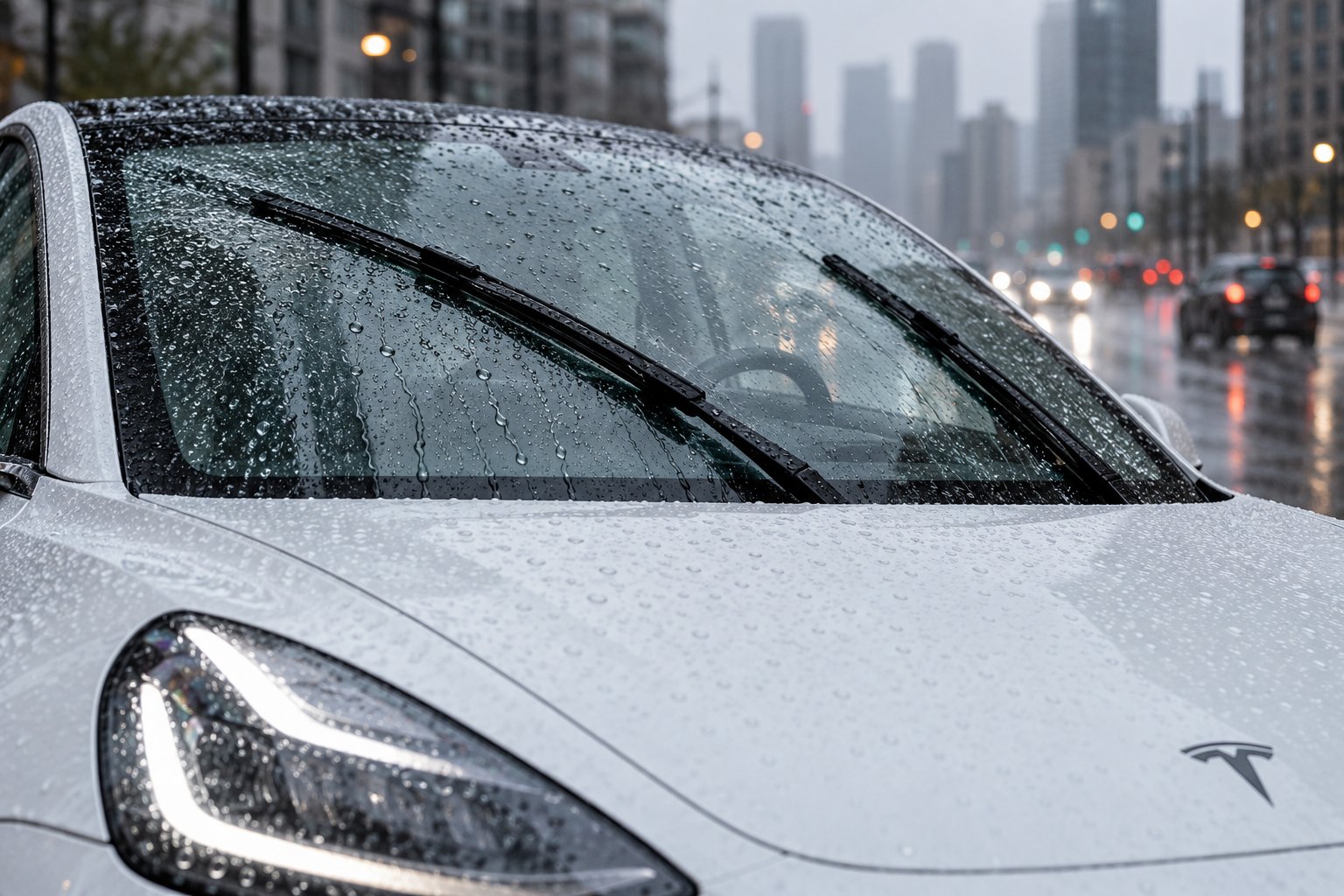
Tesla Model 3 Wiper Blade Size at a Glance
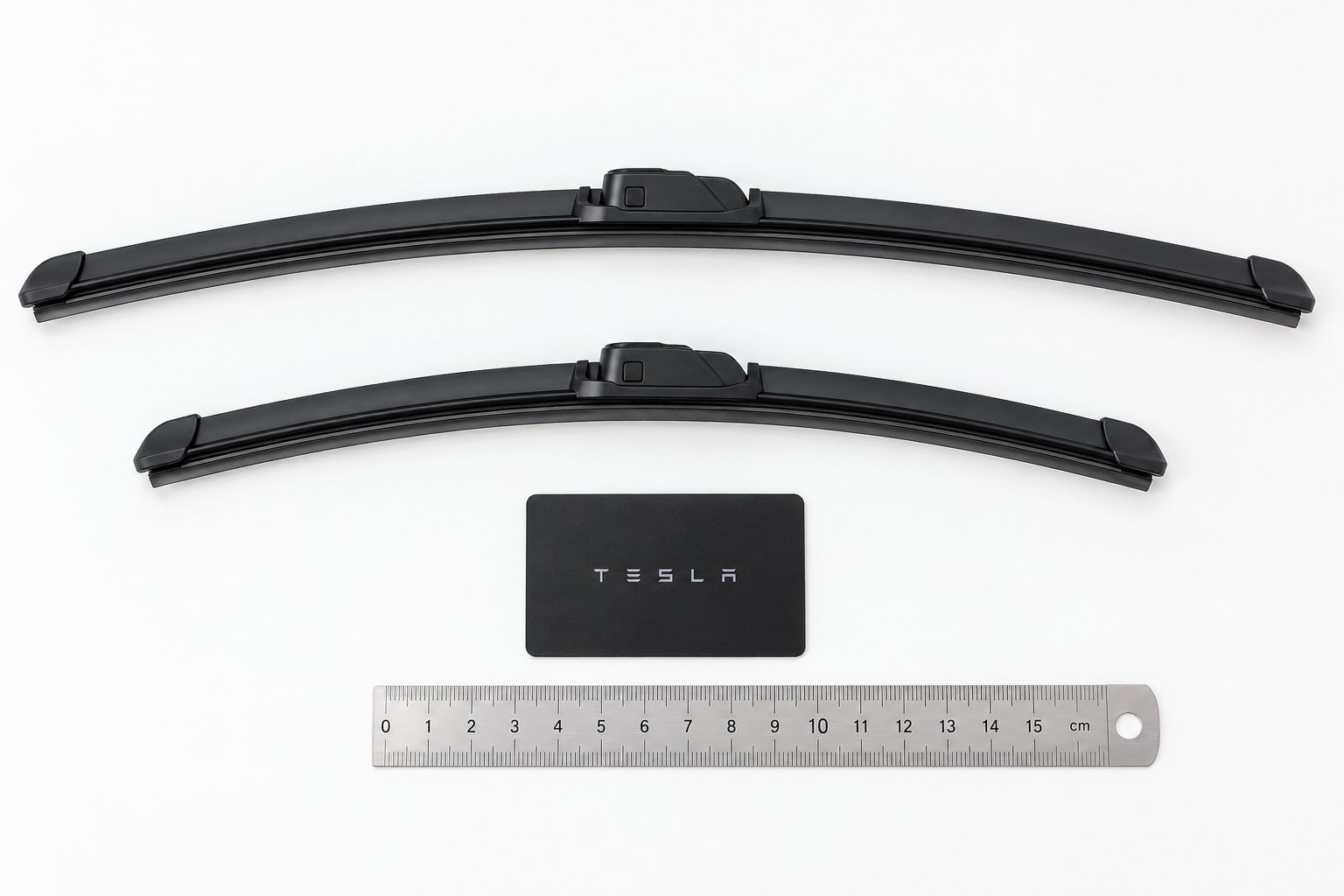
The Tesla Model 3 wiper blade size is 26 inches (650 mm) on the driver side and 19 inches (475 mm) on the passenger side, according to Tesla's official owner's manual. There is no rear wiper on any Model 3 variant. Both Tesla windshield wipers use a beam-style (flat) blade design with a push-button connector specific to the vehicle.
The Quick Answer to Tesla Model 3 Wiper Blade Size
If you just need the numbers, here they are in one simple table:
| Position | Blade Length | Blade Type |
|---|---|---|
| Driver Side | 26 inches (650 mm) | Beam / flat style, push-button connector |
| Passenger Side | 19 inches (475 mm) | Beam / flat style, push-button connector |
| Rear | None | N/A |
You might notice some aftermarket retailers listing the passenger blade as 18 inches instead of 19. That discrepancy is surprisingly common and comes down to differences in measurement methods between manufacturers. We'll unpack exactly why that happens later in this article.
Does the Tesla Model 3 Have a Rear Wiper?
This is one of the most frequent questions from new owners, especially those switching from an SUV or hatchback. The short answer is no.
The Tesla Model 3 is a sedan with a sloped rear window and does not include a rear wiper on any model year or trim.
Unlike the Model Y, which features a rear wiper for its liftgate-style hatch, the Model 3's sedan design channels water off the rear glass naturally. So when shopping for Tesla wiper blades, you only need two: one 26-inch blade for the driver side and one 19-inch blade for the passenger side. That said, picking the right replacement involves more than just matching the length. The connector type, blade style, and even how you measure can trip up first-time buyers, which is exactly what the full year-by-year breakdown ahead will clarify.
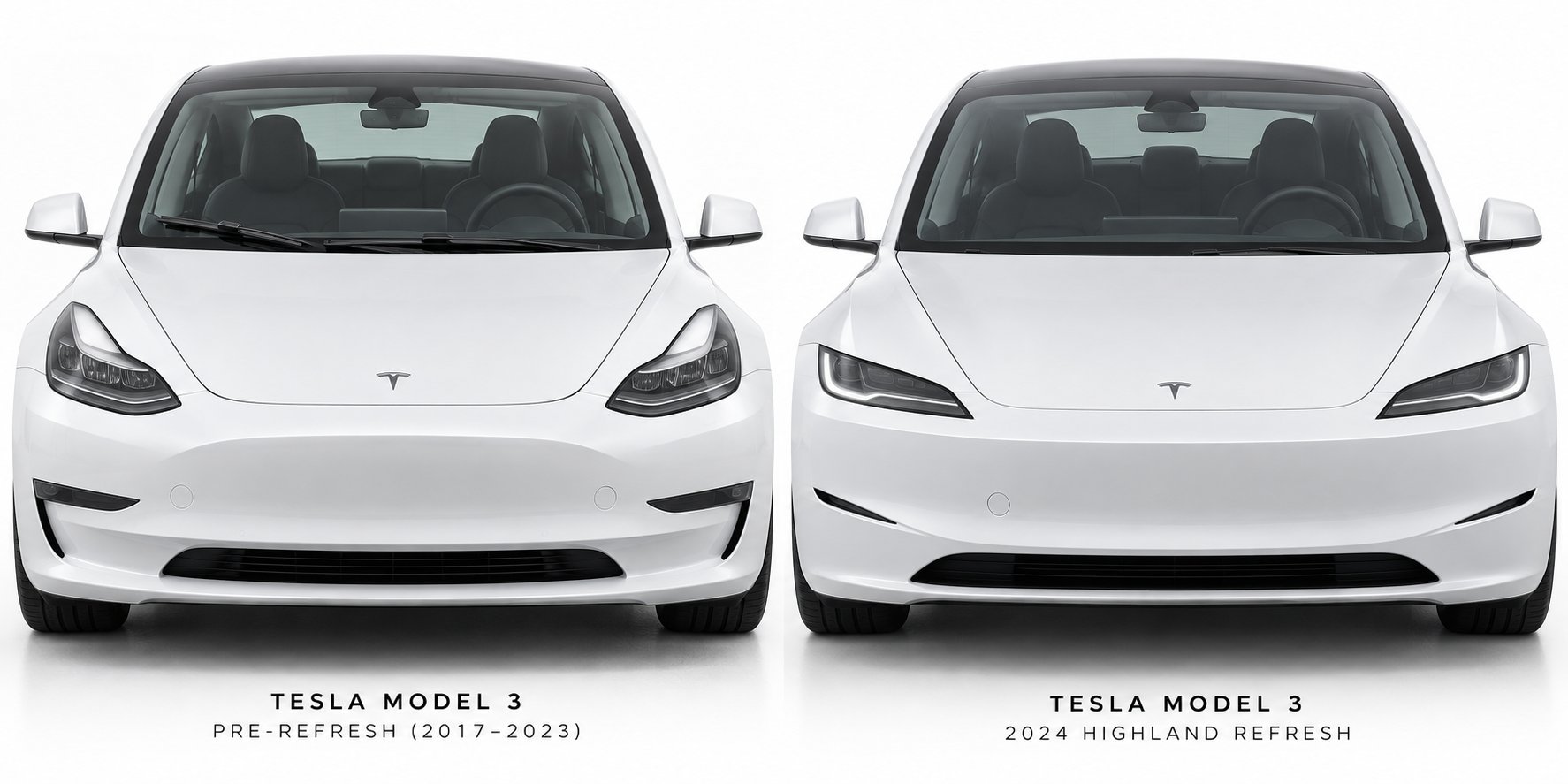
Complete Wiper Blade Size Chart for Every Tesla Model 3 Year
Knowing the general blade lengths is helpful, but what if your Model 3 rolled off the line in 2018? Or what if you just picked up a 2024 Highland refresh? Does the year actually matter when it comes to Tesla model 3 wiper blades? The answer is nuanced — the blade dimensions themselves have stayed remarkably consistent, but the physical connector changed around 2024. A single consolidated reference covering every production year eliminates the guesswork entirely.
One challenge you'll run into is that Tesla's own documentation often omits explicit blade lengths from certain pages or buries the specs deep within the owner's manual. The Tesla DIY service guide does confirm the measurements — 26 inches (650 mm) for the driver side and 19 inches (475 mm) for the passenger side — but third-party confirmation from trusted sources like Not a Tesla App helps validate that these specs apply across all model years.
Wiper Sizes for Pre-Refresh Tesla Model 3
The original Tesla Model 3 began deliveries in mid-2017 and continued through late 2023 before the Highland refresh arrived. Throughout that entire production run, the windshield dimensions and wiper geometry stayed the same. Here's the full breakdown:
| Model Years | Driver-Side Length | Passenger-Side Length | Attachment Type | Notes |
|---|---|---|---|---|
| 2017–2019 (Early Production) | 26 in (650 mm) | 19 in (475 mm) | Push-button connector (pre-2024 style) | Original design; sizes established at launch |
| 2020–2021 | 26 in (650 mm) | 19 in (475 mm) | Push-button connector (pre-2024 style) | No changes to wiper system despite other vehicle updates |
| 2022–2023 | 26 in (650 mm) | 19 in (475 mm) | Push-button connector (pre-2024 style) | Final pre-refresh years; same blade specs |
The consistency here is worth emphasizing. Whether you own a 2018 Long Range or a 2023 Performance, your tesla wiper blade replacement specs are identical. The 26-inch driver blade and 19-inch passenger blade with a push-button connector have been the standard since day one. This makes shopping for replacements straightforward — as long as you match the connector style to your production era.
Wiper Sizes for the Highland Refresh Model 3
Tesla introduced the Model 3 Highland refresh for the 2024 model year, bringing a redesigned front end, updated interior, and revised exterior styling. Naturally, owners wondered whether the wiper system changed along with everything else.
The good news? The blade lengths remain the same. The Highland refresh still uses a 26-inch driver-side blade and a 19-inch passenger-side blade. However, there is one critical detail to watch for: the connector mechanism itself was updated. Tesla's official service documentation distinguishes between "vehicles manufactured prior to approximately 2024" and "vehicles manufactured as of approximately 2024" when illustrating the blade removal process. This indicates a revised push-button connector design on the Highland model.
| Model Years | Driver-Side Length | Passenger-Side Length | Attachment Type | Notes |
|---|---|---|---|---|
| 2024+ (Highland Refresh) | 26 in (650 mm) | 19 in (475 mm) | Push-button connector (updated 2024+ style) | Same blade lengths; revised connector design compared to pre-2024 models |
What does this mean in practice? If you're buying aftermarket blades, you'll want to verify that the connector tab matches your specific car. A blade designed for a 2020 Model 3 might be the correct length for a 2024 Highland but could use a slightly different locking tab configuration. Always confirm compatibility with your model year — not just the blade size — before purchasing.
This distinction also matters if you're browsing tesla model y windshield wipers alongside Model 3 blades. While the Model Y shares the same 26-inch driver blade, its passenger-side blade is 20 inches rather than 19, and the rear wiper adds a third blade to the shopping list. Mixing up parts between the two vehicles is easier than you'd think, especially when aftermarket listings group them together. A direct side-by-side comparison of these two models clears up exactly where the overlap ends and the differences begin.
The 18-Inch vs 19-Inch Passenger Blade Mystery Explained
Here's a frustrating scenario: you search for a replacement tesla wiper blade for the passenger side, and one retailer says you need an 18-inch blade while another insists it's 19 inches. Both sites look equally credible. Both claim Tesla compatibility. So which one is right?
Surprisingly, the answer is that both can be technically correct — depending on how the blade was measured. But if you want the definitive number, Tesla's own owner's manual specifies the passenger-side blade as 19 inches (475 mm). That's the figure to trust when placing an order.
Why Some Sources Say 18 Inches and Others Say 19 Inches
The confusion stems from a surprisingly mundane cause: measurement methodology. When manufacturers measure a wiper blade, there's no single universal standard for what gets measured. Some measure the entire blade assembly from tip to tip, including the end caps and connector housing. Others measure only the rubber wiping edge — the part that actually contacts the glass. Still others round to the nearest common retail size.
Consider the metric specification Tesla provides: 475 mm. Convert that to inches and you get approximately 18.7 inches. Depending on which direction a manufacturer rounds, that number becomes either 18 or 19 inches on the packaging. A brand that rounds down labels it 18 inches. A brand that rounds up — or measures the full frame length including end caps — labels it 19 inches.
There are a few additional factors driving the inconsistency:
- Rubber edge vs. total frame length: The rubber wiping element is often slightly shorter than the overall blade housing. A measurement of just the rubber may yield a number closer to 18 inches, while the full assembly tips past 18.5 inches.
- Rounding conventions by region: Some aftermarket brands round to even numbers for simpler packaging and inventory management, which can nudge an 18.7-inch blade down to 18 inches.
- Aftermarket labeling flexibility: Unlike OEM parts that follow Tesla's exact specifications, aftermarket brands sometimes adjust their listed sizes to match standard retail categories. An 18-inch and a 19-inch blade from different brands may actually be nearly identical in physical length.
The bottom line? A site listing 18 inches and a site listing 19 inches are often describing the same physical blade — just measured or labeled differently. Tesla's official spec of 475 mm (19 inches) should be your reference point, because that measurement accounts for the full blade length needed for proper windshield coverage.
How to Verify the Correct Size for Your Specific Vehicle
Rather than relying solely on third-party listings, you can confirm the exact tesla windshield wiper size yourself. Here are three reliable verification methods:
- Measure the existing blade: Remove the passenger-side wiper blade and measure it from end to end with a tape measure. Include the full housing but not the connector tab that attaches to the wiper arm. This gives you the actual installed length your car was designed around.
- Check the part number on your current blade: Look for a printed or stamped part number on the blade housing or connector. Cross-reference that number on parts.tesla.com or a trusted aftermarket database to confirm the listed dimensions.
- Reference the Tesla parts catalog using your VIN: Entering your vehicle identification number on Tesla's parts site pulls up components specific to your exact production date and configuration, removing any ambiguity about connector style or blade length.
One reassuring detail worth noting: a 1-inch discrepancy matters far less with beam-style blades than it would with old-fashioned bracket-style wipers. Beam blades flex uniformly across the entire windshield surface, so a blade that's half an inch shorter than spec still maintains contact across most of its sweep. Bracket-style blades, by contrast, rely on rigid pressure points that lose coverage more dramatically when undersized.
That said, "close enough" isn't the same as "correct." A blade that's even slightly too short can leave a thin unwiped strip near the edge of the windshield — exactly where water tends to pool. On the Tesla Model 3's expansive glass, that strip is more visible and more distracting than on a smaller windshield. Aim for the manufacturer-specified 19-inch (475 mm) length to ensure full passenger-side coverage without streaking at the margins.
Getting the size right is only half the equation, though. The Model 3 shares its driver-side blade length with another popular Tesla, and owners frequently cross-shop parts between the two vehicles. Understanding where those specs genuinely overlap — and where they don't — prevents costly mix-ups at checkout.
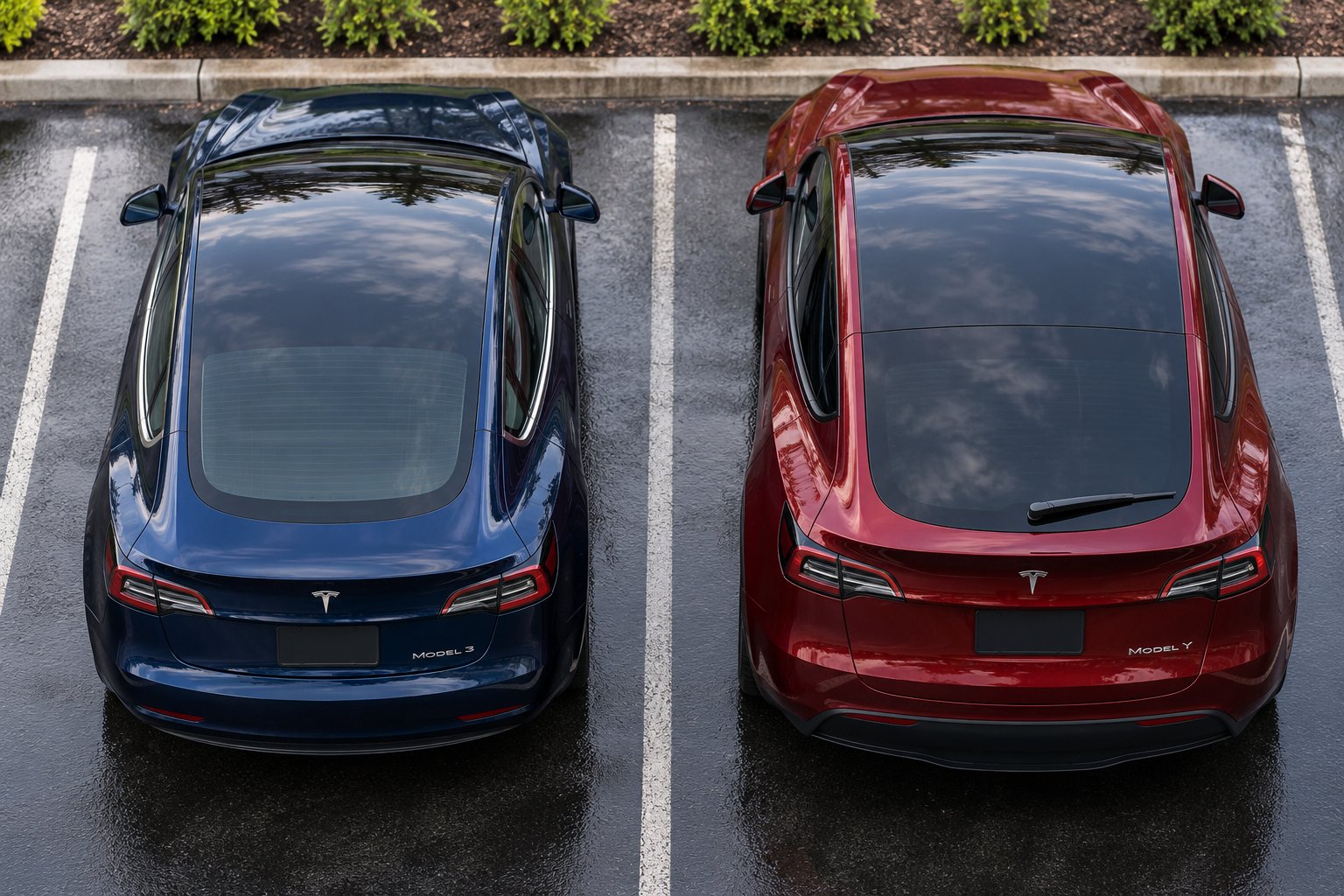
Tesla Model 3 vs Model Y Wiper Blade Comparison
If you own both a Model 3 and a Model Y — or you're helping a friend shop for tesla wipers — it's tempting to assume the blades are interchangeable. The two vehicles share a platform, a similar price bracket, and even the same driver-side blade length. But "similar" and "identical" aren't the same thing, and grabbing the wrong passenger-side blade because a listing said "fits Model 3 and Model Y" can leave you with imperfect coverage and annoying streaks.
A direct side-by-side comparison strips away the guesswork.
Where Model 3 and Model Y Wiper Specs Overlap
The overlap between these two vehicles is real — but limited. Both use the same 26-inch beam-style blade on the driver side with a push-button connector, so that single blade is genuinely cross-compatible. Beyond the driver side, however, the specs diverge. The table below lays out every relevant detail in one view:
| Specification | Model 3 | Model Y |
|---|---|---|
| Driver-Side Length | 26 in (650 mm) | 26 in (650 mm) |
| Passenger-Side Length | 19 in (475 mm) | 20 in (500 mm) |
| Rear Wiper | None | Yes (included on all trims) |
| Attachment Type | Push-button connector | Push-button connector |
| Blade Style | Beam / flat (bracketless) | Beam / flat (bracketless) |
| Total Blades Needed | 2 | 3 |
Notice the passenger-side difference: the Model 3 uses a 19-inch blade while the Model Y uses a 20-inch blade. That single inch matters. A 19-inch blade installed on the Model Y's passenger side would leave an unwiped strip along the upper edge of its windshield. Going the other direction — putting a 20-inch Model Y blade on the Model 3 — risks the blade extending past its intended sweep zone, potentially catching on the windshield trim or A-pillar gasket.
The driver-side blade, though, is fair game. If you already have a spare 26-inch blade at home, it works on either vehicle without modification. The push-button connector and beam-style profile are identical across both models, so you'll hear that same reassuring click when it locks into place.
Key Differences That Affect Which Blades You Buy
The most obvious distinction is the rear wiper. The Model Y's hatchback design includes a rear wiper that the Model 3's sedan profile simply doesn't need. If you own a Model Y, your replacement shopping list is three blades, not two. Forgetting the rear wiper is a common oversight — especially for owners who previously drove a Model 3 and switched to a Model Y without updating their mental checklist.
Windshield geometry is the subtler difference. Even though both vehicles share the same driver-side blade length, the Model Y's windshield sits at a slightly different rake angle and has a marginally different curvature profile. In practice, you'll rarely notice a performance gap when using the same 26-inch blade on both cars. Beam-style blades are designed to flex and conform to curved glass, so they adapt well to minor geometric variations. The passenger side, however, is where curvature differences become more consequential — which is exactly why Tesla specs a slightly longer blade for the Model Y.
Here's where aftermarket listings can get tricky. You'll find plenty of wiper blade sets marketed as "fits Tesla Model 3 and Model Y." When is that claim accurate? Typically when the listing includes a 26-inch driver blade paired with separate passenger-side options for each vehicle. A responsible seller will either ship two different passenger blades or clearly state which model the passenger blade fits.
Be cautious when a listing bundles a single pair of identically sized blades and claims dual compatibility. If the package contains one 26-inch and one 19-inch blade, it's a Model 3 set — not a universal one. If it contains one 26-inch and one 20-inch blade, it's meant for the Model Y. Any listing that doesn't specify the passenger-side length for each model is a red flag worth investigating before you click "add to cart."
For owners of other Tesla models curious about cross-compatibility, the pattern holds: tesla model s wiper blades use a 26-inch driver blade on 2021+ vehicles but pair it with a 20-inch passenger blade and a different connector on pre-2021 models. The Cybertruck is in its own category entirely, with a single massive 48-inch blade. Each Tesla model has its own specific combination, so always verify by vehicle — not by brand alone.
Getting the right size and the right model match is the foundation. But even a perfectly sized blade won't perform well forever. Knowing when your current blades have crossed the line from "slightly worn" to "actively dangerous" is a skill every Tesla owner should develop — especially given how worn wipers interact with the car's camera-based safety systems.
Signs Your Tesla Model 3 Wiper Blades Need Replacement
A brand-new set of wiper blades feels invisible — they sweep quietly, leave the glass spotless, and you forget they exist. A failing set, on the other hand, announces itself in the most annoying ways possible. The tricky part? Wiper degradation is gradual. You adapt to slightly worse visibility without realizing it until a heavy downpour catches you off guard. Recognizing the early warning signs keeps you ahead of the problem — and on the Tesla Model 3, worn blades carry consequences that go beyond just a dirty windshield.
Visual and Audible Warning Signs on Your Windshield
Most drivers know that streaky wipers signal trouble, but there are several distinct symptoms worth watching for. Each one points to a different type of wear, and catching them early can save you from reduced visibility during the worst possible moment.
- Persistent streaking after washer fluid application: Thin lines of water remaining on the glass after a full wipe cycle are the most common early indicator. If the streaks persist even after spraying fresh washer fluid, the rubber edge has likely developed flat spots or micro-tears that prevent uniform contact with the glass.
- Chattering or skipping sounds during operation: A rhythmic juddering noise — sometimes accompanied by the blade visibly hopping across the windshield — means the rubber has hardened or warped. Instead of gliding smoothly, the blade catches and releases in rapid succession. This is especially noticeable at lower wiper speeds.
- Visible cracks, tears, or deformation in the rubber edge: Pull up the wiper arm (using Service Mode, which we'll cover in the next section) and inspect the blade's rubber strip closely. Cracks running along the wiping edge, chunks of missing rubber, or a blade that has taken on a permanent curve or set are all signs that the material has degraded past the point of effective use.
- Uneven wiping patterns: If one section of the windshield clears perfectly while another stays smeared, the blade's pressure distribution has become inconsistent. On beam-style blades like those the Model 3 uses, this usually means the internal spring steel has lost tension in a specific zone, or the rubber has worn unevenly due to windshield contaminants like tree sap or road film.
- Squealing on a wet windshield: A sharp, high-pitched squeal during rain is different from chattering. It often indicates that the blade's wiping angle has shifted — either because the rubber has worn asymmetrically or because the blade isn't seated properly in the push-button connector.
Here's a detail specific to the Model 3 that makes these symptoms harder to ignore: the windshield is large. Really large. That expansive glass surface means any streaking, smearing, or unwiped patches occupy more of your visual field than they would on a compact car with a smaller windshield. A streak that might be a minor annoyance on a Honda Civic becomes a significant distraction on the Model 3, especially during nighttime driving when oncoming headlights scatter through water residue and create glare patterns across the entire pane.
Auto manufacturers generally recommend replacing wiper blades every 6 to 12 months, depending on driving habits, climate, and maintenance routine. A biannual replacement schedule — once in fall before winter weather and once in spring — keeps you ahead of the most demanding seasons.
How Worn Wipers Affect Autopilot Camera Visibility
This is where the Tesla Model 3's wiper blade condition becomes a genuine safety concern rather than just a comfort issue. The three forward-facing Autopilot cameras are mounted behind the upper-center section of the windshield, and they rely entirely on clear glass to function. Tesla's vision-based system processes over 1.2 billion pixels per second from eight cameras — and even minor obstructions in front of the forward-facing cluster can disable Autopilot, Full Self-Driving features, and critical safety systems like Automatic Emergency Braking.
Imagine this scenario: your wipers leave a thin film of smeared residue across the upper portion of the windshield after every sweep. To your eyes, looking through the lower and center sections of the glass, visibility seems acceptable. But the Autopilot cameras sit higher, right in that smear zone. The result? You might see a "Camera blocked or blinded" warning on your touchscreen despite the windshield appearing mostly clean from the driver's seat. The cameras operate at a level of sensitivity that far exceeds what the human eye tolerates, so degradation you barely notice can be enough to trigger a system fault.
Worn tesla windshield wiper blades that leave haze, micro-droplets, or streaky residue in the camera housing area effectively blind the very system designed to keep you safe. This isn't a theoretical risk — it's a direct functional consequence of deferred blade replacement. And unlike a traditional car where worn wipers only affect your personal visibility, on a Tesla they can degrade an entire layer of automated safety features.
Seasonal Timing and Climate Considerations
When you replace your blades matters almost as much as whether you replace them. Two seasons are especially hard on wiper rubber:
- Winter: Freezing temperatures cause natural rubber compounds to stiffen and lose flexibility. Ice scraping, road salt spray, and repeated freeze-thaw cycles accelerate cracking along the wiping edge. Owners in snowy regions who park outdoors should inspect blades monthly from November through March.
- Summer: Extended UV exposure and high dashboard temperatures — which radiate heat onto the windshield — dry out rubber compounds and cause them to harden prematurely. If you park in direct sunlight regularly, expect shorter blade life than Tesla's general 12- to 18-month estimate.
For drivers in harsh winter climates, silicone wiper blades deserve serious consideration as an alternative to standard natural-rubber blades. The performance difference in freezing conditions is meaningful: silicone remains elastic down to approximately -60 degrees Fahrenheit, while rubber begins stiffening near 32 degrees Fahrenheit. Silicone blades also resist freezing to the windshield surface and naturally repel water thanks to their hydrophobic properties, which reduces ice buildup during freezing rain.
The trade-off? Silicone blades typically cost 1.5 to 2 times more than rubber equivalents, and they can be slightly less effective in extreme heat. For Model 3 owners in temperate climates who replace blades twice a year anyway, high-quality natural rubber remains a perfectly practical choice. But if you live somewhere that regularly dips below freezing and you want longer intervals between tesla windshield wiper replacement, silicone offers a genuine performance advantage during the months that matter most.
Regardless of which material you choose, the replacement process itself is uniquely Tesla. You can't simply lift the wiper arms like on a conventional car — the Model 3 requires activating a dedicated software mode before you can safely access the blades. Getting this step wrong risks scratching the glass or damaging the spring-loaded arm mechanism, so a clear, step-by-step walkthrough is worth following closely.
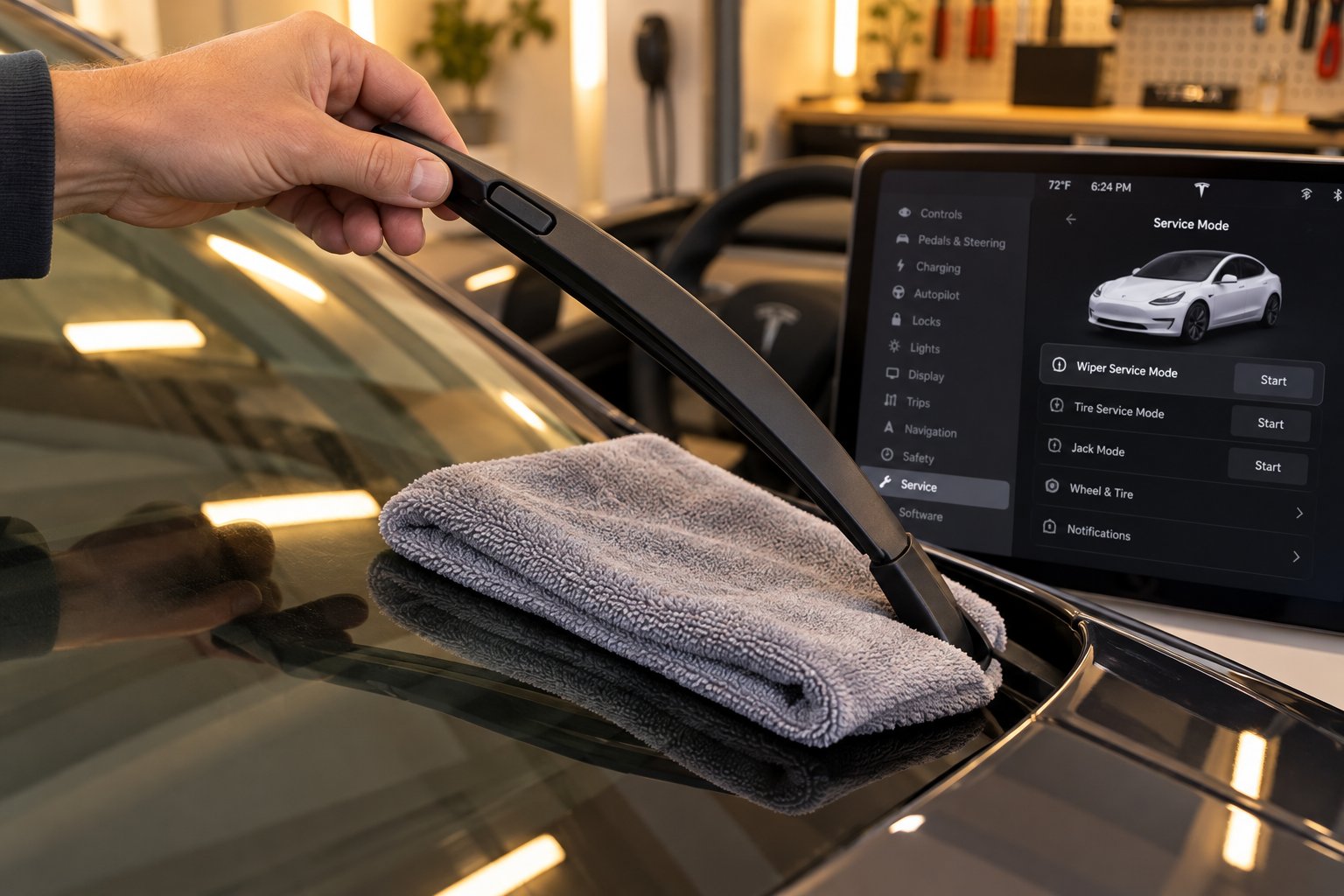
How to Replace Tesla Model 3 Wiper Blades Step by Step
Replacing tesla model 3 wipers isn't complicated, but it does follow a process that's fundamentally different from any other car you've likely owned. There's no grabbing the wiper arm and flipping it upward like you would on a Honda or a Toyota. Tesla's wiper arms are spring-loaded against the glass and lack a traditional locking detent that holds them in the raised position. Pulling one up without authorization from the vehicle's software risks snapping the arm back into the windshield — hard enough to crack the glass or damage the arm mechanism itself.
The entire process hinges on a touchscreen-activated feature called Wiper Service Mode. Miss that step, and you're setting yourself up for an expensive repair before you've even touched the blade.
How to Activate Wiper Service Mode on the Touchscreen
Wiper Service Mode repositions the wiper arms to a raised, accessible angle so you can safely work on the blades. According to Tesla's owner's manual, here's how to engage it:
- Shift the vehicle into Park and make sure the wipers are turned off.
- On the touchscreen, navigate to Controls > Service > Wiper Service Mode.
- Tap to enable it. The wiper arms will automatically glide upward to the service position.
That's it — three taps and the car does the rest. You'll see the arms settle into a slightly raised stance that gives you enough clearance to reach the push-button connector on each blade. One important caution from Tesla's documentation: even in Service Mode, the wiper arms do not lock into the lifted position. You can gently lift an arm a short distance away from the glass to access the blade, but don't force it beyond its intended range of motion. There's no detent holding it there, so it can spring back if released carelessly.
Before touching anything, place a towel or microfiber cloth on the windshield beneath the wiper arms. The Tesla service manual explicitly recommends this step to prevent scratches or cracks if an arm slips from your grip. It takes five seconds and can save you from a windshield replacement bill.
Removing the Old Blade and Installing the New One
With Service Mode active and your protective towel in place, the actual blade swap is straightforward. Follow these steps in order:
- Lift the wiper arm slightly away from the windshield. Just enough to access the blade connector — a few inches is plenty. Remember, the arm won't lock in the raised position, so hold it steady with one hand.
- Locate the push-button release tab on the connector. You'll find a small locking tab where the blade meets the wiper arm. On vehicles manufactured before approximately 2024, this tab sits in a slightly different position than on 2024+ Highland models, but the release mechanism works the same way.
- Press the locking tab and slide the old blade away from the arm. Hold the wiper arm firmly while pressing the tab, then slide the blade in the direction away from the arm's hook end. It should release smoothly with minimal force.
- Align the new blade's connector with the wiper arm. Position the replacement blade so the connector tab lines up with the arm's mounting point. Slide it toward the end of the wiper arm until the retaining tab clicks securely into place.
- Confirm the click. This is the most critical moment of the installation. You should both hear an audible click and see the retaining tab visibly seated. Tesla's documentation recommends performing a push-pull test — gently tug the blade to verify it doesn't shift or detach. If it moves at all, reseat it until the lock engages fully. A blade that isn't properly secured can detach during use, and at highway speeds that means potential damage to your windshield or the vehicle behind you.
- Repeat for the other side. The process is identical for both the driver-side (26-inch) and passenger-side (19-inch) blades. Just remember they're different lengths — don't mix them up.
- Remove the protective towel from the windshield.
- Disable Wiper Service Mode. Return to Controls > Service > Wiper Service Mode on the touchscreen and tap to turn it off. The arms will lower back to their normal resting position against the glass.
The entire process — both sides — takes under five minutes once you've done it once. First-timers might spend a bit longer getting comfortable with the push-button release, especially on pre-2024 models where the tab can feel a little stiff if the old blade has been baking in the sun for a year.
Post-Installation Checks to Confirm Proper Fit
Snapping in a new blade and walking away isn't enough. A quick verification run catches problems before they become hazards on the highway.
Spray washer fluid and run the wipers through several full cycles at different speeds. While they're operating, watch for these indicators of a proper installation:
- Even coverage across the full sweep: Both blades should clear the glass uniformly from one edge of their arc to the other, with no dry patches or unwiped strips.
- No chattering or skipping: A properly seated blade glides silently. Any rhythmic hopping or squealing suggests the blade isn't sitting flat against the glass — possibly because the connector isn't fully clicked in, or because the blade style doesn't match the windshield curvature.
- No contact with windshield trim: Watch the outer edges of the wiper sweep carefully. A blade that's the wrong length can catch on the rubber gasket along the A-pillar or the bottom windshield trim, causing premature wear or tearing.
Here's a detail that catches some owners off guard: a blade with an incorrect connector type or a slightly off-spec length may appear to attach normally. It clicks on, it looks right, and the wipers seem to work during a quick test. But over the next few drives — especially in heavy rain — you'll notice subtle issues. Streaking near the blade tips, inconsistent pressure, or a faint rattle at higher speeds all point to a blade that technically fits but doesn't truly match the vehicle's specifications.
If you're shopping for a replacement and want an option specifically designed for the Model 3's push-button connection, CUTIM's Windshield Wiper for Tesla Model 3 / Model Y features a natural-rubber blade and reinforced frame built for this exact application. One practical note: the listing is for a single blade and does not specify its length, so confirm the exact dimensions and whether it's intended for the driver or passenger side directly with CUTIM before ordering. This is especially important given the Model 3's asymmetric blade sizes — a blade that works perfectly on one side won't deliver proper coverage on the other.
Even with the right blade and a clean installation, the replacement process can go sideways if you fall into a few surprisingly common traps. Some of these mistakes seem obvious in hindsight, but they account for the majority of wiper-related complaints from Tesla owners — and most are entirely preventable.
Common Mistakes to Avoid When Buying Model 3 Wiper Blades
The replacement procedure itself is simple enough — five minutes, no tools, done. But the mistakes that lead to frustration, wasted money, or even vehicle damage almost always happen before you touch the wiper arm. They happen in the shopping cart, in the assumptions you carry over from previous cars, and in the small steps you skip because they seem unnecessary. Every one of the errors below comes up repeatedly in Tesla owner forums and service center records, and every one is avoidable with a few minutes of awareness.
Buying the Wrong Attachment Type or Blade Style
This is the single most common purchasing mistake, and it stems from how wiper blades are sold across the broader auto parts industry. Walk into any parts store or browse any online retailer, and you'll find universal wiper blade kits that promise compatibility with dozens of vehicles. They achieve this through a bag of plastic adapters — small connector pieces designed to snap onto J-hook arms, bayonet arms, pin-style arms, and side-lock arms. The idea is that one blade fits everything.
The Tesla Model 3 doesn't use any of those attachment styles. It uses a specific push-button connector — sometimes called a pinch tab — that locks the blade directly onto the wiper arm with a spring-loaded retaining clip. Many universal kits include an adapter that loosely approximates this connection, but "loosely" is the operative word. An adapter that doesn't seat flush against the arm creates wobble. That wobble translates into uneven pressure across the blade, chattering during operation, and in worst-case scenarios, the blade detaching entirely at highway speed.
When you're shopping, look specifically for blades that list pinch-tab or push-button compatibility for Tesla vehicles — not blades that claim to work via an included adapter kit. A blade engineered with the correct connector built in will always outperform one that relies on a plastic intermediary to bridge the gap.
The second part of this mistake involves blade style. The Tesla Model 3's windshield has significant curvature — more than most sedans on the road. That curvature demands a beam-style (bracketless) blade, which uses a single piece of curved spring steel inside the rubber housing to distribute pressure evenly across the entire wiping surface. Every point of the blade maintains contact with the glass, even along the outer edges where curvature is most pronounced.
Conventional bracket-style blades — the kind with a visible metal frame and multiple articulating pressure points — simply cannot conform to this windshield geometry. They apply concentrated force at a few hinge points and leave the sections between those hinges with reduced contact. The result? Dry strips along the edges, unwiped crescents near the A-pillars, and an overall wiping performance that feels like a downgrade even when the blade is brand new. Beam-style blades aren't a premium upsell on the Model 3; they're a functional requirement.
Skipping Wiper Service Mode and Other Installation Errors
Beyond the purchase itself, installation is where a second wave of preventable mistakes shows up. Some are Tesla-specific quirks that catch owners migrating from conventional vehicles. Others are universal oversights that just happen to carry bigger consequences on this particular car.
- Attempting to lift wiper arms without activating Service Mode: This is the mistake that can cost you real money. On most cars, you simply flip the wiper arm away from the windshield and it locks at a 90-degree angle. On the Model 3, the arms park in a recessed position beneath the hood cowl, and there is no locking detent. Forcing an arm upward without first engaging Wiper Service Mode through Controls > Service > Wiper Service Mode risks bending the arm's spring mechanism, scratching the hood — especially on the tighter-clearance 2024+ Highland, where the park position sits even lower — or cracking the cowl trim. The ten seconds it takes to tap three buttons on the touchscreen eliminates all of these risks entirely.
- Using washer fluids that degrade rubber compounds faster: Not all washer fluids are created equal. Fluids containing harsh solvents, ammonia, or high concentrations of alcohol can accelerate the breakdown of natural rubber wiping edges. Over time, the rubber becomes brittle, cracks form along the contact edge, and blade life drops from the expected 6-to-12-month range to just a few months. Stick to washer fluids rated for automotive use, and in freezing climates, choose a winter-grade formula with antifreeze properties rather than improvising with household cleaners.
- Assuming both sides use the same blade length: It sounds obvious once you know the specs, but plenty of owners order two identical blades without checking. The driver side is 26 inches. The passenger side is 19 inches. Installing a 26-inch blade on the passenger side means the blade extends beyond its intended sweep zone and can collide with the windshield trim, the A-pillar gasket, or even the driver-side blade during operation. Going the other direction — two 19-inch blades — leaves the driver side with a massive unwiped section directly in your line of sight.
- Neglecting to test the wipers immediately after installation: Clicking the blade in and walking away feels like a finished job. But a post-installation test — spraying washer fluid and running a few cycles — is the only way to verify even coverage, proper seating, and the absence of chattering or contact with the windshield trim. Finding a problem in your driveway takes thirty seconds to fix. Finding it during a sudden downpour on the highway is a different experience entirely.
- Buying blades based solely on vehicle model name without confirming the exact measurement: Some aftermarket listings use vague compatibility claims like "fits Tesla Model 3" without specifying the blade length in inches or millimeters. This is a red flag. As we covered earlier, the passenger-side blade is listed as both 18 and 19 inches across different retailers due to measurement methodology differences. A listing that doesn't commit to a specific dimension may be shipping a blade that's close but not quite right — and "close" still means compromised coverage at the edges of the wiper arc. Always verify the exact inch or millimeter measurement before placing an order, regardless of what model name appears in the product title.
One more subtle trap deserves a mention: buying blades marketed for the Cybertruck or another Tesla model and assuming cross-compatibility. The Cybertruck uses a completely different wiper system — a single 33-inch blade with a side-pin connector — that shares nothing with the Model 3's setup. Even swapping between Model 3 and Model Y passenger-side blades introduces a 1-inch length mismatch. Each Tesla model has its own specific combination of length, connector, and blade style. Treating "Tesla" as a universal category when shopping for wipers is a fast track to a return shipment.
Avoiding these errors puts you in a strong position — you've got the right size, the right connector, and a clean installation. The remaining question is how to evaluate the actual blade options in front of you and decide which replacement delivers the best combination of fit, durability, and value for your specific driving conditions.
Choosing the Right Replacement Wiper for Your Tesla Model 3
Knowing what to avoid is half the battle. The other half is knowing what to look for — because the aftermarket tesla wiper landscape is crowded, and not every blade that claims Model 3 compatibility actually delivers the performance you'd expect. OEM blades from Tesla guarantee a perfect fit, but they come at a premium price and require ordering through the Tesla Shop or a service center. Quality aftermarket options can match that fit and sometimes exceed that durability, provided you evaluate them against the right criteria before adding anything to your cart.
The goal here isn't to declare a single "best" blade. It's to give you a framework that works regardless of which brand catches your eye — so you can evaluate any tesla model 3 windshield wiper blades on their actual merits rather than marketing claims.
What to Look for in a Tesla Model 3 Replacement Blade
Every replacement blade you consider should pass through five checkpoints. If it fails any one of them, move on — no matter how appealing the price or how persuasive the listing copy.
- Correct blade length: 26 inches (650 mm) for the driver side, 19 inches (475 mm) for the passenger side. This is non-negotiable. As we've covered, some listings round the passenger blade down to 18 inches, so confirm the exact millimeter measurement (475 mm) whenever possible. A blade that's even marginally too short leaves an unwiped strip at the edge of the windshield — right where water pools and glare concentrates.
- Compatible push-button (pinch-tab) connector: The Model 3 does not use a J-hook, bayonet, or pin-style arm. Any blade that relies on a universal adapter to bridge the gap between a generic connector and the Tesla arm introduces wobble and reduces wiping consistency. Look for blades that integrate the pinch-tab connector directly into the blade housing, not ones that include it as a snap-on accessory in a bag of adapters.
- Beam-style (bracketless) design: The Model 3's curved windshield demands uniform pressure distribution across the entire blade length. Beam blades achieve this with internal spring steel that flexes to match the glass curvature. Conventional framed blades and even some hybrid designs can't maintain edge-to-edge contact on this windshield geometry. Treat beam-style construction as a hard requirement, not a preference.
- Rubber compound quality: This is where the two main material families diverge. Natural rubber offers excellent flexibility and quiet operation, making it the go-to choice for temperate climates and owners who replace blades on a regular schedule. Silicone compounds last significantly longer — often 18 months or more — and resist UV degradation, freezing, and heat better than rubber. The trade-off is a slightly higher upfront cost and, in some cases, a brief break-in period where the blade deposits a hydrophobic film on the glass before reaching peak performance.
- Warranty or satisfaction guarantee: A manufacturer willing to back their blade with a warranty is signaling confidence in the product. Look for at least a six-month coverage period. Blades sold with no warranty and vague return policies are often budget products repackaged under Tesla-specific branding — functional in the short term, but likely to degrade faster than options from established brands.
OEM vs. Aftermarket: The Real Trade-Off
Tesla's OEM blades — available through the Tesla Shop — are the baseline. They're guaranteed to fit your vehicle's connector, they're the exact tesla model 3 wiper size specified in the owner's manual, and they use the beam-style profile the windshield requires. The downside? Pricing tends to run higher than equivalent aftermarket options, availability can be inconsistent depending on your region, and you're limited to whatever rubber compound Tesla chose for that production run.
Quality aftermarket blades that meet all five criteria above can deliver identical — or in some cases superior — performance at a lower price point. The key word is "quality." Budget blades that cut corners on rubber composition or connector engineering will cost you more in the long run through shorter replacement intervals and compromised visibility. Think of it this way: you're not choosing between OEM and aftermarket. You're choosing between blades that meet Tesla's specifications and blades that don't. The brand name on the packaging matters far less than what's inside it.
Aftermarket Options Worth Considering
The table below compares several categories of replacement blades available for the Model 3. Rather than fabricating prices that fluctuate with market conditions, the focus is on what each option offers and what you should verify before buying.
| Brand / Category | Key Features | Rubber Type | What to Verify Before Buying |
|---|---|---|---|
| CUTIM Windshield Wiper for Tesla Model 3 / Model Y | Natural-rubber blade with reinforced frame; designed specifically for Tesla's push-button connection | Natural rubber | The listing is for a single blade and does not specify length or side fitment — confirm exact dimensions (26" or 19"), connector compatibility with your model year, and whether it's intended for the driver or passenger side directly with CUTIM before ordering |
| Premium Beam Blades (e.g., Bosch ICON) | Exclusive rubber compound; asymmetrical spoiler for uniform downforce; up to 40% longer lifespan than standard premium blades | Natural rubber (proprietary blend) | Confirm the listing includes the correct pinch-tab adapter for Tesla; buy the 26" and 19" sizes individually or as a matched set |
| Silicone Beam Blades | Extended lifespan (12–18+ months); hydrophobic coating deposits on glass over time; excellent cold-weather flexibility down to approximately -40°F | Silicone | Verify Tesla pinch-tab connector is included — not all silicone blades support push-button arms natively; expect a short break-in period of 15–20 wipe cycles before optimal performance |
| Mid-Range Beam Blades | Water-repellent coatings; universal adapter kits; solid all-weather performance at a moderate price point | Natural rubber or rubber-silicone blend | Check that the universal adapter kit specifically includes the Tesla pinch-tab connector; test for wobble after installation — adapter-based connections are more prone to looseness than integrated connectors |
| Budget Beam Blades | Lowest upfront cost; basic beam-style construction; suitable for mild climates with infrequent rain | Natural rubber (standard grade) | Expect replacement every 4–6 months rather than 6–12; verify the blade is genuinely beam-style and not a conventional framed blade marketed as "bracketless"; confirm exact inch/mm measurements in the listing |
A few patterns emerge from this comparison. Premium and silicone options carry higher upfront costs but stretch replacement intervals significantly — a meaningful advantage for owners who'd rather not think about wipers more than once a year. Mid-range blades hit a practical sweet spot for most drivers, delivering reliable performance at a price that doesn't sting when it's time for the semiannual swap. Budget blades serve a role for owners in dry climates who rarely need their wipers, but the shorter lifespan means you'll cycle through more sets over the same time period, narrowing the actual cost savings.
Across every tier, one principle holds: correct size and connector type matter more than brand prestige. A $12 blade with the right tesla model 3 wiper size and a properly integrated pinch-tab connector will outperform a $35 blade with an ill-fitting universal adapter every single time. Fit is the foundation. Rubber compound, warranty coverage, and brand reputation are all secondary considerations built on top of that foundation.
The best tesla wiper for your Model 3 is the one that matches the 26-inch driver and 19-inch passenger spec, clicks securely into the push-button arm without an adapter, and uses a beam-style design that conforms to the windshield curvature — regardless of what name is printed on the box.
Spend your comparison time verifying those three fundamentals, and the rest of the decision becomes a matter of personal preference rather than a gamble on compatibility.
Frequently Asked Questions About Tesla Model 3 Wiper Blade Size
1. What size wiper blades does a Tesla Model 3 use?
The Tesla Model 3 requires a 26-inch (650 mm) beam-style blade on the driver side and a 19-inch (475 mm) beam-style blade on the passenger side. Both blades attach via a push-button (pinch-tab) connector. There is no rear wiper on any Model 3 year or trim. These specs have remained consistent from the original 2017 production through the 2024+ Highland refresh, though the connector mechanism was slightly redesigned for 2024 and later models.
2. Why do some websites list the Tesla Model 3 passenger wiper blade as 18 inches instead of 19?
The discrepancy comes from how manufacturers measure. Tesla's official spec is 475 mm, which converts to roughly 18.7 inches. Brands that measure only the rubber wiping edge or round down label it 18 inches, while those measuring the full frame length or rounding up call it 19 inches. Both descriptions often refer to the same physical blade. To avoid confusion, match the metric measurement of 475 mm or follow Tesla's owner's manual, which lists 19 inches.
3. Can I use the same wiper blades on a Tesla Model 3 and Model Y?
Only the 26-inch driver-side blade is cross-compatible between the Model 3 and Model Y. The passenger side differs: the Model 3 uses a 19-inch blade while the Model Y requires a 20-inch blade. Additionally, the Model Y has a rear wiper that the Model 3 lacks, bringing its total blade count to three. Always verify both size and side fitment before purchasing blades marketed as fitting both models. Options like the CUTIM Windshield Wiper for Tesla Model 3 / Model Y (https://www.cutimauto.com/products/cutim-tesla-windshield-wiper-for-model-3-y) are designed for both vehicles, but since each listing covers a single blade, confirm the exact length and intended side with the seller.
4. How do I replace wiper blades on a Tesla Model 3?
First, activate Wiper Service Mode via Controls > Service > Wiper Service Mode on the touchscreen. This raises the arms to a safe working position. Place a protective towel on the windshield, then gently lift the arm a few inches. Press the push-button release tab on the connector, slide the old blade off, align the new blade, and push it in until you hear a firm click. Repeat on the other side, disable Service Mode, then test both blades with washer fluid. Never attempt to lift the arms without engaging Service Mode, as the spring-loaded mechanism can snap back and damage the glass.
5. Do worn wiper blades affect Tesla Autopilot performance?
Yes. The forward-facing Autopilot cameras sit behind the upper windshield and depend on an unobstructed view. Worn blades that leave smears, haze, or micro-droplets in the camera zone can trigger 'Camera blocked or blinded' warnings and temporarily disable Autopilot, Full Self-Driving, and Automatic Emergency Braking. Because the cameras are more sensitive than the human eye, degradation you barely notice from the driver's seat may be enough to impair the vision system. Inspecting and replacing blades every 6 to 12 months helps maintain both personal visibility and camera-dependent safety features.