
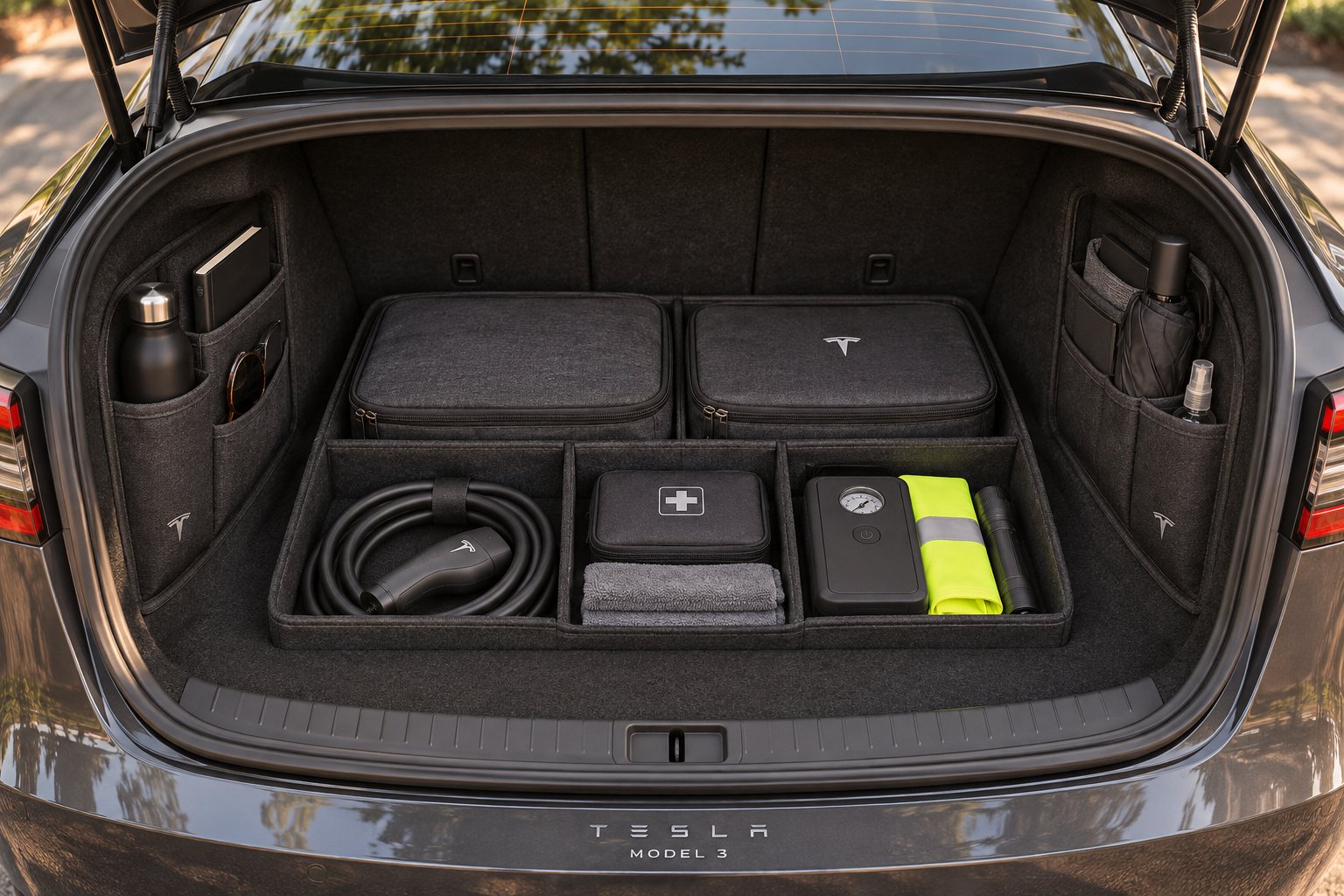
Why Your Tesla Model 3 Trunk Needs Better Organization
Imagine pulling into your driveway after a grocery run, popping the trunk, and finding eggs wedged under a gym bag, a bottle of olive oil rolling against your laptop case, and reusable shopping bags scattered into every corner. Sound familiar? The Tesla Model 3 trunk is generous in volume, yet its wide, flat cargo floor creates a frustrating paradox: the more space you have, the harder it is to keep anything in place.
Every sharp turn sends items sliding. Every hard stop launches loose cargo forward. And every time you open that trunk lid, you're greeted by a jumbled mess that takes twice as long to sort through as it did to load.
The tesla 3 trunk does include side pockets on the left and right, plus a recessed sub-trunk well beneath the floor. But none of these spaces come with built-in dividers. They're single, open cavities that swallow small items whole, forcing owners to improvise with cardboard boxes, tote bags, or the classic "just shove it in and hope for the best" approach.
The Flat Trunk Problem Every Model 3 Owner Recognizes
The root of the issue lies in the model 3 trunk design itself. There are no raised ridges molded into the floor, no permanent partitions separating zones, and the cargo surface is smooth enough that even heavy items shift freely under normal driving. The side pocket openings are wide but shallow in structure, meaning a first-aid kit and a water bottle occupy the same undivided space. The sub-trunk well, while deep enough to stash charging cables and roadside tools, functions as a single bucket with no internal organization. Tesla prioritized maximum cargo volume and a clean aesthetic, which works beautifully for large items but falls short for the everyday mix of small, oddly shaped belongings most owners actually carry.
What This Guide Covers
This article is your complete educational walkthrough for choosing the right tesla model 3 rear organizer without wasting money on accessories that don't fit, rattle during drives, or eat into your usable cargo space. Here's the roadmap:
- Every category of rear organizer available, from trunk side bins to under-seat storage boxes
- How material choices like ABS plastic, felt-lined shells, and flexible fabrics affect durability and noise
- OEM Tesla accessories versus aftermarket organizers and what trade-offs to expect
- Model-year compatibility between pre-Highland and Highland generations
- What installation actually looks like for each organizer type
- A deep dive into trunk side pocket organizers and their real-world uses
- How organizers affect seat folding and overall cargo flexibility
- A decision framework for matching your driving habits to the right organizer setup
Whether you just picked up a brand-new Highland Model 3 or you've been driving the original generation for years, the tesla trunk layout presents the same core challenge. The good news is that a growing ecosystem of purpose-built organizers now exists to solve it — but picking the wrong type can actually make things worse.
Every Type of Tesla Model 3 Rear Organizer Explained
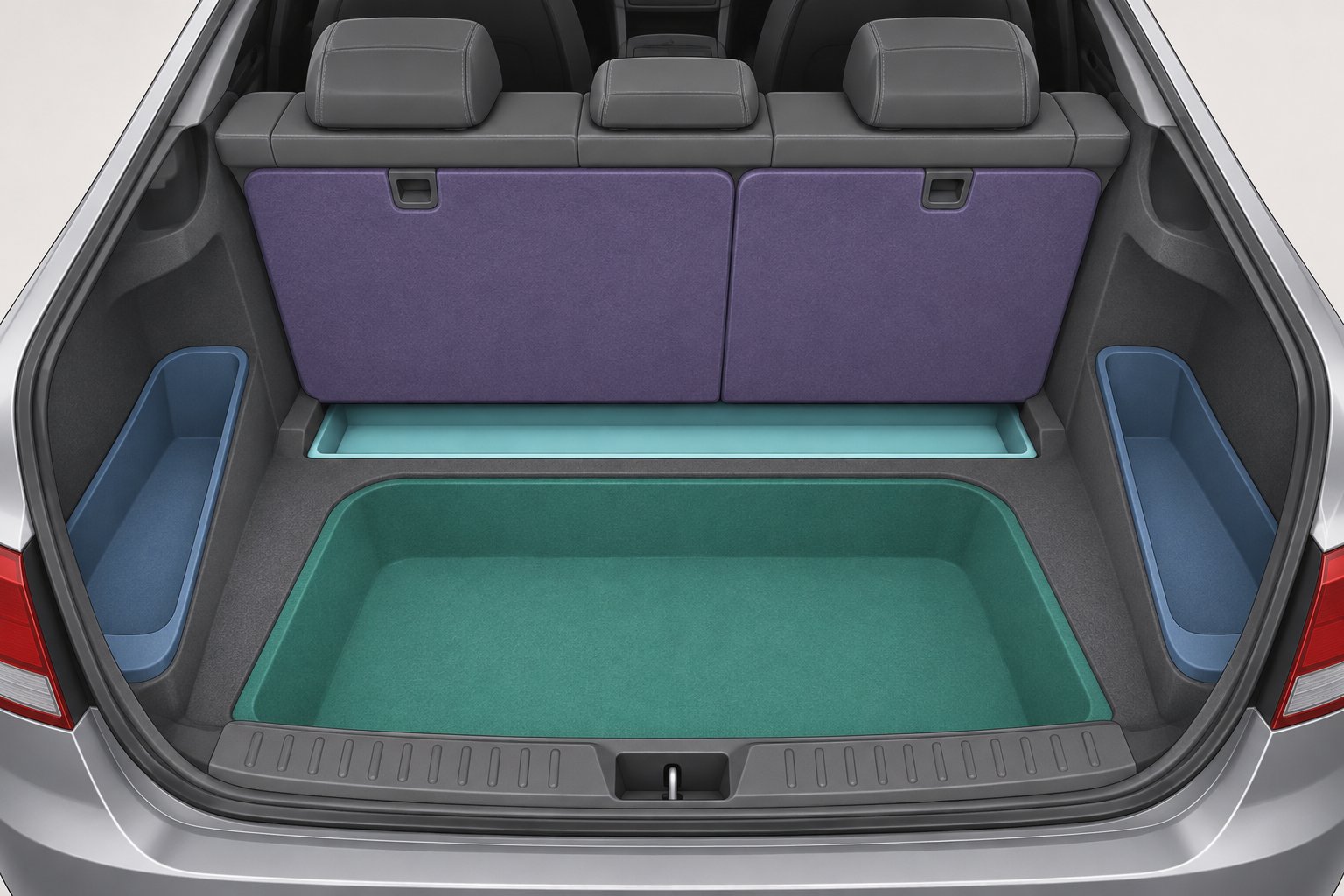
Not all rear organizers solve the same problem, and buying the wrong type is one of the fastest ways to waste money on a Tesla accessory. The market breaks down into four distinct categories, each targeting a different zone inside your tesla car trunk. Understanding what each one does — and where it lives in the vehicle — keeps you from ending up with an organizer that blocks seat folding, eats cargo volume, or simply doesn't address the mess you're actually dealing with.
Trunk Side Bin Organizers
The Model 3 trunk features left and right side pockets that are spacious enough to hold plenty of items but completely lack internal structure. A trunk side bin organizer drops into one or both of these pockets and partitions the space into smaller, defined compartments. Think of it as turning one deep, chaotic pocket into a series of cubbies.
These organizers typically sit flush with the pocket walls, keeping small items like bottles, flashlights, reusable bags, and first-aid supplies upright and separated from whatever you toss onto the main cargo floor. Because they occupy space that's already recessed into the trunk walls, they don't reduce your usable flat cargo area at all.
Sub-Trunk and Lower Well Dividers
Beneath the main trunk floor sits a recessed storage well — the sub-trunk. It's where most owners stash charging cables, tire repair kits, and emergency tools. The problem? It's one big bucket. A sub-trunk divider transforms this single deep cavity into organized sections, so your mobile connector cable doesn't tangle with your roadside kit and your rain jacket doesn't bury your tire inflator.
Most of these dividers are rigid, custom-molded trays that drop directly into the well and sit beneath the trunk floor panel. They're invisible during everyday use, and you only interact with them when you lift the floor mat to access the lower compartment.
Under-Seat Storage Boxes
Here's a category many owners overlook entirely. The gap beneath the Model 3's rear seats creates a slim pocket of vertical space that's otherwise completely wasted. Under-seat storage boxes slide into this gap from the trunk side, held in place by the geometry of the seat frame itself. They're ideal for flat items — documents, tablet cases, thin emergency blankets — or small valuables you'd rather keep hidden from plain view. Because they tuck under the seat rather than sitting on the cargo floor, they don't reduce trunk volume or interfere with loading larger items.
Rear Seatback Pocket Organizers
Fabric or semi-rigid organizers that attach to the back of the rear seats serve a different purpose. Rather than organizing the trunk itself, they create quick-access storage pockets that face either the cargo area or the rear passengers. Some owners mount them cargo-side for easy grabbing when the trunk is open. Others prefer passenger-facing pockets so riders in the back seat can stow phones, snacks, or tablets without cluttering the seat surface. These organizers typically attach using velcro strips, elastic straps, or hook-and-loop fasteners, making them easy to reposition or remove.
The table below maps each tesla trunk organizer category to its location, ideal use case, and impact on cargo flexibility — a quick-reference you can revisit as you narrow down your choices.
| Organizer Type | Location in Vehicle | Best Suited For | Affects Seat Folding? | Reduces Main Cargo Space? |
|---|---|---|---|---|
| Trunk Side Bin Organizer | Left and right trunk side pockets | Bottles, small bags, first-aid kits, loose essentials | No | No — uses recessed pocket space |
| Sub-Trunk / Lower Well Divider | Recessed well beneath trunk floor | Charging cables, tire repair tools, emergency gear | No | No — sits below the floor panel |
| Under-Seat Storage Box | Beneath rear seats, accessed from trunk side | Flat items, documents, small valuables | Potentially — may need removal before folding seats | No — occupies otherwise unused space |
| Rear Seatback Pocket Organizer | Attached to back of rear seats | Phones, tablets, snacks, quick-access passenger items | Yes — may need removal or repositioning | Minimal — occupies seatback surface only |
Each category targets a specific zone and a specific frustration. The real question isn't which type is "best" — it's which zone of your trunk is causing you the most headaches. And the answer to that question often depends on something shoppers rarely think about until their organizer arrives: what it's actually made of.
How Material Quality Affects Durability and Noise
You've picked the right organizer category for your tesla trunk model 3 — but that's only half the decision. Two organizers with identical shapes and compartment layouts can deliver wildly different daily experiences depending on what they're made from. One might sit silently in your trunk for years. The other might rattle on every highway seam, scratch your interior panels, and look worn out within months.
Material choice determines four things that matter every single day: structural durability, noise performance, scratch resistance, and how well the organizer blends with the Model 3's premium interior. Let's break down the three main material families you'll encounter when shopping.
ABS Plastic and Injection-Molded Organizers
ABS plastic is the most common material used in rigid trunk organizers, and for good reason. Injection-molded ABS holds its shape under load, resists cracking from temperature swings inside a parked car, and cleans up easily with a damp cloth. If a bottle of detergent leaks or a bag of soil tears open, you simply wipe the surface down and move on. That kind of low-maintenance durability is exactly what a trunk accessory needs.
The downside? Rigid plastic against rigid trunk panels creates noise. A bare ABS organizer sitting inside a tesla model y trunk storage bin or a Model 3 side pocket can vibrate against the surrounding surfaces during highway driving, producing a faint buzzing or tapping that's especially noticeable in the Tesla's whisper-quiet cabin. If the organizer isn't precisely molded to the pocket dimensions, even a millimeter of play introduces contact points that rattle with every road imperfection.
- Strengths: High structural rigidity, easy to clean, temperature resistant, affordable to manufacture, holds heavy items without flexing
- Weaknesses: Can rattle against trunk surfaces if fitment isn't precise, plastic-on-plastic contact may scratch interior panels over time, appearance may feel utilitarian compared to the Model 3's interior finish
Felt-Lined and Flocked Finishes
Imagine taking that same rigid ABS shell and wrapping its contact surfaces in a thin layer of soft felt or flocked fiber. That's exactly what premium organizers do — and the difference is immediately noticeable. The felt layer acts as a cushion between the organizer and the trunk's interior panels, absorbing micro-vibrations that would otherwise produce audible rattles. It also creates a gentle friction layer that prevents the organizer from shifting inside the pocket during aggressive turns or sudden stops.
For noise-sensitive owners — and that includes most Tesla drivers, since the absence of engine noise makes every trunk rattle more obvious — a felt-lined organizer is a meaningful upgrade. The flocked texture also looks and feels closer to the Model 3's interior carpeting, blending into the trunk environment rather than standing out as an obvious aftermarket addition. Tesla model y trunk organizer options frequently use this same approach, which speaks to how effective the technique is across the platform.
- Strengths: Dramatically reduces vibration noise, prevents scratches on trunk panels, visually integrates with factory carpet and trim, retains the structural benefits of a rigid core
- Weaknesses: Felt surfaces can absorb spills and stain if not treated quickly, may attract lint or pet hair, slightly higher price point than bare plastic alternatives
Flexible Materials and Fabric Options
Not every organizer needs to be rock-solid. Silicone, thermoplastic elastomer (TPE), and woven fabric organizers trade rigidity for flexibility — and in certain applications, that's exactly the right trade-off. Seatback pocket organizers, for example, need to conform to the curved surface of a seat without cracking or holding an awkward shape. Collapsible cargo bins benefit from materials that fold flat when not in use. In these cases, a rigid ABS shell would be overkill or even counterproductive.
Silicone and TPE bring their own advantages: they're naturally quiet against surfaces, resist water and UV degradation, and feel premium to the touch. Fabric-based organizers are the lightest option and often the most affordable, though they can sag under heavier loads and are harder to clean after spills. You'll notice these materials most often in accessories designed for passenger-facing storage or temporary cargo management rather than permanent trunk compartmentalization.
- Strengths: Naturally quiet, lightweight, flexible enough for curved or irregular mounting surfaces, foldable for easy storage when not in use, water-resistant options available in silicone and TPE
- Weaknesses: Less structural support for heavy or tall items, fabric versions may sag or stain, not ideal for permanent trunk pocket dividers that need to hold shape under shifting cargo
The material question becomes especially important when you're deciding between an OEM Tesla product and a third-party alternative. Factory accessories and aftermarket organizers don't always use the same materials, the same manufacturing tolerances, or the same design philosophy — and those differences shape everything from fitment precision to long-term satisfaction.
OEM Tesla Accessories vs Aftermarket Organizers
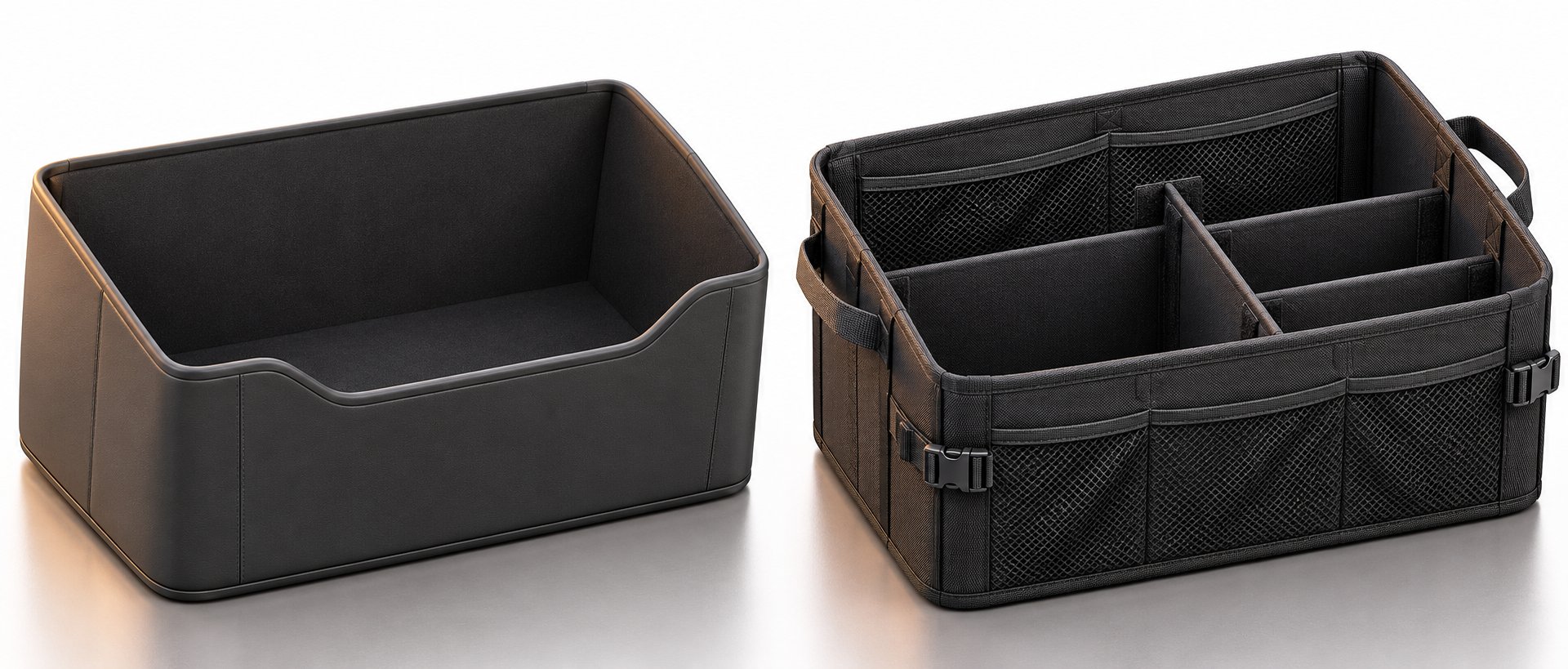
Here's a question every Model 3 owner asks at some point: should you buy storage accessories directly from Tesla, or go with a third-party alternative? The answer isn't as straightforward as "OEM is always better" or "aftermarket saves you money." Each path comes with genuine strengths and real trade-offs — and the right choice depends on what you actually need from your tesla model trunk setup.
Understanding these differences before you shop prevents the most common purchasing mistake: buying based on brand loyalty or price alone, then ending up with an organizer that doesn't solve your specific trunk problem.
What Tesla Offers as OEM Storage Solutions
Tesla's own accessory catalog covers a broad range of vehicle add-ons, from all-weather floor mats to roof racks to charging equipment. When it comes to trunk organization, though, the OEM offerings tend to focus on larger-scale cargo management rather than the fine-grained compartmentalization most owners actually need.
You'll find options like all-weather cargo mats and general-purpose liners that protect the trunk floor from spills and scratches. These are genuinely useful products, and they carry the reassurance of being designed and tested by the vehicle manufacturer. Fitment is guaranteed, material quality aligns with Tesla's interior standards, and you won't worry about compatibility surprises when your order arrives.
What you won't find in Tesla's catalog is granular storage — dedicated dividers for the side pockets, multi-compartment trays for the sub-trunk well, or structured inserts that turn a single cavity into organized sections. Tesla designed the Model 3 trunk as a versatile, open cargo space, and its accessory strategy reflects that same philosophy. If your frustration is specifically about small items sliding around inside the side pockets or charging cables tangling in the lower well, the OEM lineup may not address it directly.
Third-Party Aftermarket Organizers and Their Advantages
This gap in OEM coverage is precisely why the aftermarket ecosystem around Tesla vehicles has grown so rapidly. Owners wanted more specific solutions — tesla model 3 trunk boxes that divide the side pockets into cubbies, sub-trunk trays with dedicated slots for the mobile connector, under-seat storage compartments that exploit otherwise wasted space. Third-party manufacturers stepped in to fill those needs with products designed around real owner pain points rather than broad market appeal.
The general trade-offs break down like this:
- Variety: Aftermarket suppliers offer far more organizer types, sizes, and configurations than Tesla's own catalog. You can find products targeting every trunk zone discussed earlier in this guide — side bins, sub-trunk dividers, under-seat boxes, and seatback pockets — from multiple manufacturers.
- Specialization: Where OEM products serve a wide customer base, aftermarket organizers often solve very specific problems. Need a side pocket insert with exactly three compartments and a slot for a flashlight? That level of specialization typically lives in the aftermarket space.
- Pricing: Third-party organizers frequently come in at a lower price point than comparable OEM accessories, partly because aftermarket manufacturers compete on value in a crowded marketplace.
- Quality range: This is the honest trade-off. While the best aftermarket organizers rival or exceed OEM quality, the worst ones use cheaper materials, looser tolerances, and vague compatibility claims. OEM purchases carry a baseline quality guarantee that aftermarket shopping doesn't automatically match.
As aftermarket accessory specialists have noted, the key quality indicators for third-party products include model-specific design for your exact Tesla generation, clear material specifications, and real customer reviews with photos. Products marketed as "universal fit" for Tesla-specific compartments are a red flag — the side pockets in a Model 3 trunk are not the same dimensions as those in a Model Y or Model S, and a one-size-fits-all approach almost always means a compromised fit.
Custom-Molded vs Universal Fit
This distinction deserves its own spotlight because it's the single most overlooked factor in organizer purchases — and the number one reason owners end up disappointed. When you're shopping for a tesla model 3 rear organizer, every product listing will claim "compatible with Tesla Model 3." But there's a massive difference between an organizer that was custom-molded using the exact interior dimensions of the Model 3 trunk and a generic storage box that technically fits inside the space.
A custom-molded organizer is designed from precise measurements — or even 3D scans — of the Model 3's trunk cavities. It accounts for the specific curvature of the side pocket walls, the depth of the sub-trunk well, the angle of the trunk floor edges, and the clearance needed for the trunk lid to close without interference. When you drop it into place, it sits snug against the surrounding surfaces with minimal play, which means no shifting during driving and no rattling against panels.
A universal-fit product, by contrast, is built to approximate dimensions that work "well enough" across multiple vehicles or multiple trunk shapes. It might technically sit inside your Model 3's side pocket, but with gaps around the edges. Those gaps allow the organizer to rock back and forth during turns, producing the very rattles and sliding that you bought an organizer to eliminate. Worse, a poorly fitted organizer can actually block the trunk lid from latching properly or prevent the rear seats from folding completely flat.
The fitment issue compounds over time. A snug custom-molded organizer stays put for years. A loose universal organizer shifts a little more with each drive, wearing against surfaces, accumulating scratches, and gradually becoming the trunk nuisance it was supposed to fix.
Always verify whether an organizer is custom-molded specifically for your Tesla Model 3 generation before purchasing — universal-fit products marketed as "compatible" are the leading cause of rattles, poor fitment, and buyer regret.
Fitment precision doesn't just depend on whether a product is model-specific, though. It also depends on which Model 3 you drive. Tesla has made meaningful design changes between generations, and an organizer that fits one version of the car perfectly may not fit another at all. That generational divide is the next critical factor to understand before you add anything to your cart.
Which Organizers Fit Your Model 3 Generation?
Two Model 3 owners can order the exact same tesla model 3 trunk organizer from the exact same listing, and one ends up thrilled while the other initiates a return. The difference? Their cars aren't the same car. Tesla has produced two distinct generations of the Model 3, and the trunk area changed enough between them that organizers designed for one generation frequently don't fit the other. This is the compatibility trap that catches more buyers than any other single factor — and it's entirely avoidable once you know what to look for.
Pre-Highland Model 3 Trunk Dimensions and Design
The original Model 3, produced from 2017 through 2023, established the trunk layout that the entire aftermarket organizer industry was built around. With roughly six years of production, this generation had the longest run and the largest ownership base, which means the majority of organizers currently available online were designed to fit its specific trunk geometry.
You'll recognize the pre-Highland trunk by several design characteristics. The left and right side pockets have a specific depth, width, and curvature that's unique to this generation. The sub-trunk well beneath the cargo floor is a single open cavity sized to hold the mobile connector and tire repair kit, with no factory partitions. The rear seats fold via a release mechanism that creates a near-flat cargo extension, and the trunk floor panel lifts via a fabric pull tab to reveal the lower storage well.
Because this generation dominated the market for so many years, model 3 under seat storage boxes, side pocket dividers, and sub-trunk trays were all reverse-engineered from its exact interior dimensions. If you drive a 2017-2023 Model 3, you're shopping from the largest pool of compatible organizers — but you also need to be careful that newer listings haven't quietly shifted their designs to fit the Highland variant instead.
Highland Model 3 Changes That Affect Organizer Fitment
The 2024 Model 3 refresh — widely known as "Highland" — looks like a styling update from the outside, but it introduced physical changes to the trunk area that directly impact accessory compatibility. As MotorTrend's side-by-side comparison highlights, the only carryover body panels between the old and new Model 3 are the doors and the rear quarter-panel stamping. Everything else on the exterior skin is new, and those changes ripple into the cargo area.
For organizer buyers, the critical differences involve the trunk's side pocket geometry, the sub-trunk well configuration, and the load floor panel design. The Highland trunk components have different shapes compared to the 2017-2023 generation, and the two are not interchangeable. Side storage bins designed for the pre-Highland car may be too wide, too narrow, or the wrong curvature entirely when dropped into a Highland trunk pocket. Sub-trunk dividers face the same issue — a tray molded to the original well dimensions can sit unevenly or leave gaps in the refreshed version.
The confusion intensifies because both generations share the "Model 3" name. A product listing that simply says "fits Tesla Model 3" without specifying the year range or generation could refer to either variant. As Tesla accessory compatibility guides emphasize, if an accessory touches a molded surface, clips into a factory panel, or follows the body shape, Highland fitment must be verified separately. The rule applies to every organizer type that sits inside a trunk pocket or the sub-trunk well — essentially every rigid organizer category covered in this guide.
How to Verify Compatibility Before You Buy
Avoiding a fitment mismatch takes just a few minutes of due diligence before you click "add to cart." Here's a practical checklist that applies whether you're shopping for a car trunk organizer on a Tesla-specific retailer or a general marketplace:
- Check for explicit generation labeling. The product listing should clearly state either "2017-2023 Model 3" or "2024+ Model 3 Highland" — not just "Model 3" with a vague year range. A listing that says "Model 3 2017-2024" without distinguishing between generations is a red flag, because that range spans both variants with different trunk dimensions.
- Look for generation-specific product photos. Trustworthy sellers show their organizer installed inside the correct generation's trunk. If every photo is a studio shot on a white background with no vehicle context, you can't visually confirm fitment.
- Read owner reviews from your generation. Filter reviews for mentions of "Highland" or specific model years. A five-star review from a 2022 owner tells you nothing about whether the product fits a 2025 Highland.
- Verify the seller offers generation-specific SKUs. The best organizer manufacturers produce separate versions for each generation rather than claiming one product fits both. If a single SKU allegedly fits 2017 through 2026, approach with healthy skepticism.
- Cross-reference dimensional details. Some listings include measurements for their organizer's width, depth, and height. Compare these against known dimensions for your generation's trunk pockets — owner forums and Tesla community groups often publish exact measurements.
The table below maps each organizer category to its compatibility profile across Model 3 generations, giving you a quick-reference snapshot before you shop.
| Organizer Type | 2017-2023 Model 3 | 2024+ Model 3 Highland | Cross-Generation Compatible? |
|---|---|---|---|
| Trunk Side Bin Organizers | Wide selection available; most aftermarket options designed for this generation | Requires Highland-specific version; side pocket geometry differs | No — pocket shape and dimensions changed |
| Sub-Trunk / Lower Well Dividers | Extensive aftermarket options; fits original well dimensions | Must match Highland sub-trunk layout; not interchangeable with pre-Highland trays | No — well configuration differs between generations |
| Under-Seat Storage Boxes | Available from multiple aftermarket brands | Verify seat frame clearance for Highland; may differ slightly | Potentially — depends on seat rail and frame geometry changes |
| Rear Seatback Pocket Organizers | Universal-mount styles generally compatible | Universal-mount styles generally compatible | Likely yes — velcro and strap-mount designs are less generation-sensitive |
Notice the pattern: the more precisely an organizer needs to match a molded trunk surface, the less likely it is to work across generations. Rigid side bins and sub-trunk dividers sit directly inside cavities shaped by the vehicle's body — even small dimensional changes create fitment problems. Flexible seatback organizers, on the other hand, attach via straps or velcro and don't depend on exact trunk geometry, making them the safest cross-generation bet.
Armed with the right generation match, the next natural question is what actually happens when the organizer arrives at your door. Most owners picture a complicated installation, but the reality for nearly every tesla model 3 rear organizer is surprisingly hands-off — and knowing the process in advance can ease any lingering hesitation about pulling the trigger.
What Installation Looks Like for Each Organizer Type
One of the biggest reasons Model 3 owners hesitate before buying a trunk organizer has nothing to do with price or material quality — it's the fear of a complicated installation. Will you need tools? Could you damage the trunk's interior trim? Is there drilling involved? The short answer across nearly every organizer category is: no, no, and definitely no. The vast majority of these accessories are engineered for completely tool-free, reversible installation that takes under five minutes. But the process does vary depending on which type you're working with, so let's walk through each one.
Drop-In Trunk Side Bins
If you've ever placed a drawer divider inside a kitchen drawer, you already understand how trunk side bin installation works. These organizers are shaped to match the exact contours of the Model 3's left and right trunk side pockets. You simply take the organizer out of its packaging, orient it to match the pocket's curvature, and press it into place. The pocket walls themselves act as the mounting surface — no clips, screws, or adhesive needed.
A snug, custom-molded side bin relies on friction fit against the pocket walls to stay in position. You'll notice that the edges of a well-designed model 3 trunk box align flush with the pocket opening, sitting just below the lip of the trunk floor so it doesn't interfere with loading cargo on top. The entire process is reversible: pull the bin out, and your trunk pocket looks factory-original again.
One practical tip — if your side bin has a felt-lined exterior, make sure the pocket interior is clean and free of debris before you press the organizer in. Grit trapped between a felt surface and the trunk panel can cause micro-scratches over time, defeating the purpose of that protective lining.
Sub-Trunk Well Dividers and Under-Seat Boxes
Sub-trunk dividers involve one extra step compared to side bins, but it's still effortless. Start by lifting the trunk floor mat using the fabric pull tab at the rear of the cargo floor. This reveals the recessed lower storage well where your charging cable and tire kit live. Place the divider tray into the well, aligning its edges with the cavity walls. Then lay the floor mat back down on top. The mat sits flush again, and the divider is completely hidden beneath it — invisible during everyday use, but structuring the lower well into organized compartments whenever you lift the floor.
Under-seat storage boxes follow a similarly intuitive approach. These slide into the gap beneath the rear seats from the trunk side of the vehicle. The seat frame's metal rails and bracket geometry hold the box in position, creating a natural pocket that doesn't require fasteners. You'll want to check that the box clears the seat rail without forcing it — if it doesn't slide smoothly, double-check your generation compatibility, since even slight dimensional differences between pre-Highland and Highland seat frames can affect the fit. A model y trunk organizer designed for under-seat use follows the same general principle, though the dimensions differ between vehicles.
Seatback and Adhesive-Mounted Organizers
This category introduces the one installation variable worth thinking about: adhesive. Seatback pocket organizers that use elastic straps or hook-and-loop fasteners around the headrest posts are fully reversible and leave zero trace when removed. You thread the straps around the posts, tighten them, and the organizer hangs against the seatback. Simple.
Adhesive-mounted organizers — those that stick to the trunk walls, seatback surfaces, or the inside of the trunk lid — offer more placement flexibility. You can position them exactly where you want storage, which is a genuine advantage. The trade-off is that adhesive pads, even high-quality automotive-grade ones, can leave residue or slight discoloration on surfaces if removed after extended use. For owners who want permanent placement, this isn't an issue. For those who like to reconfigure their trunk setup regularly, strap-mounted or hook-based options are the safer choice.
Regardless of the mounting method, check whether the seatback organizer adds enough thickness to interfere with the rear seats folding flat. A bulky pocket organizer sandwiched between the folded seatback and the cargo floor can prevent the seats from latching in the down position — a problem that's easy to avoid by choosing a slim-profile design or simply removing the organizer before folding.
For a clear mental picture of the process, here's a general step-by-step overview that applies to most drop-in organizer types — the side bins, sub-trunk dividers, and under-seat boxes that make up the majority of the market:
- Unbox and inspect. Remove the organizer from its packaging and check for any shipping damage, warping, or missing components. Verify that the product matches your Model 3 generation — if the listing specified pre-Highland or Highland, confirm that the shape corresponds to your trunk layout.
- Clean the installation area. Wipe down the target pocket, well, or under-seat gap with a soft cloth. Removing dust and debris ensures a clean contact surface and prevents grit from scratching panels beneath the organizer.
- Dry-fit before committing. Place the organizer into position without pressing it firmly. Check that all edges align with the surrounding surfaces, that no corners stick up above the trunk floor plane, and that the trunk lid closes without contacting the organizer. For a tesla model 3 front box or frunk organizer, the same dry-fit principle applies to that compartment's unique geometry.
- Press into final position. Once alignment is confirmed, press the organizer firmly into place. For side bins, apply even pressure along the top edges. For sub-trunk dividers, ensure the tray sits level on the well floor before replacing the mat.
- Test under real conditions. Close the trunk, take a short drive around the block, and listen for any rattles or shifting. If you hear noise, remove the organizer and check for debris caught between contact surfaces or slight misalignment that needs adjusting.
That's genuinely all there is to it. No wrenches, no wire harnesses, no permanent modifications. Every organizer type covered in this guide is designed to be owner-installed in minutes and removed just as quickly when your needs change. The real question isn't whether you can install one — it's which specific organizer deserves a permanent spot in your trunk. And for many owners, the answer starts with the most overlooked and underutilized zone in the entire cargo area: the side pockets.
Trunk Side Organizers That Transform Wasted Pocket Space
Open your Model 3 trunk right now, reach into either side pocket, and try to find something specific without looking. Chances are, your hand encounters a tangle of reusable grocery bags, a half-buried flashlight, a bottle of windshield washer fluid leaning against a first-aid kit, and maybe a charging adapter you forgot was even in there. Everything occupies the same undivided cavity, layered and jammed together with no separation whatsoever.
This is the side pocket problem in its purest form. Tesla gave you two generous storage wells recessed into the trunk walls — pockets deep enough to swallow a tall water bottle and wide enough to hold a compact emergency kit. But without any internal structure, these pockets function less like organized compartments and more like catch-all bins where items disappear the moment you toss them in. The tesla model 3 trunk storage potential is there. The structure to unlock it is not — at least, not from the factory.
That's exactly why trunk side organizers have become one of the most popular aftermarket accessories in the Model 3 ecosystem. They solve a problem that every owner recognizes but few know how to fix efficiently.
How Side Organizers Divide Dead Space Into Useful Compartments
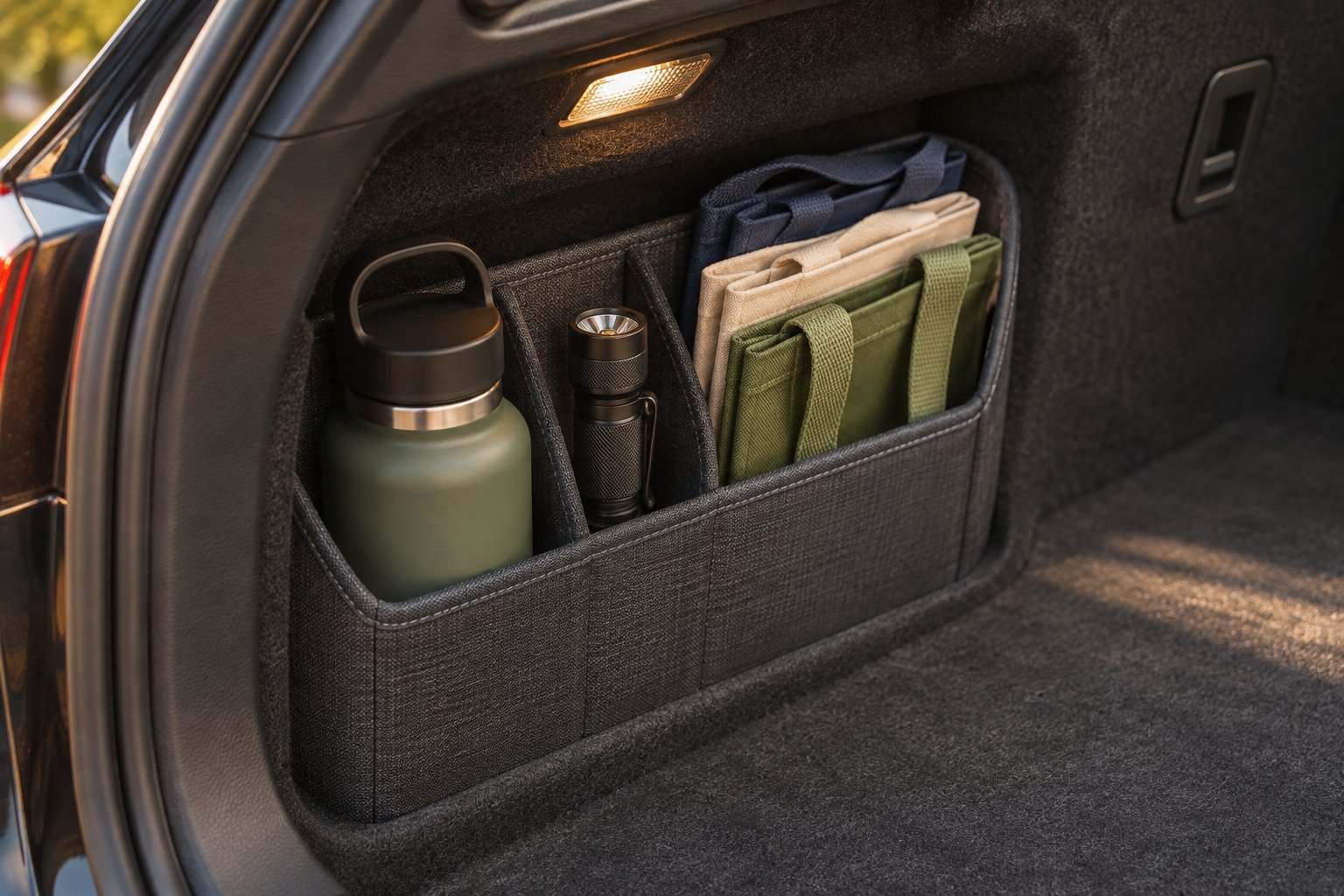
A tesla model 3 side pocket organizer works on a deceptively simple principle: it drops into the existing side pocket cavity and creates defined vertical sections where a single open space used to be. Imagine sliding a multi-compartment tray into a deep drawer — suddenly, every item has its own lane, visible and accessible without digging through everything else.
Most side organizers accomplish this through rigid divider boards made from ABS plastic or similar injection-molded materials. These boards are contoured to match the pocket's unique curvature, sitting snugly against the walls so they don't shift during driving. The result is typically two to four distinct compartments per pocket, each sized to hold a specific category of item upright and separated from its neighbors.
The practical payoff is immediate. A bottle that used to topple sideways and roll beneath a pile of bags now stands upright in its own slot. A first-aid kit stays in a dedicated section where you can grab it instantly instead of excavating through layers of miscellaneous gear. Reusable shopping bags stack neatly in one compartment rather than expanding to fill the entire pocket. Items stay where you put them — through highway merges, sudden braking, and tight parking garage turns alike.
Because these organizers occupy space that's already recessed below the trunk floor plane, they don't reduce your usable main cargo area by even a fraction of an inch. Your flat cargo floor remains fully available for suitcases, strollers, or a week's worth of Costco hauls. The side pockets simply go from being chaotic catch-alls to structured, purpose-built storage zones — a tesla trunk side bin divider transforms dead space without stealing live space.
Real-World Uses for Trunk Side Storage
The value of a side pocket organizer becomes clearest when you think about how you actually load and unload your trunk week after week. Here are the everyday scenarios where structured side pockets make a noticeable difference:
- Grocery runs: Lightweight but tippy items — a bag of rolls, a carton of eggs, a bottle of olive oil — can be tucked into a side compartment where they stand upright and separated from the heavier bags on your main cargo floor. No more opening the trunk to find your eggs crushed beneath a watermelon.
- Emergency and roadside gear: A compact first-aid kit, a reflective vest, a tire pressure gauge, and a small flashlight each get their own slot in the side pocket. When you actually need these items — often in stressful situations — you reach directly to a known location instead of frantically digging through a single deep pocket in the dark.
- Wet and dry separation: Coming back from the gym, the beach, or a rainy hike? A side pocket organizer lets you isolate a damp towel or muddy shoes in one compartment while keeping your dry jacket or work bag in another. The divider board acts as a physical barrier that prevents moisture from migrating to items that need to stay dry.
- Kids' travel essentials: Sippy cups, snack containers, a spare change of clothes, small toys — the rotating cast of items parents carry for young children fits neatly into side pocket compartments, keeping these essentials off the main cargo floor where they'd otherwise roll into every corner of the trunk during the drive.
- Everyday carry items: Umbrellas, reusable bags, a travel mug you always forget to bring inside — these are the small items that clutter the main trunk floor when they have no designated home. Assigning them to a specific side pocket compartment means they're always where you expect them and never in the way of larger cargo.
For owners looking for a concrete example of this organizer category in action, CUTIM's rear trunk side storage organizer illustrates the concept well. It's designed as a divider board system that partitions the Model 3's side pockets into structured compartments, keeping loose items separated and off the main cargo floor. The same product fits both Model 3 and Model Y, though you'll want to select the correct generation and number of pieces based on the compatibility guidance covered earlier in this guide — a pre-Highland car and a Highland car require different configurations, and ordering the wrong version leads to the exact fitment problems we've been working to help you avoid.
What makes side pocket organizers particularly satisfying as a tesla model 3 rear organizer choice is their invisibility. Unlike a collapsible cargo box sitting in the middle of your trunk floor or a seatback organizer hanging visibly from the seats, side bin dividers disappear into the pocket wells. Open the trunk, and the main cargo area looks completely unobstructed. The organization happens below the sight line, in space that was previously wasted.
That invisible quality raises an important practical question, though. When you start adding organizers to your trunk — whether they're side bins, sub-trunk dividers, or under-seat boxes — are you sacrificing the flexibility that makes the Model 3 trunk so versatile in the first place? Specifically, what happens when you need to fold those rear seats flat for oversized cargo?
How Rear Organizers Affect Trunk Space and Seat Folding
Picture this: you've finally organized your Model 3 trunk into a thing of beauty — side pockets neatly partitioned, sub-trunk divided, maybe even an under-seat box tucked beneath the rear bench. Then a friend calls and asks you to help move a bookshelf. You fold the rear seats, slide the furniture in, and discover that one of your organizers is jammed against the seatback, preventing it from lying flat. The bookshelf doesn't fit, and your carefully curated trunk setup just became the obstacle.
This is the trade-off nobody talks about until it's too late. Every organizer you add to your tesla model 3 trunk cargo space occupies physical volume, and some types interfere with the very flexibility that makes the Model 3 trunk so capable in the first place. The key isn't to avoid organizers altogether — it's to understand which ones play nicely with seat folding and large cargo loads, and which ones demand a quick removal before you can use the trunk's full potential.
Rear Seat Folding Clearance
The Model 3's 60/40 split rear seats fold forward by pulling a lever next to each headrest, dropping the seatback until it rests nearly flat against the seat cushion. As Tesloid's seat-folding guide notes, this creates a surprisingly generous extended cargo area — one owner reportedly fit 15 carry-on suitcases with the seats down. But that near-flat surface depends on nothing blocking the seatback's downward path.
Not all organizer types pose the same risk. Here's where each category stands:
- Trunk side bin organizers: These sit inside the recessed side pockets, well below the plane where the seatback folds. They have zero impact on seat folding — the seatback never comes close to contacting them. This is one reason side bins are among the safest "install and forget" options for owners who frequently switch between organized daily hauling and full-flat cargo mode.
- Sub-trunk well dividers: Because these live beneath the trunk floor panel, they're completely out of the seatback's path. Fold the seats as often as you like — the divider stays hidden in the lower well, doing its job without interfering.
- Under-seat storage boxes: This is where things get tricky. These boxes occupy the gap directly beneath the rear seat, and depending on the design, they can prevent the seatback from folding fully flat. A box that's even slightly too tall may push the seatback up by a half inch — enough to create an uneven cargo surface or prevent the seat from latching in the folded position. If you regularly carry bicycles, flat-pack furniture, or long items that need a completely flush floor, you may need to slide the box out before folding.
- Rear seatback pocket organizers: A model 3 rear seat folding organizer mounted to the seatback folds with the seat — and that added thickness gets sandwiched between the seatback and the cargo floor. A slim fabric pocket might compress enough to be unnoticeable, but a bulkier rigid organizer can raise the folded seatback by an inch or more, creating a bump in your cargo surface and potentially blocking the seat from clicking into its locked-down position.
The pattern is straightforward: organizers that live in recessed spaces — side pockets and the sub-trunk well — never interfere with seat folding. Organizers that attach to the seats themselves or occupy the gap beneath them are the ones that demand attention when you need maximum cargo volume.
Balancing Organization With Cargo Flexibility
The Model 3 offers roughly 23 cubic feet of cargo space with the rear seats up, expanding significantly when they fold flat. That's an impressive number for a midsize sedan, and the last thing you want is to permanently shrink it with organizers you can't easily remove.
The good news? Most tesla trunk organizer removable options are designed with exactly this scenario in mind. The best organizer setup is one that enhances your daily routine without locking you out of the trunk's full capacity when a big-load day comes around. Think of it as a spectrum: on one end, permanently installed organizers that maximize daily convenience; on the other, grab-and-go options that clear out in seconds when you need every cubic inch.
Here's how each organizer type ranks by removal speed, from fastest to slowest:
- Collapsible cargo boxes — fold flat or lift out in under five seconds; zero tools, zero attachment points
- Trunk side bin organizers — pull straight out of the side pocket in seconds; friction-fit means no fasteners to deal with (though most owners leave them in permanently since they don't reduce main cargo space)
- Sub-trunk well dividers — lift the floor mat, pull the tray out, replace the mat; takes about 15 seconds and rarely necessary since these don't affect main cargo volume or seat folding
- Under-seat storage boxes — slide out from the trunk side in a few seconds, but you'll need to relocate whatever is stored inside them first
- Adhesive-mounted seatback organizers — slowest to remove due to adhesive backing; may leave residue or require careful peeling, which discourages frequent removal and reinstallation
If your lifestyle swings between organized daily commuting and weekend trips that fill every inch of the trunk, prioritize organizers from the top of that list. Side pocket bins and sub-trunk dividers give you the best of both worlds — structured daily storage that either stays out of the way during big loads or lifts out in moments when you need the space.
For owners who rarely fold the rear seats, the trade-off calculus shifts. Under-seat boxes and seatback pocket organizers become much more practical when you're not regularly converting between passenger mode and extended cargo mode. The interference with seat folding is a non-issue if the seats stay upright 95% of the time.
The best organizer setup is one you never have to think about removing — choose types that enhance daily convenience without permanently sacrificing the Model 3 trunk's full cargo flexibility.
Understanding these trade-offs puts you in a strong position to make a final decision. The organizer type, material, generation fitment, and cargo impact all feed into one last question: which specific setup matches the way you actually drive and load your car every day?
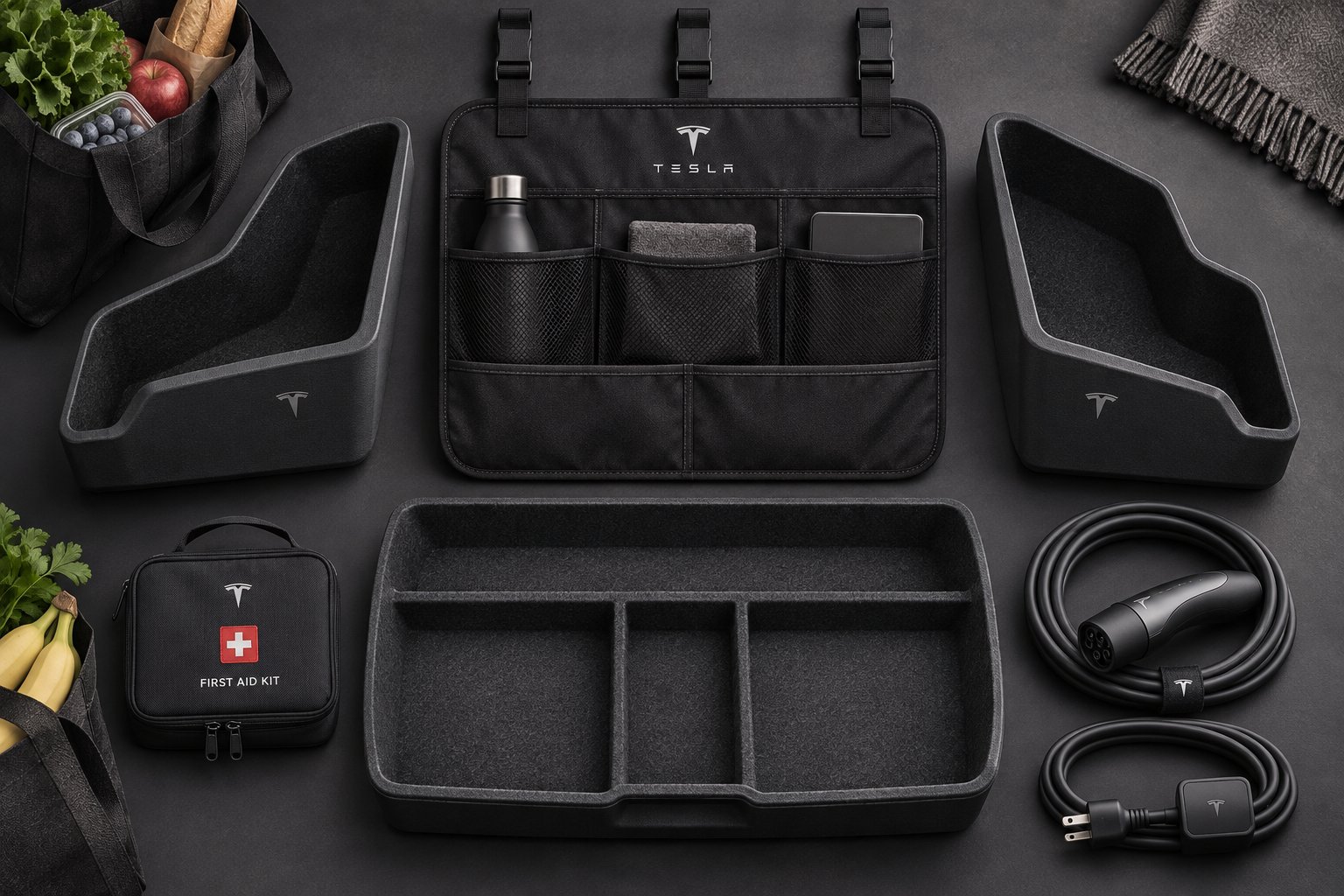
Choosing the Right Rear Organizer for Your Driving Habits
You've now seen every organizer category, compared material types, understood OEM versus aftermarket trade-offs, confirmed generation compatibility, walked through installation, and weighed the impact on seat folding and cargo flexibility. That's a lot of information — and it can feel overwhelming when all you really want is to stop your groceries from rolling across the trunk. So let's simplify the decision. The best tesla model 3 rear organizer for you depends on three things: what you carry, how you use your back seat, and whether you need your setup to be permanent or portable.
Match Your Storage Needs to the Right Organizer Category
Think about your last ten trunk-loading moments. Not the hypothetical road trip you might take someday — the actual, repetitive ways you use the cargo area week after week. Your answers to a few honest questions point directly to the organizer category that delivers the most daily value.
Are you mostly organizing small, everyday essentials? Bottles, reusable bags, a first-aid kit, charging adapters, an umbrella — if these are the items that scatter across your trunk and disappear into the side pockets, trunk side bin organizers are your highest-impact starting point. They structure the space you're already using without touching the main cargo floor. For most commuters and errand-runners, this single category solves 80% of the frustration.
Are you solving for large grocery runs or road trip gear? If the main cargo floor itself is the chaos zone — bags tipping, coolers sliding, suitcases shifting during highway merges — a collapsible cargo box or a combination of side bins plus a sub-trunk divider gives you structured zones across multiple trunk areas. The sub-trunk divider keeps your emergency gear and cables organized below the floor, while the side bins handle everything that doesn't belong in the middle of the cargo space.
Do you carry rear passengers frequently? Families with kids in the back seat benefit from seatback pocket organizers that keep snacks, tablets, and small toys within arm's reach. But remember the seat-folding trade-off — if you regularly fold the rear seats for larger loads, choose a slim fabric pocket that compresses flat rather than a rigid design that blocks the seatback from latching down.
Is the back seat typically folded for cargo? Owners who treat the Model 3 as a hatchback-style hauler — seats almost always down — should skip seatback organizers entirely and focus on side bins and sub-trunk dividers that never interfere with the folded seat surface. Under-seat boxes also become less practical when you're constantly folding and unfolding.
Do you want permanent organization or something removable? If your trunk needs change seasonally — organized for daily commuting in the winter, wide open for camping gear in the summer — prioritize friction-fit side bins and drop-in sub-trunk trays that lift out in seconds. Avoid adhesive-mounted options if you plan to reconfigure regularly, since repeated removal risks surface damage.
The table below connects each lifestyle pattern to the organizer setup that makes the most practical sense:
| Driving Lifestyle | Primary Organizer | Optional Add-On | Skip This Category |
|---|---|---|---|
| Daily commuter with small essentials | Trunk side bin organizers | Sub-trunk well divider | Seatback pockets (rarely needed) |
| Family with young children | Trunk side bins + seatback pockets | Under-seat storage box | Rigid cargo boxes (reduce stroller space) |
| Frequent road tripper | Side bins + sub-trunk divider | Collapsible cargo box for main floor | Adhesive-mounted organizers (hard to reconfigure) |
| Seats-always-down hauler | Trunk side bin organizers | Sub-trunk well divider | Under-seat boxes and seatback organizers |
| Minimalist who wants one upgrade | Trunk side bin organizers | None needed | Everything else until a specific need arises |
Notice a pattern? Trunk side bin organizers appear as the primary recommendation across nearly every lifestyle category. That's not a coincidence — they solve the most universal trunk frustration (loose items in the side pockets) with zero impact on main cargo volume or seat folding. For most owners, they're the single best tesla model 3 trunk accessories purchase to make first.
Prioritize Fitment and Material Over Price
Here's where many buyers trip up. You find two organizers that look nearly identical in product photos — same general shape, same compartment layout, same claimed compatibility. One costs $25, the other costs $45. The temptation to grab the cheaper option is strong. But the price gap almost always traces back to two factors that determine whether you'll love or regret the purchase six months from now: fitment precision and material quality.
A custom-molded organizer built from precise measurements of your specific Model 3 generation sits flush against the trunk pocket walls, stays silent over rough roads, and looks like it belongs in the vehicle. A loosely fitting universal alternative rattles against panels, shifts during turns, and slowly scratches the surfaces it was supposed to protect. The $20 you saved on the purchase evaporates the first time you hear a persistent buzz from the trunk on the highway — and it disappears entirely if you end up buying a replacement three months later.
Material matters just as much. A bare ABS plastic shell in a felt-lined trunk pocket is a noise problem waiting to happen. A felt-coated or flocked organizer eliminates that vibration at the source, integrates visually with the Model 3's interior carpet, and protects the pocket walls from micro-scratches over thousands of loading cycles. The premium isn't cosmetic — it's functional.
Before you finalize any purchase, run through this quick checklist:
- Generation match confirmed? The listing explicitly states compatibility with your Model 3 variant — either 2017-2023 or 2024+ Highland. Not just "Model 3" with no year distinction.
- Custom-molded or universal? The product is designed specifically for the Model 3's trunk pocket dimensions, not a generic bin marketed as "compatible."
- Material specified? The listing identifies the core material (ABS, PP, TPE) and whether contact surfaces are felt-lined or flocked. Vague descriptions like "high-quality material" with no specifics are a warning sign.
- Owner reviews from your generation? Real photos and comments from owners driving the same generation confirm actual fitment, not just claimed compatibility.
For owners whose primary frustration is the side pocket chaos — and that's the majority of Model 3 drivers, based on everything covered in this guide — a purpose-built side pocket divider is the strongest single upgrade you can make. CUTIM's rear trunk side storage organizer is one solid option in this category, designed to divide the trunk's side pockets into structured compartments for everyday travel essentials that would otherwise slide around the main cargo floor. It fits both Model 3 and Model Y, but remember to select the correct generation and number of pieces for your specific vehicle — the fitment differences between pre-Highland and Highland aren't something you want to discover after unboxing.
Whichever organizer you ultimately choose, the decision framework stays the same. Start with the trunk zone that causes you the most daily frustration, pick an organizer custom-molded for your exact generation, and pay attention to material quality over sticker price. Those three priorities — in that order — are what separate a satisfying purchase from a regrettable one.
The three most important factors when choosing any Tesla Model 3 rear organizer: identify the trunk zone causing your biggest daily frustration, verify custom fitment for your exact Model 3 generation, and choose felt-lined or flocked materials that eliminate rattles and protect interior surfaces.
Your Model 3 trunk was engineered with impressive total volume and a clean, versatile layout. The factory just left the fine-grained organization up to you. With the right organizer matched to your lifestyle, that wide-open cargo floor stops being a source of daily frustration and starts working the way it should have from day one — every item in its place, every trip a little less chaotic, and not a single cubic inch of usable space wasted in the process.
Tesla Model 3 Rear Organizer FAQs
1. What types of rear organizers are available for the Tesla Model 3?
There are four main categories: trunk side bin organizers that partition the left and right side pockets, sub-trunk well dividers that section off the recessed storage beneath the cargo floor, under-seat storage boxes that slide into the gap beneath the rear bench, and rear seatback pocket organizers that attach to the back of the seats for quick-access storage. Side bin organizers and sub-trunk dividers are the most popular because they use recessed space without reducing the main cargo area.
2. Do Tesla Model 3 trunk organizers fit both pre-Highland and Highland models?
In most cases, no. The 2024+ Highland refresh changed the trunk's side pocket geometry, sub-trunk well configuration, and load floor design. Rigid organizers like side bins and sub-trunk dividers must match your exact generation — a product molded for a 2017-2023 Model 3 will likely not fit a Highland variant. Always check that the listing specifies your year range and generation rather than just saying 'fits Model 3.' Flexible seatback organizers using straps or velcro tend to be the safest cross-generation option.
3. Will a rear trunk organizer interfere with folding the Model 3 back seats?
It depends on the category. Trunk side bin organizers and sub-trunk well dividers sit in recessed spaces well below the seatback's folding path, so they never interfere. Under-seat storage boxes and seatback pocket organizers can block the seats from lying fully flat if the design is too thick or tall. If you fold the rear seats regularly for large cargo, prioritize side bins and sub-trunk trays, or choose organizers that lift out quickly before folding.
4. What is the best material for a Tesla Model 3 trunk organizer?
Felt-lined or flocked ABS plastic offers the best balance of durability, noise reduction, and scratch protection. The rigid ABS core holds its shape under heavy loads and resists temperature swings, while the felt coating absorbs vibrations that would otherwise cause rattling in Tesla's quiet cabin. Bare plastic organizers are cheaper but prone to buzzing against trunk panels. Silicone and fabric options work well for seatback pockets or collapsible bins but lack the structural rigidity needed for permanent trunk pocket dividers.
5. How do you install a Tesla Model 3 rear trunk organizer?
Nearly all Model 3 trunk organizers are tool-free and reversible. Side bin organizers press directly into the trunk's side pockets using friction fit — no adhesive or hardware required. Sub-trunk dividers drop into the lower well after lifting the floor mat. Under-seat boxes slide beneath the rear bench from the trunk side. The entire process typically takes under five minutes. For the best results, clean the installation area first, dry-fit the organizer to check alignment, and take a short test drive to listen for any rattles before considering it fully installed.