
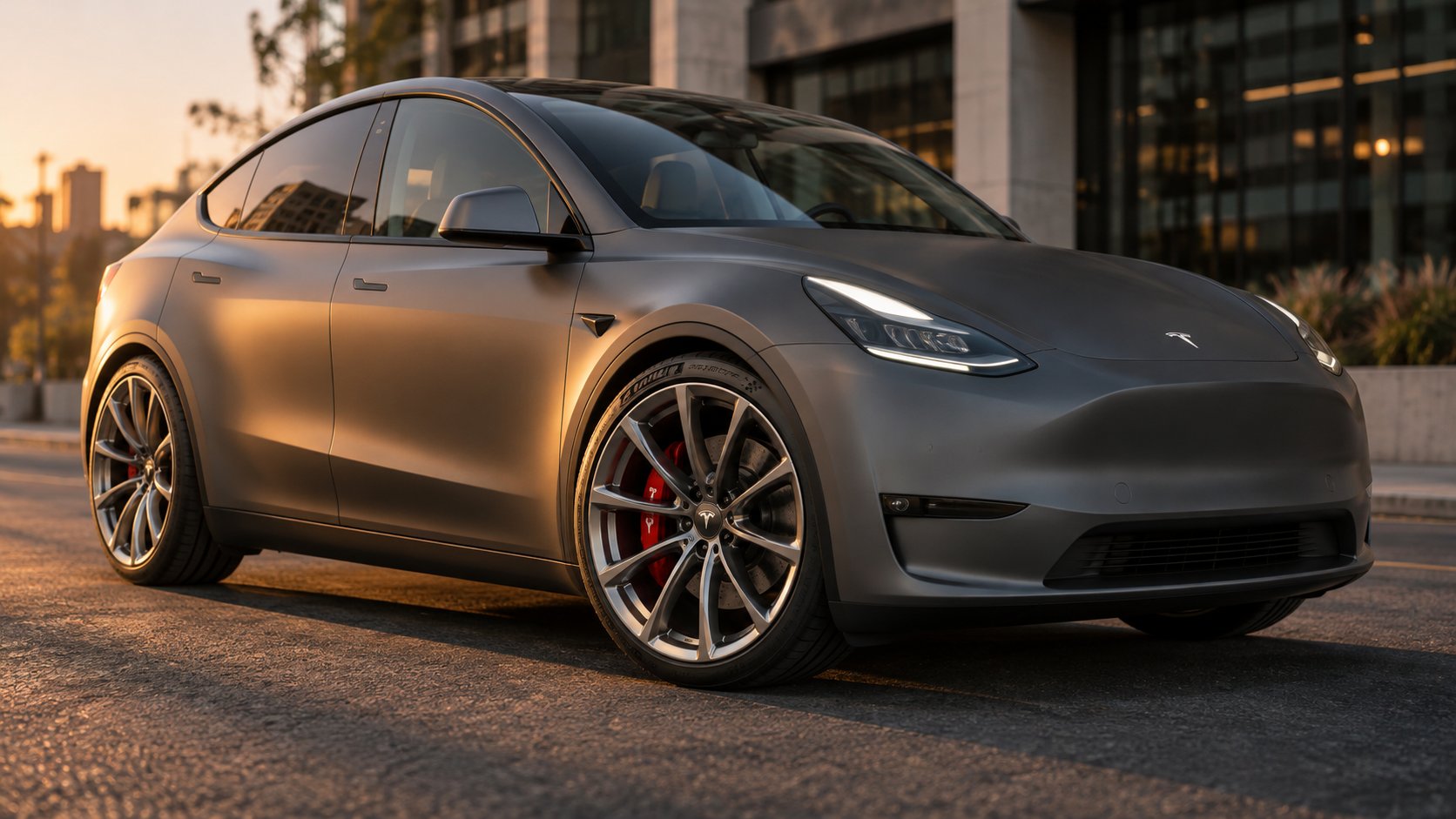
Why Aftermarket Wheels on a Model Y Are Not Like Any Other Car
Search for model y aftermarket wheels and you'll notice something immediately: nearly every result on the first page is a retailer trying to sell you a set. That's not necessarily bad, but it means the information you're reading was written with a shopping cart in mind, not your driving range or warranty. This guide takes a different approach — brand-agnostic, educational, and focused entirely on helping you make a smarter decision before you spend a dime.
Why EV Owners Face Unique Wheel Decisions
On a traditional gas-powered crossover, swapping wheels is mostly a cosmetic choice. You pick a style you like, confirm the bolt pattern, and move on. The Model Y flips that equation. Its battery pack adds significant curb weight compared to a similarly sized ICE vehicle, which means every aftermarket wheel must meet or exceed higher load ratings to remain safe. Michelin's EV tire engineering data highlights that EV battery packs can push vehicle weight beyond what standard tire and wheel ratings were designed to handle, sometimes requiring XL or HL load specifications that gas cars never need.
Wheel weight matters more here, too. Heavier wheels increase rotational mass, and that directly affects how efficiently the motor recaptures energy through regenerative braking. As RevTesla's efficiency analysis explains, heavier wheels carry more rotational inertia, meaning the regen system recovers slightly less energy per stop — a small loss that compounds across dozens of daily braking events. Features like tesla smart preconditioning help optimize battery performance in cold weather, but they can't compensate for the persistent drag of poorly chosen wheels. Meanwhile, Green Car Reports noted that a Tesla driven at 75 mph showed roughly 40 miles less range with 20-inch wheels compared to 18-inch wheels. When range anxiety is already part of the ownership experience, every pound of unsprung weight becomes more consequential than it would be on a vehicle you simply refuel in three minutes.
What This Guide Covers and Who It Helps
This article walks through everything you need to evaluate before purchasing: fitment specs for both pre-refresh and Juniper models, wheel construction types and their weight implications, size trade-offs from 18 to 21 inches, TPMS sensor compatibility, tire pairing strategies, and the warranty and insurance questions most guides skip entirely. Think of it as your research foundation — the kind of preparation that matters whether you're comparing options as casually as browsing palmeiras vs ldu quito highlights or making a serious purchase decision worth thousands of dollars.
On an EV, aftermarket wheels are not purely cosmetic — they interact with range, braking, and ride quality in measurable ways. Treat every wheel purchase as an engineering decision, not just a style choice.
The goal is straightforward: arm you with enough knowledge to have a productive conversation with a qualified wheel specialist, rather than relying solely on product pages optimized to close a sale. The differences between the Model Y and a conventional crossover start at the spec sheet — and that's exactly where this guide begins.
Pre-Refresh vs Juniper Refresh Fitment Differences
That spec sheet starts with a question most shoppers overlook: which Model Y do you actually own? Tesla's naming conventions don't always make this obvious, but the distinction between the original pre-refresh Model Y and the newer Juniper refresh has real consequences for anyone shopping for model y aftermarket wheels. Get this wrong, and you could end up with a set that doesn't clear your brake calipers or sits at an awkward offset.
Pre-Refresh Model Y Wheel Specs and OEM Options
From its 2020 launch through the pre-Juniper production era, the Model Y shipped with three OEM wheel options depending on trim level. The base and Long Range trims came with 19-inch Gemini wheels, while the Induction 20-inch wheels were available as an upgrade. Performance trims rolled off the line wearing 21-inch Uberturbine wheels — a size that shares more visual DNA with what you'd find on a tesla plaid than a family crossover.
All pre-refresh trims share a 5x114.3 bolt pattern with a 64.1mm center bore and M14 x 1.5 lug nuts torqued to 129 lb-ft. The factory 19-inch wheel measures 19x9.5 with a +45 offset, paired with 255/45R19 tires. Here's where trim level creates a critical split: Long Range and Standard Range models use a square setup, meaning all four wheels are the same width. The Performance trim, however, runs a staggered configuration — wider wheels and tires on the rear axle (275/35R21 rear vs. 255/35R21 front) to handle the extra torque. If you're considering a tesla trade in down the road, keeping your OEM wheels in good condition alongside any aftermarket set is a smart move.
This square-vs-staggered distinction matters enormously for aftermarket buyers. A square setup gives you the freedom to rotate tires across all four corners, extending tread life. A staggered setup locks each tire to its axle, which means faster rear tire wear and separate front and rear wheel specifications when shopping.
What Changed with the Juniper Refresh
The Juniper refresh introduced updated OEM wheel designs and restyled exterior proportions, but the fitment implications go deeper than aesthetics. Aftermarket wheel shoppers need to verify whether offset ranges, hub bore dimensions, and — critically — brake caliper clearance requirements shifted with the refresh. Even a few millimeters of change in caliper size can turn a wheel that fit the pre-refresh perfectly into one that rubs under hard braking. The platform shares its underlying architecture with the tesla model 3 long range, so some specs carry over, but assumptions across model years are risky.
Tesla doesn't always publish granular fitment changes in consumer-facing documentation. Features like fsd receive detailed software release notes, yet mechanical specifications for refreshed trims often require hands-on measurement or confirmation from Tesla service. That's why the safest approach is simple: before you order anything, confirm your exact model year, trim, and brake package with a fitment specialist who has verified Juniper dimensions firsthand.
| Fitment Parameter | Pre-Refresh Model Y (2020-2024) | Juniper Refresh |
|---|---|---|
| Bolt Pattern | 5x114.3 | 5x114.3 (verify with specialist) |
| Hub Bore (Center Bore) | 64.1 mm | Confirm with Tesla service or installer |
| Common OEM Diameters | 19" (Gemini), 20" (Induction), 21" (Uberturbine) | New OEM designs introduced — verify available sizes |
| Lug Specification | M14 x 1.5, torqued to 129 lb-ft | Confirm for refresh trims |
| Staggered vs Square | Square on LR/SR; Staggered on Performance | Verify by trim — configuration may differ |
| Offset (ET) Range | +45 OEM (aftermarket: +35 to +50 common) | Confirm — caliper and fender clearance may vary |
The recurring theme in that table is "verify." That's intentional. The pre-refresh Model Y has years of community-documented fitment data backing up every offset and width combination. The Juniper refresh is newer territory, and treating unverified assumptions as fact is how wheels end up rubbing against suspension components. With construction type being the next major variable in the equation, understanding how your wheels are actually made determines whether they can handle the Model Y's weight and torque without compromise.
Wheel Construction Types and Why They Matter for EVs
A wheel that looks identical to another on a showroom floor can behave completely differently on the road — and the reason comes down to how it was made. Construction method determines weight, strength, impact resistance, and price, all of which interact with the Model Y's 4,400-plus-pound curb weight and instant electric torque in ways that matter far more than they would on a lighter gas-powered crossover. Think of it this way: when your motor delivers peak torque from zero RPM and your battery pack already pushes the vehicle into near-luxury-sedan territory for weight, a wheel's structural integrity isn't just a spec-sheet detail. It's a safety factor.
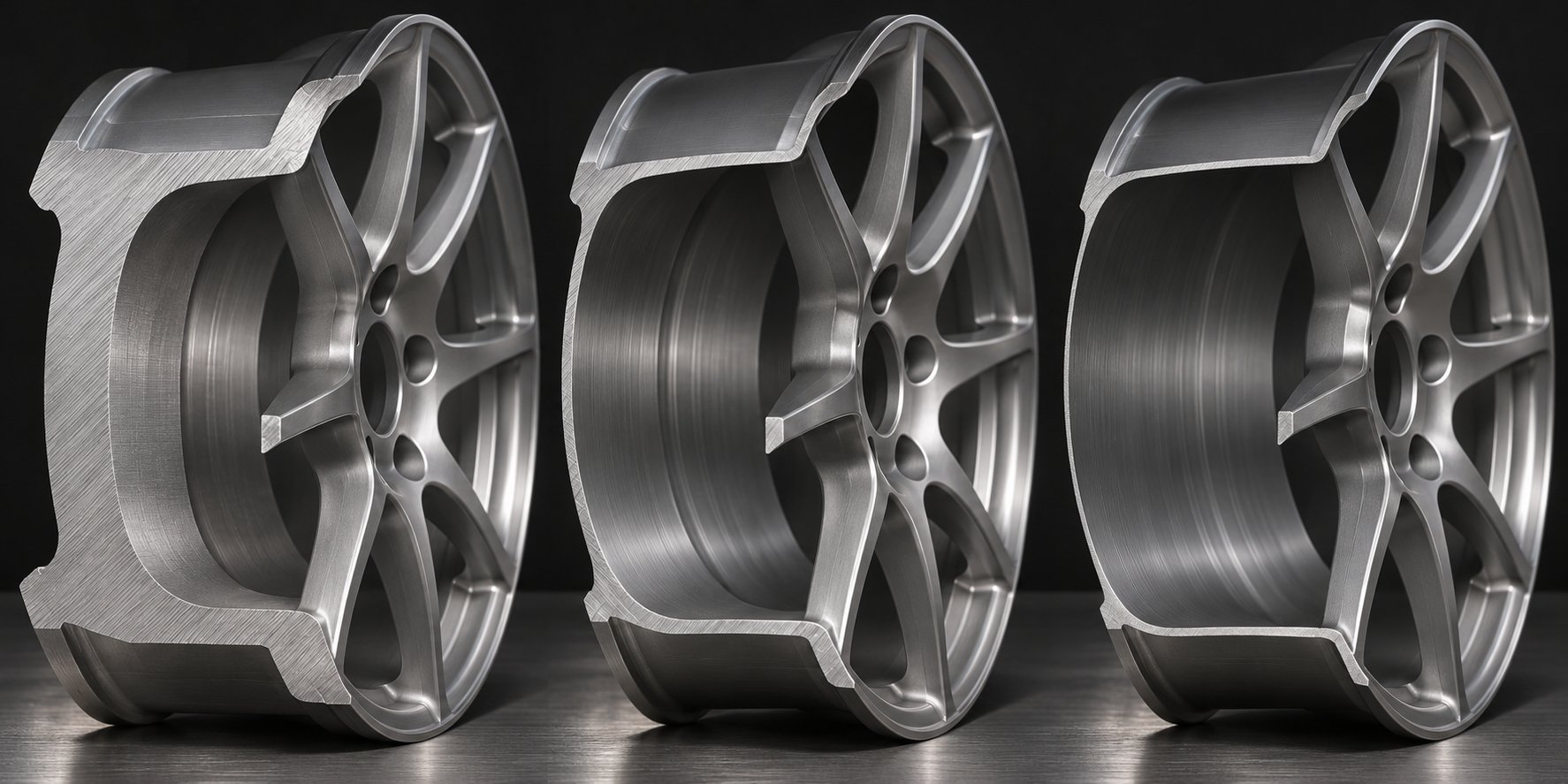
Three primary manufacturing processes dominate the aftermarket: casting, flow-forming (also called spin-forming or rotary forging), and full forging. Each sits at a different point on the weight-strength-cost spectrum, and choosing wisely can mean the difference between a wheel that enhances your ownership experience and one that compromises it.
Cast Wheels and When They Make Sense
Gravity casting is the oldest and most affordable wheel manufacturing method. Molten aluminum alloy — typically A356 aluminum — is poured into a mold and allowed to cool. The result is a finished wheel shape that requires relatively little additional machining. Because the process is simple and scalable, cast wheels come in the widest variety of designs, finishes, and colors at the lowest price point.
The trade-off? Cast wheels have thicker cross-sections to compensate for the material's lower density after cooling, which makes them the heaviest option in the lineup. On a Model Y, that extra rotational mass works against you every time you accelerate from a stoplight or rely on regenerative braking to recapture energy. Blaque Diamond's manufacturing breakdown notes that cast wheels are also more prone to bending or cracking under heavy loads compared to flow-formed or forged alternatives — a meaningful consideration given how much the Model Y weighs.
That said, cast wheels aren't without a role. If you're building a dedicated winter set that prioritizes low purchase price over weight savings, or you want a cosmetic upgrade on a tight budget, a quality cast wheel with an appropriate load rating can get the job done. Just be honest about what you're giving up: every extra pound per corner is a pound the suspension has to manage and the motor has to spin. Drivers who have also researched competitors like the bmw i4 edrive40 will recognize a similar calculus — heavy EVs universally punish heavy wheels.
Flow-Formed and Spin-Formed Wheels as the Middle Ground
Imagine taking a cast wheel blank and putting it on a lathe. The barrel section is heated, then rollers apply intense pressure while the wheel spins at high speed. This compresses and stretches the aluminum's grain structure, making the barrel thinner, lighter, and significantly stronger than a standard casting. That's flow-forming in a nutshell — and you'll also see it marketed as spin-forming, rotary forging, or spun forging. As Blaque Diamond explains, these terms all describe essentially the same hybrid process that bridges the gap between casting and full forging.
The engineering appeal is clear. Flow-formed wheels deliver a meaningfully better strength-to-weight ratio than cast wheels while costing substantially less than fully forged options. The thinner, uniform barrel cross-sections shed weight exactly where it matters most — at the outer diameter, where rotational inertia has the greatest effect on acceleration and braking response. For a vehicle with the Model Y's instant torque delivery, this weight reduction translates into more responsive steering feel and slightly improved regenerative braking efficiency without breaking the bank.
This construction type has become the go-to choice among aftermarket brands targeting Tesla owners, and for good reason. CUTIM's spin-formed aftermarket alloy wheels are one example worth evaluating — their product page lists 17-, 18-, and 19-inch diameters designed for Tesla Model 3, Y, S, and X platforms. The availability of multiple diameters gives shoppers flexibility to optimize for range (smaller diameter) or aesthetics (larger diameter) within a single construction type. That said, exact fitment configurations — offset, load rating, and brake caliper clearance — should always be confirmed with CUTIM or a qualified wheel specialist before purchase, since even wheels marketed for a specific vehicle platform can vary in critical dimensions across production runs.
If you've ever navigated a site like bayareafastrak.org trying to sort through toll account options, you know how frustrating it is when similar-sounding products have meaningfully different fine print. Aftermarket wheel marketing works the same way: "flow-forged" and "rotary forged" sound like different products but typically describe the same flow-forming process. Don't let terminology differences trick you into thinking you're comparing distinct construction methods when you're really comparing brands using different buzzwords.
Fully Forged Wheels for Maximum Weight Savings
Full forging starts with a solid billet of high-grade aluminum — usually 6061 aluminum alloy, which is inherently stronger and lighter than the A356 used in casting. That billet is heated and then compressed under enormous pressure (often thousands of tons) into the rough shape of a wheel. Additional machining carves out the final spoke pattern and barrel profile. The result is the lightest, strongest wheel you can buy.
The grain structure of a forged wheel is continuous and tightly compressed, giving it superior impact resistance and fatigue strength. Variant Wheels notes that on a 4,400-plus-pound EV like the Model Y, dropping wheel weight pays off twice: sharper handling and less range lost to rotating mass. A forged 19x9.5 wheel can weigh several pounds less than a comparable cast wheel, and across four corners, those savings add up fast.
The catch is price. Forged wheels require specialized equipment, more raw material waste, and labor-intensive finishing. Expect to pay two to four times what a flow-formed wheel costs in the same size. For most daily-driving Model Y owners, that premium is hard to justify unless maximum weight savings and track-day durability are genuine priorities rather than nice-to-haves.
| Construction Type | Typical Weight vs. OEM | Strength Characteristics | Approximate Price Tier |
|---|---|---|---|
| Flow-Formed / Spin-Formed (Recommended Value) | Lighter than OEM cast; heavier than forged | Compressed grain structure improves strength and impact resistance over standard casting | Mid-range — more than cast, significantly less than forged |
| Cast | Similar to or heavier than OEM | Adequate for daily driving; more prone to bending or cracking under heavy loads | Budget-friendly — lowest entry point |
| Fully Forged | Lightest available — meaningfully below OEM | Superior strength, fatigue resistance, and impact tolerance from continuous grain structure | Premium — two to four times the cost of flow-formed |
The table makes the trade-offs visible at a glance, but the right choice ultimately depends on your priorities. A dedicated winter set might justify cast wheels at the budget end. A year-round daily driver benefits most from the flow-formed middle ground. And a track-focused build or a weight-obsessed owner might find the forged premium worthwhile. Whatever construction type you lean toward, the next critical variable is diameter — because going from 18 to 21 inches changes far more than just how the wheel looks behind the fender.
Wheel Size Trade-Offs from 18 to 21 Inches
Diameter shapes everything — not just the look of your Model Y, but how it rides over cracked pavement, how much you'll spend replacing tires, and how confidently you'll navigate pothole-riddled city streets. Each inch of wheel diameter you add means roughly an inch of tire sidewall you lose. That sidewall is your cushion, your shock absorber between the road surface and the rim. Shrink it too much, and the ride gets harsh. Keep it generous, and you gain comfort but sacrifice some visual aggression.
The Model Y's substantial curb weight amplifies these differences. A 4,400-plus-pound vehicle hammering over a frost heave on thin sidewall tires transmits significantly more force into the wheel and suspension than a lighter crossover would. That reality makes diameter selection less of a style preference and more of an ownership strategy — especially when you're choosing the best tires for tesla model y long-term satisfaction rather than just short-term curb appeal.
18-Inch Wheels for Range and Ride Comfort
Picture driving over a rough stretch of highway riddled with expansion joints and patched asphalt. On 18-inch wheels wrapped in taller-sidewall tires, the ride stays composed. That extra rubber between the rim and the road acts like a built-in buffer, compressing and rebounding over imperfections before they reach the cabin. RNR Tire Express notes that a taller sidewall reduces harshness, lowers the risk of wheel damage from potholes, and even helps protect the wheel lip when parking near curbs.
For Model Y owners, 18-inch setups deliver another practical benefit: affordability. Tires in this size tend to cost less per unit and are widely available, making replacements painless when tread wears down. If you drive in a region with rough roads, frequent construction zones, or harsh winter conditions, an 18-inch aftermarket set — particularly as a dedicated cold-weather package — keeps your per-mile ownership cost low without sacrificing safety. It's the diameter that prioritizes your wallet and your spine over Instagram likes.
19-Inch Wheels as the Balanced Option
There's a reason 19 inches is the most popular aftermarket starting point for Model Y owners. It strikes a middle ground that neither extreme can match: enough sidewall to absorb most road imperfections comfortably, enough visual presence to look like a deliberate upgrade over base-trim wheels, and wide enough tire availability that you won't struggle to find quality replacements.
Tesla chose 19-inch Geminis as the standard fitment for the pre-refresh Long Range trim, and that wasn't arbitrary. The diameter offers a blend of aerodynamic efficiency and real-world comfort that aligns well with how most people actually use their vehicles — daily commuting, highway road trips, occasional gravel roads. For someone evaluating a tesla rental or borrowing a friend's Model Y for a weekend, the 19-inch setup is likely what they'll experience, and most come away impressed by how composed the ride feels.
If you're shopping for aftermarket wheels and don't have a strong reason to go bigger or smaller, 19-inch flow-formed options give you the broadest combination of design choices, reasonable tire costs, and comfortable everyday driving. It's the diameter where you can optimize for almost everything without dramatic compromise in any single area.
20- and 21-Inch Wheels for Visual Impact
You'll notice the difference the moment you see a Model Y rolling on 20- or 21-inch wheels. Larger diameters fill the wheel arches more aggressively, reduce the visible tire sidewall, and give the vehicle a lower, more planted stance. The visual transformation is undeniable — and for many owners, that's the entire point.
The trade-offs, however, are just as real as the aesthetics. Thinner sidewalls mean less cushion between your rim and whatever the road throws at it. Autotul's owner-driven comparison highlights that at 255/35R21, you're working with roughly 3.5 inches of sidewall — compared to roughly 4 inches on a 20-inch setup. That half-inch gap is where owners report cracked and bent rims after hitting potholes that smaller setups would absorb without complaint. If your daily commute includes roads that see freeze-thaw cycles, construction zones, or neglected pavement, that reduced cushion becomes a recurring liability.
Tire replacement costs climb as diameter increases, too. Larger, lower-profile tires use more specialized construction, and the performance-oriented compounds common in these sizes tend to wear faster under the Model Y's weight. The same Autotul analysis estimates tire replacement costs of roughly $160-250 per tire at 20 inches versus $220-350 or more per tire at 21 inches — a gap that multiplies quickly over several sets. Drivers who also track technology like the best self driving cars understand that maximizing a vehicle's capability is about system-level thinking, not isolated upgrades. A stunning set of 21-inch wheels paired with prematurely worn tires isn't optimizing anything.
Curb rash susceptibility is the other practical concern. Less sidewall means less protection for the wheel's outer lip. Low-profile tires on 20- and 21-inch wheels expose more of the rim face during parallel parking, tight turns, and encounters with raised lane dividers. Accessories like a uniden r8 tesla mount might protect your windshield investment, but nothing protects a low-profile wheel from a careless curb scrape except the driver's attention — and a bit of luck.
None of this means 20- or 21-inch wheels are a bad choice. They're a deliberate one. Owners who primarily drive on smooth highways, live in temperate climates with well-maintained roads, and prioritize visual impact over long-term tire economics can enjoy larger diameters without regret. The key is making that choice with open eyes rather than discovering the trade-offs after the first pothole.
| Wheel Diameter | Tire Sidewall Height | Ride Comfort Tendency | Pothole Resistance | Tire Replacement Cost Tendency | Visual Impact |
|---|---|---|---|---|---|
| 18-Inch | Tallest | Most comfortable — absorbs imperfections well | Highest — generous sidewall cushions impacts | Lowest — widely available, affordable sizes | Understated; practical appearance |
| 19-Inch | Moderate | Comfortable — balanced for daily driving | Good — sufficient sidewall for most road conditions | Moderate — broad selection keeps prices competitive | Clean upgrade; fills wheel arches proportionally |
| 20-Inch | Reduced | Firmer — more road texture transmitted to cabin | Moderate — noticeably less cushion than 19-inch | Higher — performance-oriented tire sizes cost more | Sporty; noticeable presence without extremes |
| 21-Inch | Thinnest | Stiffest — sharp impacts felt clearly | Lowest — thin sidewall increases rim damage risk | Highest — specialty sizes with premium pricing | Dramatic; aggressive, performance-oriented look |
The table distills the directional relationship clearly: as diameter goes up, sidewall comes down, and with it, your margin for error on rough roads. Choosing the right size is half the equation. The other half — making sure the wheel you pick actually fits your specific Model Y without rubbing, vibrating, or compromising brake function — depends on a set of critical measurements that deserve their own deep dive.
Understanding Bolt Pattern, Offset, Load Rating, and Brake Clearance
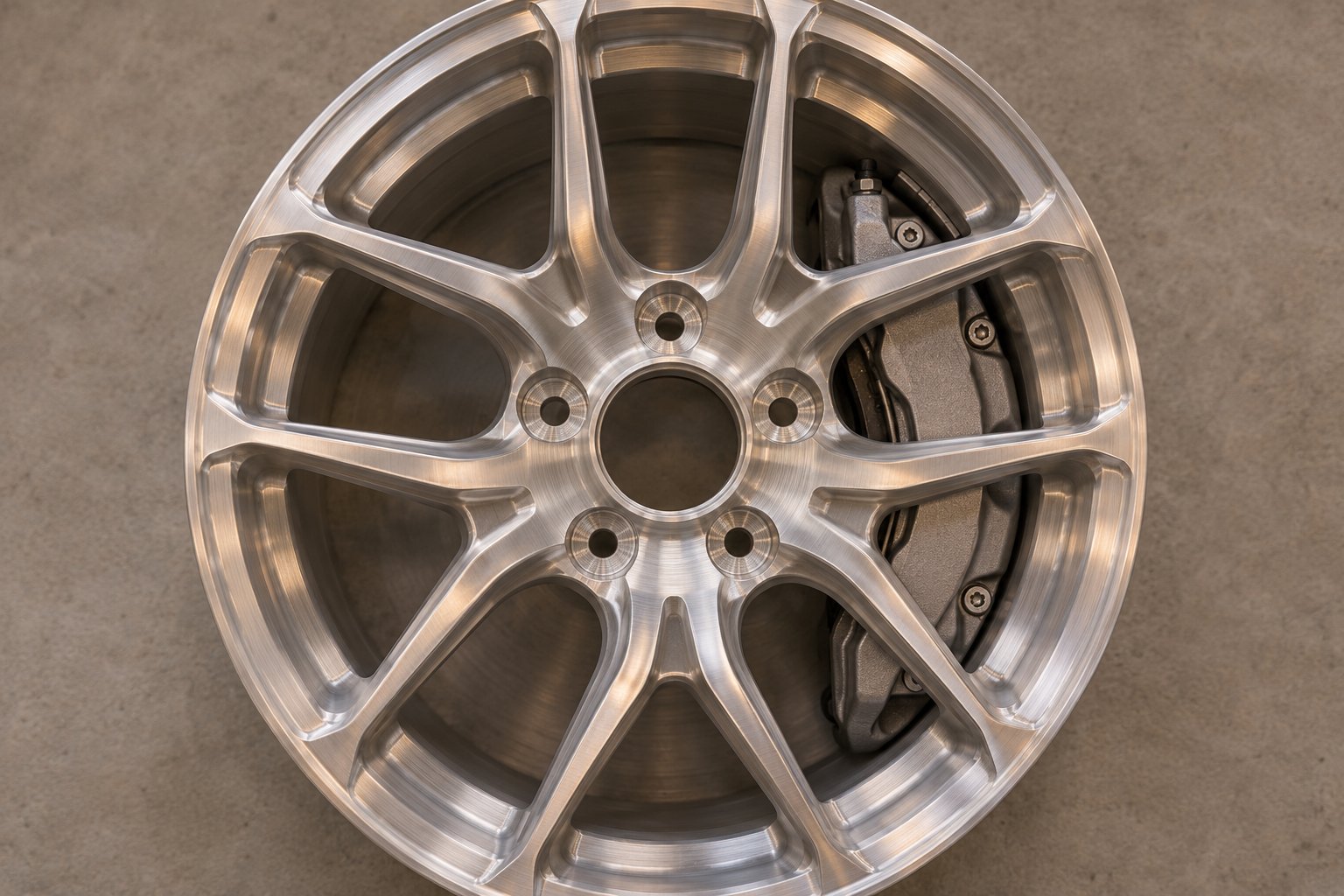
A wheel can be the right diameter, the right construction type, and the right price — and still be dangerously wrong for your Model Y if one critical dimension is off. Fitment isn't a single number. It's a stack of five interrelated specifications, and every one of them must land within safe tolerances before a wheel belongs on your vehicle. Get one wrong and you're looking at vibrations at highway speed, premature tire wear, brake interference, or worse. These aren't cosmetic concerns. On a vehicle as heavy as the Model Y, they're safety concerns.
Bolt Pattern and Hub Bore Explained
The bolt pattern is the most fundamental compatibility check. Every Model Y — across all trims and model years through the pre-refresh generation — uses a 5x114.3 bolt pattern with a 64.1mm center bore. That "5x114.3" means five lug studs arranged in a circle with a 114.3mm diameter. If the aftermarket wheel doesn't share this exact bolt pattern, it physically won't mount. This is the one spec that's essentially impossible to get wrong if you're paying attention — any reputable listing will state it clearly.
Hub bore is subtler and easier to overlook. The center bore is the machined opening at the center of the wheel that slides over the hub flange on your axle. When a wheel's center bore matches the vehicle's hub diameter exactly — 64.1mm for the Model Y — it's called hub-centric fitment. The wheel is centered by the hub itself, distributing the vehicle's weight evenly across the mounting surface. This is how your OEM wheels work, and it's the gold standard.
Many aftermarket wheels ship with a larger center bore to fit a wider range of vehicles. That's lug-centric fitment — the wheel is centered by the lug nuts rather than the hub. It can work, but relying on lug nuts alone to center a 4,400-plus-pound EV introduces risk. Even small centering errors can cause vibration at speed, uneven lug loading, and accelerated wear on studs and seats. The solution is simple: hub-centric rings. These precision-machined spacer rings fill the gap between the wheel's oversized bore and the vehicle's 64.1mm hub, restoring true hub-centric contact. They're inexpensive — usually a few dollars each — but skipping them to save a few bucks is a false economy that often reveals itself as a persistent steering wheel shimmy at highway speeds, similar to the kind of vibration you might chase through a tesla model y speed range test before realizing the issue is mechanical, not electronic.
Offset and Its Impact on Wheel Positioning
Offset — expressed as an "ET" value in millimeters — defines where the wheel's mounting face sits relative to the wheel's centerline. Imagine slicing the wheel in half through its width. A positive offset means the mounting face is closer to the outside (street-side) of the wheel, pulling the wheel inward toward the suspension. A negative offset pushes the wheel outward, away from the vehicle's body.
The factory 19-inch Model Y wheel carries a +45 offset. Aftermarket fitment data from real-world installations shows that offsets between +35 and +50 generally bolt on without issues across most 19-, 20-, and 21-inch widths. Drop below +35 on certain widths, and you're entering aggressive territory — the wheel face moves outward, potentially pushing the tire past the fender line or creating clearance issues with inner suspension components.
The consequences of incorrect offset aren't always immediate. A wheel that's a few millimeters too far outboard might clear everything during a parking-lot test drive, then rub against the fender liner during hard cornering or when the suspension compresses over a dip. Conversely, a wheel pushed too far inboard can contact the strut housing, brake caliper, or inner fender components. Over time, even minor contact creates uneven tire wear, accelerated bushing degradation, and annoying rubbing sounds that worsen as tires warm up and expand slightly. For drivers covering long metro express lanes la commutes or daily highway miles, these incremental problems compound into costly repairs faster than you'd expect.
The safest approach is to stay within the proven offset window for your specific wheel width. Wider wheels generally need lower offsets to sit correctly, but the relationship isn't perfectly linear — it varies by wheel design, tire size, and whether your Model Y runs stock suspension or aftermarket coilovers.
Load Rating and Brake Clearance for Heavy EVs
This is where the Model Y's EV nature makes the fitment conversation genuinely different from a conventional crossover. The battery pack pushes curb weight well beyond what comparably sized ICE vehicles weigh, and that extra mass must be supported by wheels rated to handle it. EV-specific engineering data from Kipardo shows that electric vehicle wheels typically require load ratings between 750 kg and 1,000+ kg per corner — substantially higher than what standard ICE aftermarket wheels are designed to bear.
Load rating isn't a suggestion. It's a structural limit. A wheel rated below the Model Y's per-corner weight requirement may hold up fine on smooth pavement at low speed, but hitting a pothole at highway speed concentrates the vehicle's full mass plus dynamic impact force onto a small contact patch. Underrated wheels crack, bend, or — in extreme cases — fail catastrophically. This is not a specification to estimate or round down. Every aftermarket wheel you consider must meet or exceed the OEM load rating for your specific trim. Your tesla battery warranty won't help you if a structural wheel failure damages suspension components or worse.
Brake caliper clearance is the final physical constraint, and it's especially relevant for Performance trim owners. The Performance Model Y ships with larger brake calipers than the Long Range or Standard Range trims. Those bigger calipers sit closer to the inner face of the wheel, and aftermarket wheels with different spoke geometry or barrel depth may not provide enough clearance. Even a millimeter of interference means the caliper contacts the wheel under braking — a dangerous scenario that can shear brake components or lock the wheel entirely.
Standard Long Range and base trims have smaller calipers, making clearance less of a concern with most mainstream aftermarket designs. But "less of a concern" doesn't mean "not a concern." Different spoke shapes route material differently through the inner barrel area, and even wheels that share the same diameter and offset can have meaningfully different caliper clearance profiles. Always verify clearance for your specific brake setup — not just your trim name, but the actual caliper size installed on your vehicle.
Before you add anything to a cart, run through this checklist:
- Bolt pattern: Confirm 5x114.3 — the wheel must physically match the Model Y's lug configuration.
- Hub bore: Verify the center bore is 64.1mm or purchase properly sized hub-centric rings to eliminate vibration risk.
- Offset (ET): Stay within the proven range for your chosen wheel width — generally +35 to +50 for most Model Y applications — and confirm with real-world fitment data or a specialist.
- Load rating: Ensure the wheel's per-corner load capacity meets or exceeds OEM specifications for your trim's curb weight, accounting for passengers and cargo.
- Brake caliper clearance: Confirm that the wheel's inner barrel and spoke geometry clear your specific brake calipers — especially critical on Performance trims with larger brakes.
Every item on that list is a pass-fail checkpoint. A wheel that nails four out of five is still a wheel that doesn't fit. With the mechanical side locked down, there's one more technical layer most guides gloss over: making sure your tire pressure monitoring system keeps working after the swap.
TPMS Sensor Compatibility and Recalibration After a Wheel Swap
Your new wheels clear the brake calipers, the offset sits perfectly within the fender line, and the load rating checks out. Everything looks right — until you pull away from the installer's shop and a tire pressure warning illuminates on the touchscreen. That moment catches more Model Y aftermarket wheel buyers off guard than almost any other step in the process, and it's usually a TPMS sensor issue that could have been avoided with five minutes of homework.
How Tesla TPMS Sensors Work with Aftermarket Wheels
Here's what makes Tesla different from nearly every other vehicle on the road: the Model Y uses Bluetooth Low Energy (BLE) TPMS sensors rather than the traditional RF 433MHz sensors found in most ICE vehicles. This isn't a minor technical footnote. BLE sensors communicate with the vehicle's receiver using a completely different wireless protocol, and they've been standard on every Model Y since the first one rolled off the line — no exceptions based on build date or trim level.
Why does this matter for aftermarket wheel shoppers? Two reasons. First, if you're buying used sensors from another vehicle or sourcing third-party replacements, you need BLE-compatible units specifically. An RF 433MHz sensor — the kind you'd pull from an older Model S or a pre-October-2020 Model 3 — simply won't pair with your Model Y's receiver. It won't throw an error code or give you a partial reading. It just won't register at all, leaving you with a persistent warning and no tire pressure data on your touchscreen.
Second, transferring your existing OEM sensors to a new set of aftermarket wheels is usually possible — and often the simplest path. Each TPMS sensor mounts to the wheel via a valve stem assembly secured with a retaining nut. If the aftermarket wheel's sensor pocket dimensions and valve hole positioning match the OEM wheel's layout, a qualified tire technician can demount the sensor from your old wheel and install it in the new one. Tesla's own service manual specifies careful torque values during this process — 5 Nm for Baolong sensors and 8 Nm for Continental sensors — to avoid damaging the seal. This is precise work, not a parking-lot job with an adjustable wrench.
Some aftermarket wheel designs, however, use different internal barrel profiles or valve hole placements that don't accommodate the OEM sensor without modification. In those cases, you'll need to purchase separate BLE-compatible sensors designed for the new wheel's geometry. Budget for this possibility before you buy — a set of four quality BLE TPMS sensors can add a meaningful amount to your total project cost, and discovering the incompatibility after the wheels arrive turns excitement into frustration. The simplest safeguard? Ask your wheel seller directly whether OEM Tesla TPMS sensors fit their specific wheel model, and cross-reference that answer with your installer.
Recalibrating TPMS Through the Tesla Touchscreen
Even when sensors transfer perfectly or new compatible units are installed, your Model Y won't immediately recognize them. The vehicle needs to go through an auto-learning cycle — and fortunately, Tesla built this process directly into the touchscreen rather than requiring a dealership visit or aftermarket scan tool.
The recalibration sequence is straightforward, but the details matter. You'll navigate to Controls > Settings > Service & Reset > Tire Pressure Monitor > Reset Sensors on the touchscreen. The system asks you to confirm the wheel size — and selecting the correct size is critical. Choosing the wrong diameter can trigger false tire pressure warnings that persist until you go back and fix the setting. After hitting Reset, the vehicle enters auto-learning mode, but it won't complete the process while parked. You need to drive.
Tesla's system requires the vehicle to exceed approximately 25 mph for the BLE sensors to communicate their IDs to the receiver and complete pairing. This auto-learning phase can take up to 20 minutes of driving, so don't panic if the pressure readings don't populate immediately. If readings still haven't appeared after a sustained drive, the vehicle may need to sit stationary for at least 20 minutes to clear cached data from previous sensors before you retry the process.
Here's the general step sequence from start to finish:
- Remove old wheel-and-tire assemblies — either transfer existing OEM TPMS sensors to the new wheels or install new BLE-compatible sensors, following proper torque specifications.
- Mount and balance the new wheel-and-tire assemblies — ensure sensors are properly seated and valve stems are accessible.
- Initiate TPMS re-learn via the touchscreen — navigate to Controls > Settings > Service & Reset > Tire Pressure Monitor > Reset Sensors, confirm the correct wheel size, and tap Reset.
- Drive the vehicle above 25 mph — maintain speed for up to 20 minutes to allow auto-learning to detect and pair all four sensors.
- Verify all four tire pressure readings display correctly — if any position shows as unknown after the drive, retry the reset sequence after letting the vehicle sit stationary for 20 minutes.
One last consideration that's easy to overlook: if you maintain two sets of wheels — say, a summer set and a winter set — you'll need to repeat this recalibration process every time you swap between them. The Model Y doesn't store multiple sensor profiles simultaneously, so each seasonal changeover means another touchscreen reset and another short drive to complete pairing. It's a minor inconvenience, but knowing it upfront prevents unnecessary worry when the TPMS warning pops up after your fall tire swap.
With sensors sorted and pressure data flowing to your touchscreen, the next logical question is what rubber you're wrapping around those new wheels — because changing wheel diameter means your tire size needs to change too, and the wrong pairing can throw off everything from your speedometer to your ride height.
Tire Pairing Guidance When You Change Wheel Size
Your speedometer, odometer, ride height, and even your vehicle's traction control calibration all depend on one assumption: that the tires on your Model Y maintain approximately the same overall diameter as the factory setup. Swap to a different wheel diameter without adjusting tire size accordingly, and you break that assumption — quietly, invisibly, and in ways that compound over thousands of miles. Getting the wheel right is only half the job. The tire you wrap around it determines whether everything else still works the way Tesla engineered it to.
Matching Tire Size to Your New Wheel Diameter
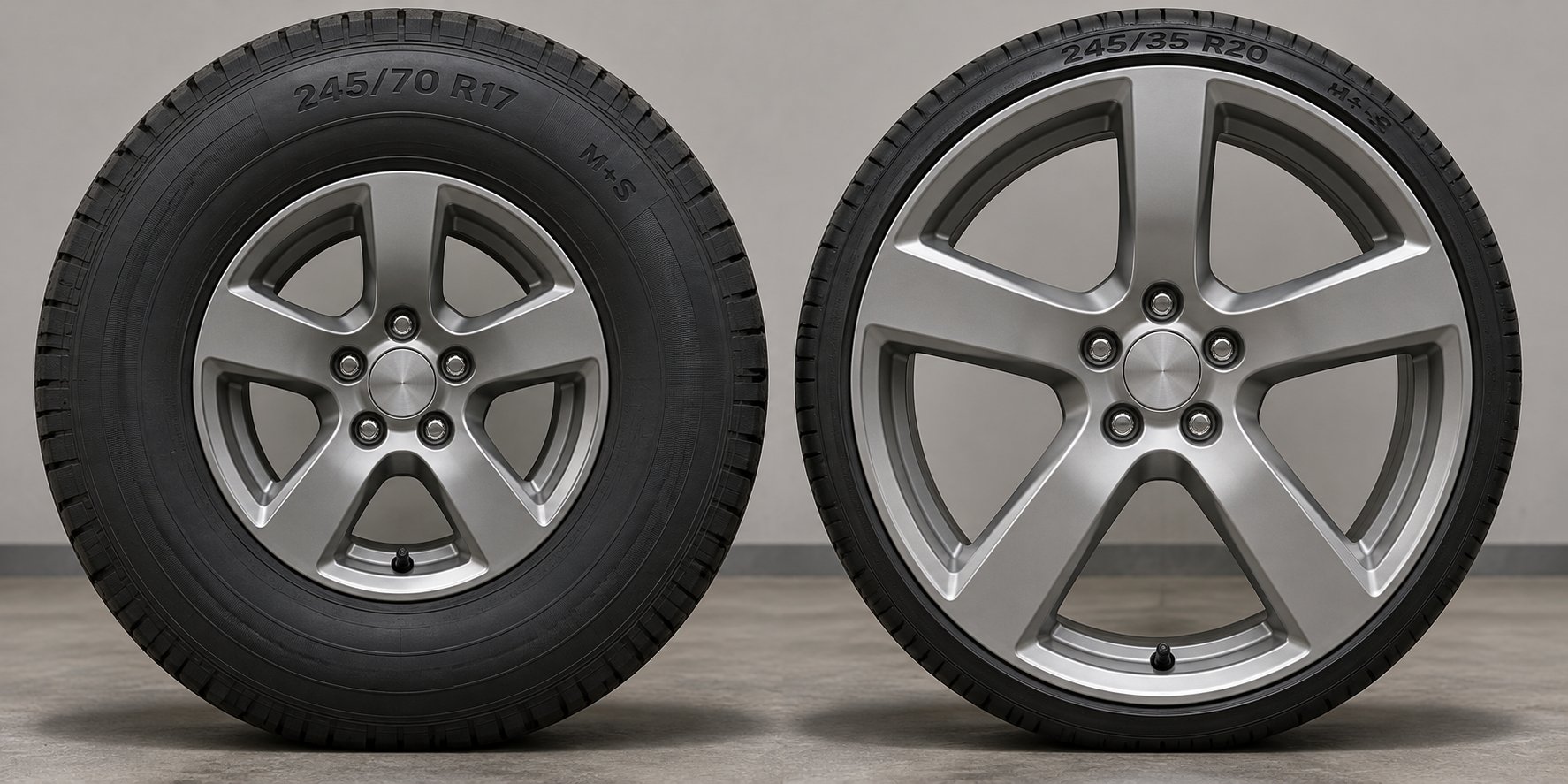
Here's the core principle: when you increase wheel diameter, you decrease tire sidewall height to keep the overall tire-and-wheel assembly roughly the same circumference as the original. This is called maintaining the overall rolling diameter, and it matters for reasons that go well beyond aesthetics.
Imagine upgrading from 19-inch OEM wheels to a 20-inch aftermarket set. If you simply mounted the same 255/45R19 tire onto a 20-inch rim — assuming it would even physically fit — the overall diameter would grow significantly. That larger circumference means the tire covers more ground per revolution, which makes your speedometer read slower than you're actually traveling. Your odometer would under-count miles. Your ride height would increase, shifting the center of gravity and altering suspension geometry. And your regenerative braking calibration, which expects a specific relationship between wheel speed and vehicle speed, would be slightly off.
The fix is straightforward in concept: pair a larger wheel with a lower-profile tire. Moving from 19 to 20 inches typically means stepping down from a 45-series sidewall to something in the 40 or 35 range, depending on width. The goal is an overall diameter that lands within a few percent of the OEM specification. Tire manufacturers publish detailed sizing charts, and most reputable aftermarket wheel sellers include recommended tire sizes for each wheel they offer.
Rather than memorize specific tire size numbers — which vary based on wheel width, brand tolerances, and model year — focus on the decision-making framework. Use an online tire size calculator to compare the overall diameter of your current OEM tire against the proposed new tire on your aftermarket wheel. If the two diameters differ by more than roughly 3%, you're drifting into territory where speedometer accuracy, ride height, and software calibration could be noticeably affected. The Tesla Model Y owner's manual details the importance of maintaining correct tire specifications, and staying close to the OEM overall diameter is the simplest way to honor those requirements. If you use the tesla trip planner for long-distance route planning, accurate odometer and speedometer readings become even more critical — range estimates depend on the vehicle knowing exactly how far each tire revolution carries it.
Load Index and Speed Rating Requirements
Tire sidewall markings include two numbers that most shoppers glance past: the load index and the speed rating. On a conventional sedan, these are easy to overlook. On a Model Y that weighs over 4,400 pounds before you add passengers and cargo, they're non-negotiable safety specifications.
The load index is a numerical code corresponding to the maximum weight a single tire can support at its rated inflation pressure. Because the Model Y's battery pack pushes curb weight well beyond what similarly sized gas-powered crossovers weigh, tires must carry an XL (extra load) or HL (high load) designation to handle the per-corner forces safely. Fitting a tire with an inadequate load index doesn't just risk premature wear — it risks structural failure under hard braking or when hitting an unexpected road hazard at speed. Always match or exceed the load index printed on the placard inside your driver's door jamb.
Speed rating is the alphabetical code indicating the maximum sustained speed the tire is engineered to handle. The Model Y's top speed varies by trim, but even the base configuration is capable of highway speeds that demand a proper speed-rated tire. Downgrading to a lower speed rating to save money introduces a liability that no responsible installer would endorse.
Tesla's tire support page highlights another dimension worth considering: Tesla-designed tires carry acoustic foam inserts that reduce cabin noise by approximately 6 decibels at 200 Hz. That foam, combined with optimized tread patterns, is engineered to deliver a noticeably quieter ride — something you'll appreciate most on long highway stretches where you're streaming music through tesla premium connectivity and want minimal road noise intruding into the cabin. Tesla-approved aftermarket tires may lack this acoustic foam, which Tesla notes could correlate with up to a 10% increase in noise, vibration, and harshness. It's not a dealbreaker, but it's a trade-off worth knowing about before you choose between a Tesla-designed tire and a more widely available aftermarket alternative.
When evaluating tires, look for the "T" marking on the sidewall — T0 for the first-generation Tesla-designed version, T1 or T2 for subsequent updates. These markings indicate that the tire was co-developed with Tesla specifically for their vehicles' torque profiles, weight distribution, and regenerative braking behavior. Aftermarket options without the T marking can still perform well, but they haven't gone through Tesla's virtual development and testing process, which optimizes for rolling resistance and range in ways generic tires don't.
Seasonal Tire Strategy with Two Wheel Sets
If you live anywhere that sees freezing temperatures, ice, or regular snowfall, running a single wheel-and-tire setup year-round forces a compromise no matter what you choose. All-season tires sacrifice winter grip for summer versatility. Summer tires become genuinely dangerous below 45°F, as their rubber compounds harden and lose traction on cold pavement — Tesla explicitly recommends switching to winter tires once temperatures consistently hit that threshold.
The most practical solution is also the most cost-effective over time: maintain two complete wheel-and-tire sets. A dedicated winter package — typically 18-inch wheels wrapped in winter-compound tires with deep siping and soft tread blocks — gives you maximum cold-weather grip while protecting your larger, more expensive summer setup from road salt, gravel, and pothole damage during the harshest months. That 18-inch winter set also happens to be the cheapest diameter to replace when tread wears down, and the taller sidewalls provide better pothole protection on frost-heaved roads.
Your warmer-weather set can then prioritize whatever matters most to you — 19-inch flow-formed wheels for balanced comfort and aesthetics, or 20-inch options for visual impact — without worrying about cold-weather performance. Swapping between sets twice a year does require the TPMS recalibration process covered in the previous section, and you'll need storage space for the off-season set, but the benefits extend beyond safety. Each set accumulates fewer annual miles, which means both sets of tires last longer and each set of wheels sees less cumulative wear.
This dual-set strategy is especially smart for Model Y owners exploring tpms sensor replacement as part of a seasonal routine. Purchasing a second set of BLE TPMS sensors for your winter wheels eliminates the need to transfer sensors back and forth every swap, reducing labor costs and the risk of damaging a sensor during repeated removal and reinstallation. Think of it as buying convenience alongside safety — two sets of sensors, two complete assemblies, and a swap that takes minutes instead of requiring a full sensor extraction each time.
Whether you're configuring a winter package through the tesla model 3 design studio approach of methodical spec-matching or simply asking your local tire shop to recommend a setup, the seasonal strategy remains the same: optimize each set for its intended conditions rather than forcing a single set to do everything adequately and nothing exceptionally well.
Changing wheel size without changing tire size throws off your speedometer, odometer, ride height, and regenerative braking calibration — always pair a new wheel diameter with a tire that maintains the original overall rolling diameter.
Tires and wheels are the components you see and touch, but the financial picture extends well beyond the initial purchase. What happens to your Tesla warranty when aftermarket wheels go on? What does your insurance company need to know? And what hidden costs catch owners off guard six months after installation? Those questions deserve honest answers — and most wheel-buying guides conveniently leave them out.
Warranty, Insurance, and Total Cost of Ownership
Most model y aftermarket wheels guides end the conversation once the wheels are bolted on. They cover specs, construction, and tire pairing — then leave you to discover the financial and legal implications on your own. That's a problem, because the decisions you make around warranty documentation, insurance coverage, and long-term budgeting can affect your ownership experience just as much as choosing the right offset or construction type. These are the topics that don't sell wheels, which is exactly why retailers tend to skip them.
Does Installing Aftermarket Wheels Void Your Tesla Warranty?
This is the question that keeps more Model Y owners running stock wheels than any fitment concern ever could. The short answer: no, installing aftermarket wheels does not automatically void your Tesla warranty. The longer answer requires understanding a piece of federal legislation that most car owners have never heard of but that protects them every day.
The Magnuson-Moss Warranty Act is a U.S. federal law that prevents manufacturers from voiding a warranty simply because an aftermarket part was installed. Under this act, Tesla would need to demonstrate that the specific aftermarket wheel directly caused a particular failure before denying a warranty claim related to that component. In other words, bolting on a set of properly spec'd aftermarket wheels doesn't give Tesla blanket permission to reject an unrelated warranty claim on your drive unit, battery pack, or suspension bushings.
Sounds straightforward? In practice, the line can get blurry. If you install wheels with an incorrect load rating and a suspension component fails prematurely under stress, Tesla could reasonably argue that the underrated wheel contributed to the failure. If you run a wildly aggressive offset that causes accelerated inner tie rod wear, the causal link becomes harder to dismiss. The protection the Magnuson-Moss Act provides is real, but it works best when you've done everything right — correct specs, proper installation, and appropriate torque values.
For 2023 tesla model y owners and earlier model years still under warranty coverage, a few practical steps strengthen your position significantly. Keep a record of every specification for the wheels you install: diameter, width, offset, load rating, construction type, and the manufacturer's name and part number. Save the purchase receipt. Photograph the installed wheels alongside a copy of the torque specification you used. If your installer provides a work order or invoice, keep that too. This documentation trail proves you acted responsibly — and makes it far more difficult for anyone to argue that a properly fitted aftermarket wheel caused an unrelated failure.
One important caveat: while the Magnuson-Moss Act is a general legal principle that applies broadly, individual warranty terms can include specific language worth reviewing. Before installing aftermarket wheels, consider reaching out to Tesla service to ask about their stance on your specific configuration. A brief conversation — or even a saved chat transcript — can clarify expectations and give you additional documentation if a warranty question ever arises. Owners researching a potential tesla model q or any future Tesla model would benefit from the same due diligence, since warranty terms can evolve across vehicle generations.
Insurance Considerations for Modified Wheels
Here's a scenario that catches owners off guard more often than it should. You invest $2,500 in a set of flow-formed aftermarket wheels, drive for six months, and then someone clips your rear quarter panel in a parking lot. Your insurance adjuster writes the estimate based on your vehicle's stock configuration. The damaged aftermarket wheel? It doesn't exist in their system. You absorb that loss entirely.
Standard auto insurance policies are written to restore your vehicle to its original factory condition — nothing more. Custom wheels, upgraded tires, and any other aftermarket modification simply don't factor into a standard collision payout unless you've proactively declared them. The fix is an aftermarket endorsement, sometimes called Custom Parts and Equipment Coverage. This optional add-on to your existing policy specifically covers non-factory modifications and upgrades, ensuring that your aftermarket wheels are recognized as part of your vehicle's insured value.
Adding this coverage is straightforward. Contact your insurance provider and ask for an aftermarket equipment endorsement. Provide a complete list of every modification — brand names, part numbers, and purchase receipts. Photograph the installed wheels from multiple angles. Then confirm the coverage limit: many policies default to a cap between $1,000 and $5,000, which may not cover the full replacement cost of a quality aftermarket wheel-and-tire package. If your modifications exceed that default, request a higher limit that actually reflects what you've invested.
The cost of this endorsement is typically modest — often just a few dollars per month added to your premium. Compared to the hundreds or thousands you'd lose replacing uninsured aftermarket wheels out of pocket after an accident, it's one of the easiest financial decisions in the entire upgrade process. Think of it this way: you wouldn't skip insuring a tesla model s price-level vehicle just to save on premiums. The same logic applies to the components bolted to it.
Total Cost of Ownership Beyond the Purchase Price
The sticker price on a set of aftermarket wheels is just the opening number. The real cost of ownership unfolds over years of tire replacements, seasonal swaps, and maintenance items that most shoppers don't think about until the invoice arrives. Understanding these hidden costs upfront lets you budget honestly and avoid the frustration of discovering that your "affordable" wheel upgrade quietly doubled in cost over its first two years.
Tire replacement is the biggest recurring expense, and it scales directly with wheel diameter. As covered earlier, larger wheels demand lower-profile tires that use more specialized construction and performance-oriented compounds. A set of 21-inch replacement tires can cost nearly twice as much as a comparable set in 18 inches — and those thinner sidewalls tend to wear faster under the Model Y's weight, shortening the interval between replacements. Over the life of the vehicle, the cumulative difference is substantial.
Owning a budget-friendly 18-inch winter set flips this dynamic in your favor. Not only does it protect your primary wheels and tires from the harshest driving conditions, it also means your larger summer set accumulates fewer annual miles. Both sets of tires last longer, and when the winter tires do need replacement, the 18-inch size sits at the most affordable end of the pricing spectrum. For Model Y owners experiencing a tesla tire installation error or unexpected damage during a rough winter, having a dedicated cold-weather set already on hand turns a potential emergency into a simple seasonal routine.
Beyond tires, several other line items deserve a spot in your budget. Some are one-time costs, others recur with every swap or service interval. Miss any of them and your carefully planned upgrade starts looking less like a smart investment and more like a slow financial leak.
- Replacement tires: Budget for the full replacement cost of tires in your chosen diameter — not just the first set, but the second and third. Lower-profile tires cost more per unit and may need replacement sooner.
- TPMS sensors: If your aftermarket wheels can't accommodate your existing OEM sensors, a set of four BLE-compatible replacements adds to the upfront cost. Owners running two wheel sets may want a dedicated sensor set for each.
- Mounting and balancing: Every tire swap — whether seasonal or due to wear — incurs mounting and balancing fees. Budget approximately $20-$40 per wheel per service visit, and factor in two swaps per year if you run seasonal sets.
- Hub-centric rings: If your aftermarket wheel's center bore is larger than the Model Y's 64.1mm hub, precision hub-centric rings are essential. They're inexpensive individually — usually under $10 per ring — but skipping them invites vibration issues that cost far more to diagnose.
- Alignment check: Any time you change wheel offset or width, a four-wheel alignment is strongly recommended. Even within the safe offset window, slight changes in how the tire contacts the road can affect wear patterns. A single alignment check typically runs $100-$150 and protects your tire investment from uneven wear that shortens tread life prematurely.
Add these items together and the total cost of ownership for an aftermarket wheel setup becomes meaningfully higher than the purchase price alone. That's not a reason to avoid the upgrade — it's a reason to plan for it. Owners who budget honestly upfront enjoy the full benefit of their new wheels without the sting of unexpected expenses eroding the satisfaction. And with the financial picture clear, the final step is pulling every variable covered in this guide — fitment, construction, size, tires, sensors, warranty, and cost — into a single decision framework that walks you from initial motivation through post-installation verification.
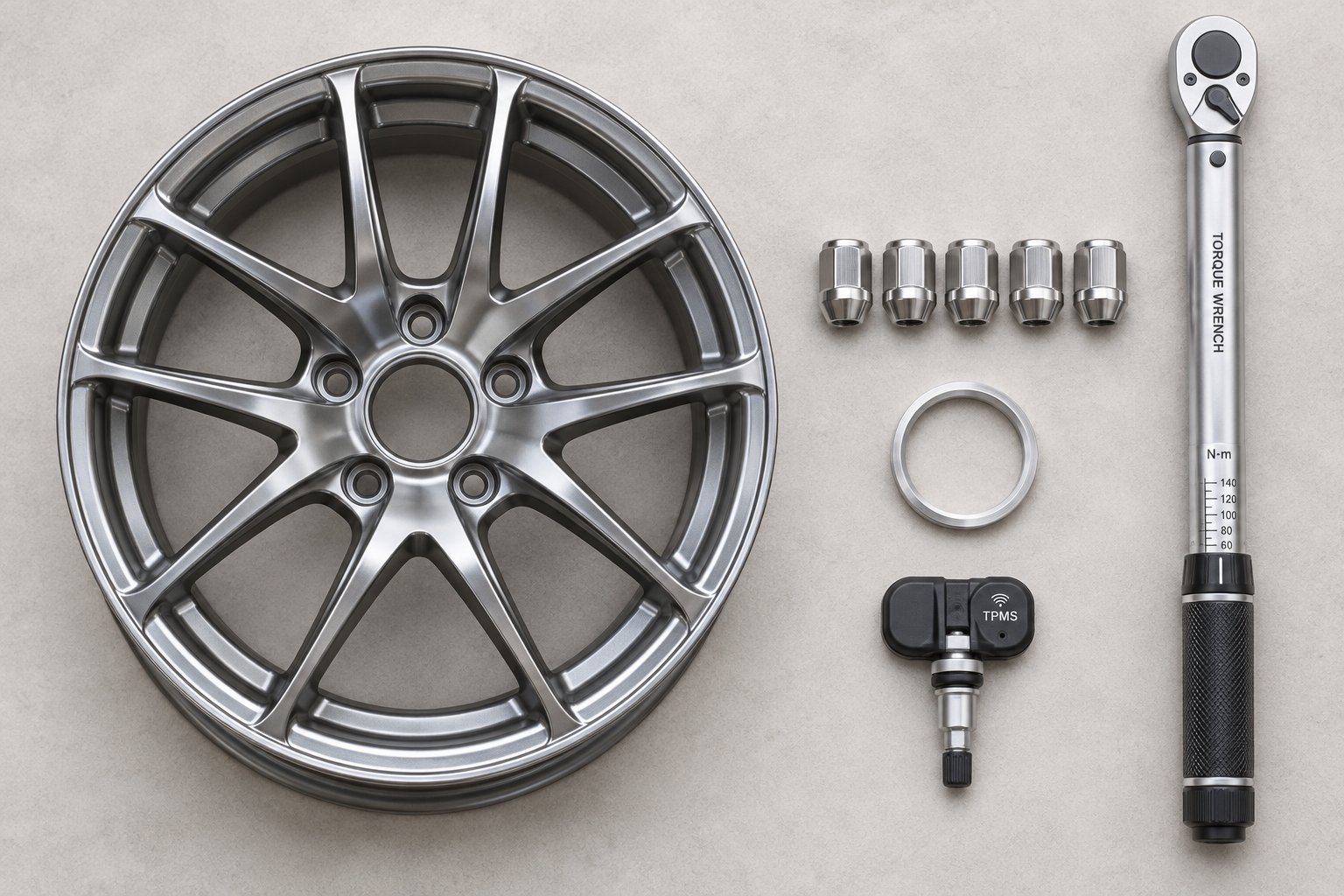
Your Model Y Aftermarket Wheel Decision Framework
Eight sections of specs, trade-offs, and hidden costs can feel overwhelming when all you want is a clear answer: which wheels should I buy? The reality is that the "right" aftermarket wheel depends entirely on your priorities, your specific vehicle, and how honestly you budget for the long game. Rather than guessing, work through the following framework step by step. Every decision builds on the one before it, and skipping ahead is how owners end up with expensive wheels that rub, vibrate, or quietly drain their bank account through tire replacements.
Step One — Define Your Goal
Before you browse a single product page, answer one question: why are you doing this? Your primary motivation shapes every downstream choice. Are you chasing a more aggressive look for your 2022 tesla model y? Building a dedicated winter set to survive Minnesota ice storms with nokian tires? Improving ride comfort by downsizing from 20-inch OEM wheels to a cushier 18-inch setup? Or simply replacing damaged factory wheels at a lower cost than Tesla's OEM pricing?
Each goal points you toward a different combination of diameter, construction type, and tire strategy. An owner prioritizing winter safety doesn't need forged 21-inch wheels. Someone chasing visual impact doesn't need the cheapest cast option available. Clarity here prevents impulse purchases — and prevents the regret that follows them.
Step Two — Confirm Your Trim, Year, and Fitment Specs
This is where most buying mistakes happen. A wheel that fits a pre-refresh Long Range perfectly may not clear the larger brake calipers on a Performance trim. A setup verified on a 2022 model may need re-confirmation for a Juniper refresh. And offset tolerances that work beautifully on stock suspension can cause rubbing if you've installed aftermarket coilovers.
Pull up your vehicle's door jamb sticker, your original window sticker, or your Tesla account profile and confirm exactly which trim, year, and brake package you own. Then cross-reference the five critical specifications covered earlier in this guide: bolt pattern (5x114.3 for all pre-refresh trims), hub bore (64.1mm), offset range, load rating, and brake caliper clearance. If you recently took a tesla demo drive and are still deciding between trims, nail down your purchase first — wheel shopping before you've confirmed your exact vehicle configuration is putting the cart before the horse.
Features like tesla stop mode, tesla fsd cabin camera authentication, or software updates like 2025.45.9 can be configured from your touchscreen after the fact. Wheel fitment can't. Get the mechanical specs right before you spend money, because returns on mounted wheels range from difficult to impossible.
Step Three — Choose Construction Type and Size
With your goal defined and your fitment specs confirmed, the construction-and-diameter decision becomes significantly simpler. For most daily-driving Model Y owners, the sweet spot is a flow-formed or spin-formed wheel in either 18- or 19-inch diameter. This combination delivers meaningful weight savings over cast wheels, strong impact resistance for a heavy EV, and pricing that doesn't approach the stratosphere of fully forged options.
CUTIM's spin-formed aftermarket alloy wheels are one option worth evaluating alongside other aftermarket brands during this stage. Their product page lists 17-, 18-, and 19-inch diameters for Tesla Model 3, Y, S, and X platforms, giving you diameter flexibility within a single manufacturer. That said — and this applies to any brand, not just CUTIM — buyers should confirm exact offset, load rating, and brake clearance specifications directly with the seller or a qualified wheel specialist before ordering. Product pages list general compatibility, but your specific trim, model year, and brake configuration determine whether a particular wheel actually fits without issues.
If your goal is a budget winter set, cast wheels in 18-inch remain a practical choice — the weight penalty matters less when paired with soft-compound winter tires on slippery surfaces, and the price savings leave more room in the budget for quality rubber. If maximum performance and weight reduction are genuine priorities rather than marketing-driven aspirations, fully forged wheels justify their premium for owners who will actually feel the difference during spirited driving or track days.
Step Four — Verify Tire and TPMS Compatibility
The wheel is only half the assembly. Pair it with the wrong tire size and your speedometer reads inaccurately, your ride height shifts, and your regenerative braking calibration drifts. Match the new wheel diameter to a tire that maintains your OEM overall rolling diameter — use a tire size calculator to verify you're within roughly 3% of the factory spec.
Confirm that your chosen tire meets or exceeds the Model Y's load index and speed rating requirements. Look for XL or HL designations appropriate for the vehicle's weight. And if cabin noise matters to you, consider Tesla-designed tires with acoustic foam inserts — they make a measurable difference on highway drives, especially when features like tesla premium connectivity are streaming audio and every decibel of road noise becomes an intrusion.
Finally, sort out TPMS before the wheels ship to your door. Verify whether your existing BLE sensors transfer to the new wheel design or whether you need a separate set. If you're building a two-wheel seasonal strategy, purchasing dedicated sensors for each set eliminates the hassle of sensor transfers every swap — and protects a delicate component from repeated removal and reinstallation. Budget for a tesla windshield protection plan if you're spending this much on vehicle care, but don't skip budgeting for sensors, mounting, balancing, hub-centric rings, and an alignment check. These aren't optional extras. They're part of doing the job right.
Here's the complete decision sequence from start to finish:
- Define your primary goal — aesthetics, winter preparedness, ride comfort improvement, or cost savings over OEM replacement.
- Confirm your exact Model Y trim, model year, and brake package — don't assume specs carry over across trims or between pre-refresh and Juniper models.
- Verify the five critical fitment specifications — bolt pattern, hub bore, offset, load rating, and brake caliper clearance for your specific vehicle.
- Select your construction type — flow-formed/spin-formed for the best balance of weight, strength, and value; cast for budget winter sets; forged for maximum weight savings.
- Choose your wheel diameter — 18-inch for comfort and cost efficiency, 19-inch for balanced daily driving, 20- or 21-inch for visual impact with acknowledged trade-offs.
- Pair with the correct tire size — maintain overall rolling diameter within 3% of OEM, match or exceed load index and speed rating requirements.
- Confirm TPMS sensor compatibility — verify whether OEM BLE sensors transfer to your chosen wheel or budget for new compatible units.
- Complete installation with proper torque specs — 129 lb-ft for lug nuts, manufacturer-specified torque for TPMS valve stems.
- Initiate TPMS re-learn via the touchscreen — reset sensors, drive above 25 mph for up to 20 minutes, and confirm all four readings display correctly.
- Schedule a four-wheel alignment — verify wear patterns and suspension geometry after the swap, especially if offset or width differs from OEM.
Always consult a qualified wheel specialist who can verify fitment for your specific Model Y before finalizing any aftermarket wheel purchase — no product page, forum post, or buying guide replaces hands-on confirmation of your exact trim, year, and brake configuration.
That single principle — verify before you buy — ties every section of this guide together. The Model Y rewards careful, informed upgrades with a better driving experience and long-term savings. It punishes shortcuts with vibrations, premature wear, warranty headaches, and unexpected costs. You've now got the framework to land firmly on the rewarding side of that equation. Take it to a specialist, confirm every number, and enjoy the upgrade you've earned through doing the homework first.
Frequently Asked Questions About Model Y Aftermarket Wheels
1. Will aftermarket wheels void my Tesla Model Y warranty?
Under the Magnuson-Moss Warranty Act, Tesla cannot void your warranty simply because you installed aftermarket wheels. However, if Tesla can prove that an improperly spec'd wheel directly caused a specific failure — such as an underrated load capacity leading to suspension damage — they may deny that particular claim. To protect yourself, always choose wheels that meet or exceed OEM load ratings, offset ranges, and brake clearance requirements. Keep detailed records of your wheel specifications, purchase receipts, and installation invoices. This documentation strengthens your position if a warranty question ever arises.
2. What bolt pattern and hub bore does the Tesla Model Y use for aftermarket wheels?
All pre-refresh Tesla Model Y trims use a 5x114.3 bolt pattern with a 64.1mm center bore and M14 x 1.5 lug nuts torqued to 129 lb-ft. When shopping for aftermarket wheels, verify the center bore matches exactly or plan to use hub-centric rings to bridge any gap between a larger aftermarket bore and the Model Y's 64.1mm hub. Running without hub-centric rings on an oversized bore can cause steering wheel vibration at highway speeds. For the Juniper refresh, these specs should be confirmed with a fitment specialist since Tesla does not always publish granular changes in consumer-facing documents.
3. What is the best wheel size for Tesla Model Y range and ride comfort?
For maximum ride comfort and the lowest long-term tire costs, 18-inch aftermarket wheels paired with taller-sidewall tires are the strongest choice. The extra sidewall rubber absorbs potholes and road imperfections before they reach the cabin, and 18-inch tires are the most affordable to replace. For a balanced approach that blends comfort with visual appeal, 19-inch wheels are the most popular aftermarket starting point. Larger 20- and 21-inch setups deliver dramatic looks but come with thinner sidewalls, stiffer rides, higher tire costs, and increased susceptibility to pothole damage.
4. Do Tesla Model Y TPMS sensors work with aftermarket wheels?
The Model Y uses Bluetooth Low Energy (BLE) TPMS sensors, which differ from the RF-based sensors in most other vehicles. Your existing OEM sensors can typically be transferred to aftermarket wheels if the sensor pocket dimensions and valve hole placement match. If they don't, you'll need BLE-compatible replacement sensors — standard RF 433MHz units will not pair with the Model Y at all. After installation, recalibrate through Controls > Settings > Service & Reset > Tire Pressure Monitor > Reset Sensors on the touchscreen, then drive above 25 mph for up to 20 minutes to complete pairing.
5. Are flow-formed wheels worth it for the Tesla Model Y?
Flow-formed (also called spin-formed or rotary forged) wheels offer the best balance of weight, strength, and price for most Model Y owners. They weigh meaningfully less than cast wheels thanks to a compressed grain structure in the barrel, improving regenerative braking efficiency and steering responsiveness. At the same time, they cost significantly less than fully forged wheels. Brands like CUTIM offer spin-formed options in 17-, 18-, and 19-inch diameters for Tesla platforms, though exact offset, load rating, and brake clearance should always be confirmed with the seller or a wheel specialist before purchase. For dedicated winter sets where budget matters most, cast wheels remain a practical alternative.