
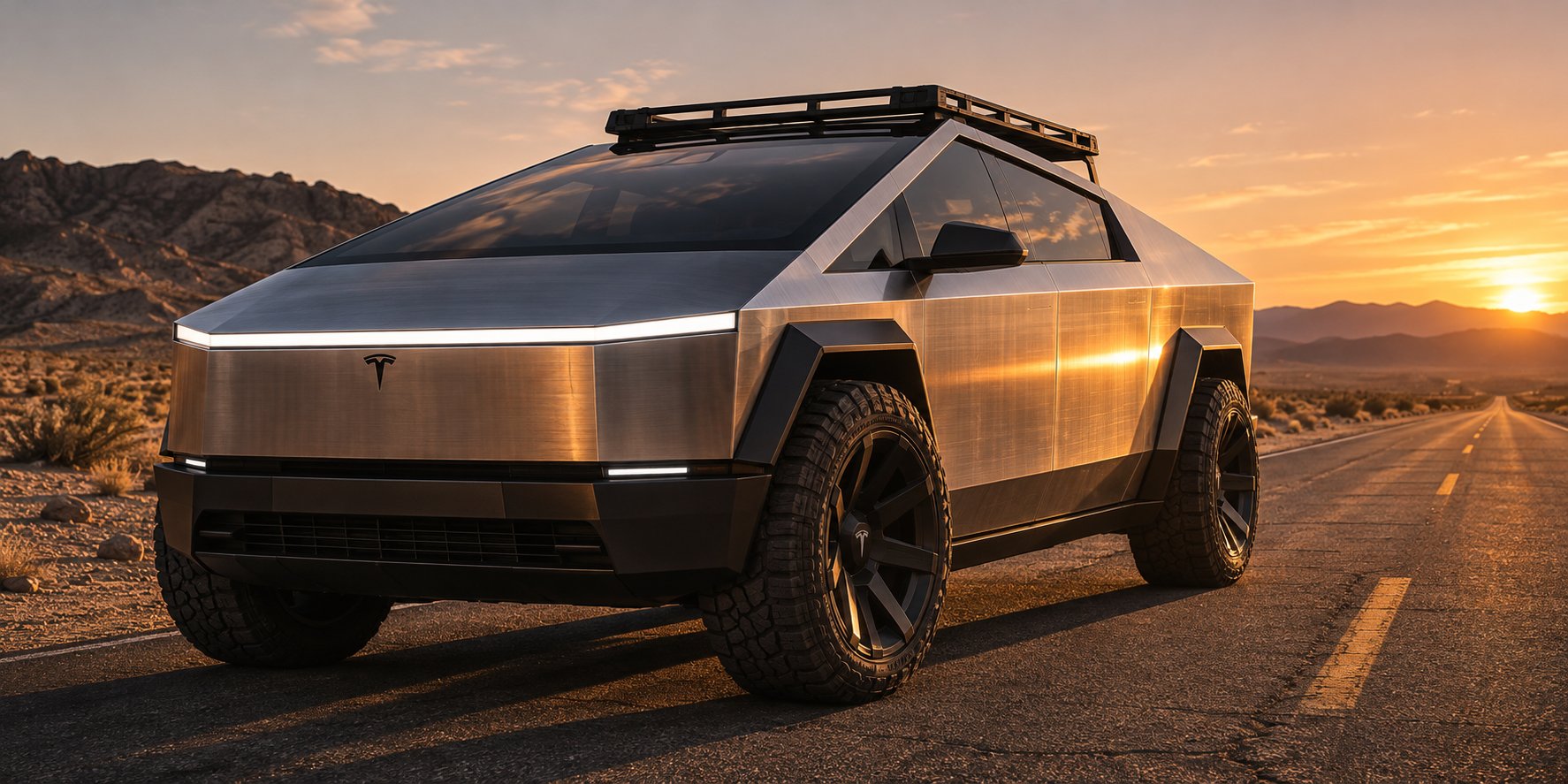
What Makes Cybertruck Modding Different from Every Other Truck
Imagine picking up a set of universal truck bed rails, a bolt-on cybertruck body kit, or a plug-and-play light bar harness - only to discover none of them fit, connect, or even mount the way they should. That frustration is shockingly common among new Cybertruck owners who treat this vehicle like any other pickup. It isn't one. The Cybertruck breaks from truck conventions so dramatically that its entire modification landscape plays by a different set of rules.
Before you spend a single dollar on cybertruck mods, you need to understand the five engineering decisions that make this platform genuinely unique. Each one directly shapes which upgrades work, which ones require workarounds, and which ones you should avoid entirely.
- 30X cold-rolled stainless steel exoskeleton - The body panels resist dents and corrosion, but they also reject traditional paint, complicate adhesive bonds, and require specialized approaches for mounting accessories like a cybertruck spoiler or fender flares.
- Sealed vault bed design - There is no conventional tailgate. The enclosed tonneau system limits compatibility with standard truck bed organizers, racks, and cargo management accessories.
- 48V low-voltage electrical architecture - Most aftermarket truck accessories are designed for 12V systems. Plugging them directly into the Cybertruck's 48V feeds can damage components or require costly voltage converters.
- Adaptive air suspension - The factory system adjusts ride height across multiple settings, from a low entry mode to an extraction height offering over 16 inches of ground clearance. Aftermarket lift and lowering kits must account for this active system rather than simply swapping static springs.
- Curb weight between 6,118 and 6,898 lbs - According to Tesla's official specs, the Cyberbeast with All Terrain tires tips the scales at nearly 6,900 lbs. That mass affects every decision you make about cybertruck wheels, tires, brake upgrades, and suspension components.
Why Stainless Steel Changes Everything
On a traditional F-150 or RAM, you'd prep the painted surface, apply an adhesive-mount accessory, and call it done. The Cybertruck's bare stainless steel body flips that playbook. Its ultra-hard surface has a different texture and energy profile than painted metal, which means vinyl wraps, protective films, and adhesive-mounted parts all behave differently. Professional wrap installers note that the Cybertruck's sharp geometric edges, large flat panels, and raw stainless texture demand specialized materials and precision techniques that go well beyond a standard vehicle wrap. Even the cybertruck headlights sit within that angular stainless framework, meaning any accent lighting or protective film around the headlight area must conform to edges far sharper than those found on conventional trucks.
The practical takeaway? Adhesive-based mods - from wraps to body trim to small cosmetic pieces - need products formulated for bare metal surfaces, not clear-coated paint. Drilling or clamping into 30X stainless steel also requires hardened tooling that standard truck accessories simply aren't built with. Skipping this step leads to stripped fasteners, failed adhesion, and wasted money.
The 48V Architecture and Vault Bed Factor
Here's where things get especially tricky for electrical accessories. The Cybertruck provides dedicated 48V power feeds in the frunk and on the roof, each carrying power and LIN bus data so accessories can be controlled through the touchscreen. That sounds convenient until you realize the light bar, dash cam, or powered cooler you bought was designed for a 12V system. Connecting 12V accessories to a 48V feed without a proper step-down converter risks immediate component failure. Even the cybertruck headlights and their surrounding auxiliary lighting systems operate within this higher-voltage ecosystem, so any aftermarket lighting upgrade needs explicit 48V compatibility.
The sealed vault bed creates a parallel challenge for cargo and organizational mods. With a floor width of roughly 51 inches and a length just under 72 inches, the bed's enclosed design means standard truck toolboxes, bed extenders, and universal tie-down systems rarely fit. You'll need Cybertruck-specific solutions engineered for these exact dimensions and the tonneau's movement path.
Understanding these five factors isn't just academic - it's the difference between a mod that integrates cleanly and one that damages your vehicle or ends up returned. Every upgrade decision downstream, from choosing the right set of wheels to selecting a lift kit that cooperates with adaptive air suspension, flows from this foundational knowledge. The real question becomes: once you know what makes this truck different, where should you actually start spending?
Your First 30 Days as a Cybertruck Owner and What to Mod First
Excitement on delivery day makes it tempting to jump straight to aggressive cybertruck tires, a widebody cybertruck kit, or a full suspension overhaul. Resist that urge. The owners who end up happiest with their builds almost always follow a deliberate sequence - protecting the vehicle first, solving everyday annoyances second, and making bold aesthetic or performance moves only after they actually know how they use the truck. Think of it like moving into a new house: you wouldn't pick out wallpaper before installing the locks and checking the plumbing.
This three-phase framework keeps your spending efficient, your truck protected, and your mod choices grounded in real experience rather than Instagram hype.
- Phase 1 (Day 1-7): Protection-first modifications - ceramic coatings or PPF, interior floor mats, and screen protectors.
- Phase 2 (Week 2-4): Daily usability upgrades - bed organization, lighting improvements, and small exterior touches.
- Phase 3 (Month 2+): Performance and aesthetic builds - aftermarket wheels, suspension changes, and body kits.
Phase 1 - Protect Your Investment Immediately
The Cybertruck's bare stainless steel exterior looks striking in a showroom, but within days of daily driving it picks up fingerprints, water spots, and fine surface scratches that are surprisingly visible on that brushed finish. Early owners consistently report that contamination from brake dust, rail dust, and road grime can bond to the surface and leave orange-tinted specks - a phenomenon known as "tea staining" - if left uncleaned. This makes protective modifications the single highest-value place to start.
A ceramic coating or spray sealant creates a hydrophobic layer that repels water and makes routine washing far easier. For owners who want maximum coverage, paint protection film shields the stainless from rock chips and deeper scratches, though it requires professional installation and typically costs significantly more. The Cybertruck Owners Club community breaks down the trade-offs clearly: PPF excels at rock chip and scratch protection but is expensive and not DIY-friendly, while ceramic coatings offer excellent water repellency and gloss enhancement at a fraction of the cost and can sometimes be applied at home.
Inside the cabin, two small purchases deliver outsized protection. A tempered-glass screen protector for the 18.5-inch center display - typically in the $20 to $40 range - prevents scratches and reduces glare on a component that would cost hundreds to replace. A full set of custom-fit TPE floor mats covering the cabin, frunk, and rear cargo area locks in resale value by shielding surfaces from mud, snow, and daily wear. These are the mods you'll never regret installing on day one.
Phase 2 - Solve Daily Pain Points
After a couple of weeks behind the wheel, you'll notice specific friction points that no spec sheet warned you about. The vault bed, for example, scratches surprisingly easily under real loads despite being stainless steel. A drop-in bed mat is one of the cheapest and most impactful upgrades available, stopping cargo from sliding and protecting the floor from tools, gravel, and shifting gear. Beyond the bed mat, a tonneau cover - whether the factory powered version or an aftermarket tri-fold or roll-up alternative - adds security, weather protection, and a small but measurable range improvement at highway speeds thanks to better aerodynamics.
This is also the phase where lighting upgrades and small exterior additions start making sense. Bed lighting enhancements make loading and unloading at night dramatically easier, and interior ambient lighting kits personalize the cabin without any permanent modification. Tie-down solutions designed specifically for the vault bed's dimensions solve the frustration of limited factory anchor points - a common complaint in owner forums.
The key principle here is simple: let real-world ownership reveal what bothers you before reaching for your wallet. Two weeks of actual driving will surface annoyances that no YouTube review could predict for your specific routine.
Phase 3 - Go Big with Performance and Aesthetics
By month two, you know the truck. You know whether you spend weekends on trails or highways, whether the stock ride height feels right, and whether you want the Cybertruck to turn heads even harder. This is when the bigger-budget modifications earn their place in the conversation.
A lifted cybertruck with off-road suspension and aggressive all-terrain tires transforms the truck into a genuine trail machine, but that build path demands careful component selection given the vehicle's extreme weight and active air suspension. A lowered cybertruck with aftermarket wheels and a widebody cybertruck kit goes the opposite direction, delivering a street-focused stance that looks aggressive on pavement. Either route requires more research, a larger budget, and often professional installation - which is exactly why rushing into them during week one leads to expensive regrets.
Wheel and tire swaps alone can dramatically alter how the truck looks, handles, and even how far it travels on a charge. Body kits and wider fender treatments push the visual envelope further but introduce fitment complexity on a stainless steel platform that doesn't accept modifications the way traditional painted trucks do.
The golden rule of smart Cybertruck modding: protect the surfaces in week one, fix what frustrates you by week four, and customize for style or performance only after you truly understand how you use the truck.
Following this phased approach doesn't just save money - it ensures every modification you install actually solves a problem or enhances an experience you've personally identified. And once you reach Phase 3, the world of exterior transformation opens up in ways that are genuinely unlike any other truck on the road.
Exterior Mods That Transform How Your Cybertruck Looks
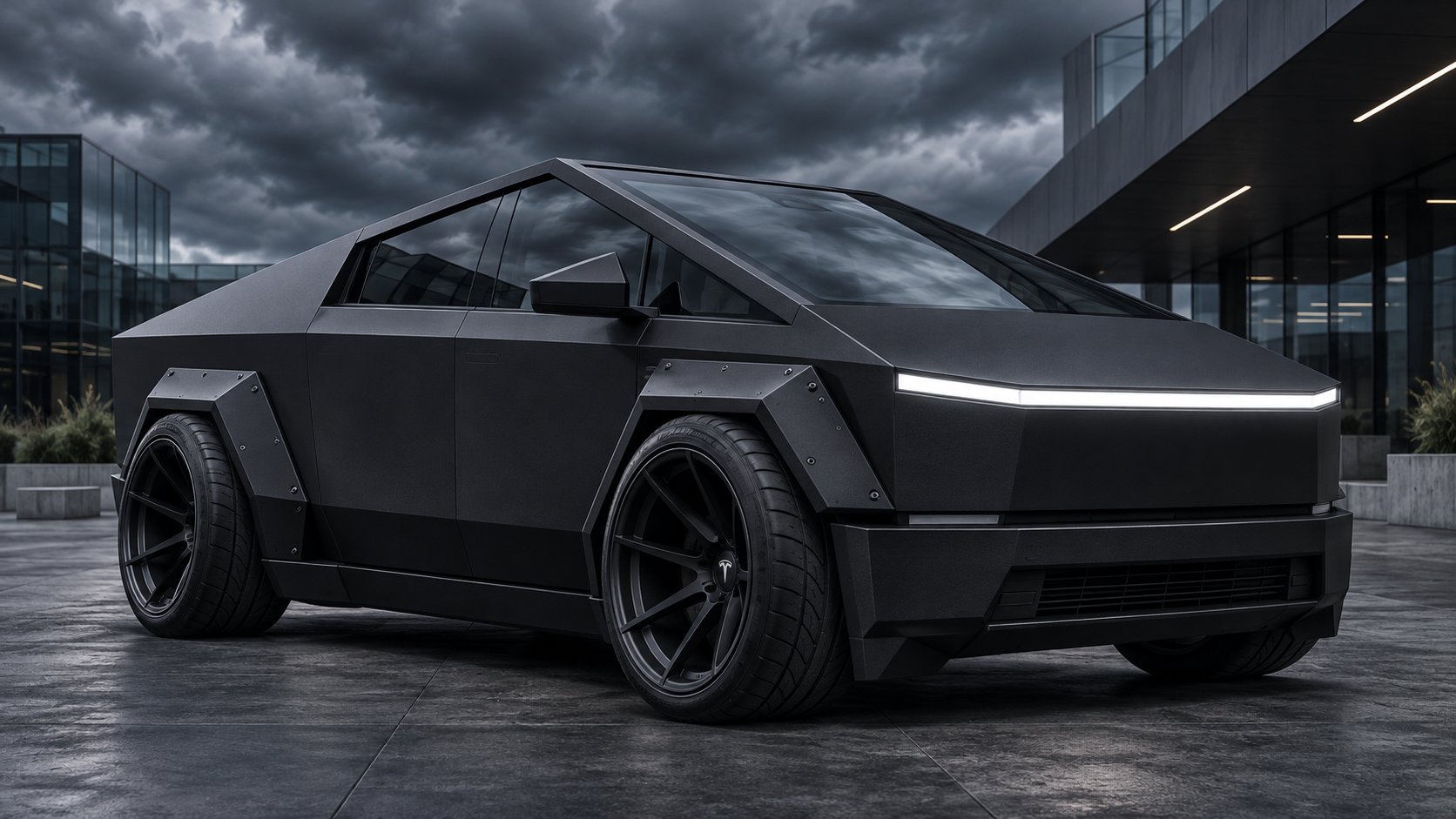
Here's where most owners' imaginations really catch fire. The Cybertruck already commands attention in its factory form, but a growing wave of cybertruck accessories now lets owners push its angular design even further - broader, meaner, more personalized. The catch? Every exterior modification has to contend with that ultra-hard stainless steel body and the unconventional panel geometry that makes this truck so visually distinct. Some upgrades bolt on cleanly, others demand professional hands, and a few can actually be reversed without a trace. Knowing which is which before you buy separates a clean build from a costly headache.
Widebody Kits and Body Panel Modifications
Widebody conversions are among the most dramatic cybertruck mods available, adding flared fenders that push the truck's stance outward and create room for wider wheels and more aggressive tire fitments. The aftermarket for these kits is still maturing, but early options have already attracted serious attention.
One of the first companies to market, Waido, offers a kit that adds a full six inches of width through oversized fender flares, beefier side skirts, a front splitter, a rear diffuser, and a tailgate spoiler. The kit is made from ABS plastic rather than stainless steel, which keeps weight manageable and - crucially - allows it to be fitted without cutting any factory panels. That reversibility matters if you ever want to return the truck to stock. Waido limited its initial production run to just 100 units at $9,990 before installation, with a Version 2 featuring carbon fiber rear wing and GT-style front fender vents capped at 50 units for roughly $2,000 more.
Installation, however, is not a weekend garage project. Stars in the Ceiling, the LA-based shop that completed one of the first customer installs, reported that the Cybertruck's integrated camera systems required longer wiring harnesses to maintain proper angles for driver-assist features after the wider fenders shifted the mounting points. That's a detail easy to overlook - and one that could compromise safety systems if done incorrectly. Professional fitting typically adds several thousand dollars to the kit price, plus you'll need appropriately sized cybertruck rims and tires to fill those wider arches. The Forgiato wheels used on the initial build measured 26 inches in diameter and 10 inches wide, with the off-road tires fitted so tightly that removal at wear-out was expected to be extremely difficult.
The key distinction for any widebody cybertruck kit is mounting method. Bolt-on kits that use existing attachment points or structural rivnuts are more secure and better suited for high-speed driving. Adhesive-only kits work for lighter cosmetic pieces but may not hold up under sustained vibration or extreme weather without proper surface preparation on bare stainless steel. If a kit requires both adhesive and mechanical fastening, plan on professional installation.
Light Bars, Spoilers, and Visual Upgrades
LED light bars are one of the most popular visual upgrades, and Tesla itself offers an official Off Road Lightbar designed to mount at the top of the windshield. The installation process, documented in Tesla's own service manual, reveals just how involved roof-mounted lighting can get on this platform. The procedure involves disconnecting the 48V mid-voltage system, removing B-pillar and roof appliques, drilling into the roof for rivnut installation, applying self-etching primer to the drilled area, and soldering wiring harness connections. It's a multi-hour process requiring specialized tools like hydraulic rivnut setters, carbide drill bits, and wire harness repair kits. Tesla even notes that by law, its own employees cannot connect the lightbar electronics - only the customer or a third-party installer can complete the final electrical connection.
That level of complexity is worth understanding because it applies, to varying degrees, to any third-party light bar or roof-mounted accessory. Wiring expertise, 48V compatibility, and proper weatherproofing of drilled penetrations are non-negotiable requirements. If you're not comfortable with electrical work and precision drilling into stainless steel, budget for professional installation from the start.
Rear spoilers sit at the opposite end of the difficulty spectrum. Most aftermarket options use adhesive mounting with 3M VHB tape or similar high-strength bonding systems, making them a realistic DIY project for patient owners. Styles range from subtle lip extensions to aggressive wings that complement a widebody kit. Projection light kits - the kind that cast a logo or pattern onto the ground when doors open - also fall into the simpler end, usually plugging into existing door lighting circuits without splicing.
Wraps and Surface Treatments
Vinyl wraps are arguably the most transformative exterior modification you can make, converting the Cybertruck's raw stainless finish into matte black, satin military green, gloss color-shift, carbon fiber texture, or virtually any finish imaginable. They also serve a practical purpose: professional wrap specialists note that the bare stainless body is prone to fingerprints, water stains, and minor surface scratches, and a quality vinyl wrap acts as a protective barrier against all three.
The Cybertruck's geometry, though, makes wrapping uniquely challenging. Those massive flat panels seem like they'd be easy to cover, but large unbroken surfaces actually amplify every imperfection - bubbles, wrinkles, and dust inclusions become far more visible than on a curved fender. The sharp body creases and angular edges demand precise cutting and heat manipulation that push even experienced installers. DIY wrapping is technically possible, but the Cybertruck's sheer size and unforgiving geometry make professional installation the far safer bet for a clean result.
Longevity is another consideration. On a traditional painted vehicle, high-quality vinyl wraps routinely last five to seven years. On the Cybertruck's bare stainless surface, adhesion behavior can differ because the bonding surface isn't smooth clear coat - it's brushed metal with a different surface energy profile. Adhesion promoters formulated for bare metal help bridge this gap, and reputable installers will use them as standard practice. The upside? Removal is generally clean, letting you restore the original stainless finish or switch to a completely new color without permanent alteration. That reversibility makes wraps one of the lowest-commitment visual upgrades available.
| Mod Category | Difficulty Level | Visual Impact | Reversibility | Typical Cost Range |
|---|---|---|---|---|
| Widebody Kit | Professional install recommended | Very High | High (bolt-on, no cutting) | $10,000 - $15,000+ installed |
| Roof-Mounted Light Bar | Professional install recommended | High | Low (requires drilling into roof) | $1,500 - $3,500 installed |
| Rear Spoiler | DIY-friendly (adhesive mount) | Moderate | High (adhesive removal) | $200 - $800 |
| Full Vinyl Wrap | Professional install strongly recommended | Very High | Very High (fully removable) | $4,000 - $8,000+ |
| Projection Door Lights | DIY-friendly (plug-in) | Low - Moderate | Very High (no permanent change) | $30 - $100 |
| Chrome Delete / Accent Pieces | DIY-friendly to moderate | Moderate | High (vinyl or clip-on) | $100 - $500 |
What stands out across every category is a consistent theme: the more dramatic the visual transformation, the more likely you'll need professional installation and Cybertruck-specific hardware. That's not a reason to avoid exterior modifications - it's a reason to budget accurately and choose your installer as carefully as you choose the parts themselves. The payoff, when done right, is a truck that looks like nothing else on the road riding on a platform that was already unlike anything else to begin with.
Of course, visual presence only tells half the story. The other half lives where rubber meets pavement - and on a vehicle pushing nearly 7,000 pounds, the wheels, tires, and suspension you choose underneath all that bodywork matter just as much as what sits on top of it.
Wheels, Tires, and Suspension Upgrades That Change the Ride
Few modifications reshape the Cybertruck's personality as immediately as swapping what sits at all four corners. A different set of tesla cybertruck wheels changes the visual stance, ride feel, braking behavior, and even driving range - sometimes dramatically. Pair those wheels with the right tires, then adjust the suspension to match your driving style, and you're looking at a fundamentally different vehicle from the one that rolled off the delivery truck. The stakes are higher here than on lighter vehicles, though, because nearly 7,000 pounds of mass magnifies every decision you make.
Aftermarket Wheels and Rim Options
The Cybertruck ships with two stock wheel options depending on trim: the angular 20-inch Cyber Wheels with their distinctive geometric spoke pattern, and the simpler 20-inch Core Wheels offered on base configurations. Both are functional, but the aftermarket opens up a much wider range of aesthetics and performance characteristics.
Suppliers like T Sportline and Unplugged Performance have led the charge with Cybertruck-specific fitments engineered around the truck's unique bolt pattern, offset, and load requirements. What sets quality Tesla aftermarket wheels apart from generic options is application-specific engineering. T Sportline, for instance, runs every design through finite element analysis (FEA) before approving production, testing stress concentrations at the vehicle's max gross weight. Their Model X wheels - tested at a gross weight of 6,878 lbs, comparable to the Cybertruck's heaviest configuration - showed stress concentrations well within safe limits. Most generic aftermarket wheel manufacturers skip this step entirely, focusing on aesthetics while leaving structural integrity to chance.
Wheel construction matters enormously on a vehicle this heavy. The three main types - cast, flow-forged, and fully forged - represent escalating levels of strength and decreasing weight:
- Cast wheels are the most affordable but heaviest, using a basic molding process that results in thicker, heavier spoke designs to achieve adequate strength.
- Flow-forged (flow-formed) wheels start as cast blanks that are heated, stretched, and compressed into their final shape. This process alters the molecular structure, producing a wheel that's lighter and stronger than a standard cast piece - a smart middle ground for daily drivers.
- Fully forged wheels deliver the best strength-to-weight ratio available. They're manufactured in the USA by companies like T Sportline using high-pressure forging processes that yield the lightest, strongest result. The trade-off is cost: forged wheels can run two to three times the price of cast alternatives.
Another critical detail often overlooked is hub centering. Generic aftermarket wheels typically use oversized hub openings designed to fit dozens of different vehicles, relying solely on lug nuts to center the wheel on the hub. Tesla-specific wheels incorporate precision-machined hub centering that ensures perfect alignment - a meaningful safety advantage on a truck that weighs as much as the Cybertruck does. Improperly centered wheels can cause vibrations, uneven tire wear, and accelerated bearing wear.
For owners who want a wider stance without the commitment of full wheel replacement, wheel spacers offer a budget-friendly alternative. Quality hubcentric spacers push the wheels outward, giving the truck a broader, more planted appearance - especially effective on a chrome cybertruck build or any setup where you want the wheels closer to flush with the fender edge. Just make sure any spacers you choose are rated for the vehicle's weight and use proper extended lug bolts or studs.
Tire Selection for a 7,000-Pound Electric Truck
Here's where the Cybertruck's extreme mass turns a routine decision into a safety-critical one. Every tire carries a load rating - a number stamped on the sidewall that indicates the maximum weight the tire can safely support at a given inflation pressure. On a truck tipping the scales at nearly 6,900 lbs before passengers and cargo, choosing a tire with inadequate load ratings isn't just a bad idea; it's genuinely dangerous.
Tesla's official wheel and tire specifications define strict requirements for load ratings, section widths, and overall diameters. Deviating from these specs - especially dropping to a lower load index for the sake of a particular look or tread pattern - risks tire failure under load. The consequences at highway speed are severe: tread separation, sudden deflation, and loss of vehicle control.
Beyond load capacity, tire choice creates real trade-offs that affect daily driving:
- All-terrain tires deliver better grip on dirt, gravel, and loose surfaces while providing a more aggressive look. The penalty is increased rolling resistance, road noise, and a measurable hit to driving range - often 5 to 15 percent depending on the tread pattern's aggressiveness.
- Highway or touring tires maximize range and minimize noise, making them ideal for commuters and road-trippers. They sacrifice off-road capability almost entirely.
- All-season performance tires split the difference, offering decent wet and light winter grip without the range penalty of a true all-terrain. These are the sweet spot for most daily drivers who occasionally encounter unpaved roads.
Tire choice is arguably the single most impactful modification for ride quality and real-world capability. A set of premium all-terrain tires transforms the Cybertruck's off-road confidence, while a quieter touring tire makes long highway drives noticeably more comfortable. And because tire selection directly influences range, it's a decision that affects your wallet on every single drive.
Lifted vs. Lowered - Suspension Paths
Suspension modifications take the Cybertruck in two completely opposite directions, and the factory adaptive air suspension sits right in the middle of that conversation. On air-suspension-equipped trims, Tesla's system already offers adjustable ride heights ranging from a low entry mode up to an off-road extraction height exceeding 16 inches of ground clearance. That built-in flexibility means many owners may not need a cybertruck lift kit at all - the software-adjustable height handles a surprising range of situations right out of the box.
However, hardware kits push beyond what the factory system allows. For owners wanting more ground clearance than the air suspension's maximum setting, aftermarket spacer lifts and full coilover conversion kits add additional height. The important caveat: the Cybertruck's mass demands heavy-duty components. As discussions in the Cybertruck Owners Club suspension forum highlight, air suspension allows pressure to increase dynamically under load, keeping the suspension geometry in its sweet spot. Coil spring replacements use a fixed spring rate set to a single ride height, which means the truck will sag more under heavy rear loads, changing tire contact geometry and handling characteristics. That's not necessarily a dealbreaker, but it's a real engineering trade-off - Tesla rated its coil-spring AWD trim for 7,500 lbs towing versus 11,000 lbs for the air suspension version, signaling a meaningful difference in load-handling capability.
Lowered builds go the other direction, dropping the truck below its factory low setting for a street-focused look. Lowering typically improves aerodynamic efficiency and can slightly extend range, but it sacrifices ground clearance and approach angles. On a vehicle with a flat battery pack spanning the underside, reduced clearance increases the risk of underbody contact on uneven surfaces.
| Category | Lifted Build | Lowered Build |
|---|---|---|
| Ground Clearance | Increased significantly (2-4 inches above stock max) | Reduced below factory low setting |
| Ride Quality | Firmer; depends on spring rate and damper choice | Stiffer at speed bumps; smoother on highways |
| Range Impact | Negative (larger tires, more drag, higher CG) | Slightly positive (improved aerodynamics) |
| Best Use Case | Off-road trails, overlanding, rough terrain | Street presence, highway cruising, urban driving |
| Typical Cost Range | $1,500 - $5,000+ (spacers to full coilovers) | $1,000 - $3,500 (lowering links or coilovers) |
| Installation Complexity | Moderate to high (professional recommended) | Moderate (professional recommended) |
| Warranty Considerations | Moderate risk (suspension component changes) | Moderate risk (suspension component changes) |
Whichever direction appeals to you, the factory air suspension's software-controlled adjustability deserves full exploration before spending on hardware. Many owners discover that toggling between the stock ride heights covers their needs surprisingly well. If it doesn't, at least you'll know exactly how much additional lift or drop you actually want - and that knowledge prevents the expensive mistake of buying a kit that overshoots or undershoots your real-world requirements.
The lifted path, in particular, opens a door that goes far beyond just adding ride height. Pair that extra clearance with the right bumpers, racks, and underbody protection, and the Cybertruck transforms from a street-capable EV into a legitimate overlanding platform - a build direction that's rapidly becoming one of the most exciting corners of the modification scene.
Off-Road and Overlanding Builds for Adventure-Ready Cybertrucks
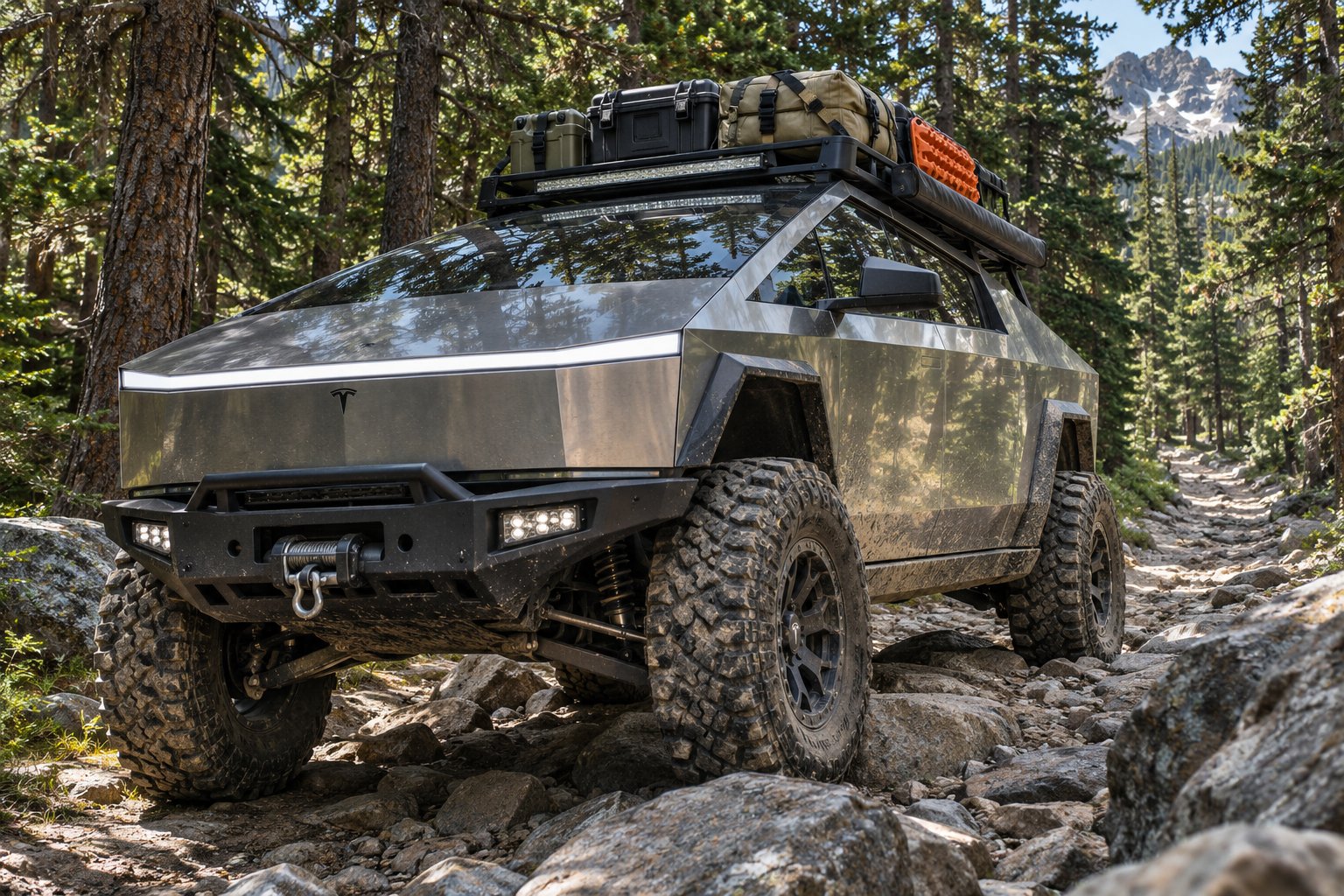
A lifted stance and aggressive tires hint at off-road potential, but they're only the starting point. Building a truly trail-capable custom cybertruck means layering protection underneath, recovery capability up front, and hauling capacity on top. The good news? The Cybertruck's stainless steel armor, onboard power export, and adaptive suspension give it a stronger foundation for overlanding than any other electric truck currently available. The not-so-good news? Its flat battery pack floor and nearly 7,000-pound curb weight create vulnerabilities that demand purpose-built solutions before you hit anything more challenging than a gravel road.
Here's how to prioritize the off-road mod stack - starting with what protects the truck and working outward toward what expands its capability.
- Underbody armor and skid plates - Highest priority; protects the battery pack from rock strikes and trail debris.
- Rock sliders - Shields the lower body panels and rocker area from side impacts on narrow trails.
- Steel bumpers with recovery points - Adds winch mounts and D-ring attachment for self-recovery and trail assistance.
- Lift kit or suspension upgrade - Increases ground clearance and accommodates larger tires for obstacle negotiation.
- Roof rack or bed rack system - Expands cargo capacity for gear, rooftop tents, and expedition equipment.
- Auxiliary lighting (cybertruck light bar, pods) - Illuminates trails and campsites after dark.
- All-terrain tires with proper load ratings - Provides grip on loose, muddy, or rocky terrain while supporting the truck's full weight.
Lift Kits and Off-Road Suspension Builds
The previous chapter covered the broad strokes of lifted versus lowered suspension paths. For off-road builds specifically, the conversation narrows to a few practical options - each with distinct trade-offs on a vehicle this heavy.
The most accessible entry point is a lift rod kit, which works with the factory air suspension rather than replacing it. These kits essentially recalibrate the suspension's reference points, raising the truck at each ride-height setting without removing or bypassing the adaptive system. CybertruckCo's Lift Rod Kit, for example, adds up to 2.125 inches of additional height in the High suspension mode, enough to clear 37-inch tires without rubbing under normal driving. In Medium mode, the gain is roughly 1.5 inches, and even the Low setting sits about an inch higher than stock. The kit installs without generating error codes and preserves the air suspension's dynamic load-leveling ability - a meaningful advantage for towing and heavy cargo situations.
Full coilover conversions represent the opposite end of the spectrum. These replace the factory air springs entirely with fixed-rate coil springs and adjustable dampers, offering more tuning flexibility and typically greater durability on sustained rough terrain. The trade-off, as discussed in the suspension chapter, is the loss of dynamic ride-height adjustment and the reduced towing capacity that comes with a fixed spring rate. For serious off-road enthusiasts who plan to spend significant time on trails, coilovers can be worth the compromise. For owners who split time between pavement and dirt, lift rods that preserve the air suspension's versatility are usually the smarter play.
Regardless of which lift approach you choose, every inch of additional height carries a cost. Taller ride height raises the center of gravity, slightly reduces highway stability, increases aerodynamic drag, and chips away at driving range. On a vehicle that already weighs close to three and a half tons, heavy-duty components rated for the load aren't optional - they're essential for safety. Budget spacer lifts designed for lighter trucks simply aren't engineered to handle the forces involved.
Bumpers, Racks, and Trail Protection
Imagine you're 30 miles down a remote trail and a rock the size of a football strikes the underside of your truck. On a gas-powered pickup, that's probably a dent in the skid plate and a story for later. On the Cybertruck, that rock is hitting a lithium-ion battery pack - the single most expensive and most vulnerable component on the entire vehicle. Early Cybertruck owners learned this the hard way. Multiple incidents involving underbody impacts - including one where a fire hydrant strike damaged the battery and caused a fire - highlighted the critical need for proper underbody armor.
Tesla eventually responded with its own Terrestrial Armor Package, which bundles a reinforced underbody battery shield and rock sliders for $3,500. The kit adds 185 pounds to the truck's weight but addresses the most serious vulnerability for off-road use. Demand was so high that the initial batch sold out within hours of listing. Aftermarket alternatives exist as well, though they typically carry a higher price tag - Unplugged Performance, for instance, offers its battery armor and rock sliders as separate purchases totaling over $7,000 combined.
Rock sliders deserve special attention given the Cybertruck's wide stance. On narrow trails with exposed boulders or deep ruts, the lower body panels and rocker areas are directly in the line of fire. Quality sliders bolt to the frame and create a sacrificial contact surface that takes the abuse instead of the body. Without them, a single bad line choice on a rocky trail can leave permanent damage along the entire length of the truck.
Aftermarket steel bumpers serve a dual purpose: protecting the front and rear ends during trail use while adding functional recovery points. A front bumper with an integrated winch mount and D-ring attachment points turns the Cybertruck from a vehicle that might get stuck into one that can pull itself - or others - out. Rear bumpers with recovery shackles and hitch-mounted accessories extend that capability further. When selecting bumpers, look for designs that maintain clearance for the Cybertruck's sensor array, cameras, and parking sensors. A bumper that blocks the truck's driver-assist features defeats the purpose of building a capable and safe off-road rig.
For hauling gear above the cab, modular roof rack and bed rack systems mount to the Cybertruck's OEM mounting points using stainless steel and extruded aluminum construction. These systems range from simple crossbar setups - ideal for surfboards, recovery boards, or a rooftop storage box - to full MOLLE panel racks with standardized mounting patterns for shovels, water storage, bags, and high-lift jacks. A cantrail cybertruck rack that follows the roof edge profile preserves the truck's aerodynamic silhouette better than a tall, boxy cage, minimizing range impact while still adding meaningful cargo capacity.
Bed rack configurations deserve careful thought around the vault tonneau. Full-height bed racks that enclose the bed sides can work with or replace the tonneau, while shorter "moto" racks leave the bed accessible from a standing position and still support a rooftop tent above the cab. Bed cap or topper options close off the bed entirely, creating a water-resistant lockable storage space while doubling capacity with a flat roof surface above. Professional installation is recommended for base frame components - plan for roughly four hours of labor - while crossbars typically mount in about ten minutes each.
Building an Overlanding Setup
The real magic of an overlanding build is how all these individual components work together as a system. A properly configured custom cybertruck for multi-day off-grid trips combines several layers:
- Protection layer: Underbody armor, rock sliders, and steel bumpers keep the truck intact on rough terrain.
- Capability layer: Lifted suspension and all-terrain tires provide the ground clearance and traction needed for trail access.
- Cargo layer: Roof racks, bed racks, or toppers carry the gear - tents, recovery equipment, water, cooking supplies - that makes extended trips possible.
- Lighting layer: A roof-mounted cybertruck light bar paired with lower-mounted auxiliary pods illuminates trails after dark and lights up camp without draining the high-voltage battery excessively.
- Power layer: The Cybertruck's built-in 120V and 240V outlets provide power export capability straight from the battery, running camp appliances, charging tools, and even powering other vehicles without a separate generator.
That last point is what gives the Cybertruck a genuine edge over traditional overlanding trucks. The onboard power export feature turns the vehicle itself into a mobile power station, eliminating the need for a separate generator setup that gas-powered overlanders typically carry. Pair that with the vault bed's lockable, weather-sealed storage and you have a platform that's surprisingly well-suited for expedition use - provided you've addressed the underbody vulnerability first.
Weight management becomes the overarching discipline tying everything together. Every rack, bumper, skid plate, and accessory adds pounds to a truck that's already among the heaviest consumer vehicles on the road. Heavier means more energy consumed per mile, which means less range between charging stops - a critical planning factor on remote routes where charging infrastructure may not exist. Choosing lightweight materials where possible, like aluminum crossbars over steel, and avoiding redundant accessories keeps the build functional without turning range anxiety into a genuine limitation.
The off-road and overlanding mod path represents one of the most rewarding - and most expensive - directions you can take a Cybertruck build. But not every modification needs to be this ambitious. Some of the highest-satisfaction upgrades cost a fraction of a steel bumper or rack system, solving everyday ownership frustrations that have nothing to do with trail capability and everything to do with making the truck better to live with on a daily basis.
Daily Driver Mods That Solve Real Ownership Frustrations
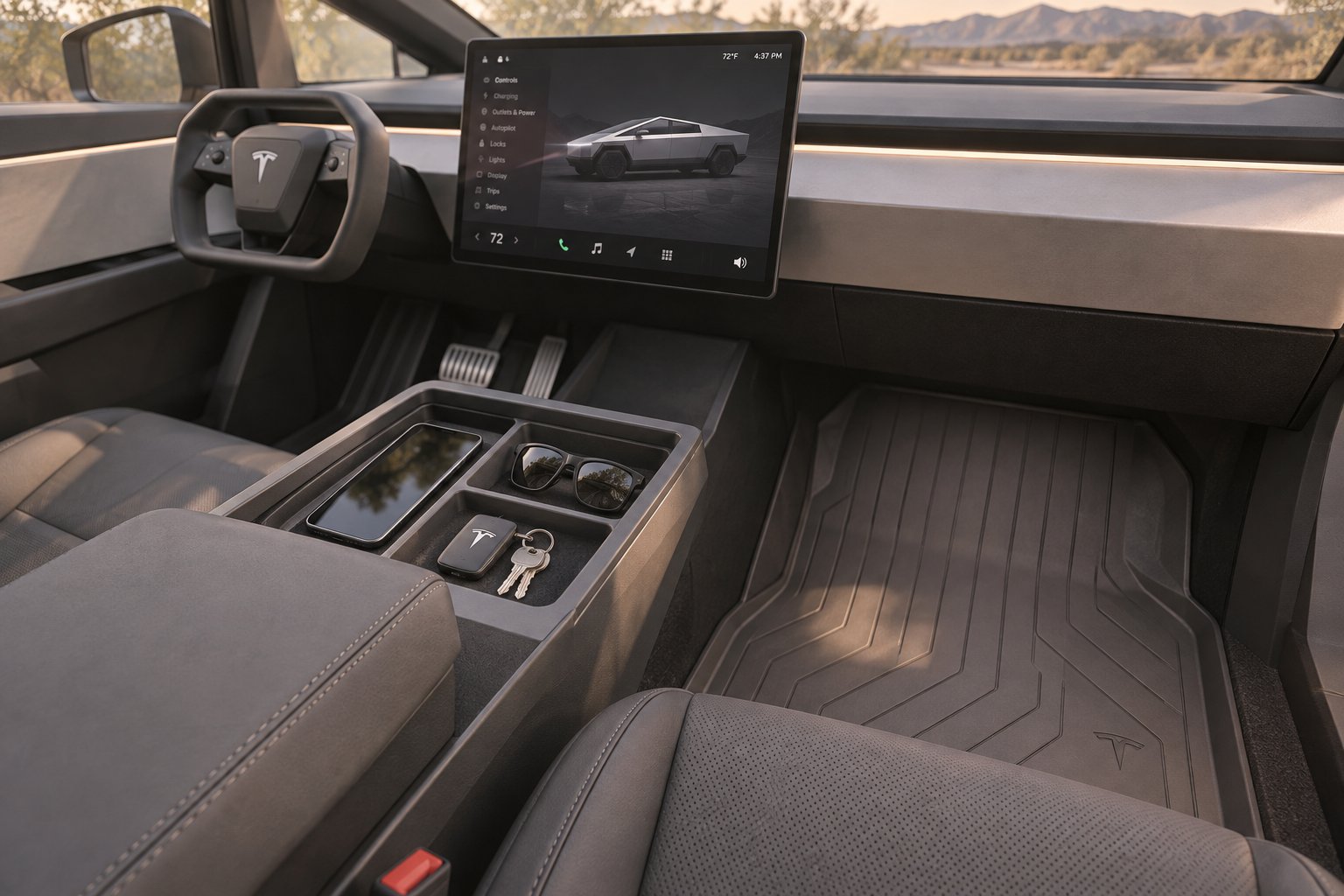
Steel bumpers and rooftop tents look incredible on an overlanding build, but most Cybertrucks spend the vast majority of their miles on paved roads - commuting, hauling groceries, shuttling kids, and running errands. The modifications that earn the highest praise in owner forums aren't the flashiest or most expensive. They're the ones that quietly eliminate the small daily annoyances the factory design either overlooked or left for the aftermarket to solve. A $40 organizer tray that stops your phone from rattling across the dashboard delivers more daily satisfaction than a $10,000 widebody kit you admire in the driveway.
What makes these upgrades especially valuable is their simplicity. Most require zero tools, take minutes to install, and cost under a few hundred dollars. Yet they fundamentally change how the truck feels to live with every single day.
Bed Organization and Cargo Solutions
The Cybertruck's sealed vault bed is one of its most distinctive features - lockable, weather-resistant, and unlike anything else in the truck market. It's also, in its stock form, a wide-open cavern with limited tie-down options that lets cargo slide freely every time you brake or corner. Standard truck bed organizers designed for an F-150 or Tacoma simply don't fit the vault's dimensions, tonneau path, or mounting points. That makes Cybertruck-specific solutions essential rather than optional.
The most versatile bed organization system leverages the L-track rails that come factory-installed in the vault. These are the same standardized aluminum channels used in the MOLLE and commercial cargo-tie-down industry, which means a growing ecosystem of compatible accessories slots right in. Tesla itself released a $985 lockable Bed Gear Box and a $350 Tailgate Utility Track built around these rails - the Gear Box being the only lockable, factory-fit bed storage option currently available. It's well-engineered but expensive, and Long Range and Dual Motor AWD trims need the separate L-Track accessory installed before the Gear Box will even mount.
For owners who need organization without the four-figure price tag, aftermarket L-track-compatible MOLLE shelves and panel systems offer rail-mounted surfaces at roughly half the cost. These provide flat, load-rated platforms with webbing for strapping gear down, though they lack the lockable lid of Tesla's official option. Bed dividers that lock into place are another high-impact, lower-cost solution - they separate groceries from heavy tools, preventing the chaotic cargo avalanche that happens every time you hit the brakes with a mixed load. A heavy-duty TPE bed mat underneath everything protects the vault floor from scratches and keeps items from sliding. Full bed mat sets covering the main bed, frunk, and rear sub-trunk run around $160 to $180 and represent some of the best value-per-dollar available in the entire Cybertruck accessory market.
Interior Comfort and Everyday Upgrades
Ever notice how the Cybertruck's wide center console cup holders let a standard 12-ounce can rattle around like a marble in a mixing bowl? That kind of small annoyance is exactly what the right interior accessories eliminate. A silicone cup holder insert fills the gap around narrower bottles and cans, killing the rattling noise while protecting the hard plastic from scratches and stains. It costs under $20 and solves a frustration you'd otherwise experience on every single drive.
The cabin's expansive, minimalist design creates a few other gaps that the factory didn't fill. Door-side storage trays reclaim dead space in the oversized door pockets, giving you organized spots for charging cables, tools, sunglasses, and the small items that otherwise end up scattered across the massive dashboard. A center console organizer tray adds compartmentalization to an armrest bin that's otherwise just a deep, undivided hole. Dashboard storage solutions tuck behind or beneath the screen, keeping frequently-used items accessible without cluttering visible surfaces.
Two upgrades deserve special emphasis as near-universal essentials. All-weather TPE floor liners with raised lips trap mud, snow, and spilled coffee before they reach the carpet - critical for a truck that owners actually use for truck things. Automotive-grade liners laser-measured to the Cybertruck's specific footwell dimensions prevent the accelerator pedal obstruction risk that comes with ill-fitting generic mats. And a matte or tempered-glass screen protector for the 18.5-inch center display isn't optional on a vehicle where everything - climate, navigation, vehicle settings, even mirrors - runs through a single touchscreen. A scratched or glare-washed display affects every interaction you have with the truck.
One critical buying tip applies across all interior accessories: always verify explicit Cybertruck compatibility. The Cybertruck shares almost no interior architecture with the Model 3 or Model Y. Console dimensions, seat bolt patterns, and dashboard contours are entirely different, and accessories designed for other Tesla models will sit awkwardly, slide around, or fail to protect what they're supposed to. If a product listing vaguely says "fits most trucks" or "fits all Tesla models," skip it.
Pet Travel and Lifestyle Accessories
A surprising number of Cybertruck owners travel regularly with dogs - and the truck's cavernous rear cabin and flat load floor make it naturally well-suited for pet transport. The aftermarket has responded with a growing category of pet-specific accessories designed to make animal travel safer and less destructive to the interior.
Rear seat pet barriers prevent dogs from climbing into the front cabin during sudden stops, a safety concern that becomes more serious in a vehicle weighing nearly three and a half tons where deceleration forces hit harder. Waterproof rear seat covers protect the light-colored upholstery from muddy paws, wet fur, and the general chaos that comes with an excited dog after a trail hike. For larger dogs or those with joint issues, portable ramps make loading and unloading from the truck's relatively high step-in height far easier on both the animal and the owner.
These lifestyle accessories may not get the same attention as cybertruck aftermarket wheels or a cyber truck body kit, but they represent exactly the kind of thoughtful upgrade that makes the difference between a truck you tolerate and one you genuinely enjoy using every day. For owners looking to browse everyday accessories, exterior add-ons, pet-travel products, and general care items in one place, curated collections like CUTIM's Cybertruck accessories page offer a consolidated starting point rather than hunting across dozens of individual sellers - though dedicated forums and specialist Tesla aftermarket shops remain equally valuable for discovering specific solutions.
Here's a quick-reference ranking of daily-driver mod categories by owner satisfaction and everyday impact:
- All-weather floor liners - Universally recommended; protect the highest-wear interior surfaces from day one.
- Screen protector - Inexpensive, fast to install, and protects the single most critical interface in the vehicle.
- Bed mat and cargo organizers - Transform the vault from a sliding cargo free-for-all into organized, protected storage.
- Cup holder inserts and console organizers - Eliminate rattling, reduce clutter, and cost almost nothing.
- Door-side storage trays - Reclaim wasted pocket space for everyday small items.
- Pet barriers and seat covers - Essential for dog owners; protect upholstery and improve animal safety.
- Ambient lighting and cabin accents - Low-cost personalization that enhances the driving atmosphere without permanent modification.
- Door edge protectors and tesla cybertruck tires pressure monitoring caps - Small, inexpensive touches that prevent cosmetic damage over time.
The common thread across every item on that list? None of them require drilling, cutting, or professional installation. They're friction-fit, clip-on, or drop-in solutions that can be removed without a trace if you ever want to return the truck to factory condition. That reversibility matters - both for preserving resale value and for keeping your options open as the Cybertruck aftermarket continues to mature. What you don't want to do is install something permanent before you're certain it's the right solution, which brings up an equally important conversation: the modifications that look tempting but consistently leave owners disappointed.
Mods to Skip or Delay Until You Know What You Actually Need
Not every popular upgrade deserves a spot on your build list. Spend enough time in Cybertruck owner forums and you'll notice a pattern: certain modifications get purchased in a wave of excitement, only to generate threads titled "anyone else regret buying this?" weeks later. The culprits aren't always bad products - they're often good products installed at the wrong time, designed for the wrong vehicle, or chosen for the wrong reasons. Recognizing these traps before you open your wallet saves real money and keeps your build focused on what actually improves the ownership experience.
Cosmetic Mods That Disappoint or Damage
The urge to personalize is understandable. You've got this striking stainless steel machine sitting in your driveway and you want it to feel like yours. But rushing into visual modifications before handling protection is the single most common regret among new owners. A cheap vinyl wrap applied before the stainless surface is properly cleaned and prepped with a bare-metal adhesion promoter will bubble, lift at the edges, and look worse than the factory finish within months. Worse, aggressive adhesive-backed trim pieces - the kind marketed as universal "chrome accents" or decorative strips - can leave residue on the 30X stainless steel that requires professional polishing to remove.
Low-quality wrap materials present a subtler risk. Bargain vinyl that performs adequately on painted vehicles can behave unpredictably on bare stainless, where the surface energy is different and temperature-driven expansion happens at a different rate. The result? Wrinkles that appear after the first hot summer, edges that curl in cold weather, and a finish that degrades in two years instead of five. If you're going to wrap the truck, invest in premium material and professional installation - or wait until you've lived with the raw stainless long enough to know you genuinely want it covered.
Universal Truck Accessories That Don't Fit
This is the trap that catches the most first-time Cybertruck owners. You search for a bed organizer, console tray, or cargo net, and a listing pops up claiming compatibility with "all full-size trucks" or "most Tesla models." You order it. It arrives. And it doesn't fit.
The Cybertruck shares virtually no dimensional DNA with an F-150, RAM 1500, or even a Model Y. The vault bed's width, depth, and tonneau rail path are unique. The center console, cup holder wells, and dashboard geometry match no other vehicle in production. As fitment testing from aftermarket suppliers has confirmed, even accessories designed for other Tesla models should be treated as non-compatible unless the product explicitly names the Cybertruck. A console organizer built for the Model 3 will rattle in the Cybertruck's wider, deeper bin. A windshield shade cut for the Model Y won't cover the Cybertruck's entirely different glass angle and area.
The premium you pay for Cybertruck-specific accessories - typically 10 to 30 percent more than generic alternatives - buys you parts that actually fit flush, sit flat, and function without rattling or interfering with adjacent controls. That's not a luxury markup. It's the cost of dimensional accuracy on a vehicle that breaks every convention the truck accessory industry was built around.
Expensive Mods with Diminishing Returns
Bigger isn't always better, especially on an electric vehicle where every pound and every inch of aerodynamic drag translates directly into lost range. Consider the owner who installs a 4-inch lift kit, bolts on 37-inch all-terrain tires, and swaps to heavy cast cyber truck rims - only to discover their highway range has dropped by 20 percent or more. Unplugged Performance notes that lifting the truck and running larger, more aggressive tires increases both frontal area and rolling resistance, with the penalty most pronounced at freeway speeds. Around town the effect is smaller, but for a daily commuter, that highway range loss compounds into real charging costs and planning headaches on every road trip.
Ultra-premium forged wheels tell a similar story of diminishing returns for certain use cases. A $6,000 set of forged cybertruck wheel upgrades makes engineering sense on a track-focused or weight-sensitive build, but on a daily driver that never exceeds the speed limit, the performance difference over quality flow-forged options costing half as much is nearly imperceptible. You're paying for marginal weight savings that the truck's 6,800-pound curb weight renders almost unnoticeable in everyday driving.
The same logic applies to oversized cybertruck steel bumper setups on trucks that never leave pavement. A 90-pound steel front bumper with an integrated winch mount is an essential investment for serious off-road use - but on a commuter that parks in a suburban garage every night, it's dead weight that reduces range, adds stress to front suspension components, and solves a problem that doesn't exist. Match the modification to your actual use case, not the use case you imagine having someday.
Protect first, solve real problems second, customize for aesthetics third. Every dollar spent out of that order is a dollar that works against your build instead of for it.
Skipping or delaying these common missteps keeps your budget focused on upgrades that genuinely earn their place. But even well-chosen modifications raise a question that hangs over every Cybertruck owner's head - one that has nothing to do with fitment or aesthetics and everything to do with that $60,000-plus purchase price: what happens to your warranty when you start bolting things on?
Warranty Implications Every Modded Cybertruck Owner Must Understand
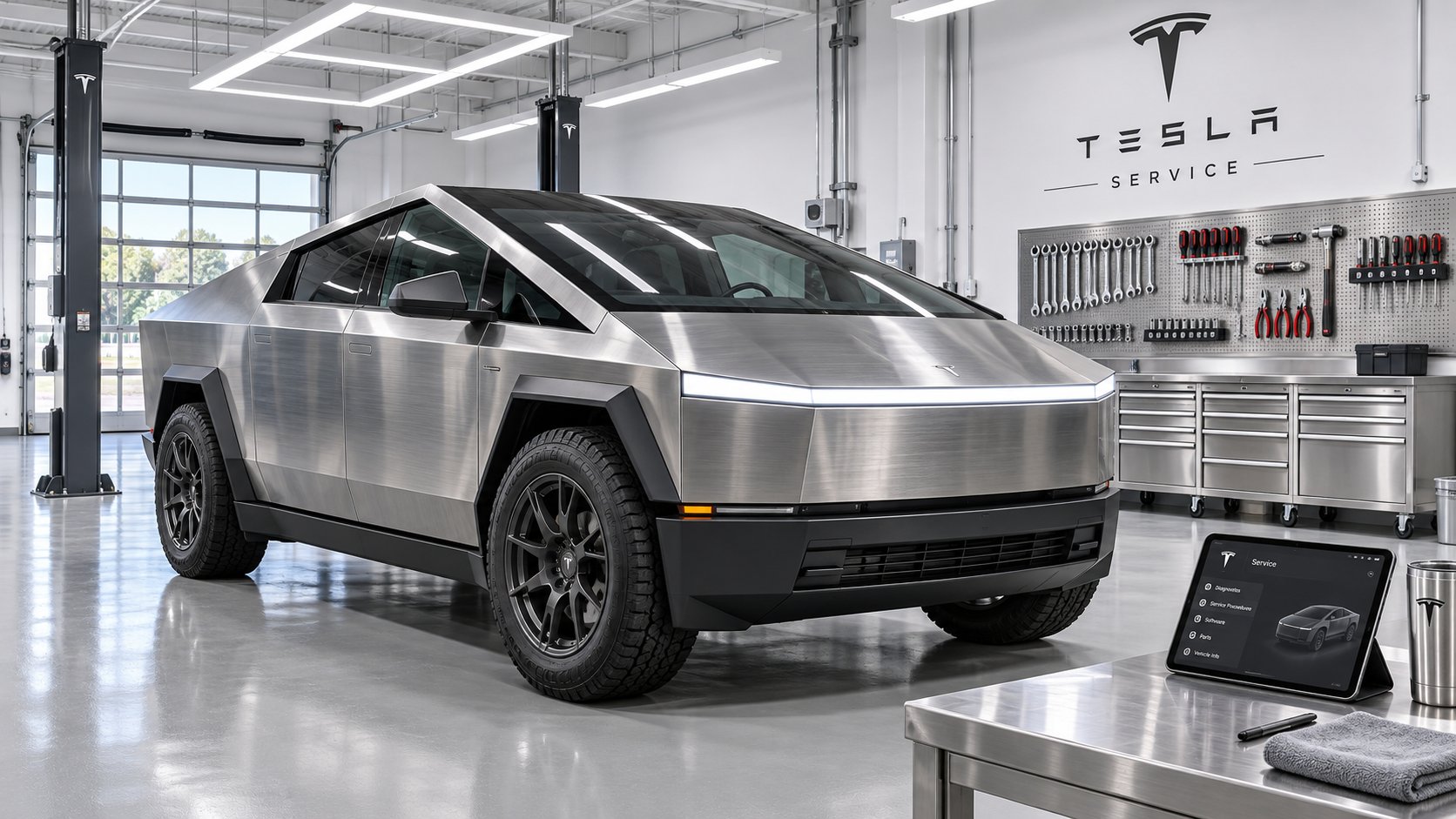
That question - what happens to my warranty? - quietly shapes more modification decisions than any fitment chart or installation guide ever will. You're driving a vehicle that costs well above $60,000, backed by a warranty covering 4 years or 50,000 miles of basic coverage and 8 years or 150,000 miles on the battery and drive unit. The fear of jeopardizing that protection stops many owners from modifying anything at all. Others charge ahead without thinking twice. Both extremes miss the reality, which is more nuanced - and more favorable to owners - than most people assume.
How Aftermarket Mods and Tesla Warranty Actually Interact
Here's the central piece of federal law that governs this entire conversation: the Magnuson-Moss Warranty Act. In practical terms, it means a manufacturer cannot void your entire warranty simply because you installed aftermarket parts. The burden falls on the manufacturer to demonstrate that a specific aftermarket component directly caused a specific failure before denying that particular repair under warranty. Install a cybertruck rear spoiler using adhesive mounting? Tesla can't refuse to cover an unrelated drivetrain issue just because the spoiler exists. But if an improperly wired aftermarket light bar shorts out a control module, denying warranty coverage on that module becomes much more defensible.
Unplugged Performance frames it concisely: installing aftermarket parts does not automatically void Tesla coverage, and the burden sits with Tesla to link a specific component to a specific failure before denying that repair. Their recommendation - keep your factory bumpers and panels boxed so the truck can return to stock if needed - reflects real-world pragmatism shared across the Cybertruck modification community.
A critical caveat: Magnuson-Moss provides a legal framework, not a guarantee of smooth service interactions. Tesla service centers operate with some discretion, and experiences can vary between locations. Software-level cybertruck modifications raise a different kind of flag entirely. Tesla's connected platform means the company can detect certain changes remotely - altered suspension parameters, third-party software interventions, or unusual electrical loads - in ways that traditional automakers simply couldn't. Whether a technician notes these during a routine visit or the system logs them automatically, the digital paper trail exists.
Important: this is general information, not legal advice. Consult Tesla's warranty documentation for your specific vehicle and seek professional guidance if a warranty dispute arises.
Low-Risk vs. High-Risk Modifications
Not all modifications carry equal warranty exposure. Think of it as a spectrum - from accessories that a service advisor won't bat an eye at, all the way to changes that could trigger a detailed inspection note in your service record. Understanding where your planned build falls on that spectrum helps you make informed decisions before committing.
Simple bolt-on and drop-in accessories sit at the safest end. Floor mats, screen protectors, bed organizers, cup holder inserts, and cosmetic trim pieces don't interact with any vehicle system and are fully reversible in minutes. A cybertruck with rims swapped to aftermarket wheels raises the risk slightly - if a wheel bearing fails and Tesla can point to improper offset, incorrect hub centering, or inadequate load ratings as the cause, warranty coverage for that specific repair could be contested. Choosing wheels engineered specifically for the Cybertruck's weight and hub specifications keeps you firmly in the lower-risk zone.
Suspension modifications - lift kits, lowering links, or coilover conversions - occupy moderate territory. These directly alter the operating parameters of safety-critical systems. A lift rod kit that works with the factory air suspension without generating error codes represents a more conservative approach than a full coilover swap that replaces the original components entirely. Either way, a suspension-related failure on a modified truck gives Tesla a clearer path to arguing the modification contributed to the problem.
The highest-risk category belongs to electrical system changes and software modifications. Tapping into the Cybertruck's 48V architecture, installing aftermarket controllers, or modifying software parameters creates the strongest potential link between an aftermarket change and a subsequent failure. Tesla cybertruck desert modifications involving hardwired auxiliary power systems, upgraded lighting circuits, or battery management alterations demand professional installation and meticulous documentation to maintain any defensible warranty position.
| Mod Type | Risk Level | Why |
|---|---|---|
| Floor mats, screen protectors, bed organizers | Very Low | No interaction with vehicle systems; fully reversible in minutes |
| Vinyl wraps and PPF | Very Low | Surface-only application; no mechanical or electrical involvement |
| Adhesive-mount spoiler or trim pieces | Low | Cosmetic only; removable without structural impact |
| Aftermarket wheels and tires (proper specs) | Low to Moderate | Safe if load ratings and fitment match OEM specs; risk rises with incorrect sizing |
| Roof racks and bed racks (bolt-on) | Low to Moderate | Mechanical attachment to body; reversible but adds load and stress points |
| Lift rod kits (air suspension compatible) | Moderate | Alters suspension geometry while preserving factory components |
| Steel bumpers and skid plates | Moderate | Significant weight addition; alters crash structure interaction |
| Full coilover suspension swap | Moderate to High | Replaces factory safety-critical components entirely |
| 48V electrical taps and hardwired accessories | High | Direct interaction with vehicle electrical architecture; potential to cause system faults |
| Software modifications or third-party controllers | High | Detectable by Tesla remotely; strongest link to potential system failures |
Documenting Your Mods for Service Visits
Smart documentation is your best insurance policy regardless of what you install. If a warranty claim ever reaches a dispute, the owner who can produce professional installation receipts, torque specifications, and photographic evidence of proper fitment stands in a far stronger position than one who simply says "my buddy did it in the garage."
A few practical habits make a meaningful difference:
- Keep every receipt and installation record. Professional installation from a reputable shop creates a paper trail showing the work was done correctly, with proper tools and procedures. Some shops, like Unplugged Performance, even document their installation methods in a way that's designed to support warranty discussions.
- Photograph before and after every modification. Timestamped images showing clean installation, correct wiring routing, and undamaged factory components establish a baseline that's hard to argue with.
- Store your factory parts. If you replace bumpers, suspension components, or wheels, box up the originals and label them. The ability to return the truck to stock condition before a service visit - or permanently if needed - preserves your options completely.
- Consider reverting visible modifications before service appointments. Tesla's service preparation guidelines ask owners to clear the trunk and storage areas for technician access. Going a step further by removing non-essential aftermarket parts - especially electrical accessories - reduces the chance of a technician flagging modifications in the service notes that could complicate a future claim.
- Understand what Tesla can see remotely. Tesla's remote diagnostics run before many service appointments. Software changes, error codes generated by aftermarket components, and unusual electrical loads may already be visible to the service team before you arrive. Physical reversal doesn't erase digital records.
The Cybertruck's Basic Vehicle Limited Warranty runs 4 years or 50,000 miles, and the Battery and Drive Unit Limited Warranty extends to 8 years or 150,000 miles with a 70% minimum capacity retention guarantee. Those are substantial protections on an expensive vehicle. The goal isn't to avoid modifications entirely - it's to modify intelligently, document thoroughly, and understand where the boundaries sit so you can enjoy your build without sacrificing the safety net you paid for.
The Magnuson-Moss Warranty Act protects your right to modify, but it doesn't protect you from the consequences of a modification that actually causes damage. Choose quality parts, insist on professional installation for anything beyond simple accessories, and keep records as if you'll need them someday - because you might.
With warranty risk mapped and documentation habits in place, the remaining question is the most practical one of all: how do you pull everything together - the platform knowledge, the phased priorities, the parts research, and the warranty awareness - into a coherent plan that gets your build started the right way?
How to Start Modding Your Cybertruck the Smart Way
You've absorbed the platform constraints, walked through the phased priority framework, explored everything from wraps and widebody kits to warranty law - and now you're sitting with a browser full of open tabs, a growing wish list, and the question every owner eventually faces: where do I actually begin? The difference between a modded cybertruck that feels cohesive and one that feels like a random collection of impulse purchases comes down to a plan. Not a rigid, spreadsheet-driven blueprint - just a clear set of principles that keep every decision anchored to how you actually use the truck.
Key Principles for Smart Cybertruck Modding
Everything covered in this guide distills into five rules. Pin them somewhere visible before you place your first order.
- Respect the platform's engineering first. The 30X stainless steel body, 48V electrical system, sealed vault bed, adaptive air suspension, and near-7,000-pound curb weight aren't obstacles - they're design parameters. Every modification you choose should work with these features, not fight against them.
- Protect before you personalize. Ceramic coatings, PPF, floor liners, and screen protectors cost a fraction of cosmetic upgrades and preserve the surfaces that everything else sits on top of. Skipping this step is the most expensive mistake you can make.
- Buy Cybertruck-specific, not universal. Generic truck accessories built for F-150 dimensions or 12V electrical systems will disappoint you at best and damage components at worst. The premium for purpose-built tesla cybertruck accessories pays for itself in fitment, function, and longevity.
- Let real ownership reveal your priorities. Two weeks of daily driving will tell you more about what your truck actually needs than two months of watching YouTube builds. Solve the frustrations you experience personally before chasing someone else's aesthetic vision.
- Document everything and understand warranty boundaries. Keep receipts, photograph installations, store factory parts, and know where your planned modifications fall on the risk spectrum. The Magnuson-Moss Warranty Act gives you legal ground to stand on - but only if you've done your homework.
Building Your Mod Plan and Finding the Right Parts
Start by defining your primary use case. Are you building a daily commuter that needs to look sharp and feel organized? A weekend trail rig that demands a cybertruck rack, lift kit, and underbody armor? A head-turning street build centered around cyber truck wheels and a widebody kit? Your answer shapes the entire spending sequence. A commuter doesn't need steel bumpers. An overlander doesn't need ambient interior lighting. Knowing which camp you fall into - or how much you split between them - prevents the scattered, unfocused spending that plagues so many first builds.
Once your priorities are clear, build a simple three-column list: what to buy this month, what to research for next quarter, and what to save for long-term. Slot protection-tier items into the first column regardless of your use case. Phase 2 and Phase 3 items fill the remaining columns based on whether you're solving daily pain points or pursuing performance and aesthetic goals. This isn't just organization - it's budgeting discipline that keeps your build moving forward without financial regret.
Finding quality parts requires tapping into multiple sources, each with different strengths. Dedicated Cybertruck community forums - like the Cybertruck Owners Club and CybertruckTalk - provide unfiltered, real-owner reviews from people who've actually installed the products and lived with them for months. These communities are invaluable for spotting fitment issues, quality inconsistencies, and hidden installation gotchas that no product listing will mention. Established Tesla aftermarket specialists such as Unplugged Performance and T Sportline offer engineered components with proper load testing and documented fitment verification - critical for safety-related upgrades like wheels, suspension, and armor. For everyday accessories, exterior add-ons, pet-travel products, and general care items, curated collections like CUTIM's Cybertruck accessories page consolidate options in one browsable location, saving you the effort of hunting across dozens of individual sellers. Pair that with broader marketplaces and direct-from-manufacturer shops to compare pricing and availability across the full ecosystem.
No single source carries everything, and no single reviewer catches every detail. Cross-reference product recommendations across at least two independent sources - a forum thread and a specialist shop's fitment data, for example - before committing to anything that bolts on, plugs in, or permanently adheres. That ten-minute verification habit will save you hours of returns and reinstallation down the road.
Every Cybertruck mod decision should start with understanding how the vehicle's unique engineering affects compatibility. Get that right, and everything else - protection, usability, aesthetics, performance - falls into place.
The Cybertruck aftermarket is still young, evolving rapidly as more owners push the platform in new directions and more manufacturers develop purpose-built solutions. What's available today will expand dramatically over the coming years, with better-fitting parts, more competitive pricing, and solutions for pain points that haven't even been fully identified yet. That reality is actually liberating: you don't need to do everything at once. Start with protection, solve what frustrates you, and build from there at whatever pace your budget and enthusiasm allow. The truck will still be ready for the next upgrade whenever you are.
Frequently Asked Questions About Cybertruck Mods
1. Do aftermarket mods void the Tesla Cybertruck warranty?
Under the Magnuson-Moss Warranty Act, Tesla cannot void your entire warranty simply because aftermarket parts are installed. However, Tesla can deny coverage on a specific repair if it can demonstrate that a particular modification directly caused that failure. Low-risk mods like floor mats, wraps, and screen protectors carry virtually no warranty exposure, while electrical system taps into the 48V architecture and software modifications sit at the highest risk level. Keeping professional installation receipts, photographing every modification, and storing factory parts for potential reversal are the best strategies for protecting your warranty position.
2. What are the best first mods to install on a new Cybertruck?
Protection-focused modifications should always come first. A ceramic coating or paint protection film shields the bare stainless steel from fingerprints, water spots, and surface scratches that appear within days of driving. Custom-fit all-weather floor liners protect high-wear interior surfaces, while a tempered-glass screen protector safeguards the 18.5-inch center display that controls virtually every vehicle function. These three upgrades cost a fraction of cosmetic mods yet preserve surfaces that are expensive to repair or replace, making them the highest-value starting point for any new owner.
3. Can you use universal truck accessories on a Cybertruck?
In most cases, no. The Cybertruck shares virtually no dimensional DNA with conventional trucks like the F-150 or RAM 1500. Its sealed vault bed has unique width, depth, and tonneau rail paths, and the center console, cup holders, and dashboard geometry match no other production vehicle. Even accessories designed for other Tesla models rarely fit correctly. Cybertruck-specific products typically cost 10 to 30 percent more than generic alternatives, but that premium pays for accurate fitment, proper function, and compatibility with the truck's 48V electrical system.
4. How much does it cost to wrap a Tesla Cybertruck?
A professional full vinyl wrap on a Cybertruck typically ranges from $4,000 to $8,000 or more, depending on the material quality and regional labor rates. The Cybertruck's massive flat panels, sharp angular edges, and bare stainless steel surface make wrapping more challenging than standard painted vehicles. Adhesion promoters formulated for bare metal are required, and professional installation is strongly recommended because imperfections like bubbles and wrinkles are highly visible on the truck's large unbroken surfaces. The upside is that wraps are fully reversible, allowing owners to restore the original stainless finish or switch colors without permanent alteration.
5. Does lifting a Cybertruck reduce its driving range?
Yes, lifting the Cybertruck reduces range to varying degrees depending on how much height is added and what tires are paired with the lift. Increased ride height raises the center of gravity, adds aerodynamic drag from the larger frontal area, and typically involves switching to heavier all-terrain tires with greater rolling resistance. Owners report range losses of 5 to 20 percent or more with aggressive lift and tire combinations, with the penalty most noticeable at highway speeds. Lift rod kits that work with the factory air suspension offer a more moderate approach, adding around 1.5 to 2 inches of height with a smaller range impact than full coilover conversions paired with oversized tires.