
What Makes Cybertruck Accessory Shopping Different
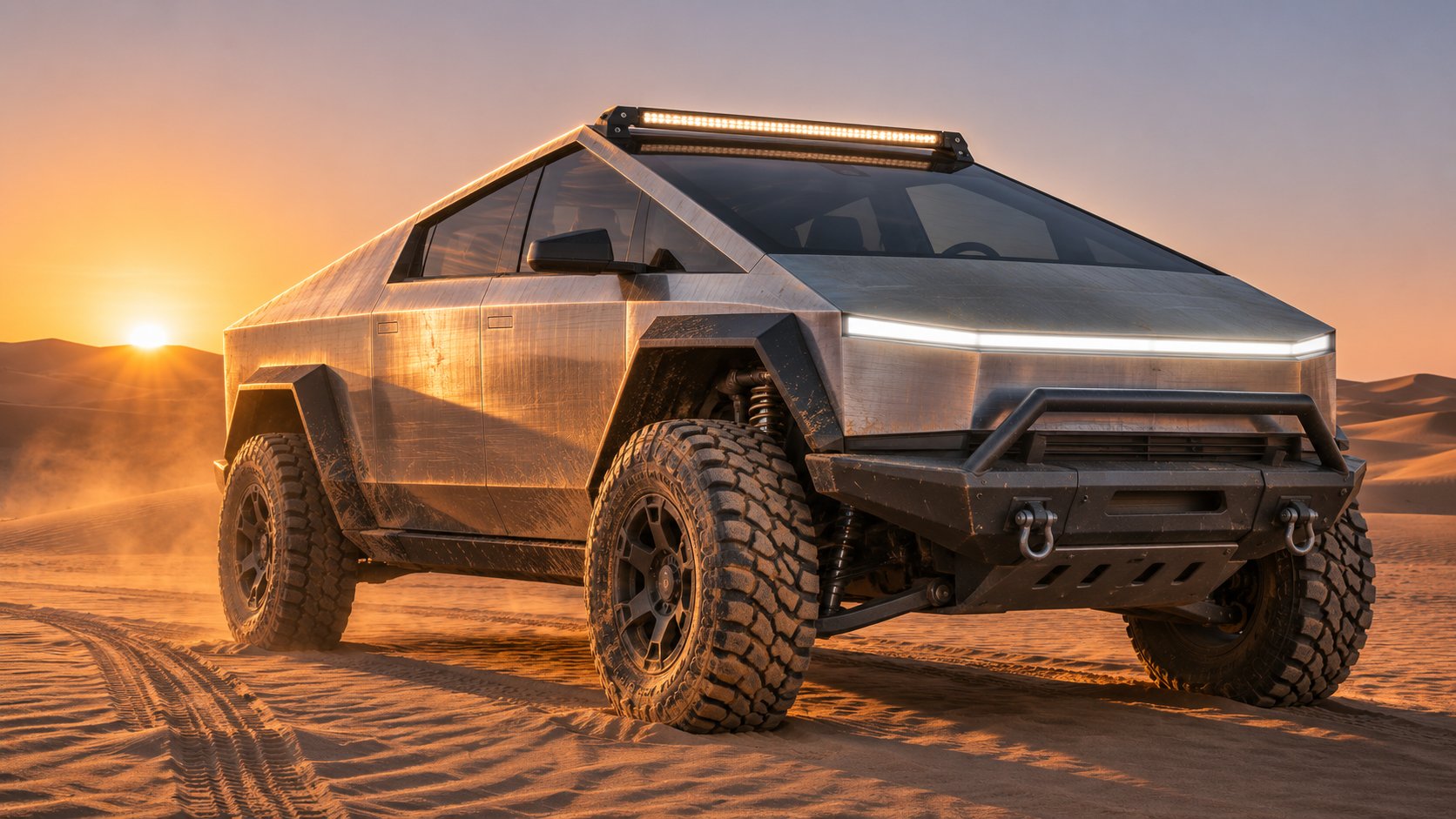
Cybertruck accessories are add-ons designed specifically for Tesla's stainless steel pickup, sold both by Tesla and by aftermarket brands. They include exterior parts like bumpers, light bars, wraps, and a cybertruck body kit. They also cover interior upgrades like floor mats and console organizers, plus cargo gear for the vault-style bed. They differ from ordinary truck gear because of the platform they have to fit. The truck has an unpainted stainless steel exoskeleton and sharp, angular panels. Its bed has its own geometry, and many of its functions run through software.
Why the Cybertruck Is Not Like Other Trucks
Have you ever ordered a seat cover or bed mat for a pickup and had it fit on the first try? With a Cybertruck, that habit can end in a return label. Universal truck products are sized around conventional pickups, and the Cybertruck shares few of their reference points. The body has no paint, so products made for clear coat don't apply. The low-voltage electrical system runs on 48V instead of the usual 12V, which matters for anything you plan to hardwire. The vault bed has dimensions that gear made for an F-150 or Silverado rarely matches. Even small details are different. There is no conventional cybertruck door handle, because the doors open with an electronic button.
The cabin is just as distinct. It centers on an 18.5-inch touchscreen, and one fitment guide advises treating Model 3 and Model Y mats, shades, and organizers as non-compatible unless the listing names the Cybertruck. None of this limits what owners can build. Unplugged Performance's Dune-inspired build, one of the most extensive tesla cybertruck desert modifications shown publicly, adds steel bumpers, beadlock wheels, and a 50-inch light bar. Every part of that build was engineered for this truck, so shopping for one takes more planning than shopping for any other pickup.
What This Guide Covers
This guide doesn't favor any vendor. Its goal is to help you judge fit and value before you spend money. It covers:
- Exterior upgrades: bumpers, lighting, armor, wraps, and options like a cybertruck spoiler
- Interior accessories: mats, covers, and convenience add-ons
- Bed and cargo management: covers, racks, liners, and ramps
- Wheels and suspension: aftermarket cybertruck wheels, tires, and what a lifted cybertruck involves
- OEM vs aftermarket: how to weigh Tesla's shop against third-party sellers
- Common mistakes: the purchases owners regret most
- A buying framework: how to build a setup over time
Two of the traits mentioned above, the 48V wiring and the bare steel skin, determine whether many accessories will work at all. They're the first things to understand.
Understanding the 48V Architecture and Stainless Steel Body
Imagine buying a light bar that bolts on perfectly and then fails within a week. On a Cybertruck, a problem like that usually traces back to one of two things: the electrical system or the steel body. Both affect nearly every category of tesla cybertruck accessories, from lighting to cybertruck bed accessories with powered features.
The 48V Electrical System and Accessory Compatibility
Most vehicles run their low-voltage electronics at 12V, so most aftermarket gear is built for 12V. The Cybertruck uses a 48V low-voltage system instead. A 12V LED light bar, dash cam hardwire kit, or powered bed accessory connected directly to it can be damaged or behave unpredictably. You'll need a version rated for the Cybertruck or a proper step-down converter.
Tesla also restricts where you can connect. Its DIY power feed guide names two power feeds as the only approved connection points:
- Roof feed: 400W maximum draw
- Powered frunk feed: 400W maximum draw
- Voltage range: 28V minimum, 44-50V nominal, 58V maximum
That range matters when you read a product's spec sheet. An accessory rated only for 48V may not handle swings up to 58V, so check that its input rating covers the full range. Tesla warns that tapping any other low-voltage wiring can cause unexpected results, including a total loss of power steering. Trucks built after roughly April 2025 also lack a harness on the roof feed. The owner's manual adds that the warranty doesn't cover damage from non-approved parts or modifications. It also notes that accessories can change range and vehicle dimensions, which is worth remembering when you pick cybertruck tires or racks later.
Stainless Steel Care and Protection Needs
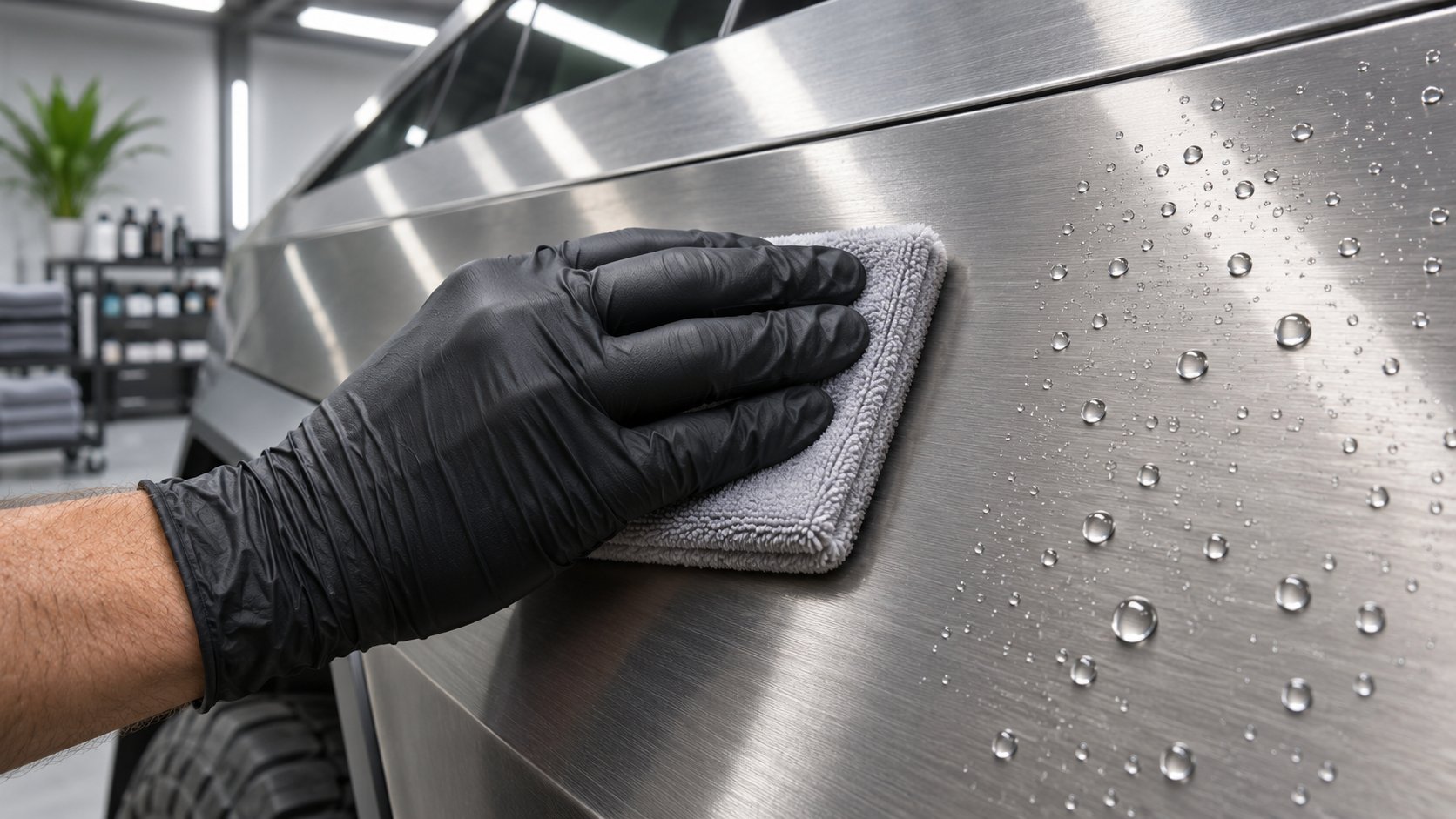
Tesla calls the body material Ultra-Hard 30X cold-rolled stainless steel, and it has no paint or clear coat. Fingerprints, smudges, and water spots show quickly. Because there is no clear coat, you can't polish scratches out of it the way you would on a painted truck, and wax products made for paint aren't the main tools anymore. Most owners pick a surface treatment instead. Detailers such as Carisma Customs describe the common options:
- Ceramic coating: bonds to the stainless steel and creates a hydrophobic surface that resists UV rays, chemical stains, and oxidation, and makes washing easier.
- Paint protection film (PPF): guards against scratches and rust, can be removed and reapplied, and now comes in colored versions.
- Vinyl wrap: adds color or graphics and can be removed when you want a change.
If you're planning a widebody cybertruck or a lowered cybertruck, decide on that before you apply film. Widebody panels change which surfaces are exposed, and a lower stance puts the rocker panels closer to road debris.
Before you buy any Cybertruck accessory, check two things: whether it is rated for the 48V system and whether it is safe for bare stainless steel.
The exterior is where both checks come up most often, because bumpers, light bars, and wraps involve the wiring and the steel at the same time.
Exterior Upgrades from Bumpers to Lighting
When you walk past a modded cybertruck in a parking lot, you'll probably notice the front end first. It might have a steel bumper, a light bar, or a wrap covering the bare steel. Exterior parts are the most visible cybertruck mods, and the work they take varies a lot. Some bolt on in an afternoon. Others need a shop and a careful look at the wiring.
Bumpers, Light Bars, and Armor Upgrades
The Cybertruck's front end is a sharp wedge, so a replacement bumper has to be designed around that shape. A steel front bumper protects the corners from rocks and brush on the trail and gives the truck a tougher look. Rear bumpers do similar work, and some come with a heavy-duty trailer hitch receiver, swing arms, or flood lights. If you'd rather keep the factory bumper, Unplugged Performance sells a mounting base that fits a bull bar onto the OEM bumper.
Light bars are one of the most popular exterior add-ons, and they're where the 48V check matters most. Look for a bar sold as 48V-rated, like the 50-inch double-row bar built for this truck. Then ask the seller which approved feed it uses: the roof feed or the one in the frunk (the front cybertruck trunk). Remember that newer trucks may not have a harness on the roof feed.
Armor protects the parts of the truck that hit the trail first. Underbody armor covers the bottom of the truck, and rock sliders guard the panels below the doors. Some sellers bundle these into staged packages, from a basic protection kit up to a full expedition setup. Armor matters more on this truck than on most, because you can't polish a scratch out of bare stainless steel.
Body Kits, Spoilers, and Widebody Options
Body modifications range from small bolt-on pieces to full transformations. Carbon fiber fender flares are a common first step toward a widebody look. Spoilers and other add-on pieces can follow the truck's flat panels and straight edges with simple, flat shapes. On a conventional pickup with curved fenders, the same pieces would need complex curves to fit. Your choice of cyber truck wheels often drives this decision, because wider flares can cover larger cybertruck rims and wider tires. Wheels get their own section later in this guide.
Wraps, Chrome Finishes, and Color Changes
Want a Cybertruck that isn't silver? The truck comes only in stainless steel, so a shop that installs Cybertruck wraps calls vinyl the best way to get the color you want. Choices range from blue color-flip films to solid colors like teal or orange. Chrome films are the hardest to install. That shop's red chrome build used a highly reflective specialty vinyl that it says calls for trained installers.
Choosing between a wrap and a coating is simpler than it sounds. A wrap changes the color. A ceramic coating keeps the current finish and makes it easier to clean. You can also use both. On that red chrome build, the shop applied ceramic coating directly over the film, which made it repel water, gave it a harder surface, and made it more resistant to scratches and scuffs.
| Accessory Type | Typical Purpose | Installation Complexity |
|---|---|---|
| Steel front and rear bumpers | Protection, aesthetics | Professional recommended |
| Bull bar on OEM bumper | Protection | Moderate, shop install advised |
| 48V LED light bar | Performance (visibility) | Professional recommended (wiring) |
| Underbody armor and rock sliders | Protection | Professional recommended |
| Fender flares and widebody kits | Aesthetics | Professional recommended |
| Spoilers and small bolt-on trim | Aesthetics | Often DIY-friendly |
| Vinyl wrap or chrome film | Aesthetics | Professional recommended |
| Ceramic coating | Protection | Professional recommended |
Exterior changes are what other people see. You'll feel the interior changes every time you get in the truck.
Interior Accessories That Improve Daily Driving
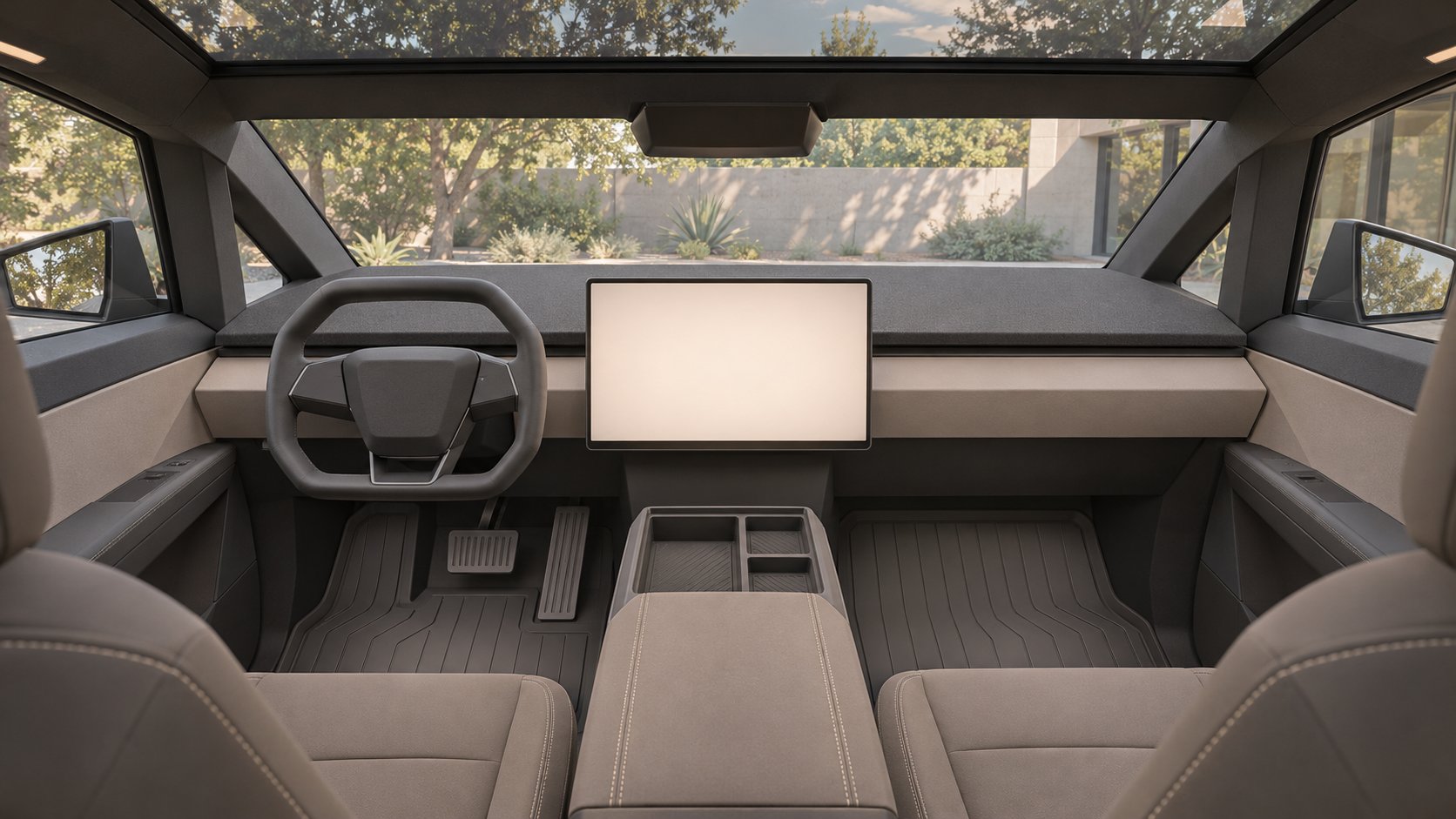
You'll spend far more hours inside the truck than looking at it. The cabin is minimal by design. It has few physical controls and very little built-in storage, so small gaps show up within the first week. Most interior accessories are inexpensive, and nearly all of them install without tools.
Floor Mats, Dash Covers, and Surface Protection
Custom-fit floor mats are usually the first thing owners buy. One interior accessories guide recommends all-weather mats made from durable materials to keep dirt, mud, and spills off the factory floor. A dash cover reduces windshield glare and shields the dashboard from UV exposure. A screen protector does a similar job for the center touchscreen, which controls nearly every function in the truck. The glass roof lets in a lot of sun, so a fitted sunshade keeps the cabin cooler and helps keep interior materials from fading and cracking. Fit matters for all of these. Generic mats and covers are cut for conventional cabins, so buy versions made specifically for the Cybertruck.
Steering Wheel Covers and Seat Upgrades
The Cybertruck's squared-off steering wheel won't take a standard round cover, so look for one shaped for this wheel. A good cover adds grip and some padding. For the seats, full-coverage leather covers protect the factory upholstery from pets, kids, and work clothes, and they let you change the cabin's color. Owners who go all out on the exterior, such as a chrome cybertruck build, often want the cabin to match. That demand has expanded the market for luxury Tesla interior upgrades, from nappa leather seat covers to pillows for the front seats.
Tech and Convenience Add-Ons
Storage is where the cabin feels most unfinished. Imagine setting your keys in the door handle opening and hearing them fall into the map pocket below. One owner with five decades of design experience calls tray inserts that give that opening a floor on the front and rear doors "a complete game-changer" in his Cybertruck accessory guide. Console trays, under-seat drawers, and rear under-seat bins add more space. Projection lights that show a logo or pattern on the ground when a door opens add a personal touch. Many owners also replace the plastic key card with a metal one that feels sturdier. None of these cost what a wrap or a cybertruck lift kit does, but together they fix small annoyances you would otherwise run into every day. If an add-on needs power, check how it connects before you buy, for the reasons covered in the 48V section.
This list is ordered by how often you'll notice each item in normal driving, starting with the most noticeable:
- Custom-fit floor mats: protect the cabin on every trip, starting on day one
- Screen protector: guards the main control interface against scratches and fingerprints
- Door trays and console organizers: solve the most common storage complaints
- Sunshade and dash cover: reduce heat, glare, and UV wear
- Seat covers: protect the upholstery from pets, kids, and work gear
- Steering wheel cover: improves grip and comfort
- Projection lights and a metal key card: small personal touches
In the cabin, a few organizers solve most storage problems. The vault bed is harder to plan, because the right setup depends on what you haul.
Bed and Cargo Management for Every Hauling Need
What goes in your bed most weeks? It might be lumber, two mountain bikes, a dog, or a long weekend's worth of camping gear. Your answer decides which bed accessories are worth the money. The vault bed measures about 6 feet by 4 feet. It comes with a powered tonneau cover, tie-down points, and cantrails, which are the mounting tracks along the top of each bed wall. Most add-ons either build on those features or replace one of them, so know which kind you're buying before you order.
Tonneau Covers, Bed Caps, and Toppers
All three cover the bed, but each one handles a different job. A tonneau cover lies flat at the bed rails. It keeps the truck's profile low and opens quickly. A bed cap, also called a topper or camper shell, is a hard shell that encloses the bed and adds height. One truck accessory comparison gives caps the edge for security and weather sealing. It gives tonneaus the edge for aerodynamics and tall cargo. Weight matters more on an EV because it comes out of your range, and the same guide puts fiberglass caps at 200 to 600 pounds.
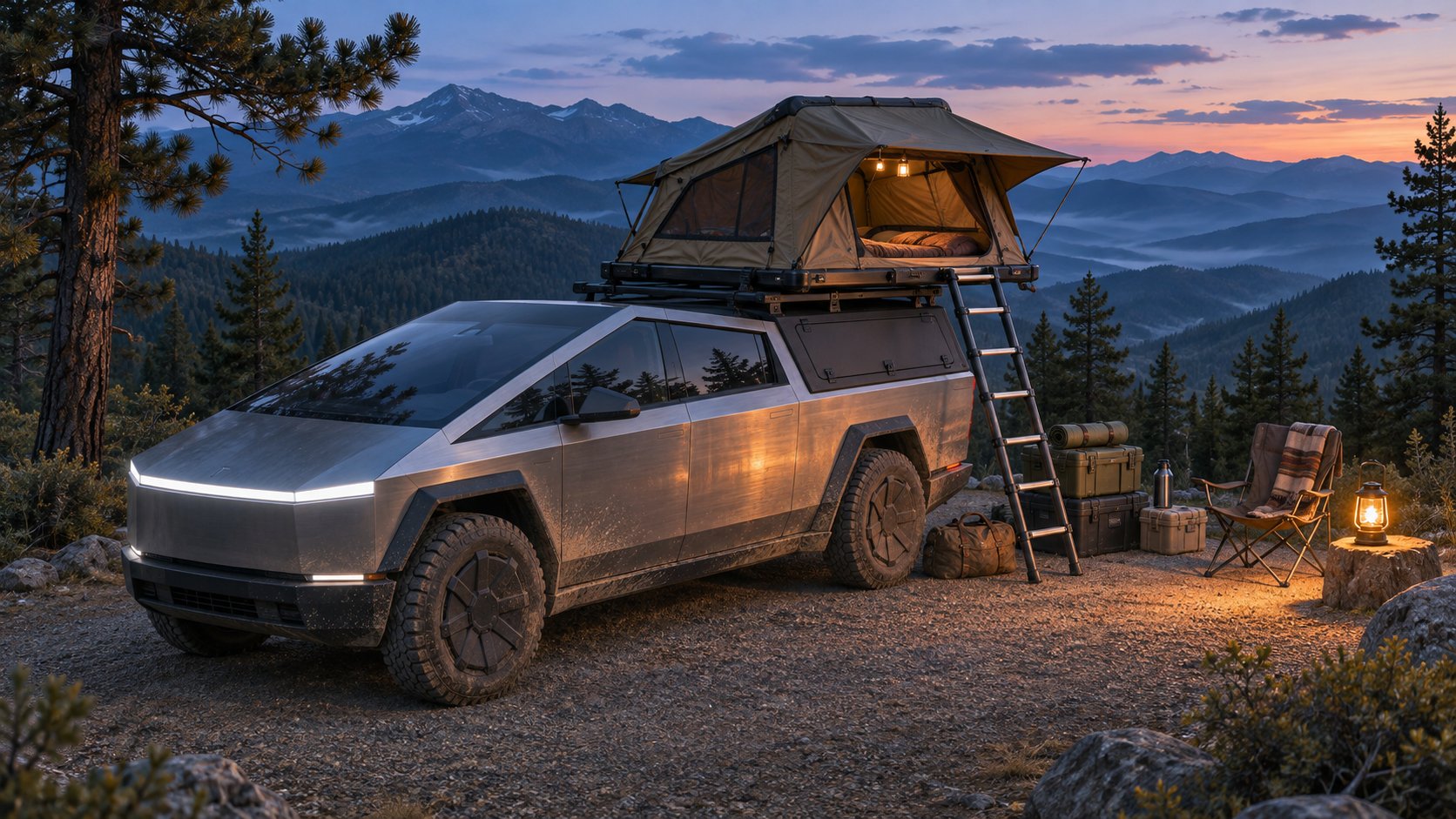
The Cybertruck already has a tonneau, so an aftermarket cover has to offer something different. That usually means a manual design with no motor to fail, a higher load rating, or a surface built to carry a rack. These covers replace the stock unit. Caps work differently. Most need the factory cover fully retracted, and some full topper conversions remove it entirely. A topper with side windows and interior lighting is a common base for a custom cybertruck camping or work build. The sail panels slope down toward the tailgate, so a cap has to be shaped for this truck or it won't seal.
Bed Racks, Liners, and Cargo Organization
A bed rack raises a carrying platform above the bed for bikes, kayaks, or a rooftop tent. A well-designed cybertruck rack clamps to the cantrails, so you don't need to drill anything. Check the load rating before you mount a tent. Tesla's own crossbars are rated for about 220 lb (100 kg) per two-bar set. One rack maker notes that third-party platforms with higher ratings should still stay within Tesla's official limits. A rooftop tent plus bedding and gear can reach that figure quickly. Taking the rack off when you're not using it cuts wind noise and gets back some range.
Racks also give you a high spot to mount a cybertruck light bar, an awning, or a solar panel. A bar mounted up there adds to the cybertruck headlights on unlit trails, but it still has to draw power from one of Tesla's approved feeds.
For the bed floor, you can choose between two types of liner:
- Drop-in mats: rubber or composite mats that lift out for cleaning and leave nothing behind when you remove them.
- Spray-in coatings: a permanent textured layer that bonds to the bed surface. It holds up well under heavy hauling, but you can't take it off later.
MOLLE panels (short for Modular Lightweight Load-carrying Equipment) mount along the bed walls and give you a grid for pouches, straps, and tools. Paired with cargo bins, they keep small items from sliding across the bed when you brake.
Tailgate Accessories and Ramps
If you carry bikes with their front wheels hanging over the tailgate, the tailgate takes the wear. Tesla's tailgate shield launched at $300 and covers that surface. It has MOLLE webbing on the inside, a combo-lock carabiner, and anchor points for Tesla's $100 jump seats. Up to three of those seats fit side by side for tailgating or sporting events.
Ramps make it easier to get heavy things into the bed. Tesla's own tailgate ramp has been one of the most sought-after items in its shop. A ramp lets you roll in a mower, dirt bike, or loaded dolly, as long as its load rating exceeds the weight of what you're loading. A pet ramp keeps an older dog from jumping, which is hard on its joints. Lowering the air suspension to its lowest setting before loading shortens the climb for cargo and pets alike.
| Accessory Type | Primary Function | Installation Difficulty | Factory Tonneau Compatibility |
|---|---|---|---|
| Aftermarket tonneau cover | Manual operation, higher load rating, or rack support | Professional recommended | Replaces it |
| Bed cap or topper | Weather-sealed, lockable storage or camping | Professional recommended | Requires it retracted; some conversions remove it |
| Bed rack or crossbars | Bikes, kayaks, rooftop tents | Moderate, often DIY | Usually works alongside it; confirm on the listing |
| Drop-in bed mat | Floor protection | DIY-friendly | Works alongside it |
| Spray-in liner | Permanent heavy-duty protection | Professional recommended | Works alongside it if coating is kept off the cover tracks |
| MOLLE panels and cargo bins | Modular organization | DIY-friendly | Works alongside it |
| Tailgate shield | Tailgate protection, jump seat mounting | DIY-friendly | Works alongside it |
| Equipment or pet ramp | Loading heavy gear or pets | DIY-friendly | Works alongside it |
Nearly every item in this section adds weight, and a fully loaded bed with a rooftop tent adds a lot of it. All of that weight rests on the tires and the air suspension, so the way you haul should also guide which wheels and tires you choose.
Wheels, Tires, and Suspension Modifications
Picture a cybertruck with topper, a rack holding a rooftop tent, and cybertruck molle panels full of recovery gear. All of that weight sits on four tires and the air suspension. Most owners pick wheels and tires for looks. Those parts also affect range, ride quality, and how much weight the truck can safely carry, so check the specs before you choose a style.
Aftermarket Wheels and Rim Options
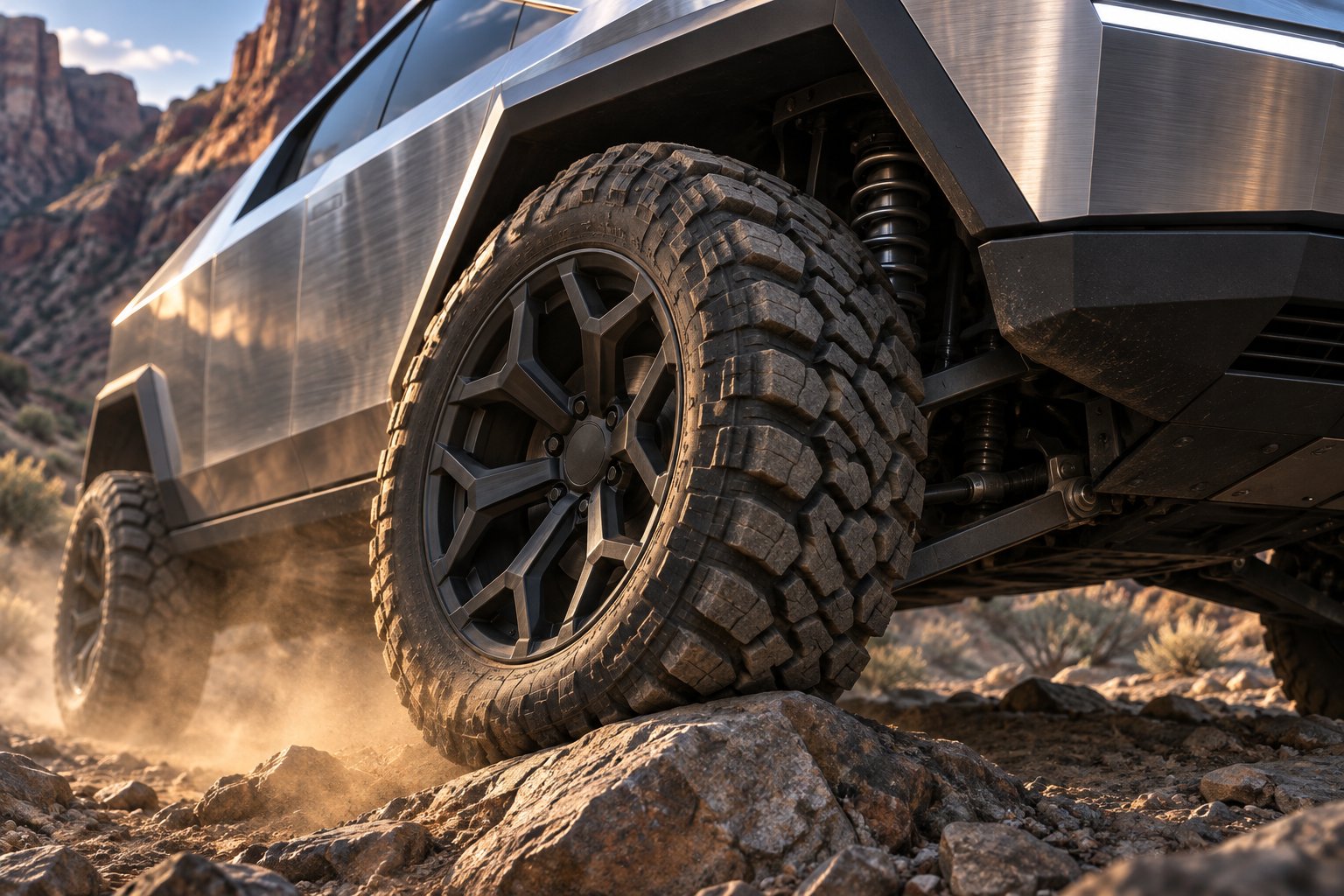
From the factory, Tesla has offered all-terrain tires and also all-season tires with aero wheel covers. The covers are flat panels that smooth airflow over the wheel. Cybertruck aftermarket wheels from brands such as Unplugged Performance give you more choice. They range from designs that look close to stock, to bold forged wheels, to the beadlock wheels used on off-road builds. The truck has no visible cybertruck door handles or trim on its flat sides, so the wheels are what people notice from the side. Few bolt-on parts change the truck's look as much.
Before you buy, confirm these specs on the listing:
- Bolt pattern: the number of lug holes and the diameter of the circle they sit on. It has to match the Cybertruck hub exactly.
- Offset: how far the mounting face sits from the wheel's centerline. Offset decides whether the tire clears the suspension and stays inside the fenders.
- Hub bore: the center hole. It should match the hub, or the wheel should come with centering rings so it sits true and doesn't vibrate.
- Load rating: the maximum weight each wheel can carry. The Cybertruck is a heavy truck, and heavy tesla cybertruck bed accessories add to the load, so pick a rating that meets or beats the factory wheel.
If a cyber truck body kit with wider flares is part of your plan, choose the kit and the wheels together. The flares set how much width and offset the truck can take.
Tires for Every Terrain
Tires change range more than most owners expect. Tesla rated the dual-motor truck at 340 miles on all-season tires with aero covers. It rated the Foundation Series at 318 miles on all-terrain tires, which is 22 miles less. On all-terrain tires, a Foundation Series truck still covered 334 miles in Edmunds' range test. Choose tires by how you actually drive:
- Highway or all-season: best for commuting and for getting the most range.
- All-terrain: a balance for drivers who split time between pavement, gravel, and dirt.
- Mud-terrain: deep tread for serious trails. These tires are heavier and noisier and have more rolling resistance, so expect a bigger range loss.
Start with the size and load figures on the tire label on the driver's door pillar. Tesla's tire specifications define load rating as the most weight a tire can carry at a given inflation pressure. The same page describes extra load tires, which are built to carry more weight at higher pressures. If you choose a different size, the new tire's overall diameter matters. A taller tire covers more ground per turn, so the speedometer reads lower than your real speed. Taller tires can also rub at full steering lock, and their extra weight costs range. Ride quality changes too, because a shorter sidewall usually means a firmer ride.
Lift Kits and Lowering Options
Do you need a lift at all? The factory air suspension already adjusts ground clearance from 8.0 to 17.44 inches, as MotorBiscuit points out. Unplugged Performance's 2.5-inch lift kit adds 2.5 inches at every height setting. Its billet aluminum parts are designed to keep camber, caster, and toe adjustable to correct alignment. The lift makes room for larger tires and improves approach, departure, and breakover angles. At launch the kit cost $9,995 before installation, and it requires an authorized installer. The added weight, plus any bigger tires, can reduce range.
Lowering kits trade clearance for a street-focused stance. Because the air suspension controls ride height, ask the seller how the kit works with the factory system. Also ask whether the truck can still raise itself for steep driveways and speed bumps.
Warranty is the bigger question. At launch, Tesla listed the basic warranty at 4 years or 50,000 miles and battery and drive unit coverage at 8 years or 150,000 miles. A lift doesn't automatically void that coverage. However, Tesla can deny a claim if it decides the modification caused or contributed to a failure. Before you book an install, ask the installer whether Tesla approves the kit.
| Category | Typical Use Case | Range Impact | Cybertruck Compatibility Notes |
|---|---|---|---|
| Factory all-season tires with aero covers | Daily driving, highway trips | Lowest impact (highest rated range) | Tesla's most efficient factory setup |
| All-terrain tires | Mixed pavement and light trails | Moderate (22 fewer rated miles on the Foundation Series) | Offered from the factory; check load rating on replacements |
| Mud-terrain tires | Mud, rocks, serious trail use | High, from weight and rolling resistance | Confirm diameter clears at full steering lock |
| Forged aftermarket wheels | Style upgrades, weight savings | Neutral to positive if lighter than stock | Verify bolt pattern, offset, hub bore, and load rating |
| Beadlock wheels | Low-pressure off-roading | Negative, usually heavier | Best paired with armor and all-terrain or mud-terrain tires |
| Larger tires with a lift kit | Dedicated off-road builds | Negative, from added weight and drag | Speedometer may read low; check warranty and installer approval |
Tesla's own shop sells few of these parts, so most wheel, tire, and suspension upgrades come from aftermarket brands. That makes the choice of seller as important as the parts.
OEM Tesla Accessories vs Third-Party Alternatives
Say you want mud flaps and a steel cybertruck front bumper. Tesla sells mud flaps, but you'll have to look elsewhere for the bumper. Most owners end up buying from both Tesla and other sellers, so it helps to know what each one does well.
What Tesla's Official Shop Offers
The Tesla Shop catalog shows what Tesla officially supports. Its parts are designed for the truck's hardware and software, so you don't have to wonder whether they'll fit. They also aren't affected by the owner's manual clause that excludes damage from non-approved parts. Crossbars, the tailgate shield, and OEM mud flaps attach to the truck's existing mounting points, so there's no guesswork.
Some features can't be bought as accessories at all. If you've searched "what is wade mode cybertruck," the answer is a software setting. It raises the air suspension to its highest ride height and pressurizes the battery pack for water crossings. No accessory adds or improves it, whether it comes from Tesla or another seller.
The downsides are a small selection and higher prices. The catalog has a limited number of items, popular ones like the tailgate ramp sell out, and prices tend to run higher than similar third-party gear.
The Third-Party Aftermarket Ecosystem
Aftermarket sellers include shops that focus only on the Cybertruck and companies that sell accessories for all Tesla models. They cover what Tesla doesn't, including off-road armor, 48V lighting, a fitted cybertruck dash cover, pet-travel gear, and care products for stainless steel. Categories like tesla cybertruck tires and lift kits come almost entirely from the aftermarket. Prices also vary more. A MagBak roundup found cyber truck bed organizers ranging from simple dividers under $100 to full slider systems around $5,000. The same roundup notes that several aftermarket mud flaps are easier to install than Tesla's.
If you want one place to start, CUTIM's Cybertruck accessories collection groups exterior accessories, pet-travel products, and everyday care items together. Browse it alongside Tesla's catalog to see what the OEM shop doesn't carry.
How to Evaluate Any Accessory Seller
Use the same checklist whether you're buying from Tesla or a small shop:
- Verified reviews: look for photos from Cybertruck owners, not reviews pooled across every Tesla model.
- Return policy: confirm the return window and who pays return shipping before you order bulky items.
- Fitment confirmation: a listing for a cybertruck wheel or bumper should name the Cybertruck specifically, plus any build-date limits.
- Warranty information: the seller should say up front whether installation involves drilling, cutting, or wiring.
- Honest claims: be wary of any listing that says a part increases wading depth or unlocks a vehicle feature.
Many owners buy only OEM parts because they're worried about the warranty, but the rules give owners more room than that. The FTC says that simply using an aftermarket part does not void your warranty. The Magnuson-Moss Warranty Act also bars companies from denying coverage for that reason alone. Tesla can still refuse to cover damage that a non-approved part causes.
| Decision Factor | Tesla OEM Shop | Aftermarket Sellers |
|---|---|---|
| Representative seller | Tesla Shop | CUTIM Cybertruck collection and other specialist retailers |
| Product selection | Small catalog, frequent sellouts | Broad, including armor, lighting, pet, and care products |
| Typical pricing | Tends to be higher | Wide range from budget to premium |
| Warranty safety | Tesla-approved parts | Doesn't void the warranty by itself, but damage the part causes may not be covered |
| Fitment guarantee | Designed for the truck | Varies by seller, so confirm on each listing |
| Cybertruck-specific products | Every Cybertruck item is made for it | Plenty, but mixed in with universal and other-Tesla listings |
A trustworthy seller lowers your risk. Most purchases owners regret, though, come down to their own choices, and the most common one is buying gear that was never made for this truck.
Common Mistakes to Avoid When Buying Cybertruck Gear
Have you owned a pickup before? Then you probably have buying habits that work fine on other trucks and cause problems on this one. Most of the purchases Cybertruck owners regret come from three of those habits.
Buying Universal Truck Accessories That Do Not Fit
Universal-fit bed mats, tonneau covers, and seat covers are sized for trucks like the F-150 or Silverado. The tesla cybertruck bed has its own length and width, and its sail panels slope down toward the tailgate. The cabin also has its own seat shapes and a squared-off steering wheel. A mat cut for a conventional bed will leave gaps or bunch up. A generic rack may be built to clamp onto flat bed rails instead of the Cybertruck's cantrails. Buy only products listed as Cybertruck-compatible, or ones other Cybertruck owners have installed and posted photos of. Owner forums and photo reviews are the quickest way to check.
Ignoring the 48V Electrical Requirement
Wiring a 12V dash cam or light bar straight into the truck can do more than make it stop working. The owner's manual warns that the 48V system runs at a higher voltage than a typical low-voltage system. That raises the risk of personal injury, arcing, or component damage if the wiring is handled improperly. Tesla also tells owners to assume these cables are always energized. Any accessory that hardwires into the truck needs a 48V rating or a proper step-down converter, and it should connect only to Tesla's approved power feeds.
Overlooking Warranty and Service Implications
The owner's manual says the warranty doesn't cover damage caused by non-approved parts or modifications. Tesla's warranty page gives one specific case: damage from third-party adaptors or chargers isn't covered. In practice, accessories fall into two groups:
- Bolt-on accessories: floor mats, a cybertruck bed rack that clamps to the cantrails, or a tailgate shield. They use existing mounting points and come off without leaving marks.
- Permanent modifications: anything that requires cutting, drilling, or splicing into wiring. A cybertruck steel bumper that requires trimming factory parts belongs here, and so does a light bar spliced into an unapproved circuit. If one of these causes a failure, Tesla can deny the claim, and the change may also affect what Tesla Service will work on.
Before you modify anything, photograph the original part from several angles, write down its part numbers, and keep any parts you remove. That record helps if a service center asks what changed, and it lets you return the truck to stock before you sell it.
If an accessory requires a permanent change to the truck, research the warranty implications thoroughly before you install it.
Most of these mistakes happen in the first few weeks of ownership, when owners tend to buy a lot at once. The order you buy in matters about as much as what you buy.
Building Your Cybertruck Accessory Setup the Smart Way
Do you need everything on your wish list in the first month? Probably not. If you build your setup in stages, you spend less up front. Each purchase is also based on how you actually use the truck, not how you expected to use it on delivery day.
Start with Protection Then Personalize
Buy protective gear first. That means custom-fit floor mats, a screen protector, a bed liner, and paint protection film or a ceramic coating for the stainless steel. These items prevent damage that is hard or impossible to undo. You can't polish a scratch out of bare stainless steel the way you can with clear coat. Ceramic Pro notes that PPF on a Cybertruck mainly prevents fine scratches and keeps the finish looking as it should. Condition also affects resale. Teslas tend to hold their value, and the same source says cosmetic condition is often the biggest difference between your car and a competing used listing.
Cosmetic and performance upgrades can wait. You'll probably choose better wheels after six months of driving than you would in your first week, and you'll know which look and size fit how you drive. Buying over several months also spreads out the cost. On a tight budget, small items like a steering wheel cover or screen protector improve daily driving for little money, as XKGLOW points out.
Match Accessories to Your Driving Profile
Which of these sounds most like your week? Start with the categories in your profile and add others later.
- Daily commuter: floor mats, screen protector, dash cover, storage organizers
- Off-road adventurer: lift kit, all-terrain cyber truck tires, a 48V light bar, skid plates
- Work and fleet truck: bed liner, bed rack, tailgate ramp, crossbars
- Overlanding expedition: a cybertruck bed cap or topper, roof rack, bumper armor such as a steel cybertruck rear bumper, cargo organization
Most owners fit more than one profile. An off-roader who commutes all week still needs floor mats. If you're shopping for new cybertruck shoes, as some owners call wheel and tire upgrades, buy cyber truck rims and tires together. Plan for any lift at the same time, because all three have to be sized as a set.
If you want a place to start browsing, CUTIM's Cybertruck accessories collection groups exterior accessories, pet-travel products, and everyday care items. Tesla's official shop covers OEM parts. Comparing the two shows you what each one carries.
Wherever you buy, make two checks before you order. Any powered accessory must be rated for the 48V system and connect only to Tesla's approved feeds. The listing must also name the Cybertruck specifically. Those two checks prevent most of the problems described in this guide.
Frequently Asked Questions About Cybertruck Accessories
1. Can I use regular 12V truck accessories on a Cybertruck?
Not directly. The Cybertruck runs its low-voltage electronics at 48V, but most aftermarket light bars, dash cam hardwire kits, and powered gear are built for 12V. A 12V device connected straight to the truck can be damaged or act unpredictably. Buy a version rated for the Cybertruck, or pair the device with a good step-down converter. Tesla approves only two connection points, the roof feed and the powered frunk feed, and each is limited to 400W. The system voltage can range from 28V to 58V, so the accessory's input rating should cover that whole range. Trucks built after roughly April 2025 also lack a harness on the roof feed. Tesla warns that tapping any other wiring can cause serious failures, including loss of power steering.
2. Will aftermarket accessories void my Cybertruck warranty?
Not by themselves. The FTC explains that under the Magnuson-Moss Warranty Act, a manufacturer can't deny coverage just because you used an aftermarket part. However, Tesla can refuse to pay for damage that a non-approved part or modification causes. Examples include a light bar spliced into an unapproved circuit or a lift kit blamed for a suspension failure. Bolt-on items that use existing mounting points and come off cleanly carry the least risk. Before any job that involves cutting, drilling, or wiring, ask the installer whether Tesla approves it. Also photograph the original parts, write down their part numbers, and keep anything you remove so you can return the truck to stock.
3. What is the best way to protect the Cybertruck's stainless steel body?
The Cybertruck's stainless steel has no paint or clear coat. That means you can't polish scratches out, and wax made for painted trucks does little. Most owners choose from three treatments. Ceramic coating bonds to the steel and repels water, so fingerprints, water spots, and stains wipe off more easily. Paint protection film gives the best scratch protection, can be removed or replaced, and now comes in colored versions. Vinyl wrap is the main way to add color, and a ceramic coating can go on top of a wrap for extra resistance to water and scuffs. If you plan a widebody kit or a lowered stance, decide on that before applying film, because both change which surfaces need coverage.
4. Do I need a lift kit on my Cybertruck?
Many owners don't. The factory air suspension already adjusts ground clearance from 8.0 to 17.44 inches, which covers most trails, steep driveways, and rough roads. A lift kit makes sense for dedicated off-road builds that need room for larger tires and better approach, departure, and breakover angles. Expect a high cost. Unplugged Performance's 2.5-inch kit launched at $9,995 before installation and requires an authorized installer. The added weight and bigger tires also cut range. Taller tires make the speedometer read lower than your actual speed, so choose wheels, tires, and any lift together as one package.
5. Should I buy Cybertruck accessories from Tesla or from aftermarket sellers?
Most owners buy from both. Tesla's shop is the safest choice for guaranteed fit and warranty peace of mind, with items like crossbars, mud flaps, and the tailgate shield. Its catalog is small, though, popular items sell out, and prices tend to run higher. Aftermarket sellers cover what Tesla doesn't, including off-road armor, 48V lighting, wheels, lift kits, pet-travel gear, and stainless steel care products. CUTIM's Cybertruck accessories collection is one place to browse exterior accessories, pet-travel products, and everyday care items alongside Tesla's OEM catalog. Wherever you shop, make sure the listing names the Cybertruck and check the return policy before ordering bulky items. Skip any product that claims to add Wade Mode, because Wade Mode is a factory software setting that no accessory can unlock.