
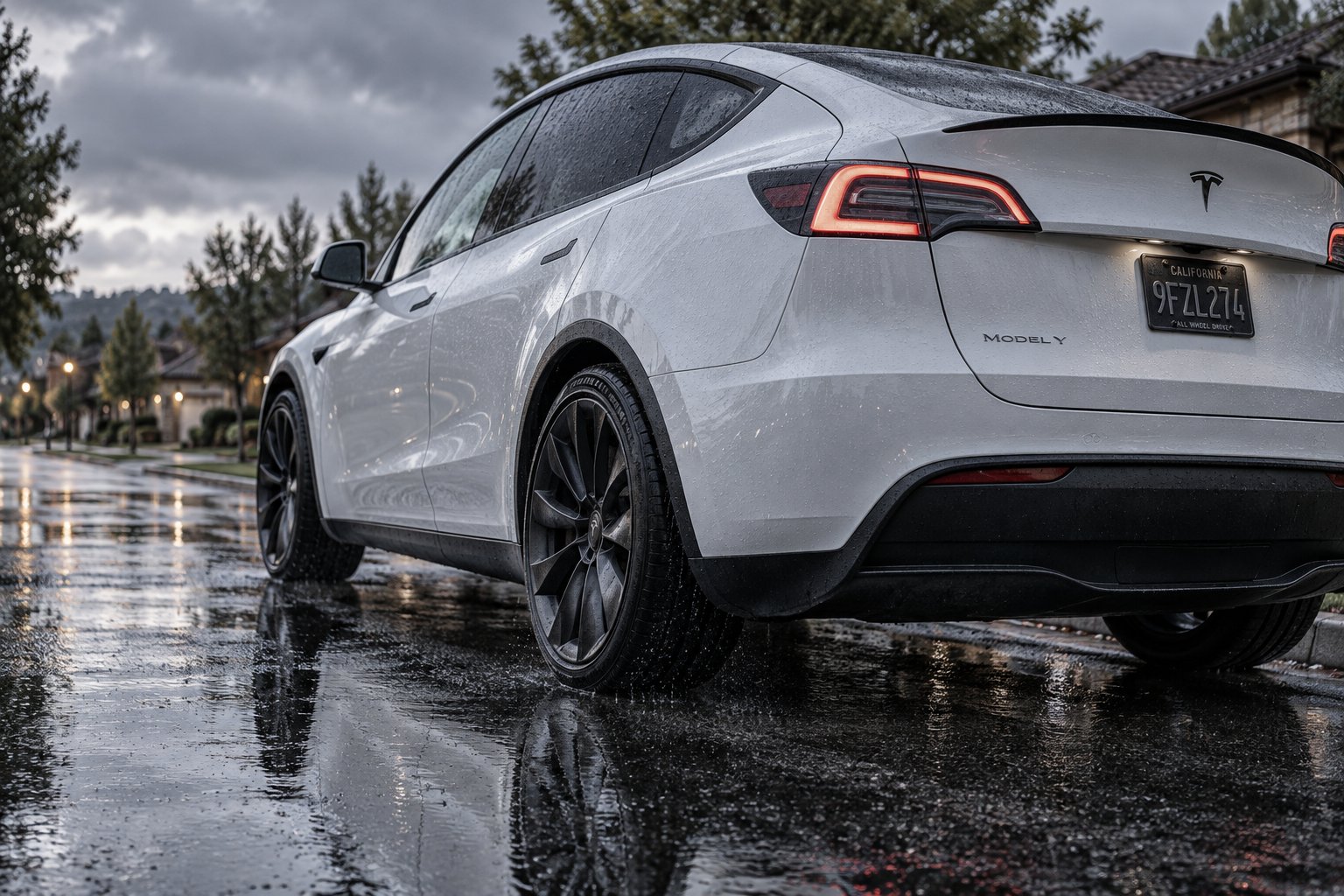
The Mud Flap Question Every Tesla Owner Eventually Faces
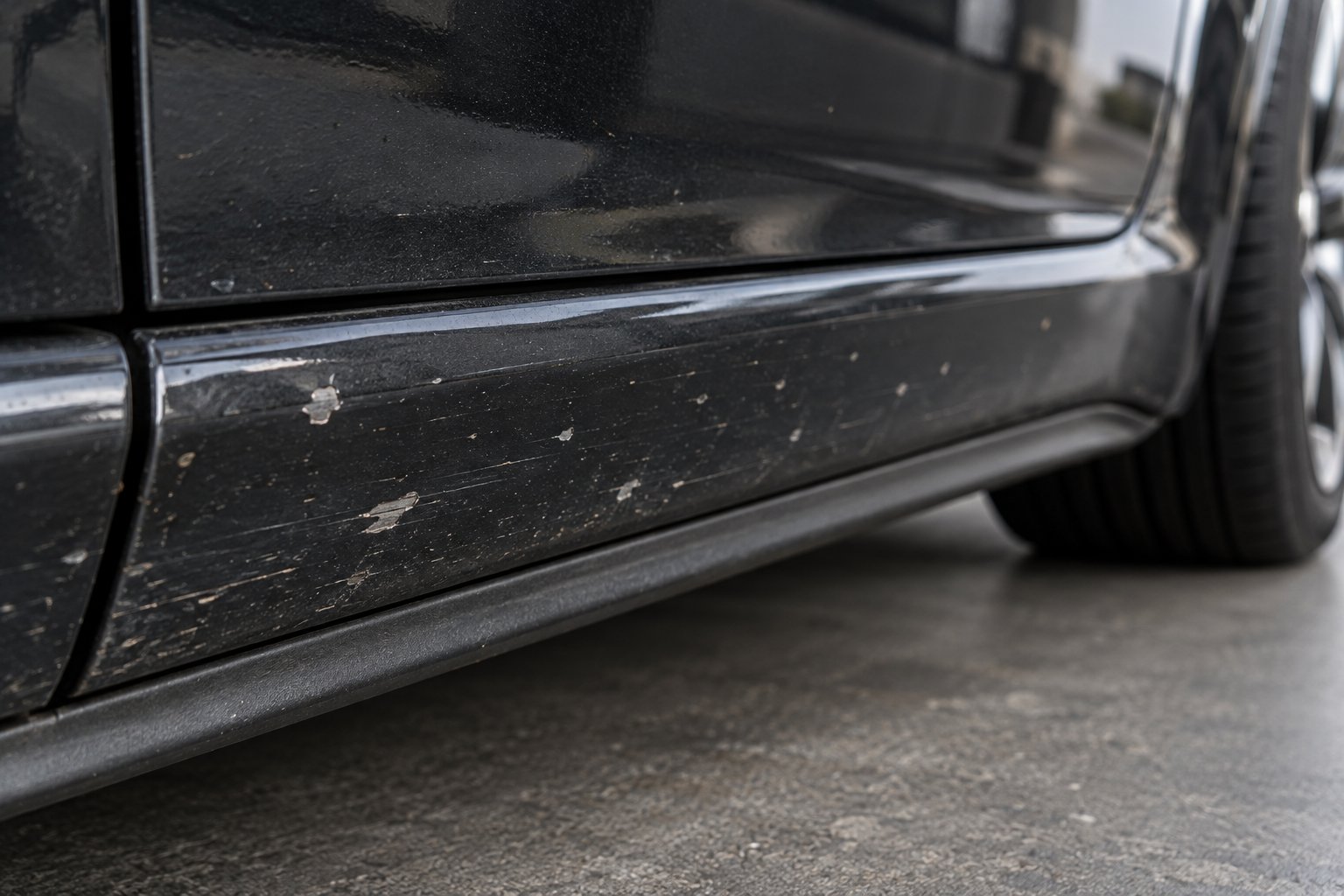
There's a predictable moment in every Tesla owner's journey. The excitement of delivery fades, the first road trip wraps up, and instant torque becomes second nature. Then one day, during a close inspection or a routine car wash, you spot them — tiny chips near the rocker panels, faint marks along the lower doors, subtle signs of wear that weren't there on delivery day.
And that's when a deceptively simple question pops into your head: are Tesla mud flaps worth it?
It seems like an easy call. A set of mud flaps costs roughly the same as a nice dinner out. Yet Tesla owners agonize over this decision in a way that drivers of other vehicles rarely do. The reason is rooted in something deeper than price — it's about philosophy. Tesla designed these vehicles with obsessive minimalism, and adding anything aftermarket feels like it could disrupt that carefully engineered aesthetic. You've invested in a $41,990 Tesla Model Y or a sleek Model 3, and the last thing you want is an accessory that cheapens the look.
Why Tesla Owners Keep Asking This Question
Here's a detail that surprises many first-time buyers: Tesla vehicles ship without mud flaps from the factory. No splash guards tucked behind the wheels, no rubber flaps deflecting road debris. Nothing. That deliberate omission sends a mixed signal. On one hand, it suggests Tesla's engineers didn't consider them necessary. On the other hand, it means the company essentially leaves lower body panel protection entirely to your discretion.
Thousands of owners have documented remarkably similar experiences across forums and owner groups. Some installed mud flaps immediately and never thought about them again. Others skipped them, only to discover visible paint erosion months later — damage that a tesla warranty won't cover because it falls under normal wear and tear, not a manufacturing defect. The debate never fully resolves because the answer genuinely depends on how and where you drive.
What This Guide Will Help You Decide
This isn't a product pitch. It's a decision-making framework built around one honest goal: helping you figure out whether mud flaps make financial and practical sense for your specific situation. Over the following sections, we'll examine the real damage risks your lower body panels face, compare OEM splash guards against aftermarket options, break down the actual return on investment, and provide model-specific and climate-specific guidance you can act on immediately.
Whether you just completed a tesla demo drive and are still configuring your order, or you've owned your vehicle for two years and are only now noticing those first stone chips, this guide meets you where you are.
The real question isn't whether mud flaps work — it's whether the protection they offer matters for YOUR driving situation.
The answer, as you'll see, hinges on a handful of very specific factors — starting with the exact types of damage these simple accessories are designed to prevent.
The Specific Damage Tesla Mud Flaps Actually Prevent
Saying mud flaps "protect your car" is about as helpful as saying sunscreen "protects your skin." The real value only clicks when you understand exactly what's hitting your Tesla's lower body panels every time you drive — and what that damage looks like six months, a year, or three years down the road.
Let's get specific.
Rock Chips and Paint Erosion on Rocker Panels
Every time your tires roll over gravel, sand, or loose road debris, they act like high-speed launchers. Particles are flung laterally and rearward with surprising force, striking your rocker panels and lower quarter panels in a relentless pattern. A single stone chip might seem harmless. Fifty of them over six months? That's a different story entirely.
Each micro-impact cracks through the clear coat, sometimes reaching the primer or bare metal underneath. Once that protective barrier is breached, moisture creeps in — and corrosion follows. What starts as a barely visible nick becomes a rust spot that spreads beneath the surface.
Here's where Tesla ownership adds a unique wrinkle. Tesla's water-based paint system, while more environmentally responsible, produces a coating that is 20-30% thinner than comparable luxury vehicles. That thinner layer means less material standing between road debris and exposed metal. Owners of every model — from the Model 3 to the Model S — frequently report that their paint chips more easily than expected, especially along the lower body where tire spray concentrates its assault.
And it's not just about the paint itself. Tesla's aerodynamic body design channels airflow in ways that can funnel debris across specific surfaces, creating chip clusters in predictable zones along the rocker panels and behind the wheel arches. Pair that with the instant torque of an electric drivetrain — which causes more aggressive tire spin during acceleration — and your Tesla is actually throwing up more road debris than many traditional vehicles.
Salt Damage and Winter Road Chemical Exposure
If rock chips are the visible enemy, road salt is the invisible one. In winter climates, municipalities spread salt and brine solutions liberally across roadways. Your tires pick up that corrosive mixture and spray it directly onto your lower body panels, wheel wells, and undercarriage with every rotation.
The result isn't always dramatic — at first. You'll notice chalky white staining around the wheel arches. The finish starts looking dull in spots that used to gleam. Underneath that cosmetic degradation, the salt is actively attacking the paint's protective layers. Over a full winter season without protection, the cumulative chemical exposure can weaken the clear coat to the point where it begins to peel or flake, creating entry points for deeper corrosion.
For tesla model 3 rear mud flaps specifically, this is one of the strongest arguments owners make in winter-driving communities. The rear wheels track through the salty slush that the front tires disturb, creating an especially aggressive spray pattern aimed directly at the rear quarter panels and bumper.
Mud Staining and Sand Pitting on Wheel Wells
Mud and fine sand might seem like nuisances rather than threats, but imagine thousands of tiny abrasive particles packed against your paint, vibrating with every bump in the road. That's exactly what happens inside your wheel arches when mud accumulates and dries.
Dried mud traps moisture against the paint surface, promoting oxidation. Fine sand particles embedded in that mud act like micro-sandpaper against the clear coat every time the car moves. Even the cleaning process becomes risky — scrubbing caked mud off painted surfaces without proper technique creates swirl marks and micro-scratches that dull the finish permanently.
This issue was highlighted in real-world testing when a Canadian Model 3 owner found that after just 410 kilometers of winter driving, a significant amount of mud and debris had already collected behind the wheel liners. That kind of rapid buildup shows how quickly unprotected wheel wells become collection points for paint-damaging material — particularly on vehicles driven through wet or unpaved conditions.
Here are the four primary damage types mud flaps are designed to defend against:
- Rock chips on rocker panels — cumulative stone impacts that crack through Tesla's thinner paint, exposing metal to corrosion
- Paint erosion from road salt — chemical degradation of clear coat and paint layers during winter driving seasons
- Sand pitting on lower body panels — abrasive micro-damage from fine particles flung at high velocity by tire rotation
- Mud staining on wheel wells — trapped moisture and debris that promotes oxidation and makes safe cleaning difficult
What makes all four of these damage types particularly deceptive is their cumulative nature. You won't notice a single stone chip the day it happens. You probably won't see salt staining after one commute. But these micro-damages compound silently over months and years — and the bill often comes due at the worst possible moment. A trade-in appraisal that docks your value by thousands. A detailing session that reveals just how far the damage has spread beneath the surface grime. Market data suggests that Teslas with documented paint damage can lose 5-8% of their resale value, and lower body panels are among the first areas inspectors check.
The damage is real and measurable. But knowing what mud flaps prevent is only half the equation — the other half is knowing which mud flaps actually deliver on that promise, and whether Tesla's own offerings stack up against the aftermarket alternatives that have flooded the market.
OEM Tesla Splash Guards vs Aftermarket Mud Flaps
So you've decided your Tesla could benefit from mud flaps — or at least you're seriously considering it. The next fork in the road catches many owners off guard: do you buy Tesla's own splash guards, or do you go aftermarket? It sounds straightforward, but the answer is surprisingly layered. Tesla's relationship with its own mud flap accessories has been inconsistent at best, and the aftermarket world has rushed in to fill every gap the factory left behind.
Tesla OEM Splash Guards and What They Offer
Tesla has, at various points, offered official splash guards and mud flap kits for certain models — though "offered" might be a generous term for how sporadically they've appeared. The most notable example came when Tesla quietly introduced an All-Weather Protection Kit for the Model 3 in Canada. The kit included front splash guards that came in two separate pieces per side — one covering the rocker panel underneath, and the other acting as the actual flap — along with extenders for additional coverage.
The advantage of going OEM is obvious: guaranteed fitment. These parts are designed by the same company that built your car, so color matching, contour alignment, and attachment points are engineered specifically for your vehicle. There's also the peace of mind that comes with knowing an official accessory won't void any warranty claims related to the area it covers.
But the drawbacks are equally real. Tesla's OEM kit for the Model 3, for example, only covered the front wheels — not all four. That's a significant limitation when rear panels often take the worst beating from road debris. Availability has also been a recurring frustration. These kits appear in the Tesla Shop, disappear without notice, and may only be offered in specific markets. Pricing tends to sit at a premium compared to aftermarket alternatives, and installation — while doable at home — can require jacking up the vehicle and working with 10mm bolts and push clips that aren't always intuitive. As one owner who installed the kit at home noted, doing the job in winter when the car is wet and muddy made the process far less appealing.
Aftermarket Mud Flaps and the Value Proposition
The aftermarket landscape for Tesla mud flaps has matured dramatically. Brands like Basenor, which produces popular Basenor Tesla Model 3 mud flaps, and performance-oriented companies like Unplugged Performance have developed model-specific designs that often rival — and in some cases exceed — the coverage of Tesla's own kits. The sheer variety available gives owners something Tesla's shop never could: choice.
Materials range from flexible thermoplastic elastomer (TPE), which bends on impact and resists cracking in cold weather, to rigid ABS plastic, which holds its shape better and offers a more factory-finished look. Some sets feature a matte finish that blends seamlessly with unpainted lower trim. Others come in gloss black to match specific wheel packages. You'll even find options with or without Tesla logos, different coverage widths, and designs that wrap further behind the wheel arch for maximum protection.
Installation methods vary just as widely. Many aftermarket sets use a no-drill design, relying on existing factory mounting points, push-pin clips, and adhesive strips. This approach appeals to owners who want a reversible modification — pop them off before a trade-in or lease return, and the car looks factory-fresh. Other sets require drilling small holes into the wheel liner or fender for a more secure, rattle-free mount. The drilling approach provides better long-term stability, especially at highway speeds, but it introduces permanent modification to the vehicle.
The trade-off is straightforward. Aftermarket options typically cost between $20 and $50 for a complete set of four, compared to Tesla's OEM kits that have historically covered only the front at a higher price point. You get more coverage for less money. The catch? Fitment quality varies across manufacturers. A poorly designed aftermarket flap might leave visible gaps, sit at an awkward angle, or rattle at speed — creating the exact aesthetic disruption Tesla owners were trying to avoid. You'll also occasionally encounter a Tesla tire installation error-style headache where clips don't align with the specific production year of your vehicle, since Tesla frequently makes minor changes to wheel well geometry between model years.
The best aftermarket options, though, genuinely challenge the need for OEM parts. They offer full four-wheel coverage, clean visual integration, and materials engineered for the specific thermal and mechanical demands of each Tesla model.
| Factor | Tesla OEM Splash Guards | Aftermarket Mud Flaps |
|---|---|---|
| Typical Price Range | $40 - $80+ (front only on some models) | $20 - $50 (full set of four) |
| Fitment Consistency | Guaranteed OEM fit for specific model/year | Varies by brand; top options rival OEM |
| Material Options | Factory-spec plastic/rubber | TPE, ABS, PP; matte or gloss finishes |
| Availability | Inconsistent; market-dependent | Widely available online year-round |
| Installation Complexity | Moderate; may require jacking the vehicle | Easy to moderate; many no-drill options |
| Aesthetic Integration | Exact color/contour match | Good to excellent depending on brand |
| Coverage Area | Front only on some kits | Front and rear sets standard |
Neither path is objectively superior. OEM splash guards win on guaranteed fit and factory aesthetics, while aftermarket mud flaps win on value, coverage, and availability. Your best choice depends on what you prioritize — and interestingly, it also depends on which specific wheels need protection most. Not all four positions on your Tesla face the same level of risk, and understanding that distinction can save you money while maximizing the protection that actually matters.
Front vs Rear Mud Flaps and Why the Difference Matters
Most mud flap guides treat all four corners of your Tesla as a single purchase decision — buy the set, bolt them on, move on with life. In reality, front and rear mud flaps solve different problems, protect different zones, and deliver different levels of value depending on your driving habits. If you're weighing cost, aesthetics, or just trying to figure out where to start, understanding this distinction is the difference between spending strategically and spending blindly.
Why Rear Mud Flaps Deliver the Most Protection
Think about what happens as your Tesla moves down the road. The front tires break through puddles, disturb gravel, and churn up whatever's on the road surface. Your rear tires then roll through that freshly disturbed debris field — and fling it backward and laterally with considerable force. It's a compounding effect: the front tires create the problem, and the rear tires amplify it.
That amplified spray targets two things. First, your own rear quarter panels and bumper catch a relentless barrage of road grit, salt, and small stones. Many Tesla owners report that their rear panels accumulate significantly more road grime and chip damage than the front — a pattern that becomes painfully obvious at trade-in time. Second, the spray hits whatever vehicle is behind you. That's not just a courtesy issue; flinging debris at highway speed can chip windshields and create real liability concerns, particularly during winter months when roads are covered in abrasive material.
For Tesla owners running wider performance rubber like the Pilot Sport 4S or even all-season options like the Goodyear Assurance ComfortDrive, the effect intensifies. Wider tires displace more material across a broader arc, meaning the unprotected spray zone grows with every upgrade in tire width. If you've invested in the best tires for Tesla Model Y performance, those same tires are throwing more debris at your paint than the narrower stock options ever did.
Front Mud Flaps and Rocker Panel Defense
Front mud flaps serve a different purpose entirely. Their primary job is intercepting the debris your front tires kick laterally — the spray that sandblasts your rocker panels, the lower edges of your front doors, and the seams near the door seals. On most passenger vehicles, the front wheels generate the strongest dirt stream into the sill area, which is why conventional automotive wisdom often prioritizes front mud flaps as the first install.
For Tesla owners, though, the calculus shifts based on driving conditions. On clean highways and well-maintained city streets, front flaps do relatively little because there's minimal loose debris for the tires to disturb in the first place. On gravel roads, construction zones, or salt-treated winter highways, their value jumps dramatically. You'll notice the difference most during wet driving — that chalky film of road grime along your rocker panels after a rainy commute gets visibly reduced with front flaps in place.
There's a practical trade-off to consider, too. Front mud flaps sit closer to ground-level obstacles — curbs, speed bumps, steep driveway transitions. On lower-riding models, a poorly fitted front flap can scrape or catch, especially in winter when ice builds up between the flap and the wheel arch. Choosing a model-specific design rather than a universal set minimizes this risk considerably.
Do You Need All Four or Can You Start With Two?
Here's the honest answer most guides won't give you: if you can only buy one pair, your decision should be driven by your biggest pain point — not by a blanket recommendation.
If your primary concern is preserving your own vehicle's paint and resale value, and you frequently drive on debris-heavy roads or in winter conditions, rear mud flaps generally provide the highest return on investment. They address the most aggressive spray pattern and protect the panels that tend to show cumulative damage first. If your main frustration is dirty rocker panels and grimy lower doors after every commute, front flaps target that specific zone more effectively.
For owners dealing with both scenarios — or anyone planning to keep their Tesla for several years — a full set of four remains the most comprehensive approach. But framing it as an all-or-nothing decision misses the point.
Here's a quick summary of what each pair actually covers:
- Rear mud flaps protect: rear quarter panels, rear bumper lower edge, rear wheel arches, and reduce debris spray onto vehicles behind you
- Front mud flaps protect: rocker panels, lower front door edges, front wheel arches, and door seam areas vulnerable to salt and sand intrusion
Starting with two and adding the second pair later isn't a half-measure — it's a targeted strategy. And the smartest version of that strategy factors in not just front versus rear, but which Tesla model you're driving. A Model Y's tall crossover stance and a Model 3's low sedan profile create very different exposure patterns, which means the value equation shifts depending on what's parked in your garage.
Which Tesla Models Benefit Most from Mud Flaps?
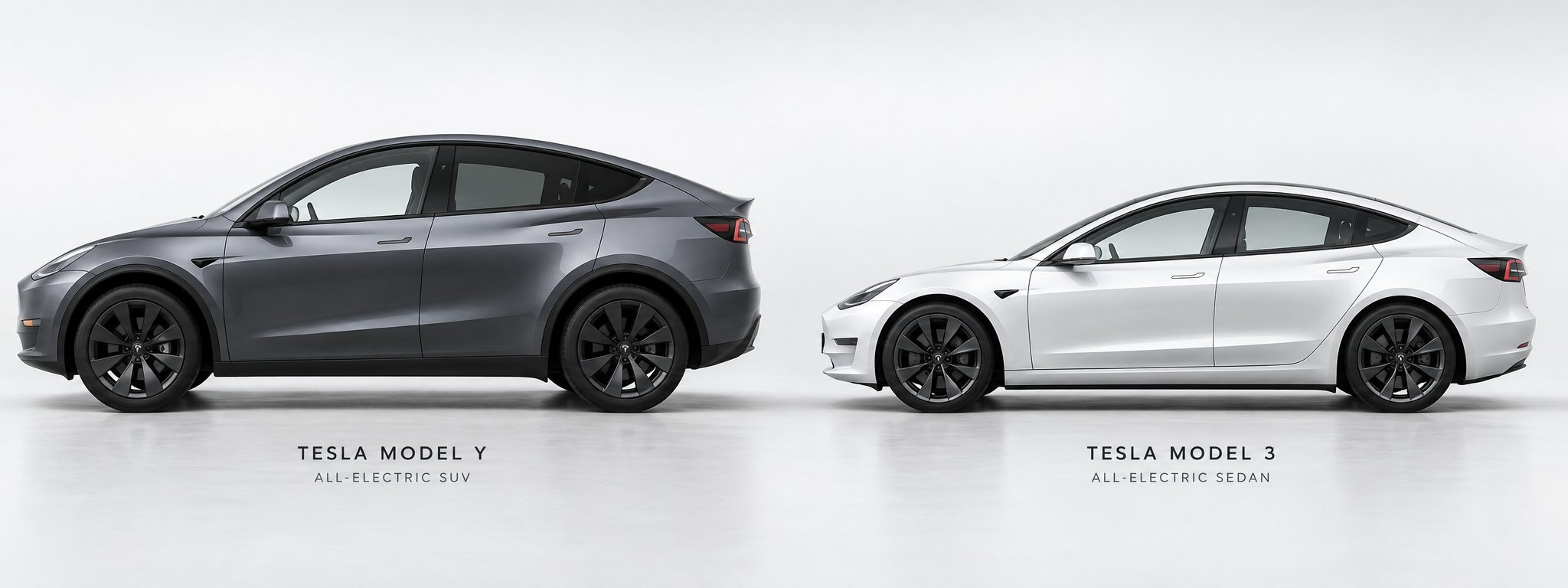
Imagine two Tesla owners standing side by side in a parking lot. One drives a 2024 Tesla Model Y with its tall crossover stance. The other owns a low-slung Model 3 sedan. Both drove the same 30-mile commute through identical winter roads. When they crouch down and inspect their lower body panels, the damage patterns look nothing alike.
That's because each Tesla model has a unique combination of ride height, wheel well geometry, tire positioning, and fender design — all of which influence how aggressively road debris reaches your paint. Treating every model identically when deciding whether mud flaps are worth it is like recommending the same running shoes to a sprinter and a hiker. The terrain is different, and the protection needs follow suit.
Model Y and Its Higher Ride Height Factor
The Model Y's crossover proportions create the strongest case for mud flap protection across Tesla's entire lineup. Its elevated ride height means the tires sit higher off the ground, giving debris a wider trajectory arc before gravity pulls it back down. Picture a stone kicked up by a front tire on a sedan — it travels in a relatively tight, low parabola. That same stone launched from a Model Y tire has more vertical clearance to fan outward, potentially striking a larger surface area across the lower body panels, rocker panels, and wheel arches.
The Model Y's flared fenders and wider stance compared to the Model 3 add another dimension to this equation. While those flared fenders give the crossover its muscular look, they also create larger wheel well openings that offer less natural shielding against tire spray. More exposed body panel surface means more paint at risk during every drive.
Whether you're driving a 2022 Tesla Model Y or eyeing the refreshed Tesla Model Y 2026, the fundamental physics remain the same. The crossover body style trades aerodynamic tightness for ground clearance and cargo volume — and that trade-off extends to debris exposure. Model Y owners in forums consistently report more aggressive road grime accumulation along the rear quarter panels than Model 3 owners driving similar routes, and the larger wheel wells act as catch basins for mud and slush during wet conditions.
There's a practical detail worth noting, too. The Model Y's popularity as a family vehicle means it often carries heavier loads — passengers, luggage, camping gear. That added weight compresses the rear suspension slightly, changing the tire-to-fender gap and potentially redirecting spray patterns toward body panels that sit just above the wheel arch. For the Model Y specifically, a full set of four mud flaps delivers noticeably more value than on any other Tesla model.
Model 3 and Its Lower Profile Considerations
The Model 3 tells a different story. Its sedan stance positions the wheel wells tighter and closer to the ground, which provides slightly more natural coverage against wide-angle debris spray. The fender-to-tire gap is narrower, meaning there's less open space for stones and road grit to escape laterally before hitting the inner fender liner instead of your paint.
But "more natural coverage" doesn't mean "enough coverage." The Model 3's lower rocker panels sit closer to the tire spray zone, placing them directly in the firing line of the most concentrated debris stream. Imagine a garden hose spraying against a wall — the closer the wall, the more intense the impact in a smaller area. That's essentially what happens to your Model 3's rocker panels during highway driving on wet or debris-covered roads.
Rear mud flaps on the Model 3 generate some of the most active discussion in owner communities, and for good reason. The sedan's rear wheel positioning and tighter rear fender geometry concentrate spray into a focused pattern that hammers the rear bumper's lower edge and the quarter panel seam areas. Owners who've removed their rear wheels during tire rotations often discover a startling amount of accumulated grit packed into spaces that are invisible during a normal walk-around inspection.
The Model 3 Highland refresh introduced subtle changes to exterior panel lines and bumper geometry, which means mud flap fitment can vary between pre-Highland and post-Highland production runs. If you're shopping for aftermarket options, confirming your exact production year matters here more than on any other Tesla model. A set designed for a 2021 Model 3 may not align perfectly with a 2024 build — a detail that catches many owners off guard.
Model S and Model X Differences
Tesla's flagship sedan and SUV don't dominate the mud flap conversation the way the Model 3 and Model Y do — partly because their ownership volumes are lower, and partly because their buyers tend to invest more heavily in professional paint protection from day one. But the physics of debris exposure don't care about price brackets.
The Model S Plaid shares many of the same low-profile dynamics as the Model 3. Its sweeping sedan profile keeps the wheel wells relatively tight, but the performance variant's wider rear tires — designed for that blistering acceleration — throw a broader debris pattern than narrower stock rubber. Owners pushing their Model S Plaid on mixed-surface roads or through winter conditions face the same cumulative paint damage risks as any other Tesla, amplified by those wider contact patches. The car's lower front lip also sits closer to the pavement, meaning front mud flaps need careful fitment to avoid scraping on driveway transitions and speed bumps.
The X Tesla SUV mirrors the Model Y's exposure patterns but on a larger scale. Its SUV proportions, taller ride height, and substantially larger wheel well openings create a generous window for debris to reach painted surfaces. The falcon-wing doors add a unique wrinkle — the door sill area where passengers step in and out is directly adjacent to the front wheel spray zone, meaning unprotected grit accumulation doesn't just affect aesthetics but also daily livability. Mud and salt buildup along those sills gets tracked into the cabin, onto shoes, and across the interior trim.
For both the Model S and Model X, the decision often comes down to whether existing protection measures — ceramic coatings, PPF, or regular detailing schedules — already cover the lower body panels. If they do, mud flaps become a supplementary layer. If they don't, the cost-benefit math works out similarly to the Model 3 and Model Y.
The Mud Flap Worth-It Matrix
Every model-and-condition combination produces a different answer. Rather than offering a vague "it depends," here's a concrete matrix you can reference based on your Tesla model and the driving conditions you encounter most frequently:
| Tesla Model | City (Paved) | Suburban (Mixed) | Rural (Gravel) | Winter (Salt Belt) | Desert (Sand) |
|---|---|---|---|---|---|
| Model 3 | Optional | Recommended | Highly Recommended | Highly Recommended | Recommended |
| Model Y | Recommended | Highly Recommended | Highly Recommended | Highly Recommended | Highly Recommended |
| Model S | Optional | Recommended | Highly Recommended | Highly Recommended | Recommended |
| Model X | Recommended | Highly Recommended | Highly Recommended | Highly Recommended | Highly Recommended |
A few patterns jump out immediately. The Model Y and Model X — both elevated, larger-wheeled vehicles — earn a "Recommended" rating even in ideal city driving conditions, simply because their wheel well geometry exposes more painted surface area regardless of road quality. The Model 3 and Model S, with their tighter fender gaps, get a bit more breathing room in benign environments but lose that advantage the moment road surfaces deteriorate or winter chemicals enter the equation.
Notice that no cell in the matrix says "Not Recommended." Even in the best-case scenarios, mud flaps offer some measurable protection — the question is always whether that protection justifies the modest cost and aesthetic trade-off for your priorities. And that trade-off shifts dramatically once you factor in something the matrix can't fully capture in a single word: the specific climate and geography you drive through every day.
How Your Climate and Driving Conditions Change the Answer
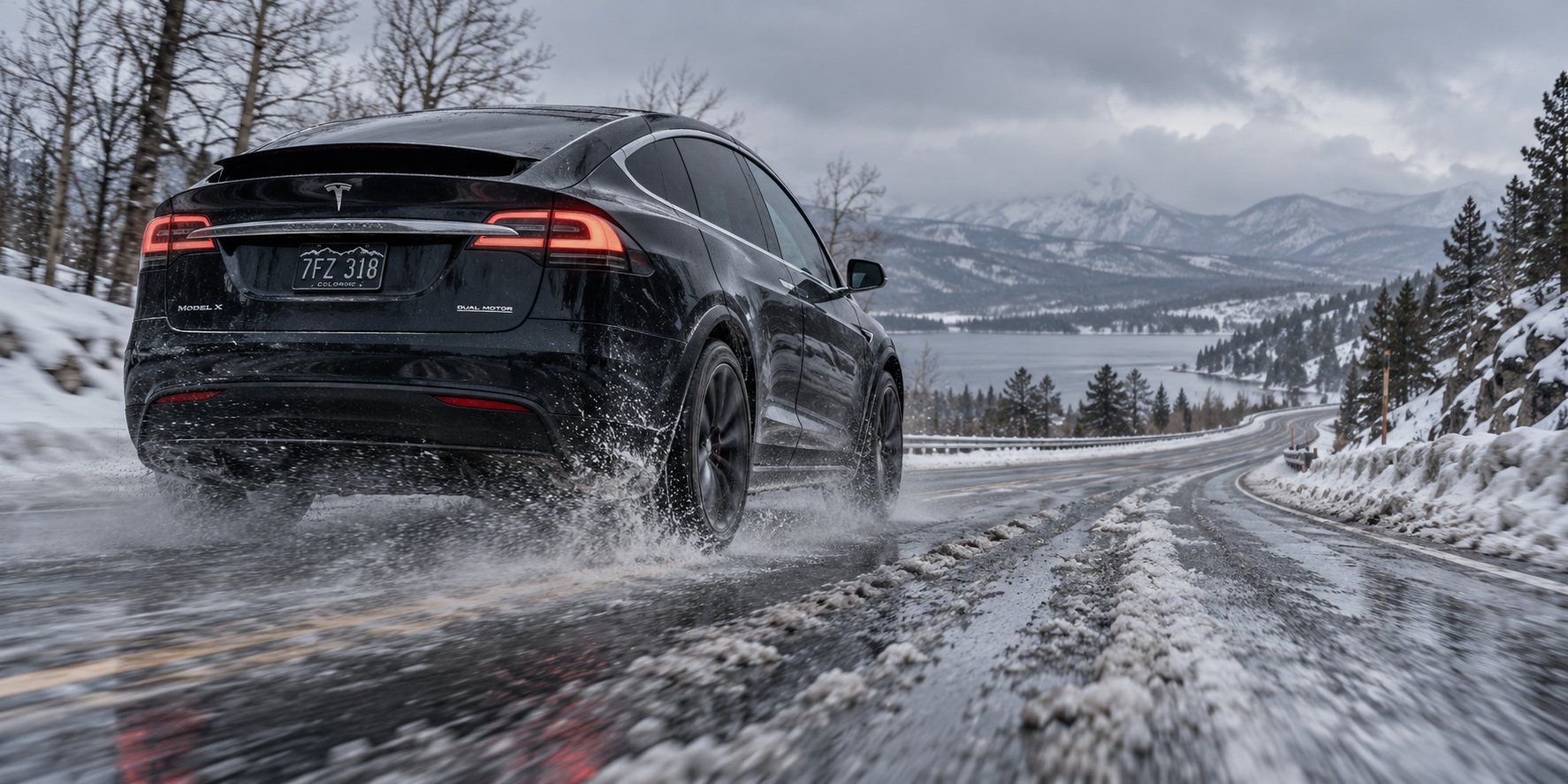
A Tesla owner in Phoenix and a Tesla owner in Minneapolis might drive the same Model Y Standard Rear-Wheel Drive on the same number of daily miles — yet their mud flap math produces completely different answers. The model-specific matrix from the previous section tells you which vehicles are most vulnerable, but your zip code and daily route tell you how much that vulnerability actually costs you. Climate and geography don't just shift the value of mud flaps slightly — they can move the needle from "nice accessory" to "essential protection" or from "smart investment" to "honestly unnecessary."
Here's how each major driving environment changes the calculation.
Winter and Salt Belt Driving
If you live anywhere from the upper Midwest through the Northeast corridor, you already know the ritual: temperatures drop, snowplows roll out, and every road surface gets coated in a cocktail of rock salt, magnesium chloride brine, and calcium chloride solutions. Your tires churn through that corrosive slurry mile after mile, spraying it directly onto your lower body panels, wheel wells, and the seams where paint meets trim.
This is where mud flaps deliver their most dramatic return. Salt doesn't just stain — it actively eats through clear coat and paint layers over time, creating chemical pathways for moisture to reach bare metal. A single winter season of daily commuting on treated roads can inflict more cumulative damage to your rocker panels than three years of summer driving. The "sandblasting effect" that Tesla owners frequently reference in forums — where thousands of micro-impacts strip away paint in concentrated zones — accelerates dramatically when those micro-impacts carry corrosive chemicals along for the ride.
Mud flaps paired with quality winter tires like the Bridgestone Blizzak or the Michelin CrossClimate 2 create a strong complementary protection strategy. The tires provide grip and safety, while the flaps intercept the worst of the brine spray before it reaches your paint. For Tesla owners in the salt belt, skipping mud flaps isn't just rolling the dice on cosmetic damage — it's accepting a measurable hit to long-term resale value every time you pull out of the driveway between November and April.
Gravel Roads and Rural Driving
Gravel presents the most obvious and immediately visible case for mud flaps. There's no ambiguity here, no slow accumulation you might miss during a casual walk-around. Drive down a gravel road without mud flaps, and you'll hear the stones pinging off your rocker panels and quarter panels in real time. Drive that same road daily — or even just have a gravel driveway — and the damage timeline compresses from years to weeks.
Rock chips from gravel are larger, deeper, and more destructive than the fine particulate spray you encounter on paved highways. A single sharp stone flung at speed can crack through clear coat and paint in one impact, leaving a visible crater that exposes primer or metal. Multiply that by hundreds of impacts per trip, and you're looking at rocker panels that resemble the surface of a golf ball within a few months.
Rural Tesla owners — particularly those who chose a Model Y for its practicality on mixed-terrain routes — often discover this reality the hard way. The irony is that the very driving scenarios that make a crossover appealing (country roads, farm access lanes, unpaved shortcuts) are the exact scenarios where unprotected lower panels take the most punishment. If gravel is part of your regular driving life, mud flaps aren't a question of "worth it" — they're a prerequisite.
Desert and Coastal Environments
Sand behaves differently from gravel, but the damage it causes is just as real. In desert environments — think Arizona, Nevada, West Texas, or Southern California's inland valleys — fine sand particles act like airborne abrasives. Your tires lift them from the road surface and blast them laterally against your paint at highway speeds. Over time, this creates a distinctive matte dulling effect on lower panels, a phenomenon known as sand pitting. Unlike a rock chip you can touch up, sand pitting creates thousands of microscopic scratches across broad surface areas that can only be corrected through professional polishing or repainting.
Coastal driving introduces a different chemical threat. Salt air alone contributes to paint degradation over time, but combine airborne salt with the road spray your tires generate, and the corrosive exposure on lower panels intensifies significantly. Coastal Tesla owners in Florida, the Carolinas, or the Pacific Northwest deal with a double assault: salt mist from the environment above, and salt-laden road spray from below. Mud flaps address the road spray half of that equation, reducing the total corrosive load your paint has to withstand.
City and Highway Commuters on Clean Pavement
Here's where honesty matters most. If you drive exclusively on well-maintained urban roads and modern highways — clean asphalt, no construction zones, no gravel shoulders, no winter salt treatments — mud flaps provide the least incremental value of any scenario. The debris load on pristine pavement is minimal. Your tires encounter less loose material, and the spray pattern carries mostly water rather than abrasive particles.
For garage-kept Teslas in temperate climates that only see city streets and interstates, the aesthetic trade-off of adding mud flaps may genuinely outweigh the protection benefit. You'll still pick up the occasional stone chip from highway debris, and construction zones can create temporary hazards, but the day-to-day damage accumulation rate is dramatically lower than in any other driving scenario. Some city-only owners drive for years without mud flaps and see minimal evidence of lower body panel degradation at resale time.
That said, "mostly city driving" and "exclusively city driving" are two very different things. If your commute occasionally routes through construction corridors, if you take weekend trips on rural roads, or if your region experiences even a mild winter with occasional salt application, you've crossed the threshold where mud flaps start earning their keep.
To make this actionable, here's a quick-reference ranking of driving scenarios from highest benefit to lowest benefit for mud flap installation:
- Gravel roads and unpaved driveways — immediate, visible protection against the most aggressive debris impacts
- Winter salt belt commuting — critical defense against corrosive chemical spray that accelerates paint failure and corrosion
- Rural mixed-surface driving — frequent transitions between paved and unpaved roads create unpredictable debris exposure
- Desert and sandy environments — ongoing protection against fine abrasive particles that cause cumulative sand pitting
- Coastal driving with salt air exposure — reduces road-level salt spray that compounds environmental corrosion from ocean air
- Suburban mixed driving — moderate benefit from intercepting occasional debris on less-maintained neighborhood roads
- City and highway commuting on clean pavement — lowest incremental benefit; value depends on how strictly "clean pavement" describes your actual routes
Your position on that list tells you a lot about whether mud flaps make financial sense — but it doesn't tell the whole story. Some Tesla owners skip mud flaps entirely and invest in paint protection film instead, betting on a completely different approach to the same problem. Others argue that neither solution is necessary for their situation. Both perspectives deserve an honest look, especially when the cost difference between the two strategies can be staggering.
Mud Flaps vs PPF
That ranking of driving scenarios makes the case for mud flaps look strong — especially if you live anywhere snow falls or gravel crunches under your tires. But mud flaps aren't the only game in town. A growing number of Tesla owners bypass them entirely and invest in paint protection film (PPF) on their lower panels instead, arguing that invisible armor beats visible plastic every time. Others combine both. And a vocal minority insists neither is necessary.
Each position has legitimate reasoning behind it. The question isn't which camp is "right" — it's which approach aligns with your budget, your aesthetic priorities, and the specific risks your Tesla faces daily.
Mud Flaps vs PPF as Competing Protection Strategies
At first glance, mud flaps and PPF seem to solve the same problem. Both aim to keep your lower body panels free from road damage. But they work through fundamentally different mechanisms, and understanding that distinction matters more than most owners realize.
Mud flaps are deflection tools. They physically intercept debris before it ever reaches your paint. A stone flung by your rear tire hits the mud flap instead of your quarter panel. Road salt spray gets redirected downward instead of coating your rocker panels. The debris never makes contact with your vehicle's surface in the first place.
PPF is an absorption tool. It's a transparent thermoplastic urethane film applied directly to your paint that takes the hit on behalf of the clear coat underneath. The stone still strikes your vehicle — but it strikes the film instead of bare paint. High-quality PPF even features self-healing properties, where minor scratches and swirl marks disappear with heat from sunlight or warm water.
The aesthetic advantage of PPF is undeniable. A professional installation is virtually invisible — no plastic appendages, no disruption to Tesla's clean design language, no visual compromise whatsoever. For owners who chose their Tesla partly for its minimalist appearance, that invisibility carries real weight. You preserve the factory look while adding a layer of defense that most people can't even detect.
The cost difference, however, is where the conversation gets uncomfortable. A full set of mud flaps for any Tesla model typically costs between $25 and $50. PPF on just the rocker panels — not the full vehicle, just the lower panels where mud flaps would normally protect — runs around $400 as an add-on at professional installation shops. Full front PPF coverage (hood, fenders, bumper, and mirrors) sits at approximately $1,800, and full body PPF ranges from $4,000 to $7,500 depending on the installer and film brand. Even the most targeted PPF application on lower panels costs roughly eight to ten times what a complete set of mud flaps runs.
There's a practical distinction worth noting, too. PPF protects the specific panels it covers — and only those panels. A rock that strikes an unfilmed area still damages paint. Mud flaps reduce the total volume of debris reaching multiple panels simultaneously, including areas you might not think to cover with film, like the inner wheel arches and the underside of the bumper. PPF also has a finite lifespan. Professional-grade film typically lasts 7 to 10 years before it needs replacement — another cost cycle that mud flaps simply don't have.
Some owners land on the smartest approach of all: using both. Mud flaps handle the heavy debris deflection, preventing the largest and most damaging impacts from ever reaching the vehicle. PPF underneath handles whatever fine spray and micro-particulates get past the flaps. It's a belt-and-suspenders strategy that makes the most sense for owners who plan long hold periods — five or more years — on vehicles driven in demanding conditions. Think of it as combining a tesla battery warranty mentality (protecting a major asset over time) with a practical, low-cost first line of defense.
The Honest Case Against Mud Flaps
Editorial honesty requires acknowledging that mud flaps aren't a universally perfect solution. There are legitimate reasons some Tesla owners choose to skip them, and those reasons deserve a fair hearing rather than dismissal.
The aesthetic argument is real. Tesla spent years refining every body line, panel gap, and surface transition on these vehicles. Adding plastic flaps behind the wheels introduces a visual element that wasn't part of that design intent. Even well-fitted aftermarket options change the profile when viewed from certain angles. For owners who value the unbroken visual flow of Tesla's design philosophy above all else, this trade-off feels like a step backward — not unlike adding a bulky phone case to a device engineered to be held naked.
Aerodynamic impact exists, though it's minimal. Mud flaps introduce small surfaces that interact with airflow around the wheels. In practice, the drag penalty is negligible at normal driving speeds — you won't notice any measurable impact on your tesla model y speed range test results or daily efficiency numbers. But for the subset of owners who obsess over maximizing every mile of range, even a theoretical drag increase feels like it contradicts the purpose of driving an EV.
Some owners genuinely don't need them. This is the argument that carries the most weight. A Tesla that lives in a garage, commutes exclusively on pristine urban pavement, never encounters gravel or winter salt, and gets traded in every two to three years faces a fundamentally different risk profile than a daily-driven Model Y in Michigan. Owners in this first category can drive for years without mud flaps and see negligible lower body panel damage at resale inspection. For them, mud flaps are a solution to a problem they don't actually have.
Fitment quality creates its own problems if you choose poorly. A well-designed, model-specific mud flap sits flush, stays quiet, and looks intentional. A cheap, ill-fitting set rattles at highway speed, develops visible gaps, and looks exactly like what it is — an aftermarket add-on that doesn't belong. Owners who've had a bad experience with loose-fitting flaps or irritating vibrations understandably develop a negative association with the entire category. The product itself isn't the issue — the selection is. But the frustration is valid.
PPF and ceramic coatings already cover some owners. If you've already invested in professional paint protection on your lower panels — whether that's full body PPF with rocker panel coverage or a high-quality ceramic coating — adding mud flaps provides diminishing returns. You're layering protection on top of protection, which isn't harmful but may not be cost-justified when the underlying surface is already shielded. Owners who've budgeted for comprehensive paint protection from day one sometimes view mud flaps as redundant rather than complementary, similar to how a discount tire warranty feels unnecessary if you already carry comprehensive roadside coverage.
| Category | Pros of Mud Flaps | Cons of Mud Flaps |
|---|---|---|
| Cost | $25 - $50 for a full set of four; one-time purchase with no recurring expense | Not free — adds a minor cost to an already expensive vehicle purchase |
| Installation | DIY-friendly; many no-drill options install in under 30 minutes | Poorly fitted options may rattle, require readjustment, or need drilling for secure attachment |
| Protection | Deflects debris before impact; reduces road salt spray, rock chips, and mud accumulation simultaneously | Doesn't protect against all debris angles; very fine spray can still bypass flaps |
| Resale Value | Preserves lower body panel condition, directly supporting higher trade-in appraisals | Some buyers may perceive aftermarket accessories as non-factory modifications |
| Aesthetics | High-quality sets integrate cleanly with Tesla's body lines | Any add-on disrupts the factory minimalist look to some degree |
| Versatility | Removable before resale or lease return; reversible modification | Unnecessary for owners in ideal driving conditions with garage-kept vehicles |
The most honest answer is that mud flaps aren't universally worth it — they're situationally worth it.
That single sentence captures the entire debate more accurately than any blanket recommendation ever could. Your driving conditions, your climate, your aesthetic tolerance, and your existing protection setup all feed into the equation. The owner commuting through Chicago winters on salted expressways and the owner cruising through San Diego on sun-baked freeways are asking the same question but living in entirely different realities.
What unites both scenarios — and every scenario in between — is the underlying math. Protection always costs something, whether you pay a little now or a lot later. The specific numbers behind that trade-off reveal exactly where the tipping point falls, and why the gap between preventive spending and corrective spending is far wider than most Tesla owners expect.
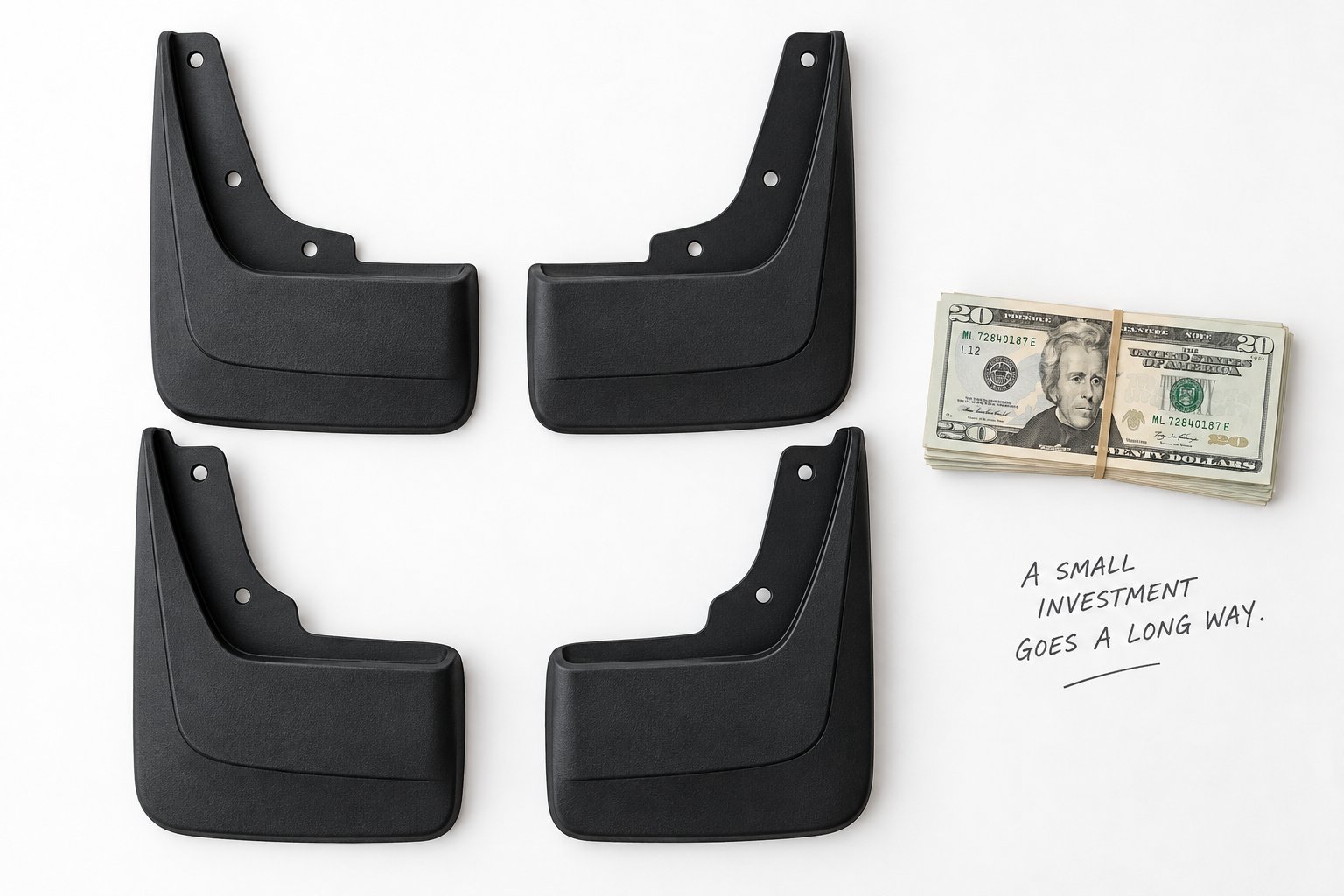
The Cost-Benefit Breakdown That Actually Answers the Question
Every protection decision eventually boils down to a single, uncomfortable comparison: what does it cost to prevent the damage versus what does it cost to fix it? For mud flaps, that gap isn't a narrow margin — it's a canyon. And once you lay the numbers side by side, the math speaks louder than any product review or forum debate ever could.
The Real Cost of Not Having Mud Flaps
Let's trace the financial path of a Tesla owner who skips mud flaps and deals with the consequences later. It starts small — a handful of stone chips along the rocker panels after the first winter, maybe some salt staining inside the wheel arches. Nothing urgent. Nothing worth worrying about today.
Fast-forward two or three years. Those chips have multiplied. Some have started to oxidize. The rocker panels have a pebbled texture that wasn't there at delivery. And now you're sitting across from a trade-in appraiser or preparing your listing for a private sale — and every one of those micro-damages is about to cost you real money.
DIY touch-up kits run $30 to $50, but they only address individual chips and rarely produce invisible results on Tesla's paint. You're left with visible dots of touch-up paint that scream "damage was here" to any informed buyer. Professional paint chip repair — where a technician color-matches, fills, and blends each chip — typically costs $500 to $1,200 depending on the extent of the damage and the vehicle's size. If the damage has progressed beyond chips into broad-area clear coat failure or corrosion along the rocker panels, you're looking at a localized respray — a job that can run $1,500 to $4,000 depending on how many panels need attention and whether the shop needs to blend into adjacent panels for color consistency.
Here's where the financial sting intensifies. Tesla trade in values are directly influenced by exterior condition. A clean, low-mileage Tesla in stock condition commands the top end of the estimated trade-in range, while visible paint damage — especially along the lower body panels that inspectors check first — pushes your offer toward the bottom. For a 2022 Model Y, that spread between a high and low trade-in estimate can be $12,000 or more. You don't need to lose the entire spread to lower body damage for the math to hurt — even a modest appraisal reduction of $1,000 to $2,000 dwarfs the cost of prevention.
The same logic applies if you're shopping the tesla certified pre owned market on the buying side. Vehicles with documented paint issues or visible chip damage sell at a discount precisely because the next owner inherits those repair costs. Whether you're buying or selling, lower body panel condition is a financial variable that moves real dollars.
And unlike a tesla battery replacement cost — which is a major but infrequent expense tied to component failure — paint damage from debris is a slow, guaranteed erosion that happens every single day you drive without protection. It's not a question of if but how much and how fast.
Comparing Protection Costs Side by Side
Numbers in isolation are easy to rationalize away. Placed next to each other, they tell a story that's hard to ignore. Here's what each level of protection or correction actually costs for a typical Tesla owner:
| Protection or Repair Option | Approximate Cost Range | What It Covers | Type |
|---|---|---|---|
| CUTIM Tesla Mud Flaps & Splash Guards | $25 - $50 | Front and rear sets designed to reduce road spray, paint wear, and everyday debris damage across all four wheel positions | Preventive |
| Other Aftermarket Mud Flaps | $20 - $50 | Varies by brand; coverage and fitment quality range widely | Preventive |
| Tesla OEM Splash Guards | $40 - $80+ | Front only on some kits; guaranteed OEM fitment where available | Preventive |
| DIY Paint Touch-Up Kit | $30 - $50 | Individual chip coverage; visible results on close inspection | Corrective |
| Professional Paint Chip Repair | $500 - $1,200 | Color-matched fill and blend for multiple stone chips across panels | Corrective |
| Rocker Panel PPF | $300 - $500 | Transparent film on lower panels only; absorbs impact but doesn't deflect debris | Preventive |
| Full Lower Body Respray | $1,500 - $4,000+ | Complete repaint of damaged rocker panels, quarter panels, and bumper sections with color blending | Corrective |
The pattern is stark. Every preventive option sits under $500. Every corrective option starts at $500 and climbs rapidly from there. A set of purpose-built mud flaps from a collection like CUTIM's Tesla-specific lineup — which offers both front and rear configurations matched to the protection zones we discussed earlier — costs less than what most detailers charge for a single paint correction session. That's not a rounding error. That's a 10x to 80x cost difference between preventing the problem and fixing it after the fact.
Consider the multiplier effect over a typical ownership period. If you keep your Tesla for five years and drive through even moderately challenging conditions — a couple of winter seasons, occasional construction zones, the odd gravel parking lot — cumulative debris damage can easily cross the threshold where professional correction becomes the only viable path to restoring resale appearance. At that point, the $40 you didn't spend on mud flaps has quietly transformed into a $1,500 paint repair bill or a $2,000 reduction in your trade-in offer. The math doesn't require aggressive assumptions to reach those numbers. It just requires time and tires on the road.
When the Math Clearly Favors Mud Flaps
Not every owner faces the same cost equation. For some, the ROI on mud flaps is overwhelming. For others, it's marginal. Here's where the numbers tilt most decisively in favor of installing them:
Gravel exposure of any frequency. Even a gravel driveway you traverse twice daily creates hundreds of rock impacts per week. The visible chip damage accumulates faster than in any other scenario, and the repair costs arrive sooner. Mud flaps in this situation don't just pay for themselves — they pay for themselves within the first few months.
Salt belt driving through winter seasons. The corrosive chemistry of road salt accelerates paint degradation beyond what cosmetic damage alone would suggest. Corrosion that reaches beneath the clear coat requires more extensive — and more expensive — correction than surface-level chips. Two or three winters of unprotected salt exposure can push repair costs well past $1,000, making a $40 set of mud flaps one of the most lopsided ROI calculations in automotive accessories.
Owners planning to trade in or sell within a few years. Vehicle condition directly influences what buyers and appraisers are willing to pay. Lower body panel damage is among the first things an experienced appraiser checks, and professional paint correction before a sale can add $1,500 to $3,000 in perceived value — but only if the underlying damage is correctable. Deep chips, broad-area pitting, and corrosion-related paint failure are harder and costlier to address than swirl marks and surface scratches. Preventing that damage in the first place preserves your position at the upper end of the trade-in value range without requiring a last-minute correction investment.
Owners who've already noticed early signs of damage. If you've spotted the first few chips on your rocker panels or noticed salt staining around your wheel arches, the damage clock is already running. Installing mud flaps now stops the accumulation from progressing further and limits your eventual repair bill to what's already occurred rather than what's yet to come. Every month you wait adds to the corrective side of the ledger.
The underlying principle is simple enough to fit on a bumper sticker: spending $40 today to avoid spending $1,500 to $4,000 tomorrow isn't just smart — it's the kind of straightforward financial logic that makes the question of whether Tesla mud flaps are worth it almost rhetorical for anyone outside pristine city driving conditions. The real remaining question is more personal: given everything you now know about your model, your climate, and the cost equation, what's the right call for you specifically?
The Honest Verdict on Whether Tesla Mud Flaps Are Worth It
You've seen the damage types, the model-specific exposure patterns, the climate variables, the PPF comparison, and the cost-benefit math. At this point, the answer to whether Tesla mud flaps are worth it isn't hiding behind more data — it's sitting right in front of you, shaped entirely by the specifics of your ownership situation.
So let's skip the hedging and answer the question the way you'd want a knowledgeable friend to answer it: directly, with clear conditions attached.
You Should Definitely Get Mud Flaps If
Some scenarios make the decision essentially automatic. If any of the following describe your situation, the ROI is strong enough that debating further costs you more than the mud flaps themselves:
- You have a gravel driveway or regularly drive unpaved roads. Every trip down loose surface material peppers your lower panels with impacts. This is the fastest path to visible damage, and mud flaps provide immediate, tangible protection you'll notice the first time you wash your car after installation.
- You live in the winter salt belt. Northern states, the upper Midwest, and the Northeast corridor treat roads with corrosive chemicals for months each year. Mud flaps intercept the bulk of that brine spray before it reaches your paint — a function that pays for itself many times over during a single winter season.
- You're planning to trade in or sell your Tesla within the next few years. Lower body panel condition is one of the first things appraisers scrutinize. Preserving those surfaces now protects your negotiating position later, whether you're eyeing a Tesla Model Y Standard upgrade, a refreshed Model 3, or something else entirely.
- You've already noticed stone chips, salt staining, or grime buildup on your rocker panels. The damage clock is already ticking. Installing mud flaps stops the accumulation from compounding further and limits your eventual repair costs to what's already occurred.
- You drive a Model Y or Model X. The taller ride height and larger wheel well openings on these crossover and SUV body styles expose substantially more painted surface area to debris, making mud flaps more valuable here than on any other Tesla — even in relatively mild driving conditions.
You Can Probably Skip Mud Flaps If
Fairness demands the other side of the coin. Some owners genuinely won't see enough benefit to justify even a modest investment, and pretending otherwise would undermine everything this guide has aimed to be — honest.
- You drive exclusively on well-maintained city streets and highways. If your daily routes never encounter gravel, construction zones, or winter treatment chemicals, the debris load on your lower panels is minimal. The protection benefit exists but may not cross your personal threshold for adding an aftermarket accessory.
- Your Tesla is garage-kept with minimal weekly mileage. A vehicle that spends most of its life parked indoors and accumulates low mileage simply faces less cumulative exposure. The math shifts when the damage input is already near zero.
- You've already invested in PPF on your lower body panels. If professional paint protection film already covers your rocker panels, quarter panels, and bumper edges, adding mud flaps provides diminishing marginal returns. The underlying surface is already shielded against the impacts mud flaps would otherwise deflect.
- Aesthetic purity is your non-negotiable priority. If preserving Tesla's unbroken factory design lines matters more to you than preventing cosmetic damage you may never encounter in your specific driving conditions, that's a valid and internally consistent position. Not every owner optimizes for the same outcome.
Where to Start If You Decide They're Worth It
For owners who've landed on "yes" — or even a confident "probably" — the practical next steps matter as much as the decision itself. A poorly executed purchase can sour the entire experience, while a well-chosen set disappears into your ownership routine and quietly does its job for years.
If budget or aesthetic caution limits your initial commitment, start with rear mud flaps. As we covered earlier, the rear wheels generate the most aggressive debris spray pattern, and rear quarter panels consistently show the heaviest cumulative damage across every Tesla model. A rear-only install gives you the highest protection-per-dollar ratio while letting you evaluate the look and feel before committing to all four corners.
When you're ready for a full set — or if you prefer to do it right the first time — look for model-specific designs that use existing factory mounting points. No-drill installation keeps the process reversible and avoids permanent modifications to your wheel liners. CUTIM's Tesla Mud Flaps & Splash Guards collection offers a curated selection of front and rear options specifically designed for Tesla models, making it a convenient starting point for owners who want purpose-built fitment without sorting through hundreds of generic listings. Their sets are built around the same protection zones we've discussed throughout this guide — rocker panels, quarter panels, rear bumper edges, and inner wheel arches — so you're not guessing about coverage.
Whichever direction you go, confirm the exact year range and model variant before ordering. As fitment testing has shown, even subtle production-year changes — like the Model 3 Highland refresh — can shift mounting points enough to make a seemingly compatible set sit poorly. A two-minute fitment check before checkout prevents a frustrating return after the fact.
And one final piece of practical advice: install before the season that demands them. If winter is approaching, don't wait until the first salt truck rolls past you on the highway. If you just moved to a property with a gravel driveway, install before your first full week of commuting. The protection value of mud flaps is front-loaded — every day they're on the car is a day your paint isn't absorbing damage that compounds silently over time.
Mud flaps won't transform your Tesla — but for most owners outside pure city driving, they quietly pay for themselves by preventing damage you'd otherwise never notice until it's too late.
Frequently Asked Questions About Tesla Mud Flaps
1. Do Teslas come with mud flaps from the factory?
No, Tesla vehicles ship without mud flaps or splash guards from the factory across all models, including the Model 3, Model Y, Model S, and Model X. Tesla leaves lower body panel protection entirely to the owner's discretion, which is why aftermarket and occasional OEM accessory kits exist. Because Tesla's water-based paint is 20-30% thinner than comparable luxury vehicles, the lack of factory mud flaps means rocker panels and quarter panels are especially vulnerable to stone chips, road salt, and sand pitting from day one.
2. Are OEM Tesla splash guards better than aftermarket mud flaps?
Not necessarily. Tesla's OEM splash guards offer guaranteed fitment and factory-matched finish, but they have historically been limited to front-wheel coverage only on certain models, cost more ($40-$80+), and suffer from inconsistent availability. Quality aftermarket options like those from CUTIM's Tesla Mud Flaps & Splash Guards collection (https://www.cutimauto.com/collections/tesla-mud-flaps) typically provide full front-and-rear coverage for $25-$50, with model-specific designs that rival OEM fit. The best choice depends on whether you prioritize exact factory aesthetics or broader coverage at a lower price.
3. Which Tesla model benefits most from mud flaps?
The Model Y and Model X benefit the most due to their higher ride heights and larger wheel well openings, which expose more painted surface area to debris. The Model Y's crossover stance gives road debris a wider trajectory arc, meaning stones and grit can strike a larger area of the lower body. Even in city driving on paved roads, both models earn a 'Recommended' rating for mud flaps. The Model 3 and Model S still benefit significantly in winter, gravel, or rural conditions, but their tighter fender gaps provide slightly more natural shielding on clean pavement.
4. Should I get mud flaps or PPF for my Tesla's lower panels?
Mud flaps and PPF use fundamentally different strategies. Mud flaps deflect debris before it reaches your paint and cost $25-$50 for a full set. PPF absorbs impacts after contact and costs $300-$500 for rocker panels alone. Mud flaps offer far better cost efficiency and protect multiple panels simultaneously, including areas PPF might not cover like inner wheel arches. PPF provides invisible protection that preserves Tesla's clean design. Some owners combine both for maximum defense. For budget-conscious owners, mud flaps deliver the strongest ROI by a wide margin.
5. Do I need all four mud flaps or can I start with just two?
Starting with just two is a valid strategy. If you can only buy one pair, rear mud flaps generally provide the highest return on investment. Rear tires roll through debris disturbed by the front wheels and fling it with compounding force, causing the most aggressive paint damage to rear quarter panels and bumpers. Front mud flaps primarily protect rocker panels and lower door edges from lateral spray. For owners dealing with gravel, salt, or mixed-surface roads, a full set of four is ideal, but rear-only installation is a smart first step if budget or aesthetics are a concern.