
Why Tesla's All-Glass Roof Creates a Unique Sunshade Need
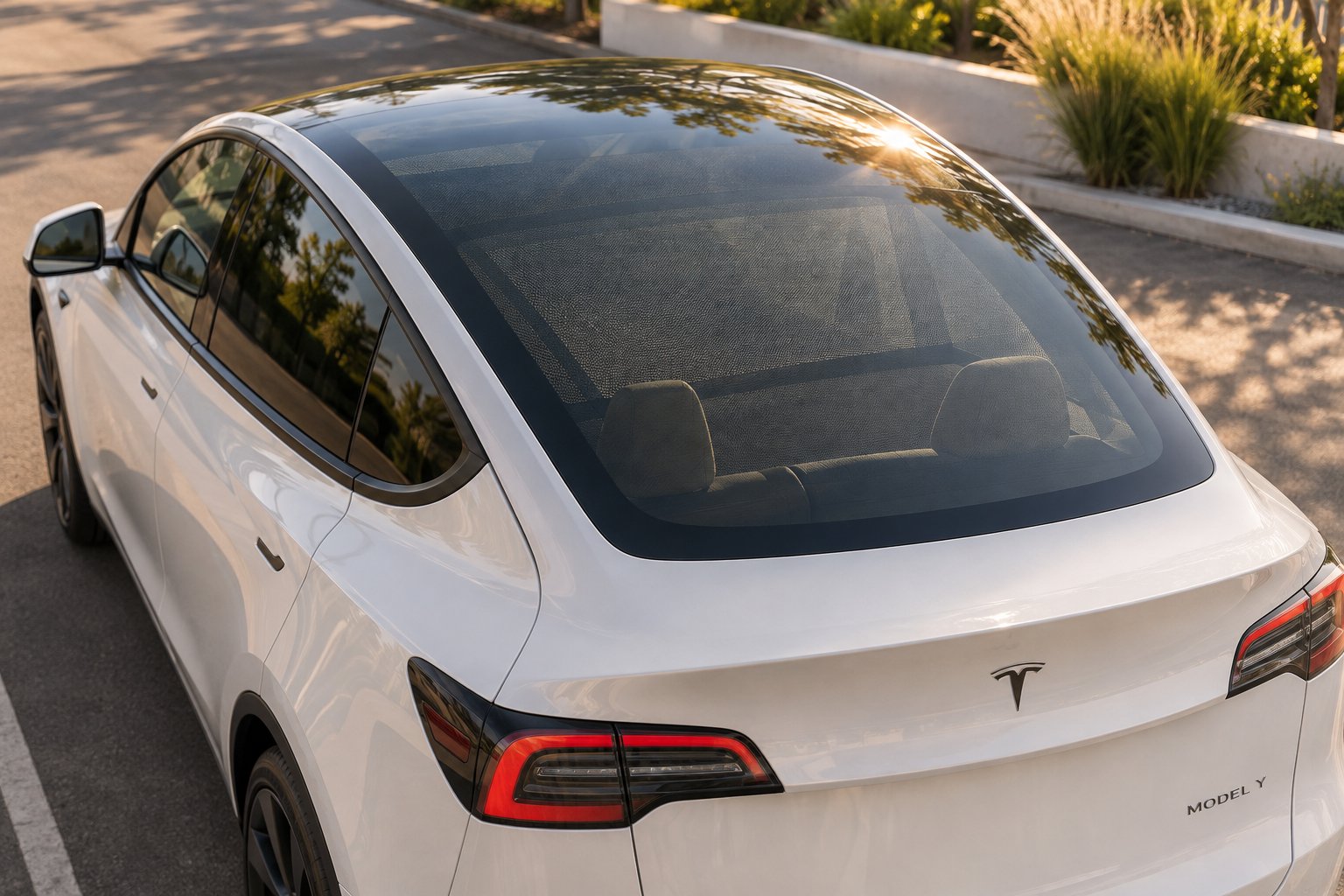
Imagine stepping into your parked Tesla on a July afternoon and feeling the heat press down from above like an invisible blanket. That warmth is not coming through the doors or the dashboard vents - it is radiating straight through the massive glass panel overhead. Every Tesla built since the Model 3 replaces the traditional metal roof with an expansive sheet of fixed glass, and that single design choice changes everything about how the cabin manages heat.
Fixed Glass Roof vs Traditional Sunroof
Here is a detail that still trips up many buyers: Tesla does not offer a sunroof you can slide open. The panel stretching from the windshield header to the rear glass is a sealed, single-piece panoramic roof - sometimes called a moonroof in automotive circles. Unlike the mechanized panoramic sunroof that older Model S vehicles featured before 2018, today's Model 3 glass roof has no tracks, no motor, and no ability to tilt or retract. The same fixed design carries over to the Model Y, making the common search for a "model y sunroof" a bit of a misnomer - what you actually have is a permanently closed glass panel.
That distinction matters for heat management. A traditional sunroof can vent hot air when cracked open. A fixed glass roof cannot. Every bit of solar energy that passes through the glass stays trapped inside the cabin until the climate system catches up.
The Greenhouse Effect Inside a Tesla
The physics are straightforward. Sunlight passes through the panoramic glass as short-wave radiation, strikes the seats, dashboard, and console, and converts into long-wave infrared energy. That infrared heat cannot easily escape back through the glass, so it accumulates. Measurements show a parked vehicle can exceed 60-70 degrees Celsius inside in under 20 minutes on a 30-degree day. Darker interior surfaces amplify the effect even further.
This greenhouse cycle is exactly why the tesla sunshade category exists and continues to grow - including news that Tesla launches an official retractable sunshade for Model Y vehicles. Owners are not buying shades for aesthetics. They are solving a real thermal problem that the glass roof introduces by design.
Tesla's glass roof delivers an unmatched sense of openness and light, but it introduces measurable thermal challenges that tesla window shades and roof sunshades are specifically engineered to address.
The glass itself is not unprotected, though. Tesla layers meaningful UV and infrared filtering into the roof panel from the factory - and understanding exactly what that built-in protection does (and where it falls short) is the key to choosing the right supplemental shade.
Understanding Tesla's Built-In Glass Roof Protection
Tesla did not leave that enormous glass panel completely defenseless. The roof is a multi-layer laminated assembly - two sheets of glass bonded around a polymer interlayer - with a proprietary infrared-reflective coating baked into the stack. This is not ordinary automotive glass. It is engineered to filter a meaningful share of solar energy before it ever reaches your head and shoulders. The real question is how much filtering is enough, and for which types of solar energy.
What Tesla's Factory Glass Already Blocks
Sunlight hitting the roof carries energy across three distinct wavelength bands, and Tesla's glass handles each one differently:
- Ultraviolet (UV) radiation - The laminated interlayer absorbs the large majority of UV rays. Tesla's glass roof blocks roughly 99% of UV radiation, which is why interior surfaces resist fading and why dermatologists consider the roof well above average for skin protection during normal commutes.
- Infrared (IR) radiation - The reflective coating targets near-infrared wavelengths, bouncing a portion of radiant heat away before it enters the cabin. This is the energy you feel as warmth on your skin and scalp, and Tesla's coating does reduce it - but it does not eliminate it entirely.
- Visible light - This is where the trade-off lives. The panoramic roof is designed to let natural light flood the cabin. Visible light passes through largely unimpeded, and it carries substantial energy with it.
So the glass earns high marks for UV defense and partial credit for IR rejection. Your skin and your leather seats are genuinely protected from ultraviolet degradation. That much is not in dispute.
Where Factory Protection Falls Short
Here is the gap most owners do not discover until their first summer: UV filtering and heat reduction are not the same thing. Visible light carries a significant share of solar energy - roughly 43% of what the sun delivers - and when it passes through the roof and strikes dark seats, a black center console, or a dashboard surface, those materials absorb it. That absorbed energy re-radiates as long-wave infrared heat inside the cabin, the same greenhouse mechanism that makes parked cars dangerously hot.
You will notice this effect most during stop-and-go traffic on a cloudless afternoon. The climate system runs harder, passengers in the rear seats feel a warm spot on their heads, and the steering wheel surface climbs well above the ambient temperature. Even with the AC blasting, radiant heat from above creates an uneven thermal experience that forced air alone struggles to correct.
This is precisely why a tesla roof shade adds a measurable layer of comfort. A physical sunshade - whether it is a mesh panel, a reflective fabric, or a foldable screen - intercepts visible light and radiant heat before they reach cabin surfaces. It is a barrier, not a film. It does not change the glass's factory UV rating or alter its optical properties. It simply prevents solar energy from entering the cabin in the first place, which is a fundamentally different approach than what the glass coatings provide.
Think of it this way: the factory glass is a filter, letting most light through while stripping out UV. A roof shade is a shield, blocking a broad share of all incoming solar radiation - UV, visible, and infrared alike. Products like the HaloBlk roof glass sunshade for Tesla Model 3 and similar aftermarket options typically reduce solar heat gain by roughly two-thirds, a meaningful drop that owners in warm climates feel immediately. The two layers of protection complement each other rather than overlap.
Tesla's factory glass is a UV champion and a heat compromise - your skin is well protected, but your comfort on a 95-degree afternoon is not fully solved by the glass alone.
With that thermal reality in mind, the next logical step is understanding which type of tesla sun shade actually matches your driving habits and vehicle - because the range of designs on the market is far wider than most buyers realize.
Every Type of Tesla Sunshade Explained
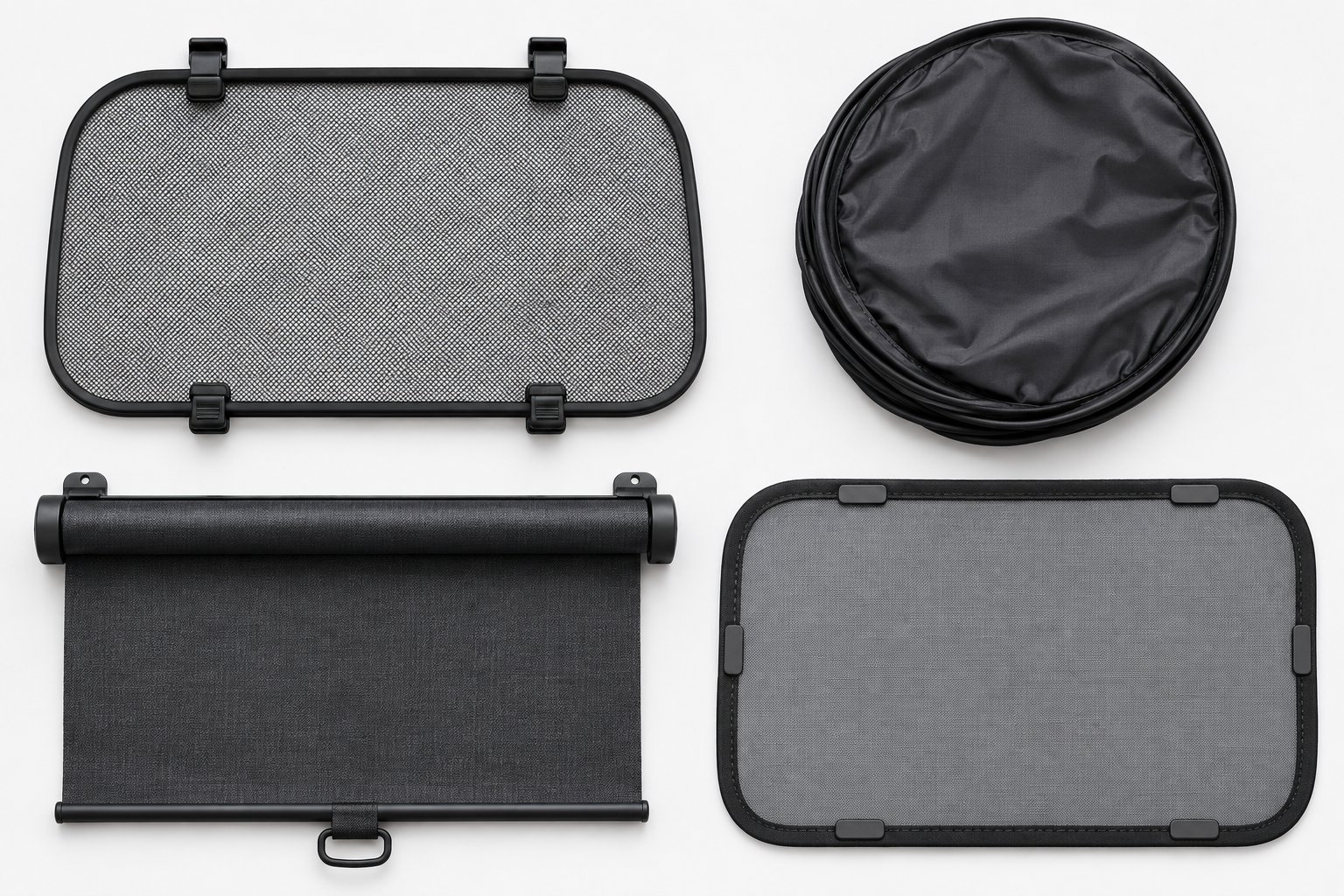
Walk into any Tesla accessories store - physical or online - and you will find dozens of sunshade options that all look vaguely similar in thumbnail photos. The differences only become obvious after you have already spent your money and tried to install the wrong type. The tesla glass roof sunshade market breaks down into five distinct design categories, each with a different balance of convenience, coverage, and aesthetic impact. Knowing which category fits your life before you shop is the single biggest factor in avoiding buyer's remorse.
Static Mesh and Clip-On Sunshades
This is the most common and most affordable design on the market. A static mesh sunshade is a lightweight fabric panel - usually a semi-transparent mesh or woven polyester - stretched over a rigid or semi-rigid frame. You press the frame against the underside of the glass roof and snap plastic clips or friction tabs into the channels along the roof frame.
The appeal is simplicity. There are no moving parts, no mechanisms to break, and the mesh sits nearly flush against the glass, which means minimal headroom loss. Most owners report losing less than half an inch of clearance. The trade-off? Removing the shade requires physically unclipping it and finding somewhere to stow it - usually the trunk. If you want light in the morning and shade at noon, you are pulling over and wrestling with a panel. Many popular model y sunshade options, including Tesla's own static OEM mesh panels, fall into this category. Triangular window shades for Tesla Model Y/3 Model 3 side glass follow a similar clip-in principle, just scaled to smaller panes.
Foldable and Collapsible Designs
Foldable sunshades solve the storage problem that static panels create. These use a flexible wire ring frame - similar to a pop-up car windshield shade - that allows the entire panel to twist and collapse into a compact disc roughly a third of its deployed size. You position the shade against the glass, and spring tension holds it in place, sometimes assisted by small clips or friction pads.
The advantage is obvious: when you do not need the shade, it folds down small enough to slide behind a rear seat or tuck into the trunk sub-floor. The disadvantage is equally clear. A flexible frame never fits as precisely as a rigid one. You may notice small gaps along the edges where light sneaks through, and the folding mechanism can lose tension over time, causing the shade to sag slightly away from the glass. For owners who remove and reinstall their shade frequently - say, commuters who want an open roof on cool mornings and coverage during the midday park - foldable designs hit the sweet spot between portability and performance.
Retractable and Roller-Style Shades
This is where the market is heading, and Tesla itself is leading the charge. A retractable shade uses a spring-loaded or reel-type roller mechanism permanently mounted inside the cabin. You pull a handle to extend the fabric across the glass and release it to retract the shade back into its housing - much like a manual window blind in your home.
Tesla's own official retractable sunshade for the Model Y, priced at approximately $220 USD, represents the premium end of this category. It uses a low-noise reel mechanism, matches the factory headliner fabric, and has passed Tesla's side-curtain airbag deployment testing - a safety detail that many aftermarket roller shades cannot claim. The shade is compatible with all 2020+ Model Y vehicles, including the Juniper redesign.
The convenience factor is unmatched: you go from full shade to open sky in two seconds without unclipping, folding, or storing anything. The downside is installation complexity - Tesla notes that mounting the roller frame requires at least two people - and the higher price point compared to passive shade designs. A few aftermarket brands also offer roller-style shades at lower prices, but fitment precision and airbag compatibility vary widely.
Magnetic and Multi-Piece Kits
Magnetic sunshades embed small magnets along the perimeter of the shade panel. You simply hold the shade near the roof frame, and the magnets snap it into alignment against the steel structural members hidden beneath the headliner trim. Installation takes seconds, removal takes even less, and there are no clips to break or lose.
The catch is that magnetic strength degrades with distance, and because Tesla's roof frame is partially aluminum in some areas, magnet placement has to be precise. A well-engineered magnetic sunshade for Tesla Model Y will map its magnet positions to the steel attachment points specific to that model and generation. A generic design will slip, sag, or refuse to hold altogether.
Multi-piece kits take a different approach to coverage. Instead of a single roof panel, these kits include two or three separate sections - a front roof panel, a rear roof panel, and sometimes a dedicated rear glass shade. This segmented design lets you mix and match: shade just the front seats on a commute, add the rear panel when kids are in the back, and deploy the full set for a parked camping session. The trade-off is juggling multiple pieces and making sure each one is aligned correctly without overlapping edges or leaving gaps between panels.
One concern comes up almost every time a new owner considers a roof shade: will it block the Autopilot cameras? The short answer is no. Tesla's roof-mounted cameras sit behind the windshield glass, not under the panoramic roof panel. A properly positioned roof sunshade sits entirely behind the camera housings and does not interfere with Autopilot, Navigate on Autopilot, or Full Self-Driving features. Windshield shades, on the other hand, must always be removed before driving - they cover the forward-facing cameras and would blind the system entirely.
To help you zero in on the right design for your routine, here is how the five types rank by ease of daily use - meaning how quickly you can deploy, adjust, and stow the shade during a normal week of driving:
- Retractable roller-style shades - Pull a handle, done. No removal or storage needed. The most seamless daily experience.
- Magnetic-attach shades - Snap on in seconds, pull off just as fast. Minimal effort, though you still need a storage spot.
- Foldable and collapsible shades - Quick to deploy, compact to store, but the folding and unfolding routine adds a step compared to magnets.
- Static mesh and clip-on shades - Reliable coverage once installed, but clipping and unclipping multiple attachment points takes more time and patience.
- Multi-piece kits - Maximum flexibility in coverage, but managing two or three separate panels daily is the most hands-on option of any category.
Every type works. The right choice depends on whether you value set-it-and-forget-it convenience, compact portability, or the ability to customize which sections of glass stay shaded. What none of these categories can help you with, though, is whether the shade you pick actually fits your specific Tesla - and that question is far trickier than most buyers expect. The difference between a Model Y pre-Juniper and a Model Y Juniper, or a Model 3 pre-Highland and a Highland, can mean the difference between a perfect fit and a shade that rattles, gaps, or refuses to clip in at all.
Model-by-Model Sunshade Compatibility Guide
That fitment gap between Tesla generations is not a minor inconvenience - it is the single most common reason owners end up returning sunshades. A product listing that says "fits Tesla Model Y" without specifying a year range is a red flag, because the Model Y you bought in 2022 and the Model Y your neighbor picked up in 2025 do not share identical roof glass geometry. The same story plays out across the entire Tesla lineup. Glass panel dimensions, curvature profiles, interior trim clip locations, and headliner mounting points all shift between generations, which means a sunshade engineered for one version will leave gaps, sag, or refuse to seat correctly in another.
Tesla's own shop underscores this reality. When you purchase a sunshade from shop.tesla.com, certain configurations require VIN verification before the order processes. That is not a bureaucratic inconvenience - it is Tesla acknowledging that even within a single model name, fitment is not universal. If Tesla itself insists on checking your VIN, you should demand the same precision from any aftermarket seller.
Model 3 and Model 3 Highland Sunshade Fitment
The original Model 3, produced from 2017 through 2023, features a fixed panoramic glass roof with specific edge dimensions and clip channel positions that an entire ecosystem of tesla model 3 sunshade products was designed around. When the Highland refresh launched in 2024, Tesla revised the interior trim, the sensor housing above the windshield, and the roof geometry enough that legacy Model 3 sunshades do not interchange with Highland. The no-stalk interior and revised A-pillar trim are visual reminders that 2024-2026 Model 3 Highland is a separate accessory family. A shade built for the 2017-2023 car will typically leave a visible bright strip along the edges when forced into a Highland roof opening, and clip tension will feel wrong almost immediately.
One exception worth noting: windshield sunshades have broader cross-generation compatibility because the windshield dimensions changed less dramatically. Some products explicitly list 2017-2026 Model 3 windshield coverage as a single SKU, but roof panels should always be purchased generation-specific.
Model Y and Model Y Juniper Sunshade Fitment
This is where the confusion is thickest right now, and it affects anyone shopping for a tesla model y glass roof sunshade. The standard Model Y, produced from 2020 through 2024, established its own roof glass footprint - similar in spirit to the Model 3 but physically distinct in width, curvature, and rear edge profile. Tesla model y sunshades designed for this generation are plentiful and well-reviewed.
The 2025 Juniper refresh changed the equation. The redesigned Model Y introduced enough exterior and cabin geometry changes that 2020-2024 roof shade listings should not be treated as safe shortcuts for Juniper owners. Juniper retains the physical turn-signal stalk - unlike Model 3 Highland's stalkless design - so do not confuse interior similarities between the two. If you own a 2025-2026 Model Y, look specifically for products labeled "Model Y Juniper" with the correct year range. A discounted older listing might save a few dollars upfront, but edge gaps and clip misalignment will cost you in daily frustration.
The Model Y L, a longer-wheelbase variant available in select markets, adds yet another dimension. While roof glass specifications for the Y L are closely related to the Juniper platform, always confirm with the seller whether their product has been tested on the extended variant.
Model S and Model X Considerations
Does Tesla have a sunroof on the Model S? Not anymore. Early Model S vehicles offered a retractable panoramic sunroof, but Tesla phased that out years ago. The refreshed 2021+ Model S features a fixed glass roof, bringing it in line with the Model 3 and Y philosophy - though with its own unique panel dimensions. Sunshade options for Model S are more limited than for the higher-volume Model 3 and Y, with windshield shades being the most readily available accessory.
Model X is a different animal entirely. Its signature falcon-wing doors and sweeping panoramic windshield that extends over the front seats create a glass geometry unlike anything else in the lineup. The windshield alone is massive, and covering it requires a dedicated, model-specific shade that accounts for its unique curvature and A-pillar angles. Roof glass coverage on the Model X is complicated further by the falcon-wing door openings, which alter the structural frame around the glass panels. Generic shades simply do not work here.
The table below consolidates everything into a single compatibility reference. Bookmark it, screenshot it, or pull it up on your phone before you click "add to cart" on any sunshade product:
| Tesla Model | Generation / Trim | Roof Glass Type | Sunshade Compatibility Notes | OEM Shade Available? |
|---|---|---|---|---|
| Model 3 | 2017-2023 (Legacy) | Fixed panoramic glass | Legacy-specific roof shades only; do not use Highland products | Yes - static mesh via Tesla Shop |
| Model 3 | 2024-2026 (Highland) | Fixed panoramic glass (revised geometry) | Highland-specific required; revised trim clips and sensor housing | Yes - static mesh via Tesla Shop |
| Model Y | 2020-2024 (Standard) | Fixed panoramic glass | Standard Model Y shades only; do not substitute Juniper products | Yes - static mesh via Tesla Shop |
| Model Y | 2025-2026 (Juniper) | Fixed panoramic glass (refreshed dimensions) | Juniper-specific required; official retractable shade also available | Yes - static mesh and retractable roller shade |
| Model Y L | 2025-2026 (Extended wheelbase) | Fixed panoramic glass | Closely related to Juniper platform; confirm fitment with seller | Limited - verify via VIN at Tesla Shop |
| Model S | 2021-2026 (Refresh) | Fixed panoramic glass | Model S-specific; smaller aftermarket selection than Model 3/Y | Limited - windshield shade available |
| Model X | 2021-2026 (Refresh) | Panoramic windshield + rear glass | Unique geometry due to falcon-wing doors; model-specific only | Limited - windshield shade available |
| Cybertruck | 2024-2026 | Fixed panoramic glass (largest panel) | Cybertruck-specific; larger panels require dedicated storage planning | Limited - check Tesla Shop availability |
The pattern is clear: model name alone is never enough information to guarantee a proper fit. You need the generation, the production year range, and ideally VIN-level verification for any roof-mounted shade. Sellers who dodge these details - listing simply "fits Model Y" or "universal Tesla sunshade" - are the ones most likely to ship you a product that leaves a 10mm bright strip along the edge or clips that pop loose after the cabin heats up.
Getting the fitment right is the foundation. The next decision - whether to buy Tesla's own OEM shade or choose from the aftermarket - introduces a different set of trade-offs entirely, especially with Tesla's newly announced retractable option reshaping the landscape.
Tesla's Official Sunshade Options and the Retractable Shade
Tesla does not just build the cars that create the solar heat problem - it also sells accessories designed to solve it. For years, the official Tesla Shop has stocked static mesh roof sunshades for the Model 3 and Model Y, giving owners an OEM option alongside the crowded aftermarket. More recently, Tesla raised the stakes by announcing a factory-engineered retractable sunshade for the Model Y, a move that signals the company finally treats cabin heat management as a first-party priority rather than an afterthought left to third-party brands.
Understanding what Tesla already offers - and what is arriving soon - puts you in a much stronger position before you spend a dollar on any tesla glass roof sunshade product.
Tesla's Static OEM Roof Sunshades
If you have browsed shop.tesla.com, you have probably seen the mesh roof sunshade kits listed under vehicle accessories. These are lightweight, semi-rigid mesh panels designed to clip directly into the roof frame channels of the Model 3 and Model Y. The material is a fine-weave polyester mesh that blocks a meaningful share of visible light and radiant heat while still allowing some ambient light to filter through - so the cabin stays shaded without feeling like a cave.
Installation follows the same general process as most clip-on aftermarket panels: align the frame with the glass, press the perimeter clips into the headliner channels, and verify full coverage with no gaps along the edges. Removal is the reverse - unclip, fold or stack the panels, and stow them in the trunk. For Model 3, Tesla bundles the roof shade as part of a broader sunshade kit that can include windshield and rear glass coverage. Model Y gets a similar treatment, with roof-specific and tesla model y window shades available as individual pieces or combined sets.
The advantage of buying OEM is guaranteed fitment. Tesla designed these panels against the exact CAD geometry of each model and generation, so there is no guessing about clip alignment or edge gaps. The trade-off is price - OEM accessories typically carry a premium over comparable aftermarket alternatives - and the inherent inconvenience of manual installation and removal every time you want to switch between shaded and open sky.
The Official Retractable Sunshade for Model Y
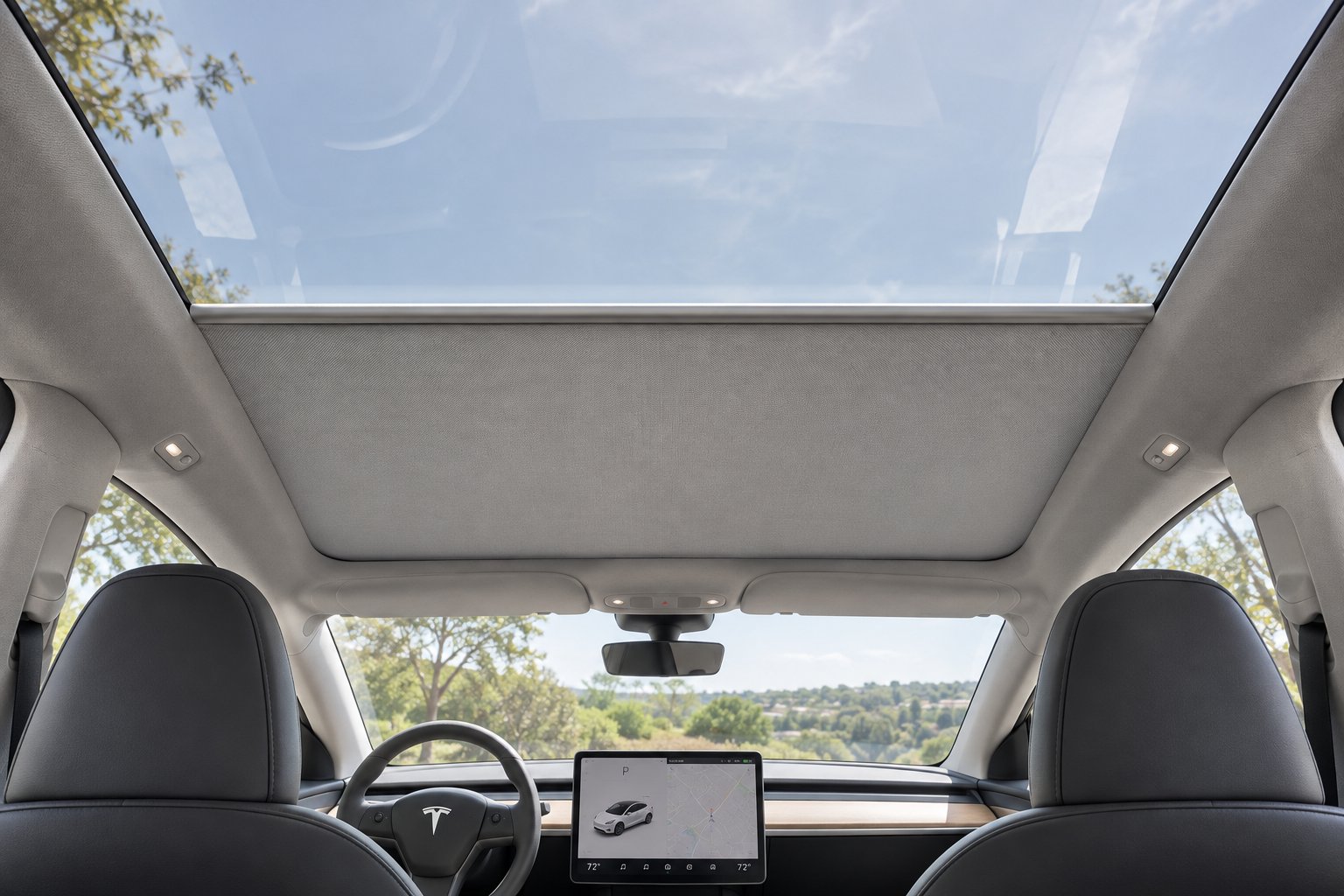
This is where things get genuinely interesting for Model Y owners. Tesla officially listed a premium retractable roof sunshade for the Model Y on the Tesla China Shop, priced at 1,499 RMB - roughly $220 USD. Unlike the static mesh panels that require hands-on clipping and unclipping, the retractable shade uses a permanently mounted reel-type roller mechanism. You pull a metallic-textured grab handle to extend the fabric across the glass, and release it to retract the shade back into its housing. Two seconds from shaded to open sky, with zero panels to remove and nothing to stow in the trunk.
The engineering details separate this tesla electric sunshade concept from cheaper roller alternatives floating around the aftermarket. Tesla matched the shade fabric to the vehicle's factory headliner material, so the installed product looks like it rolled off the assembly line rather than something bolted on afterward. More importantly, the retractable shade has undergone full-vehicle airbag deployment testing - a safety certification that addresses the legitimate concern about aftermarket roof frames interfering with side-curtain airbags during a collision. Few third-party roller shades can make that claim.
Compatibility is broader than you might expect. The retractable shade fits all 2020 and later Model Y vehicles, including the 2025 Juniper redesign. Tesla requires you to sign in to the store with your account, which links to your VIN, ensuring the correct shade variant ships to your door. Installation does demand at least two people due to the structural frame that anchors the roller mechanism, and Tesla offers professional installation through its Service Centers for an additional fee.
Here is the catch that affects most readers outside China: the retractable shade initially launched exclusively on the Chinese market, with sales opening in mid-2026. A Tesla Australia spokesperson confirmed that accessories are expected to become available outside China "in the future," though no firm timeline has been announced for North America, Europe, or other regions. The global rollout will likely follow, given the product's broad compatibility and strong demand - but "likely" and "available today" are two very different things.
Owners who want shade today have proven OEM and aftermarket options available right now, while the retractable sunshade represents a future convenience upgrade worth watching - but not necessarily worth waiting for if summer heat is already a daily frustration.
So should you wait? If you live in a market where the retractable shade is already available, and you value seamless daily convenience over upfront savings, it is a compelling buy at roughly $220. If you are outside China and facing another summer with an unshaded glass roof, a static OEM mesh panel or a well-reviewed aftermarket option solves the thermal problem today - and you can always upgrade to the retractable shade once it reaches your region. Either way, buying something now and upgrading later costs far less in comfort than spending months with an unshaded roof hoping the retractable option shows up before August.
Whichever direction you choose - static mesh, retractable roller, or aftermarket alternative - the product only works if you install it correctly. And that step, surprisingly, is where a lot of owners stumble.
How to Install and Remove a Tesla Roof Sunshade
You have picked the right type, confirmed your model and generation, and a box just showed up at your door. The shade itself is in your hands. This is the step where an alarming number of owners go wrong - not because installation is difficult, but because they skip small details that turn a 90-second job into a frustrating 15-minute battle with clips that will not seat and edges that refuse to lie flat. Whether you are working with a clip-on mesh panel, a foldable tesla sunroof shade, or a magnetic design, the process follows a similar arc: prepare the surface, position the panel, secure the attachment points, and verify coverage.
Preparing Your Glass Roof for Installation
Start before you even unfold the sunshade. Dust, oily fingerprints, and residue on the interior face of the glass create friction problems that cause clips to slide out of position and magnetic shades to lose grip. Grab a clean microfiber cloth - dry or lightly dampened with water - and wipe the interior glass surface from front to rear. Avoid glass cleaners with ammonia, which can degrade tint films or leave a hazy residue on Tesla's coated glass. A quick wipe takes 30 seconds and makes every attachment method work noticeably better.
While you are up there, identify the clip channels. On Model 3 and Model Y vehicles, a narrow gap runs along the perimeter where the headliner trim meets the glass edge. This channel is where friction clips or snap tabs seat themselves. Run your finger along it to feel for any debris or trim misalignment. For magnetic designs, the attachment points correspond to steel structural members hidden beneath the headliner - you will feel the magnets "grab" when you hold the shade near the correct spots. Owners of a tesla model s sunshade will find similar headliner channels, though the clip spacing differs from the Model 3 and Y due to the sedan's wider roof panel.
Positioning and Securing the Sunshade
Most popular shades - including Tesla's own OEM mesh kits - ship as two-piece systems: a front panel and a rear panel. Teslarati's installation guide recommends starting with the front panel. Hold the shade with the label facing down toward the cabin (not against the glass), center it between the left and right edges, and press each corner firmly into the clip channel. You should hear a subtle pop or click when the clip locks into place. Repeat with all four corners, then run your hand along the perimeter to confirm the frame sits flush with no buckling.
Here is the sequence that works reliably across clip-on, foldable, and magnetic designs:
- Unpack and unfold. Remove the shade from its storage pouch and extend it to full size. For foldable designs, twist the wire frame open and let it settle into shape for a few seconds before positioning.
- Orient the panel correctly. Most shades have a label marked "front" or "rear" and a designated glass-facing side. Placing it upside down puts the clips on the wrong plane and the shade will not seat.
- Center the front panel first. Align the leading edge with the windshield header area and the trailing edge with the midpoint of the glass roof. Press the front two corners into the clip channels or allow magnets to engage.
- Secure all attachment points. Work from front corners to rear corners. For clip-on panels, press firmly on each corner until you feel or hear the snap. For magnetic shades, slide the panel slightly until the magnets lock onto the steel frame members beneath the headliner.
- Install the rear panel. Butt the leading edge of the rear panel against the trailing edge of the front panel, leaving no visible light gap between them. Secure the rear corners last.
- Inspect for gaps. Sit in the driver seat and look up. Light bleed along the edges means a clip has not fully engaged or the panel is shifted slightly off-center. Adjust and re-press any loose corners.
A common worry among first-time installers is headroom. Will the shade hang down and brush your hair? On a well-designed model y roof shade or Model 3 equivalent, the panel sits within a few millimeters of the glass surface - close enough that you will not notice it from the driver seat. Foldable shades may introduce slightly more sag at the center due to their flexible frame, but even those typically stay well above head height for passengers up to six feet tall. The only scenario where headroom becomes a genuine issue is with poorly engineered aftermarket products that use thick, rigid frames or brackets that protrude significantly below the glass plane.
Quick Removal for Daily Flexibility
Removing the shade should be just as fast as installing it - and for magnetic and foldable designs, it often takes less than ten seconds. Magnetic panels pull straight down with a gentle tug. Foldable shades unclip, twist into their collapsed disc shape, and slide into a storage pouch. Clip-on mesh panels require a bit more effort: press the release tabs on each corner, lift the panel free, and stack the front and rear pieces together for storage.
How fast can you realistically switch between shaded and open? Magnetic designs: under 10 seconds per panel. Foldable designs: roughly 15-20 seconds including the fold. Static clip-on panels: 30-60 seconds depending on how many attachment points your model uses. Retractable roller shades - covered in the previous section - beat them all at roughly two seconds, but they require a one-time permanent installation rather than a daily deploy-and-stow routine.
For owners who alternate between wanting the open tesla moonroof feel on cool mornings and full shade during a hot afternoon commute, the removal speed of your chosen design directly impacts how often you actually use it. A shade that takes too long to remove tends to stay permanently installed - or permanently stowed in the trunk - neither of which gives you the flexibility the glass roof was designed to provide. A tesla model s sunshade follows the same logic: choose the attachment method that matches how often you plan to switch between open and shaded driving.
Installation and removal are skills you master on the first try. The bigger variable in how much value you get from your sunshade is something most owners never consider until the seasons change: where you live and how your climate shapes the way you should actually use the shade throughout the year.
Climate and Seasonal Guide for Tesla Sunshade Use
A driver baking through July in Phoenix and a driver cruising through October in Seattle have wildly different relationships with their tesla glass roof. Same panoramic panel, same greenhouse physics - but the urgency of shading that glass swings from non-negotiable survival gear to a nice-to-have seasonal accessory depending on where you park every night. Most sunshade guides skip this context entirely, treating every owner's situation as identical. Yours is not.
Hot Climate Essentials
If you live anywhere the summer dashboard reading regularly pushes past 100 degrees Fahrenheit - the American Southwest, Southern Europe, the Middle East, or much of Australia - a roof sunshade is not an upgrade. It is baseline equipment. The tesla glass roof in these regions absorbs relentless direct sun for hours at a time, and even with Tesla's factory IR-rejection coating, cabin temperatures in a parked vehicle can climb to dangerous levels within minutes.
Tesla's own Model 3 Owner's Manual explicitly recommends using a sun shade - available on the Tesla Shop - when parking outside in the sun. That recommendation exists because Cabin Overheat Protection, while effective, draws energy directly from the battery pack to keep the interior below 105 degrees Fahrenheit. A physical roof shade reduces the thermal load the climate system has to fight, which means less battery drain while parked and a faster cabin cool-down when you precondition before driving. In a climate where you precondition daily for eight months of the year, that energy savings compounds meaningfully over time.
For hot-climate owners, the recommendation is straightforward: install the shade in early spring and leave it in place through late fall. There is almost no scenario between April and October where you would want unfiltered sun pouring through the roof while the car sits in a parking lot.
Four-Season and Moderate Climate Strategy
Moderate climates - think the Mid-Atlantic, Pacific Northwest, Northern Europe, or the temperate zones of Japan and Korea - introduce a genuine seasonal calculation. From roughly May through September, the glass roof behaves much like it does in a hot climate: solar heat gain is noticeable, rear passengers feel the warmth on their heads, and the A/C works harder than it should. A tesla sunshade model y or Model 3 roof shade earns its keep during these months.
But here is the twist that hot-climate owners never face: during winter, that same unshaded glass roof becomes an asset. Low-angle winter sun streaming through the panoramic panel passively warms the cabin, reducing the load on the heater and stretching your range slightly on cold commutes. Removing the shade for the cooler months lets you recapture that free solar warmth - a small but real efficiency benefit that foldable or magnetic designs make easy to take advantage of, since they stow compactly in the trunk sub-floor between seasons.
The practical playbook for four-season owners: install the shade when daytime highs consistently top 75 degrees, and pull it off once temperatures drop below that threshold for the season. You will cycle through roughly two shade changes per year, which is why a design that removes and reinstalls quickly - magnetic or foldable - often makes more sense here than a permanently mounted retractable option.
Camping and Overnight Privacy Use Cases
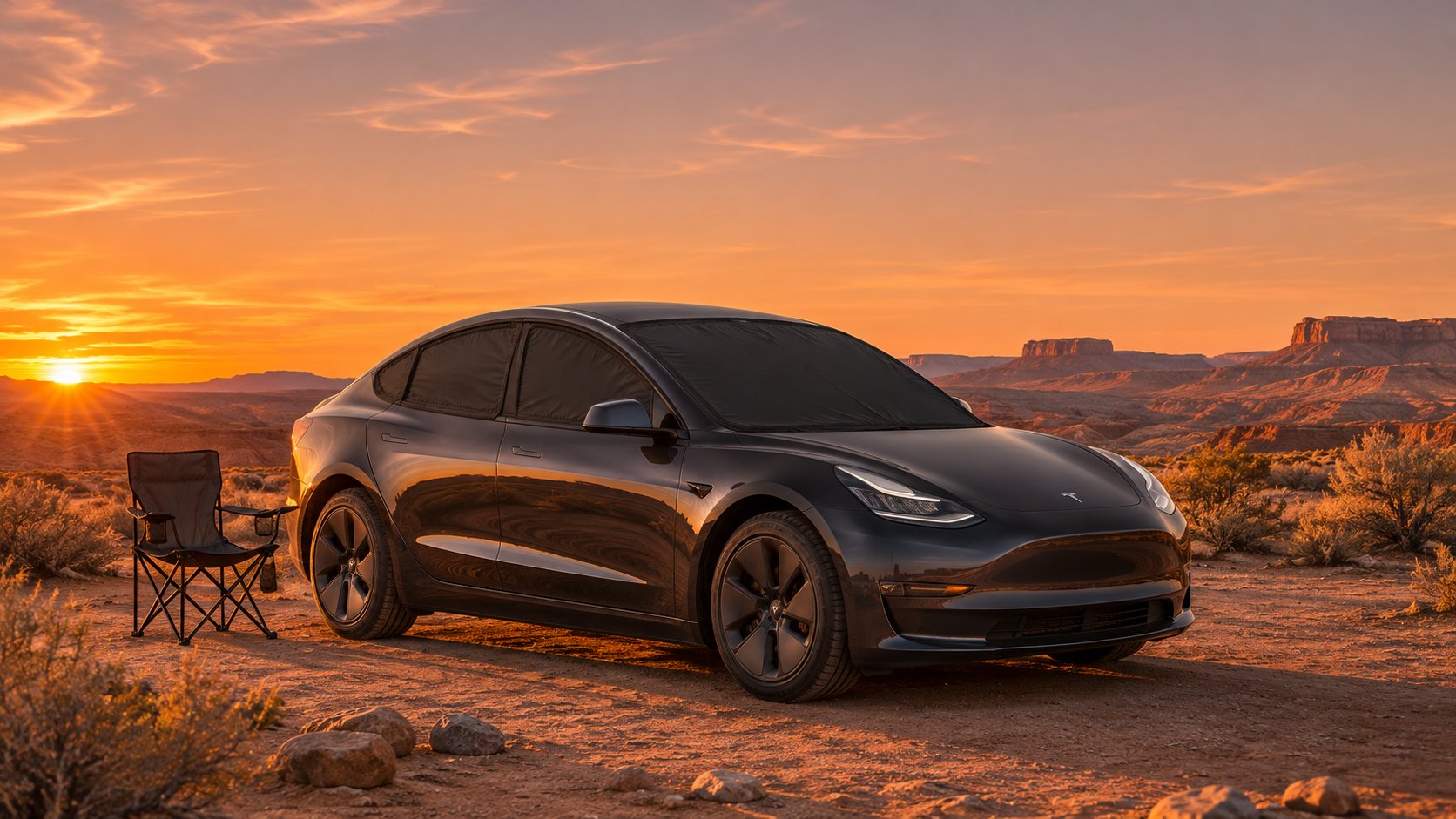
Climate zones aside, there is one use case where every Tesla owner benefits from full window coverage regardless of geography: car camping. When you activate Camp Mode, the vehicle maintains your set cabin temperature and keeps USB and 12V outlets powered through the night. The climate system handles the thermal side beautifully - but it cannot do anything about the glass walls broadcasting your sleeping setup to every passerby at a rest stop or campground.
Privacy is the reason most camping owners buy a full window shade set before their second overnight trip. A roof sunshade alone blocks the overhead light that wakes you at 5:45 a.m., but a complete kit - covering the roof, all side windows, and the rear glass - creates genuine blackout conditions and visual privacy from every angle. For tesla x sunshade owners, the Model X's expansive panoramic windshield makes front coverage especially important, since the glass extends so far overhead that dawn light floods the cabin earlier than in any other Tesla model.
The camping math also changes the climate equation. Camp Mode's overnight battery draw scales with the temperature gap between outside air and your set point - owner reports cluster around 1% per hour in mild weather, but a genuinely hot night can push 15-25% overnight. A full shade set acts as insulation, reducing the thermal load the climate system fights all night and stretching your battery further. If you camp at a site without a charging pedestal, that efficiency gain translates directly into extra driving range the next morning. Products like the 3W foldable car sunshade for Tesla Model Y Juniper 2025-2026 pair well with side and rear window panels to build a complete overnight coverage system.
A tesla x sunshade kit combined with side-window covers is particularly effective for Model X camping setups, where the falcon-wing doors and massive front glass create more exposed surface area than any other vehicle in the lineup.
| Climate Type | Sunshade Priority Level | Recommended Coverage | Seasonal Usage Notes |
|---|---|---|---|
| Hot and sunny (Southwest US, Middle East, Australia) | Essential - near year-round | Roof + windshield minimum; full vehicle ideal | Install in early spring, leave through late fall; remove only during mild winter weeks if desired |
| Moderate four-season (Mid-Atlantic, Pacific NW, Northern Europe) | Highly beneficial - seasonal | Roof shade primary; add windshield for parked heat reduction | Install May through September; remove in winter to capture passive solar cabin warmth |
| Northern or overcast (Scandinavia, UK, Pacific coastal) | Optional - summer months | Roof only for most owners | Deploy during June through August peak sun; unnecessary most of the year |
| Camping and overnight (any climate) | Essential for privacy and insulation | Full vehicle: roof + all side windows + rear glass | Deploy complete set whenever sleeping in the vehicle; reduces Camp Mode battery draw overnight |
Climate determines how urgently you need a shade, and it also influences how often you remove and reinstall it - which circles back to the attachment mechanism you chose earlier. A permanent retractable shade suits a Phoenix owner who never wants the sun unfiltered. A foldable design suits a New England commuter who swaps seasonally. And a full multi-piece kit suits the camping enthusiast who needs blackout coverage for one weekend a month. The shade itself is the same product in all three cases - the difference is how your environment shapes the way you actually live with it. What often gets overlooked in that daily living, though, is the mundane but important question of what happens to the shade when it is not on the roof: where it goes, how you keep it in good condition, and how long you can expect it to last.
Storage and Maintenance Tips for Tesla Sunshades
A sunshade that spends six months crumpled in the trunk or shoved behind a seat loses its shape, its tension, and eventually its ability to sit flush against the glass. The unglamorous truth about owning a tesla glass roof sunshade is that how you store and maintain it between uses determines whether it still works properly a year from now - or whether you are shopping for a replacement next spring.
Compact Storage Solutions
Where should the shade go when it comes off the roof? The answer depends entirely on which design you bought. Foldable and collapsible shades win the storage contest outright - their twist-flat wire frames compress into a disc roughly 12 to 15 inches in diameter, small enough to slide into the trunk sub-floor compartment beneath the cargo area in a Model 3 or Model Y. Many ship with a dedicated drawstring or zippered storage pouch that keeps the collapsed shade contained and protects the mesh from snagging on other cargo.
Static clip-on panels are bulkier. A two-piece roof set typically stacks into a flat rectangle about the size of a laptop bag, and it does not fold any further. The trunk sub-floor can usually accommodate one set, but adding a windshield shade or a tesla model y retractable sunshade housing to that same compartment starts a game of Tetris. Some owners store rigid panels in the rear seat footwell during seasons when the shade stays off, while others keep a slim nylon sleeve in the trunk specifically for panel storage. The key is avoiding anything that puts sustained pressure on the clip attachment points - stacking heavy grocery bags on top of a stored shade panel is a reliable way to warp the clips over time.
Retractable roller shades, of course, skip this problem entirely. The roller housing stays mounted in the vehicle year-round, and the fabric retracts into it when not deployed. Nothing to stow, nothing to fold, nothing to lose. It is the single strongest argument for the retractable format if you live in a four-season climate where the shade goes on and off multiple times per year.
Cleaning and Long-Term Care
Dust settles on any surface that stays inside a car for months at a time, and mesh sunshades are no exception. Fortunately, keeping them clean takes almost no effort. Most mesh and woven polyester panels - including Tesla's OEM shades - respond well to a simple wipe-down with a damp microfiber cloth. Fabric-backed or insulated designs, like those with foam-core reflective layers, benefit from a light vacuuming with a soft brush attachment to pull dust out of the weave without distorting the material.
Avoid the impulse to throw the shade in the washing machine or soak it in a bucket. Machine washing and prolonged soaking can weaken the mesh, distort the frame, and degrade magnetic mounting performance. Harsh chemicals - bleach, ammonia-based glass cleaners, and abrasive detergents - do more harm than good. A mild soap-and-water solution on a soft cloth handles any stubborn spots without risking damage.
Longevity is really a materials question. Budget shades built with thin polyester mesh and plastic frames tend to degrade after one or two summers of constant UV exposure - the mesh fades, the frame loses rigidity, and the clips crack. Higher-quality shades use UV-stabilized mesh fabrics and reinforced metal or composite frames that maintain their shape and blocking performance over multiple seasons. When you are comparing two products at different price points, the frame construction and mesh density are where the long-term value difference lives.
Here are the maintenance habits that extend your shade's useful life:
- Wipe mesh panels with a dry or lightly damp microfiber cloth every one to three months to prevent dust buildup.
- Store shades completely dry - trapping moisture inside a storage pouch promotes mildew and weakens adhesive-backed components.
- Keep stored shades flat or gently folded, never bent at sharp angles that stress the frame.
- Inspect clip and magnet attachment points at the start of each season for cracks, looseness, or reduced holding strength.
- Avoid leaving removable shades on the dashboard or rear shelf in direct sunlight when not installed - ironically, UV exposure degrades uninstalled shades faster than those sitting in their intended position against the coated roof glass.
One last note on portability: because every tesla model 3/y side window sunshade and roof panel is engineered for a specific model and generation, lending your shade to a friend with a different Tesla or transferring it between vehicles rarely works. A Model Y shade will not fit a Model 3. A pre-Highland Model 3 shade will not fit a Highland. Treat your sunshade as permanently married to the vehicle it was bought for, and plan accordingly if you sell the car or upgrade to a newer generation.
With storage habits and maintenance covered, the remaining question is the most practical one of all: how do you actually evaluate the options in front of you and decide which shade to buy? The answer comes down to a short list of features that separate a confident purchase from an expensive guess.
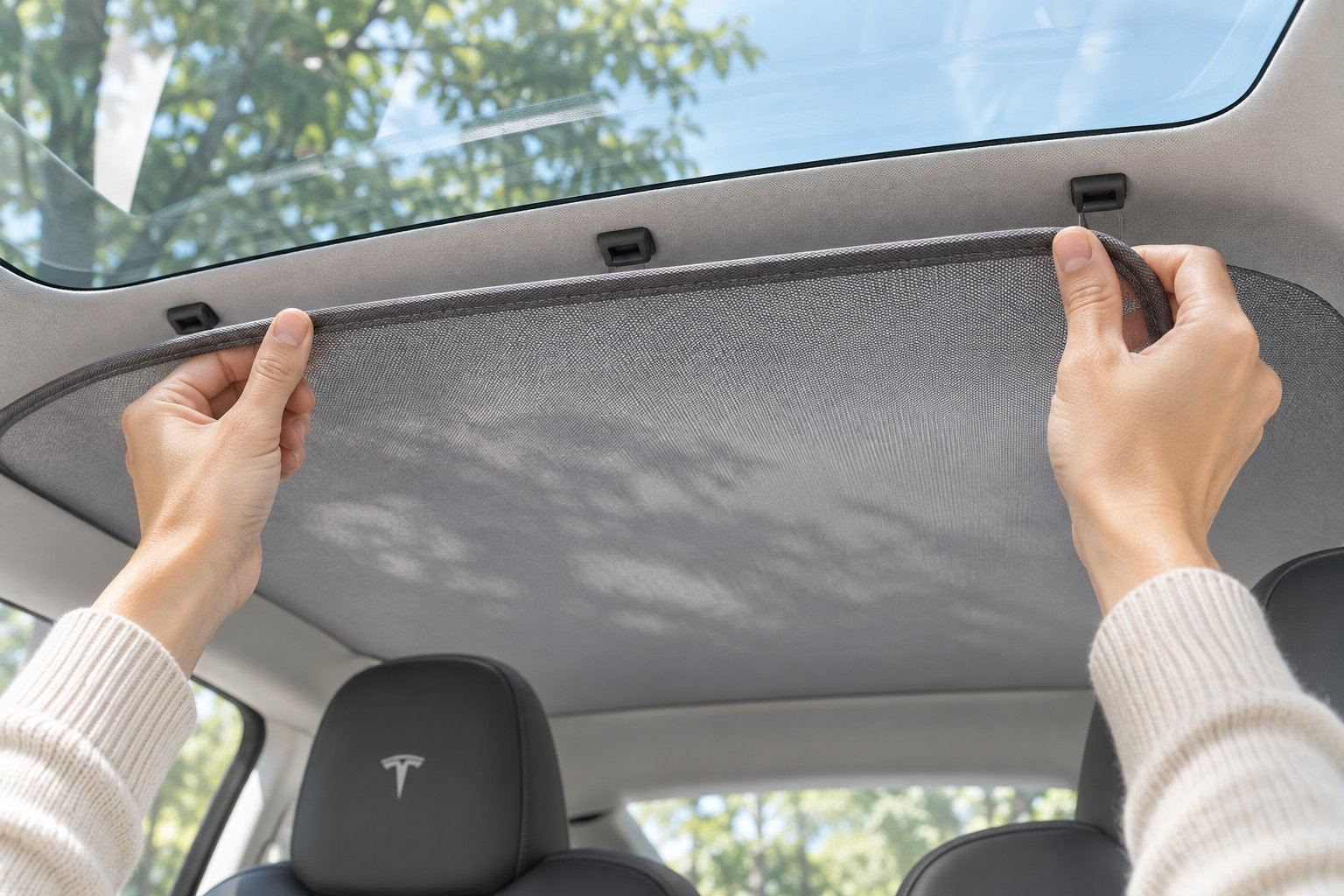
How to Choose the Right Tesla Glass Roof Sunshade
You have the thermal science, the compatibility matrix, the installation steps, and the climate strategy. The only thing left is pulling the trigger on an actual purchase - and this is the exact moment where eight chapters of knowledge either saves you from a bad buy or gets ignored in favor of whatever shows up first on a search results page. The difference between a confident purchase and an expensive guess comes down to a handful of features you can evaluate before anything ships to your door.
Key Features to Compare When Shopping
Every tesla glass roof sunshade listing highlights slightly different selling points, which makes apples-to-apples comparison difficult unless you know which variables actually matter. Material density is the single biggest performance differentiator. A shade advertising 85-90% light blockage uses a tighter mesh weave than one at 60-70%, and that density gap translates directly into how much heat reaches your cabin. Look for specific percentage claims rather than vague terms like "premium mesh" or "high-quality fabric" - numbers you can compare, marketing language you cannot.
Attachment mechanism deserves equal scrutiny. Clip-on systems are the most secure but take the longest to deploy. Magnetic designs offer speed at the potential cost of stability on rough roads. Retractable options eliminate the deploy-stow cycle entirely but cost more upfront. Match the mechanism to the daily routine you described for yourself back in the climate section - a Phoenix commuter who never removes the shade has different needs than a Boston driver who swaps seasonally.
Coverage area is the third pillar. A single-panel roof shade protects the front and rear glass overhead, but it does nothing about the windshield or side windows. Many owners shopping for a tesla sunshade model 3 or a tesla model y 2020-2025 sun shade start with just the roof panel and later realize that windshield heat is an equally serious problem when parked outdoors. Knowing your coverage goal upfront - roof only, roof plus windshield, or full vehicle - prevents piecemeal purchases that end up costing more than a coordinated set.
| Feature | Why It Matters | What to Look For |
|---|---|---|
| Material Density | Directly determines how much light and radiant heat the shade blocks | Mesh with 70-90% light blockage rating; UV-stabilized fabric for longevity |
| Attachment Method | Controls daily convenience and how often you will actually use the shade | Clips for permanence, magnets for speed, retractable for seamless switching |
| Coverage Area | Determines which glass surfaces receive protection | Roof-only panels for basic heat reduction; multi-panel kits for full-cabin coverage |
| Fitment Precision | Gaps along edges defeat the purpose and look sloppy | Products listing your exact model, generation, and year range - not "universal fit" |
| Frame Construction | Cheap frames warp, crack, and lose clip tension within one season | Metal or composite frames over all-plastic; reinforced clip attachment points |
| Storage Footprint | A shade too bulky to stow conveniently tends to stay permanently installed or permanently unused | Foldable designs under 15 inches collapsed; included storage pouch or bag |
| Price vs. Value | OEM guarantees fitment at a premium; aftermarket can match performance at lower cost | Compare per-panel cost across OEM and well-reviewed aftermarket options for your model |
The cost-benefit calculation is worth stating plainly. Tesla's OEM shades carry guaranteed fitment and brand consistency - you know the clips will seat properly and the material will match your interior aesthetic. That assurance comes at a premium price point, often 30-50% higher than comparable aftermarket options. Well-reviewed aftermarket products like the HaloBlk roof glass sunshade for Tesla Model Y or similar model-specific designs can deliver equivalent thermal performance and solid fitment at a lower cost, provided you verify compatibility against the generation chart covered earlier. Neither path is wrong - it depends on whether you prioritize brand assurance or budget efficiency.
Building a Complete Sunshade Set
Most owners begin with a tesla model 3 roof shade or Model Y roof panel because the overhead glass is the most obvious source of heat. That initial purchase solves roughly half the problem. Within a few weeks of hot-weather driving, many discover that the windshield contributes just as aggressively to cabin heating when the car sits in a parking lot. Side-window shades follow next, especially for owners with rear-seat passengers or children in car seats. The rear glass panel rounds out the set for anyone who camps overnight or wants full privacy coverage.
Building this set piece by piece often means mismatched materials and inconsistent attachment methods between panels from different brands. A more efficient approach is sourcing from a single supplier that organizes options by vehicle model and glass panel type. CUTIM's Tesla sunshades collection does exactly this - it groups roof, windshield, side-window, and rear-window shades by vehicle generation, making it straightforward to match the correct shade to each glass surface in one place. This is particularly useful for owners following the camping and full-coverage guidance from earlier sections, where coordinated panel coverage makes the difference between a comfortable overnight setup and a cabin that leaks light and heat from every angle. For anyone searching for a tesla model 3 sunroof shade or a complete Model Y set, having all panel options organized on a single page eliminates the guesswork of cross-referencing multiple storefronts.
Whether you buy everything at once or build your set over time, the shopping process follows the same logical sequence. Here is the checklist that keeps the decision clean:
- Identify your exact Tesla model and generation. Model name alone is never enough - confirm whether you have a pre-Highland or Highland Model 3, a pre-Juniper or Juniper Model Y, or a refresh Model S or X.
- Decide which glass panels to cover. Roof only for basic heat reduction, roof plus windshield for parked-car protection, or full vehicle for camping and maximum thermal control.
- Choose your preferred attachment mechanism. Clip-on for set-and-forget reliability, magnetic for quick daily changes, foldable for compact seasonal storage, or retractable for seamless switching.
- Compare options across OEM and aftermarket. Check material density ratings, frame construction quality, and customer reviews that specifically mention your model year and generation. CUTIM's collection is a strong starting point for browsing organized by vehicle and panel type.
- Verify fitment before purchasing. Confirm the product explicitly lists your production year range. If buying from Tesla's shop, use VIN verification. If buying aftermarket, contact the seller with your VIN if any doubt exists.
The owners who end up happiest with their purchase are the ones who treated it like any other vehicle-specific accessory decision: identify the exact car, define the coverage goal, match the mechanism to daily habits, and verify fitment before checkout. The owners who end up frustrated - the ones this article's title is about - skipped one of those steps and ended up with a shade that gaps, sags, rattles, or sits unused in the trunk because it is too inconvenient to deploy. You now have every piece of information needed to land in the first group.
Tesla Glass Roof Sunshade FAQs
1. Does Tesla have a sunroof you can open?
No. Every Tesla built since the Model 3 uses a fixed, sealed panoramic glass roof - sometimes called a moonroof - rather than a traditional retractable sunroof. Early Model S vehicles offered an operable panoramic sunroof, but Tesla discontinued that feature after 2018. Because the glass cannot be opened or tilted to vent hot air, a physical sunshade becomes the primary way to manage solar heat gain inside the cabin.
2. Do Tesla glass roof sunshades block Autopilot cameras?
Roof sunshades do not interfere with Autopilot or Full Self-Driving cameras. Tesla's roof-mounted cameras sit behind the windshield glass, not beneath the panoramic roof panel, so a properly positioned roof shade sits entirely behind the camera housings. However, windshield sunshades must always be removed before driving because they cover the forward-facing cameras. When shopping for a full coverage set - such as those organized by vehicle and panel type in CUTIM's Tesla sunshades collection - just remember that windshield shades are for parked use only.
3. Are Tesla Model Y sunshades interchangeable between the standard and Juniper versions?
They are not interchangeable. The 2025 Model Y Juniper refresh altered the roof glass dimensions, interior trim clips, and headliner geometry enough that sunshades designed for the 2020-2024 standard Model Y will leave edge gaps or fail to clip securely in a Juniper. Always confirm the product listing specifies your exact generation and production year range. Tesla's own shop uses VIN verification for this reason, and reputable aftermarket sellers clearly separate pre-Juniper and Juniper SKUs.
4. How much does Tesla's official retractable sunshade for Model Y cost?
Tesla listed the retractable roof sunshade at approximately 1,499 RMB, or roughly $220 USD, on the Tesla China Shop. It features a permanently mounted roller mechanism, factory-matched headliner fabric, and has passed Tesla's side-curtain airbag deployment testing. The shade fits all 2020 and later Model Y vehicles, including the Juniper redesign. As of mid-2026, broader global availability outside China has not been confirmed with a firm date, so owners in other markets may want to consider proven static or aftermarket options in the meantime.
5. Is a Tesla glass roof sunshade worth it in cooler climates?
In moderate or northern climates, a roof sunshade is most valuable from late spring through early fall when solar heat gain is noticeable. During winter months, removing the shade lets low-angle sunlight passively warm the cabin, reducing heater load and stretching battery range slightly. Foldable or magnetic designs work best for seasonal swapping since they stow compactly in the trunk sub-floor. For owners who also camp in their Tesla, a full shade set covering the roof, side windows, and rear glass provides privacy and thermal insulation regardless of climate.