
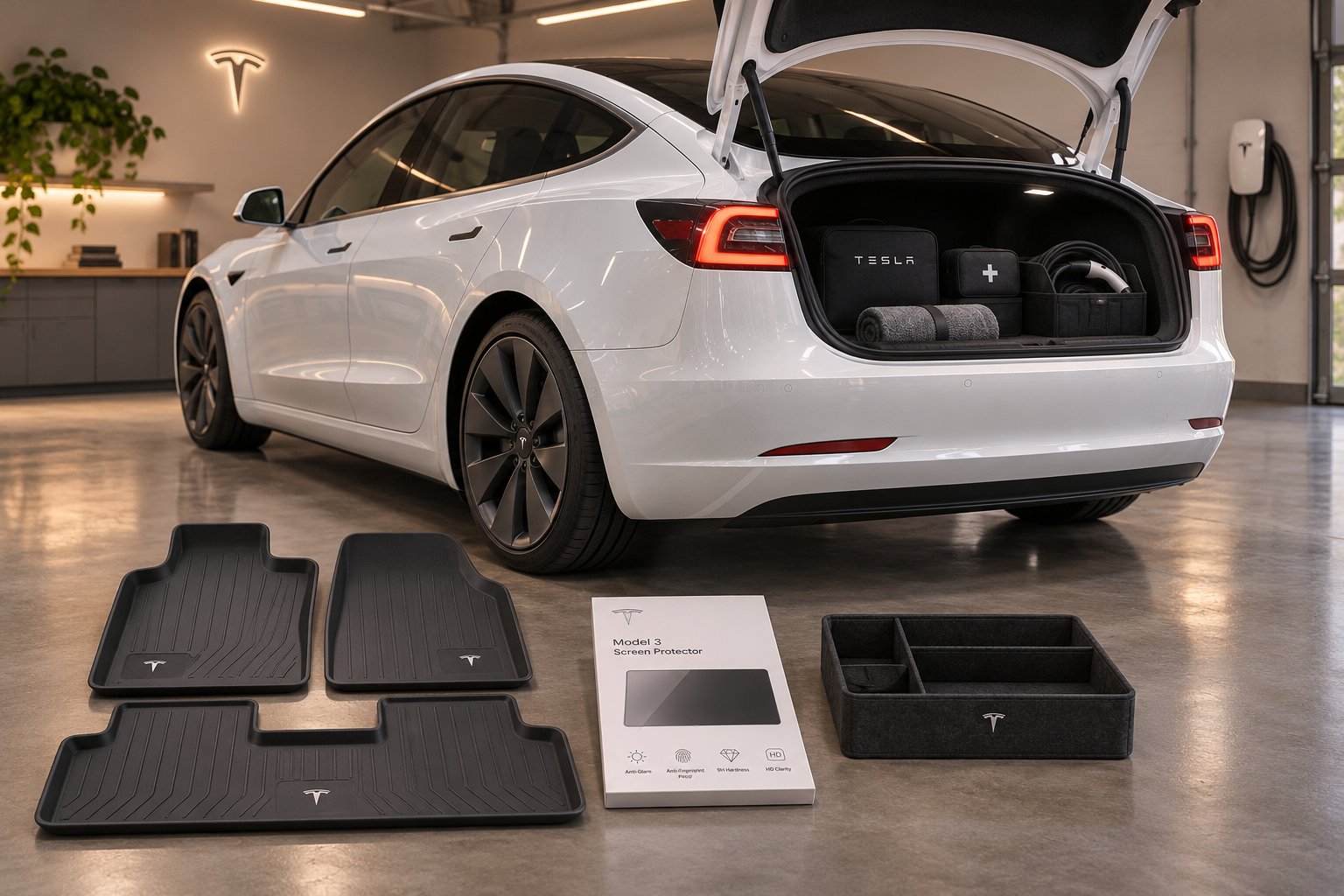
Why the Right Accessories Make or Break Model 3 Ownership
The Tesla Model 3 is one of the most compelling daily drivers on the road. It's fast, efficient, surprisingly fun to throw around corners, and packed with technology that makes traditional cars feel outdated. But spend a few weeks behind that minimalist steering wheel, and you'll start noticing gaps — small but persistent annoyances that Tesla's design team either overlooked or intentionally left for owners to sort out.
Fingerprints smeared across the glossy center console. A deep storage bin that swallows your sunglasses into a black hole. A trunk with zero organization. A touchscreen that washes out in direct sunlight. These aren't dealbreakers, but they are friction points that chip away at the ownership experience one drive at a time.
Search for the best Tesla Model 3 accessories online, and you'll mostly find endless product catalog pages — grids of thumbnails with star ratings and "Add to Cart" buttons. That approach works if you already know exactly what you need. It doesn't help much if you're trying to figure out which accessories actually matter and which ones collect dust after install day. This guide takes a different route: experience-driven recommendations organized around real ownership problems, covering interior comfort upgrades, exterior protection, Highland vs. pre-refresh compatibility, budget tiers for every price range, and the buying mistakes that cost owners the most money.
Why the Model 3 Needs Aftermarket Attention
Tesla's minimalist design philosophy is a genuine strength — the cabin feels open, uncluttered, and futuristic. As Drive and Review puts it, the interior has "more in common with a bare-bones work truck" than a traditional luxury sedan, which is both refreshing and limiting. That simplicity leaves practical gaps that tesla accessories are specifically engineered to fill. The piano black center console trim attracts micro-scratches almost immediately. There's no traditional glovebox tray for organizing small items. The trunk offers generous cargo space but nothing to keep groceries, bags, or gear from sliding around during every turn. Even the massive glass roof — stunning as it is — can turn the cabin into a greenhouse on hot days without aftermarket sun protection.
These aren't flaws that require a trip to the service center. They're design trade-offs that the aftermarket tesla model 3 accessories market has spent years refining solutions for.
What Makes an Accessory Worth Buying
Not every accessory deserves a spot in your Model 3. Before diving into specific categories, it helps to establish a clear evaluation framework you can apply to any product you encounter:
- Fit precision — Does it specify your exact Model 3 year and generation? Generic or "universal fit" claims are a red flag for tesla model 3 interior accessories.
- Material quality — Cheap adhesives peel in cabin heat. Thin plastics crack. The material matters more than the marketing photos suggest.
- Real problem, real solution — Does this accessory address something you deal with on every drive, or is it a novelty that loses its appeal after a week?
- Resale value impact — The best accessories protect surfaces, reduce wear, and keep the vehicle closer to factory condition, which directly supports long-term value.
The best accessories solve problems you experience every drive, not just look good on install day.
Keep these criteria in mind as this guide moves into the specific ownership pain points that send most Model 3 owners searching for aftermarket solutions in the first place — and the accessory categories that actually deliver results.
Common Model 3 Pain Points That Accessories Actually Solve
Every Model 3 owner hits the same realization somewhere around week two or three: the car is brilliant to drive, but a handful of daily annoyances keep surfacing. You reach for the center console and see another fingerprint smear. You open the trunk and watch your groceries tumble sideways. You squint at the touchscreen because the afternoon sun has turned it into a mirror. These moments add up, and they're exactly why the tesla model 3 mods market has exploded. The trick is knowing which frustrations actually have good aftermarket solutions — and which ones you'll just learn to live with.
Scratch-Prone Surfaces and Interior Wear
If there's one complaint that unites Model 3 owners across every model year, it's the piano black center console trim. That glossy, mirror-like finish looks stunning in showroom lighting. In real-world ownership? It becomes a magnet for fingerprints, dust, and fine scratches almost immediately. The surface is made from a soft acrylic plastic that scratches with minimal contact — wiping dust with a dry cloth, resting a phone on the surface, or simply setting down a set of keys can leave visible marks. Under direct light, even a console that's only a few weeks old can show a web of fine swirl marks.
Tesla acknowledged this problem indirectly when they redesigned the console for the 2021 model year, swapping the piano black finish for a matte gray surface. But owners of 2017-2020 models — and anyone with a vehicle that still uses glossy trim elements — are left dealing with it on their own.
The most popular fix is a console wrap or protective overlay. These come in two main forms: vinyl wraps that adhere directly over the original surface, and rigid ABS plastic covers that attach with pre-applied tape. Vinyl wraps offer a seamless, factory-like look and come in finishes like matte black, carbon fiber, and wood grain. ABS plastic covers are easier to install and provide stronger impact protection, though they add a slight layer of thickness. A quality wrap or cover kit typically runs $30 to $80 — far less than the $400 to $800 it could cost to replace the entire console assembly.
Here's the catch: cheap wraps frequently use low-grade adhesive that peels under cabin heat within weeks, leaving sticky residue behind. Quality genuinely matters in this category. If a console wrap costs under $15, you're almost certainly getting an adhesive that won't survive a summer. Screen protectors for the 15-inch touchscreen follow the same principle — tempered glass options with proper oleophobic coatings outperform thin film protectors that bubble and peel.
Storage Gaps and Cabin Organization Challenges
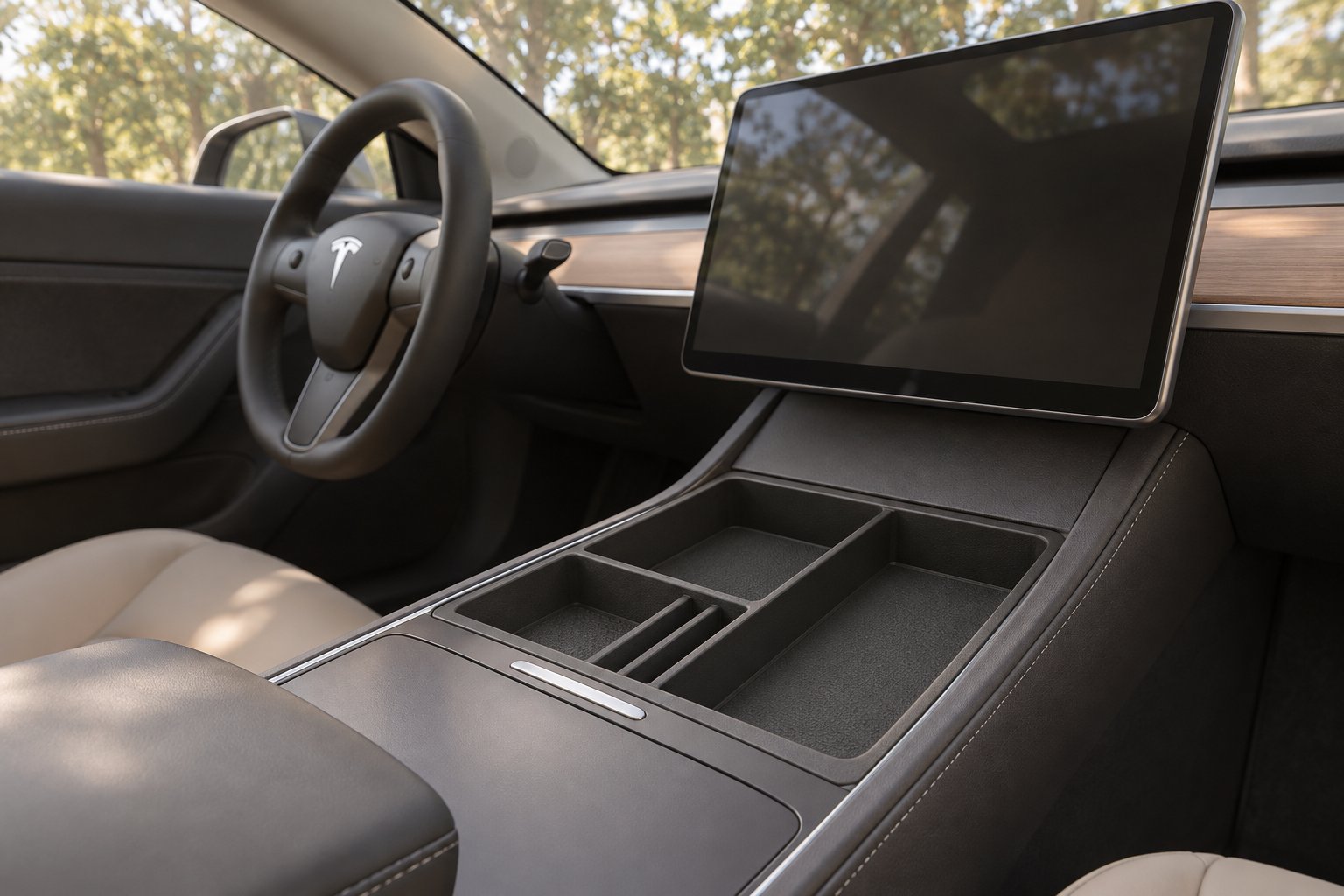
Tesla's minimalist cabin design trades traditional storage compartments for clean visual lines. The result looks great in photos but creates real inconvenience during daily use. Imagine tossing your wallet, sunglasses, and charging cable into the center console bin — they all slide to the bottom and pile up in a jumbled heap. There's no glovebox tray for organizing registration documents and small items. The trunk offers generous cargo volume but zero internal dividers, so everything shifts freely during turns and braking.
Center console organizer trays are one of the most popular tesla model 3 interior accessories for exactly this reason. A well-designed tray drops into the existing console bin and creates separate compartments for everyday items — sunglasses in one section, cards and keys in another, charging cables tucked neatly to the side. It transforms a frustrating storage pit into a genuinely functional space.
Trunk organizers and divider systems address the cargo sliding problem. These range from simple collapsible fabric organizers to rigid, custom-fit dividers that snap into the trunk floor. For owners who use their Model 3 for grocery runs, gym trips, or weekend errands, a basic trunk organizer eliminates the need to pile everything against the rear seats and hope for the best.
Under-seat storage solutions and similar compact organizers are also popular alternatives owners explore to maximize limited cabin space. These slim trays slide beneath the front seats, creating hidden compartments for items like umbrellas, first-aid kits, or anything you want accessible but out of sight. They're a small investment that makes the cabin feel significantly more practical without adding visual clutter.
Road Noise and Screen Glare
These two pain points get less attention than scratches and storage, but they're among the most frequently reported frustrations — especially among owners who spend significant time on highways.
The Model 3's cabin noise levels, particularly in pre-refresh models produced before 2024, can be noticeably higher at highway speeds compared to similarly priced luxury sedans. Wind noise around the door frames and road noise through the wheel wells become more apparent once the initial EV novelty wears off. Door seal kits — aftermarket rubber weatherstripping that supplements the factory seals — target this specific issue by closing small gaps where air and sound leak into the cabin. They're inexpensive, easy to install, and owners regularly report a meaningful reduction in wind noise after adding them.
Screen glare is the other persistent irritation. The Model 3's 15-inch touchscreen controls nearly everything — navigation, climate, media, vehicle settings — and it becomes difficult to read when direct sunlight hits it at certain angles. A matte screen protector diffuses incoming light and dramatically reduces glare, making the display legible even on bright afternoons. The trade-off is a very slight reduction in display sharpness and color vibrancy compared to a glossy protector, so the right choice depends on how often you drive in high-glare conditions.
Here's a quick summary of the top pain points and the must have tesla accessories that address each one:
- Piano black scratches and fingerprints — Console wraps, ABS plastic overlays, and protective film
- Disorganized center console storage — Console organizer trays with dedicated compartments
- Trunk cargo sliding — Trunk organizers, collapsible dividers, and custom-fit trunk mats
- Highway wind and road noise — Aftermarket door seal kits and weatherstripping upgrades
- Touchscreen glare in direct sunlight — Matte-finish tempered glass screen protectors
Each of these issues ties directly to a well-established accessory category with proven solutions. The real question isn't whether these accessories exist — it's how to choose the right ones within each category without wasting money on poorly made alternatives. That distinction becomes especially clear when you look at the interior accessories that deliver the highest daily value and the material differences that separate premium options from budget disappointments.
Interior Accessories That Transform Your Daily Drive
Knowing the problem is only half the equation. The other half is understanding which products genuinely solve it — and which ones fall apart after a month of real use. Interior accessories carry the highest daily-impact potential because you interact with them every single time you sit in the car. A floor mat catches mud before it reaches the carpet. A console organizer keeps your sunglasses from vanishing into a storage pit. A screen protector makes navigation readable when the sun is blasting through the windshield at 4 PM. These aren't luxury upgrades. For most owners building a tesla model 3 modified setup, they're the foundation everything else builds on.
Let's walk through each major interior zone of the Model 3 cabin, starting with the surface your feet touch first.
Floor Protection and All-Weather Mats
If you buy only one accessory for your Model 3, make it a set of all-weather floor mats. This is the single most universally recommended upgrade across every Tesla owner community, and for good reason: the factory carpet mats offer minimal protection against water, mud, snow, sand, or spilled coffee. One rainy commute is all it takes for moisture to seep through the carpet and into the padding underneath, where it can develop odor over time.
The material your floor mats are made from matters more than most shoppers realize. You'll encounter three primary options:
- TPE (Thermoplastic Elastomer) — The most popular choice among Tesla owners. TPE mats combine rubber-like flexibility with lightweight, low-odor performance. They're waterproof, easy to clean, and typically engineered with lower odor than traditional rubber compounds, which matters inside a sealed EV cabin where there's no engine noise to distract from a chemical smell.
- Traditional rubber — Heavier and more established. Rubber mats provide excellent durability and a softer, more familiar feel underfoot. The main downside is that some rubber formulations can produce a noticeable new-mat smell, especially when the cabin heats up on sunny days. Quality rubber mats from reputable brands still perform well, but the odor factor pushes many Tesla owners toward TPE instead.
- Multi-layer composite — Premium options that use a textured top layer for water resistance, a foam middle layer (often XPE) for cushioning and minor noise reduction, and an anti-slip bottom layer. These feel softer and more luxurious underfoot but tend to cost more and are harder to recycle due to the mixed materials.
Material alone doesn't tell the full story, though. What separates a premium set from a budget disappointment comes down to four things:
- Full coverage of foot wells — The mat should protect carpet along the door side, console side, and all edges of the footwell, not just the area directly beneath your shoes.
- Raised edges for spill containment — Flat mats let water run off the edge and into the surrounding carpet. Properly designed 3D-molded liners use raised perimeter walls to trap liquids until you remove the mat for cleaning.
- Precise laser-measured fit — Modern all-weather liners are 3D-scanned to match the exact footwell contours of the Model 3. This means proper clearance around the accelerator and brake pedals — a safety consideration, not just a cosmetic one. A poorly fitting universal mat can shift forward and interfere with pedal travel.
- Non-toxic material certifications — Look for mats that are free from heavy metals, BPA, latex, and PVC. In a vehicle where the cabin stays sealed and temperatures can climb rapidly, off-gassing from cheap materials becomes a health and comfort concern.
One critical detail that trips up many first-time buyers: always verify Model 3 year-specific fitment before purchasing. The interior dimensions changed between the pre-refresh Model 3 (2017-2023) and the Highland refresh (2024+). A mat designed for one generation will not fit the other correctly, regardless of what a vague product listing might suggest. If the product page doesn't explicitly state which generation it fits, treat that as a warning sign.
Center Console and Dashboard Upgrades
The center console area is the command center of daily Model 3 life — it's where you charge your phone, store your wallet, and rest your arm between steering inputs. It's also where Tesla's minimalism creates the most daily friction.
The deep center console storage bin is a prime example. It offers generous volume but zero internal structure, so everything you drop in there — sunglasses, cards, charging cables, coins, keys — ends up in a tangled pile at the bottom. A center console organizer tray solves this instantly. These trays are designed to drop into the existing bin and divide the space into dedicated compartments. You'll typically get a section for sunglasses, a slot for cards or a garage remote, and a channel for charging cables. It's a simple upgrade, usually priced between $15 and $35, that you'll appreciate every time you reach for something without looking.
Console wraps and protective overlays address the aesthetic and durability side of the equation. For pre-2021 Model 3 vehicles with the piano black console finish, a vinyl wrap or rigid ABS plastic overlay prevents further scratching while refreshing the surface appearance. ABS plastic covers tend to outlast vinyl wraps because they resist cabin heat better and don't rely solely on adhesive contact. For 2021 and later models with the matte gray console, wraps are less about scratch prevention and more about personalization — carbon fiber textures and wood grain finishes are popular choices for owners building a modded Tesla Model 3 aesthetic.
Dashboard accessories round out this zone. A sunshade screen for the massive glass roof is a near-essential upgrade in warm climates. The Model 3's panoramic roof floods the cabin with natural light, but it also lets in significant solar heat. A properly fitted sunshade — typically a lightweight, reflective mesh that installs along the interior roof rails — can lower cabin temperatures noticeably and reduce the workload on the air conditioning system. Some owners also add dashboard anti-glare pads or small storage mounts near the screen area, though these tend to fall into the "nice-to-have" category rather than daily necessities.
Screen Protection and Cabin Comfort
The Model 3's touchscreen isn't just a display — it's the primary interface for almost everything: navigation, climate control, media, camera feeds, vehicle settings, and even opening the glovebox. You'll interact with it dozens of times per drive, which makes protecting it one of the smartest early investments.
Tempered glass screen protectors are the standard solution, and the main decision comes down to finish: matte or glossy. Each involves a genuine trade-off, and the right answer depends on your driving conditions rather than a universal "best" option.
- Matte finish — Diffuses incoming light and dramatically reduces glare, especially during afternoon driving when the sun sits low. Also significantly reduces visible fingerprints and smudge marks. The trade-off is a slight reduction in display clarity and color vibrancy. Fine map text and white backgrounds can appear marginally softer compared to the bare screen. Display specialists describe this same trade-off across monitors: matte surfaces reduce reflections at the expense of some perceived sharpness.
- Glossy finish — Preserves the factory screen's full brightness, sharpness, and color depth. Feels nearly invisible when properly installed. The downside is that it offers minimal glare reduction and shows every fingerprint, oil mark, and smudge as clearly as the bare screen does.
For owners who commute outdoors in direct sun, matte is almost always the more practical choice. If you park in a garage and rarely fight harsh light angles, glossy makes sense. Either way, make sure the protector is rated for capacitive touch compatibility and carries at least a 9H hardness rating — though keep in mind that "9H" is primarily a scratch-resistance indicator, not a guarantee against cracking.
Beyond screen protection, two other cabin comfort accessories are worth mentioning. Cabin camera covers have become popular among privacy-conscious owners. The Model 3 includes an interior-facing camera above the rearview mirror that Tesla uses for driver monitoring and potential future features. A simple sliding cover gives owners control over when that camera can see the cabin — a small but meaningful comfort factor for many drivers.
Interior LED ambient lighting kits represent the more personalized end of the tesla must have accessories spectrum. These kits add soft accent lighting along the door panels, footwells, or dashboard, creating a warmer cabin atmosphere during night driving. They're not solving a functional problem in the same way floor mats or screen protectors do, but for owners who spend significant time driving after dark, the visual upgrade can make the cabin feel noticeably more refined. Installation ranges from simple USB-powered strip lights to more involved kits that integrate with the vehicle's existing lighting controls.
Here's a practical comparison of the major interior accessory categories to help you prioritize:
| Category | Problem Solved | Typical Price Range | Priority Level |
|---|---|---|---|
| All-Weather Floor Mats | Carpet staining, water damage, mud and debris | $80 - $250 | Essential |
| Center Console Organizer | Disorganized deep storage bin | $15 - $35 | Essential |
| Console Wrap / Overlay | Piano black scratches, fingerprints, surface wear | $30 - $80 | Recommended |
| Tempered Glass Screen Protector | Screen glare, fingerprint smudges, surface scratches | $25 - $45 | Essential |
| Glass Roof Sunshade | Excessive cabin heat, UV exposure | $40 - $120 | Recommended |
| Cabin Camera Cover | Privacy control for interior-facing camera | $5 - $15 | Nice-to-Have |
| Interior LED Ambient Lighting | Dim cabin atmosphere during night driving | $20 - $80 | Nice-to-Have |
The pattern is clear: the accessories that earn "Essential" status are the ones protecting surfaces and solving problems you encounter within your first week of ownership. "Recommended" items enhance comfort and preservation over time. "Nice-to-Have" accessories add personalization and refinement — they make the car feel more like yours, even if they don't solve an urgent functional gap.
Interior upgrades handle what happens inside the cabin. But the Model 3's exterior faces an entirely different set of threats — road debris, UV exposure, curb rash, and environmental wear — that require a different category of protection altogether.
Exterior and Protective Upgrades Worth the Investment
Rock chips, road salt, curb scrapes, UV fading — your Model 3's exterior absorbs punishment that interior accessories will never see. And unlike a scratched console or a disorganized trunk, exterior damage directly affects what buyers notice first when it's time to sell or trade in. The good news is that a handful of well-chosen tesla model 3 modifications on the exterior can prevent the kind of cosmetic wear that costs hundreds (or thousands) to repair after the fact.
A quick distinction before diving in: this section covers protective and cosmetic styling accessories — paint film, mud flaps, wheel guards, spoilers. It doesn't cover tesla model 3 performance accessories like coilover suspensions, big brake kits, or ECU tuning, which fall into a different category with different warranty and safety considerations. Everything here is bolt-on, non-invasive, and focused on preserving or enhancing the vehicle's appearance.
Paint Protection and Touch-Up Solutions
Tesla's factory clear coat is thinner than what most traditional automakers apply, a side effect of the company's weight-saving manufacturing approach. That thinner clear coat means two things for owners: paint chips more easily from highway debris, and there's less material margin for safely polishing out scratches later without cutting through to the color coat underneath. Combine that with Tesla's high-volume delivery process — which sometimes skips the paint-correction pass a traditional dealership might perform — and it's not uncommon for new Model 3s to arrive with light swirl marks already present.
Paint protection film (PPF) is the most effective solution. It's a clear, thermoplastic polymer film that physically shields the paint from rock chips, road debris, and light abrasion. Think of it as an invisible armor layer that absorbs impacts so the factory paint doesn't have to. Most owners focus PPF coverage on high-impact zones:
- Front bumper — The most vulnerable panel on any vehicle, catching the majority of road debris kicked up at highway speeds.
- Hood leading edge — Especially the first six to twelve inches, where stone chips concentrate.
- Side mirrors — Small but constantly exposed to debris in adjacent lanes.
- Headlight lenses — Protecting optical clarity and preventing yellowing over time.
Front bumper PPF typically starts around $500 to $800, while a full front-end package — hood, fenders, bumper, headlights, and mirrors — usually comes in just under $2,000. That price stings initially, but consider the alternative: repainting a damaged bumper often costs more than protecting it would have, and a repaint is never a perfect match to the factory finish. Pearl and metallic colors are especially difficult to blend seamlessly, and a repainted panel can lower resale value even when it looks "good enough" to the naked eye.
For owners who aren't ready for the PPF investment, ceramic coating offers a more accessible alternative. It won't stop rock chips — it's a thin chemical layer, not a physical barrier — but it does add UV protection, chemical resistance, and a hydrophobic surface that makes washing easier and keeps the paint looking fresher between details. Many owners pair ceramic coating on the body panels with PPF on the high-impact front end for a layered approach.
Then there are the small imperfections that don't justify professional bodywork. Touch-up paint pens designed for Tesla's specific color codes let owners address minor chips and scratches at home. These pens are matched to exact factory paint codes — Ultra White, Midnight Silver Metallic, Solid Black, and so on — so the repair blends more naturally than generic automotive touch-up products. They won't make a deep gouge invisible, but for surface-level chips on door edges, bumper corners, or hood edges, a properly applied touch-up pen is a $15 to $30 fix that prevents exposed metal from developing rust or corrosion over time.
Mud Flaps, Spoilers, and Exterior Styling
Mud flaps aren't glamorous, and that's exactly why they're underrated. Without them, the Model 3's wheels throw road debris, gravel, salt, and water directly onto the rocker panels and lower body. Over months of driving, this creates a sandblasting effect that dulls paint, causes micro-chips along the lower body, and accelerates corrosion around wheel well edges — particularly in northern climates where road salt is a winter constant.
A quality set of Model 3-specific mud flaps mounts behind each wheel and redirects debris spray away from the body panels. Installation is straightforward, usually requiring nothing more than a few screws or clips and about twenty minutes of work. The practical benefit far outweighs the modest $30 to $60 cost, making mud flaps one of the highest-value exterior accessories you can add.
On the styling side, rear spoilers are among the most popular tesla model 3 highland accessories and pre-refresh additions alike. Carbon fiber lip spoilers — the subtle, low-profile variety that mounts to the trunk lid edge — add a finished look without veering into aggressive aftermarket territory. They're typically attached with pre-applied 3M adhesive tape and don't require drilling. The visual effect is understated but noticeable: a clean rear profile that looks more intentional than the flat factory trunk line.
Aero wheel cap kits are another common exterior modification, specifically for owners who have the standard Aero wheels and want a different appearance. Tesla's factory Aero covers serve an efficiency purpose — they reduce aerodynamic drag, which contributes to range — but many owners prefer the cleaner look of the underlying wheel with a simple cap kit installed over the center hub and lug nuts. It's a cosmetic swap that takes minutes and is completely reversible.
Wheel and Tire Accessories That Protect Your Investment
Wheels are one of the most expensive components to repair or replace on a Model 3, and they're also one of the most vulnerable to everyday damage. A single curb scrape while parallel parking can leave visible gouges that cost $150 to $300 per wheel to refinish professionally. Multiply that across several incidents over a few years of ownership, and wheel damage becomes a real financial concern — especially since Tesla's wheel designs often leave the rim edge exposed beyond the tire sidewall, making them more prone to curb contact than many other vehicles.
Wheel rim protectors address this directly. These are typically rubber or polyurethane rings that adhere around the outer lip of each wheel, creating a sacrificial buffer between the rim edge and any curb it contacts. They absorb the scrape instead of the alloy surface, and they're far cheaper to replace than refinishing a wheel. Quality wheel covers offer a similar benefit — they act as an outer shell over the entire wheel face, so if something does make contact, the cover takes the hit rather than the factory wheel underneath.
Lug nut covers are a simpler, more cosmetic addition. Tesla's factory lug nuts are exposed on most wheel configurations, and over time they can corrode, discolor, or simply look unfinished. Snap-on lug nut covers in matte black or chrome give the wheels a more polished appearance. They're inexpensive — typically $10 to $20 for a full set — and take seconds to install.
Seasonal tire considerations also fall under the wheel and tire umbrella. Owners in regions with cold winters benefit from a dedicated winter tire and wheel set. Running winter tires on a separate set of wheels protects your primary wheels from salt damage, curb contact in snow-narrowed streets, and the accelerated wear that winter driving causes. It's a larger upfront investment but one that extends the life of both tire sets and both wheel sets significantly.
To help prioritize, here's how exterior accessories rank by their impact on long-term resale value:
- High resale-value impact: Paint protection film (PPF), mud flaps, wheel rim protectors — these prevent the kind of visible damage that directly lowers a vehicle's market value.
- Moderate resale-value impact: Rear spoilers, aero wheel cap kits, ceramic coating — they enhance appearance and show that the vehicle has been well-maintained, which buyers notice.
- Low resale-value impact: Purely cosmetic badges, emblem replacements, decorative trim accents — these reflect personal taste and rarely add measurable resale value, though they don't typically detract from it either.
Exterior protection keeps the Model 3 looking sharp and holding its value. But there's a complication that trips up even experienced owners when shopping for any of these accessories: the Model 3 Highland refresh changed enough about the vehicle's exterior dimensions and design that many products simply don't cross over between generations — a compatibility issue worth understanding before you spend a dollar.
Highland vs. Pre-Refresh Accessories and What Actually Fits
Here's the scenario that plays out thousands of times a month: an owner searches for the best Tesla Model 3 accessories, finds something with great reviews, places the order, and discovers on delivery day that it doesn't fit their car. Not because the product is defective — but because the Model 3 they own is a fundamentally different vehicle from the one the product was designed for.
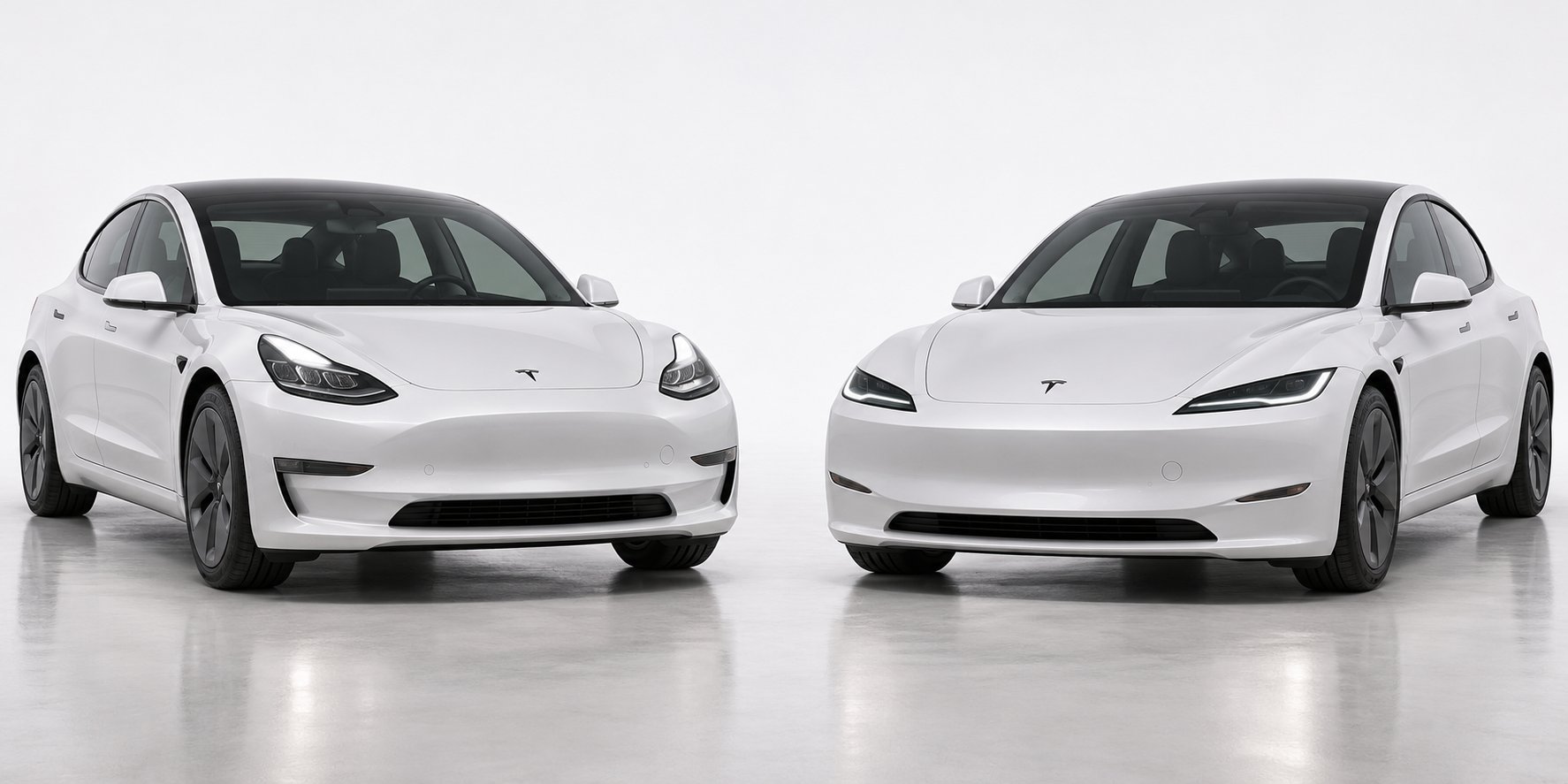
The culprit is Project Highland. When Tesla launched its refreshed Model 3 in early 2024 for the North American market, the changes went far deeper than a typical mid-cycle facelift. According to fitment testing by accessory specialists, the Highland shares only about 40% of its accessory footprint with the legacy 2017-2023 Model 3. That means the majority of accessories designed for one generation physically will not fit the other — and vague product listings that say "fits all Model 3" are a fast track to return labels and wasted money.
Understanding which generation you own, what changed between them, and where compatibility risk is highest will save you more money than any coupon code ever could.
Key Design Differences That Affect Fitment
Think of the Highland as a new car wearing a familiar silhouette. The overall shape stayed recognizable, but Tesla revised nearly every exterior panel and completely rethought the interior layout. These aren't subtle cosmetic tweaks — they're dimensional changes that directly determine whether a given accessory clips in, lines up, or sits flush.
On the outside, MotorTrend's detailed teardown documented the scope of the overhaul: a brand-new front fascia with slimmer headlights, redesigned front fenders, a completely different rear fascia with integrated one-piece taillights, new wheel designs across all trim levels, and a reshaped lower bumper. Tesla stated that every rear panel is different from the legacy model. Even the cowling along the windshield was adjusted, and the cooling ducts that were visible on the old car's front end were eliminated in favor of a single integrated inlet.
Inside, the changes are even more significant for accessory compatibility. The Highland introduced:
- A revised dashboard layout — The wood or black trim found in pre-refresh models was replaced with a full-width textile-covered dash incorporating built-in ambient lighting strips. Any dashboard cover, wrap, or overlay designed for the old layout simply won't align.
- A fixed center console tray — The legacy Model 3 used a sliding console tray; the Highland swaps that for a redesigned fixed tray with an integrated wireless charging pad. Console organizers are not interchangeable.
- Factory ambient lighting throughout the cabin — LED light bars wrap across the dash and all four doors, a feature the pre-refresh car never had. This means aftermarket ambient lighting kits designed for legacy models can conflict with or duplicate the Highland's built-in system.
- A new rear passenger display — An 8-inch screen for rear-seat entertainment and climate control replaced the simpler rear console layout. Rear organizer accessories are entirely different as a result.
- Stalkless steering column — Turn signals moved to buttons on the steering wheel, and the gear selector moved to the touchscreen. Stalk covers and stalk-based accessories have no equivalent on Highland.
- Reshaped footwells — The footwell area is approximately 8mm wider at the dead pedal, and the central tunnel contour changed enough that legacy floor mats leave gaps or bunch at the edges.
The bottom line? If an accessory physically contacts the dashboard, center console, floor, steering column, or any exterior body panel, you should assume it differs between generations until you confirm otherwise.
How to Verify Compatibility Before You Buy
The single most practical step you can take is confirming which Model 3 generation you actually own. It sounds obvious, but it trips up more buyers than you'd expect — especially those purchasing a used Model 3 without knowing exactly when it was manufactured.
Three quick checks make this easy:
- Model year on registration or title — Pre-refresh models span 2017 through 2023. Highland models are 2024 and newer. If your documentation says 2024+, you have a Highland.
- Steering column stalks — If your Model 3 has traditional turn signal and gear selector stalks on either side of the steering wheel, it's a pre-refresh. If the steering column is stalkless and you shift gears via the touchscreen, it's a Highland.
- Rear seat screen — A display mounted in the rear center console confirms Highland. Pre-refresh models have only rear HVAC vents and a small storage area in that location.
Once you know your generation, the next step is scrutinizing product listings before you click "buy." Look for explicit generation callouts — reliable sellers will state "Pre-2024 Model 3" or "Highland / 2024+" in the product title or description. Be skeptical of listings that simply say "Tesla Model 3" without specifying a year range. And be especially cautious of listings labeled something like "fits 2017-2025" — as multiple accessory retailers have noted, these broad claims are frequently inaccurate because they lump two incompatible generations into a single SKU.
When compatibility is unclear, contact the seller directly before ordering. A quick email asking "Does this fit the Highland / 2024+ Model 3?" takes thirty seconds and can prevent a return process that costs you shipping fees, time, and the frustration of being without the accessory you needed. Reputable sellers will answer this question clearly. If a seller can't confirm fitment for your specific generation, that itself is useful information — shop elsewhere.
Accessories That Work Across Both Generations
The compatibility picture isn't entirely bleak. Several accessory categories don't depend on precise panel geometry or molded contact points, which means they transfer cleanly between the pre-refresh and Highland Model 3. Understanding where compatibility risk is low helps you shop with confidence in those categories without overthinking generation specifics.
Generation-agnostic tesla add ons tend to share one trait: they interact with parts of the vehicle that Tesla didn't redesign. The chassis, battery architecture, lift points, charge port, and basic cargo dimensions carried over. That gives you safe ground in these areas:
- Trunk organizers — Collapsible fabric organizers and most cargo nets fit both generations since the trunk's overall volume and shape remained similar.
- Tesla frunk accessories — Frunk storage bins, organizer trays, and mats are compatible across generations. RWD and AWD models offer the same frunk space in both the legacy and Highland versions.
- Portable tire inflators — These are vehicle-independent tools that plug into the 12V outlet or USB port.
- USB storage drives for Sentry Mode and Dashcam — Any formatted USB drive works regardless of generation.
- Most phone mounts — Screen-clip or vent-mounted phone holders that use universal clamp mechanisms work on both generations. Dash-mounted options, however, differ because the Highland's dashboard surface curvature changed.
- Jack pads and lift point accessories — Lift points are unchanged across all Tesla models.
- Cabin air filters — The HEPA filter slot position remained the same.
- Lug nut covers — The M14x1.5 thread and 21mm hex size are consistent, though you'll need covers sized for the specific wheel design on your car.
The pattern is straightforward: the closer an accessory sits to the cabin interior or exterior body panels, the higher the compatibility risk. The further it sits from those redesigned surfaces — cargo areas, frunk, mechanical components, universal tools — the safer it is to buy without worrying about generation specifics.
Here's a practical reference showing where the two generations diverge and where they overlap:
| Accessory Category | Pre-Refresh Model 3 (2017-2023) | Highland Model 3 (2024+) |
|---|---|---|
| Floor Mats | Generation-specific required | Generation-specific required |
| Center Console Organizer | Sliding tray design | Fixed tray design — not interchangeable |
| Screen Protector | Legacy screen dimensions | Different bezel and edge curvature |
| Dashboard Wraps / Covers | Wood or black trim surface | Textile dash with integrated ambient lighting |
| Steering Wheel Covers | Standard round wheel, no button cutouts needed | Requires cutouts for turn signal buttons |
| Wheel Covers / Rim Protectors | Aero / Sport / Performance designs | Photon / Nova / Warp designs — all new profiles |
| Mud Flaps (Front) | Generation-specific mount points | Different front fascia mounting |
| Trunk Organizers | Compatible across both generations | |
| Frunk Accessories | Compatible across both generations | |
| USB Drives (Sentry Mode) | Compatible across both generations | |
| Portable Tire Inflator | Compatible across both generations | |
| Jack Pads | Compatible across both generations | |
| Cabin Air Filters | Compatible across both generations | |
Print this out, bookmark it, or screenshot it — it'll save you from at least one wrong purchase. The tesla model 3 upgrades that deliver the most value are the ones that actually fit your specific car, and a two-second generation check before checkout is the easiest quality filter you can apply.
Compatibility between generations is one half of the buying decision. The other half — choosing between Tesla's own OEM accessories and the sprawling aftermarket ecosystem — introduces a completely different set of trade-offs that most product pages never acknowledge.
OEM vs. Aftermarket Model 3 Accessories and How to Decide
Most accessory guides skip this question entirely — and for an obvious reason. Tesla's own store only promotes OEM products. Aftermarket retailers only showcase their own catalog. Neither has any incentive to give you an honest, side-by-side comparison. But as a Model 3 owner trying to figure out what's actually worth buying, this is one of the most consequential decisions you'll make for almost every accessory category. Should you stick with Tesla's official options, or venture into the aftermarket ecosystem where prices are lower but quality varies wildly?
The answer isn't one-size-fits-all. It depends entirely on what you're buying. Some categories favor OEM. Others are dominated by aftermarket alternatives that Tesla hasn't even tried to compete with. Let's break it down honestly.
The Case for Tesla OEM Accessories
Buying directly from Tesla carries a few advantages that are difficult to replicate anywhere else. The most obvious is guaranteed fitment. When Tesla designs an accessory for the Model 3, it's engineered against the exact CAD files and production tolerances of the vehicle. There's no guessing about whether the mounting points align or whether a floor mat's edge profile follows the footwell curve precisely. It fits because it was designed alongside the car itself.
Design consistency is the second major advantage. OEM accessories share the same material language — the same textures, the same finishes, the same color palette — as the rest of the vehicle. A Tesla-branded all-weather mat or trunk liner feels like it belongs in the cabin rather than something bolted on as an afterthought. For owners who value that seamless factory aesthetic, OEM delivers it with zero effort.
There's also the warranty angle. Accessories purchased through Tesla's website or app are covered under Tesla's own return and warranty policies. If something doesn't fit or arrives defective, the resolution path is straightforward — no chasing down a third-party seller or navigating a confusing return portal. And because OEM accessories don't modify the vehicle's electrical or mechanical systems, there's zero risk of a warranty dispute over accessory-related damage.
Convenience rounds out the picture. You can add OEM accessories directly through the Tesla app, have them shipped to your door or a service center, and in some cases have them installed during a scheduled service appointment. It's a frictionless buying experience by design.
So where does OEM fall short? Three areas stand out:
- Limited selection — Tesla's accessory catalog is surprisingly small. You'll find floor mats, a few exterior pieces, wheel accessories, and charging equipment. But categories like center console organizers, trunk dividers, ambient lighting upgrades, sunshades, and privacy accessories? Tesla either offers one option or nothing at all.
- Premium pricing — OEM accessories typically cost 20% to 50% more than comparable aftermarket alternatives. Tesla's all-weather floor mats, for instance, carry a price tag that puts them at the top of the market — even against aftermarket brands with similar or identical TPE materials and laser-measured fitment.
- Slower innovation — Tesla moves at its own pace when releasing new accessory SKUs. Aftermarket manufacturers often have compatible products on the market within weeks of a new model variant shipping, while Tesla's official catalog may take months to catch up — or never address certain accessory needs at all.
The Case for Aftermarket Accessories
The aftermarket Tesla accessory ecosystem is massive, and it exists precisely because Tesla's own catalog leaves so many gaps. Where OEM offers a handful of curated options, the aftermarket delivers hundreds — across every conceivable category, material, price point, and design preference. That breadth is its greatest strength.
Competitive pricing is the most immediate draw. Side-by-side testing by accessory specialists consistently shows that high-quality aftermarket floor mats, sunshades, storage organizers, and roof racks offer comparable — and sometimes superior — performance to OEM equivalents at significantly lower cost. When you're building out multiple accessory categories, those per-item savings compound quickly.
Innovation speed is another area where the aftermarket excels. Independent manufacturers respond to owner feedback in real time. When the Highland refresh launched and owners immediately identified new storage gaps, aftermarket companies had compatible console organizers and floor mats shipping within weeks. Tesla's official store took considerably longer to update its own catalog. This pattern repeats with every model revision — the aftermarket moves faster because smaller companies can iterate without navigating Tesla's corporate product development cycle.
Community validation is the aftermarket's other underrated advantage. Popular model 3 accessories from third-party brands accumulate thousands of real-world owner reviews — complete with install photos, durability updates posted months after purchase, and honest assessments of fitment quality. This kind of granular feedback simply doesn't exist in the same volume for OEM accessories. When a Reddit thread or Tesla forum has 300 owners confirming that a specific aftermarket mat fits perfectly and holds up after two winters, that's a more reliable signal than any product description can provide.
That said, the aftermarket comes with legitimate concerns that deserve honest acknowledgment:
- Quality variance is real — For every well-engineered aftermarket product, there are half a dozen cheap imitations using inferior materials and vague fitment claims. The floor is much lower in the aftermarket world than it is with OEM. Accessory reviewers consistently flag that listings using identical product photos can ship entirely different materials depending on the seller.
- Fitment isn't guaranteed — Even model-specific aftermarket accessories occasionally have alignment issues, slightly loose edges, or small dimensional variances that OEM products avoid. This is especially true at the budget end of the market, where manufacturing tolerances are wider.
- Buyer research is required — You can't blindly add aftermarket items to your cart the way you might with OEM. Checking year compatibility, reading owner reviews, confirming return policies, and evaluating material specifications all take time. That research burden is the price of entry for model 3 mods from the aftermarket side.
Making the Right Call for Each Category
The most practical approach isn't choosing a "team" — OEM or aftermarket — and buying everything from that side. It's evaluating each accessory category on its own merits and picking the option that delivers the best combination of fit, quality, and value for that specific product.
Here's how the math works out across the categories that matter most:
Floor mats: Aftermarket wins for most buyers. Reputable aftermarket brands produce laser-measured, TPE all-weather mats with full footwell coverage and raised edges that rival OEM fitment — often at 30% to 40% less. Unless you place a high premium on the Tesla logo stamped into the mat, aftermarket delivers equivalent protection for less money.
Exterior trim and body pieces: OEM has the edge here. Spoilers, aero covers, and painted exterior components benefit from Tesla's direct access to factory color codes and original panel geometry. An OEM rear spoiler will match the body lines and paint finish more consistently than most aftermarket alternatives. When color-matching precision matters, paying the OEM premium is usually justified.
Interior storage and organization: Aftermarket dominates this category outright — because Tesla barely competes in it. OEM offerings for console organizers, trunk dividers, under-seat trays, and cargo management systems are either nonexistent or limited to a single option. The aftermarket fills this void with dozens of purpose-built solutions at every price point. This is a tesla model 3 accessories must have category where the aftermarket is simply the only viable path for most owners.
Screen protectors: Aftermarket is the clear choice. Tesla doesn't sell a screen protector at all, so the entire category belongs to third-party manufacturers. The key is buying from brands that specify capacitive touch compatibility and your exact Model 3 generation.
Charging equipment: OEM is the safer bet for anything that interfaces with Tesla's proprietary charging system. The Mobile Connector, Wall Connector, and related adapters are areas where guaranteed electrical compatibility and Tesla's direct warranty support matter most.
Sunshades and UV protection: Aftermarket wins on both variety and price. Tesla offers minimal options here, while aftermarket manufacturers produce purpose-built sunshades for the windshield, glass roof, and rear window in multiple materials and configurations.
The smartest approach is category-by-category evaluation — not blanket loyalty to OEM or aftermarket. Let the product justify the price, not the brand badge.
Here's a direct comparison to keep handy when you're shopping:
| Factor | Tesla OEM | Aftermarket |
|---|---|---|
| Selection | Limited — covers basics but leaves major gaps in storage, organization, and cabin comfort | Extensive — hundreds of options across every accessory category |
| Price | Premium — typically 20%-50% higher than comparable aftermarket options | Competitive — wide price range from budget to premium |
| Fitment Guarantee | Excellent — designed against factory CAD specifications | Good to excellent from reputable brands; inconsistent from budget sellers |
| Quality Range | Consistently high — narrow quality band with no low-end risk | Wide range — top-tier brands match OEM, but budget options can underperform significantly |
| Community Reviews | Limited — fewer owner reviews and install feedback available | Abundant — thousands of real-world reviews with photos, long-term updates, and fitment confirmations |
The takeaway is straightforward: OEM earns its premium in categories where electrical integration, paint matching, or guaranteed fitment are non-negotiable. Aftermarket earns its place everywhere else — which, frankly, covers the majority of what most Model 3 owners need. The real skill isn't picking a side. It's knowing which categories call for which approach, and then setting a budget that reflects your priorities.
Speaking of budget — knowing what to buy is only useful if you also know how much to spend. Whether you're looking to cover the essentials for under $150 or build out a fully personalized setup, a clear spending framework keeps accessory shopping from turning into an endless money pit.
Budget Build vs. Complete Build
You've identified the pain points. You know which accessories solve them. You understand the Highland compatibility trap and the OEM-versus-aftermarket trade-offs. The only question left is a practical one: how much should you actually spend?
Most owners fall into one of two camps. Some want the essentials — just enough to fix the daily frustrations without overthinking it. Others want to build a fully modified Tesla Model 3, layer by layer, until every surface is protected and every storage gap is filled. Both approaches are valid. What's missing from nearly every accessory guide online is a structured spending framework that tells you exactly where your money delivers the most return at each budget level.
That's what this section provides. Three tiers — each with a recommended purchase order so you're not just buying randomly but building a setup that makes sense from day one.
Essential Build — Under $150 Total
Think of this as your first-week-of-ownership kit. Every item in this tier addresses a friction point you'll encounter within your first handful of drives, and the total investment stays well under $150. If you're working with a tight budget or just want the highest-impact accessories without overcommitting, this is your starting point.
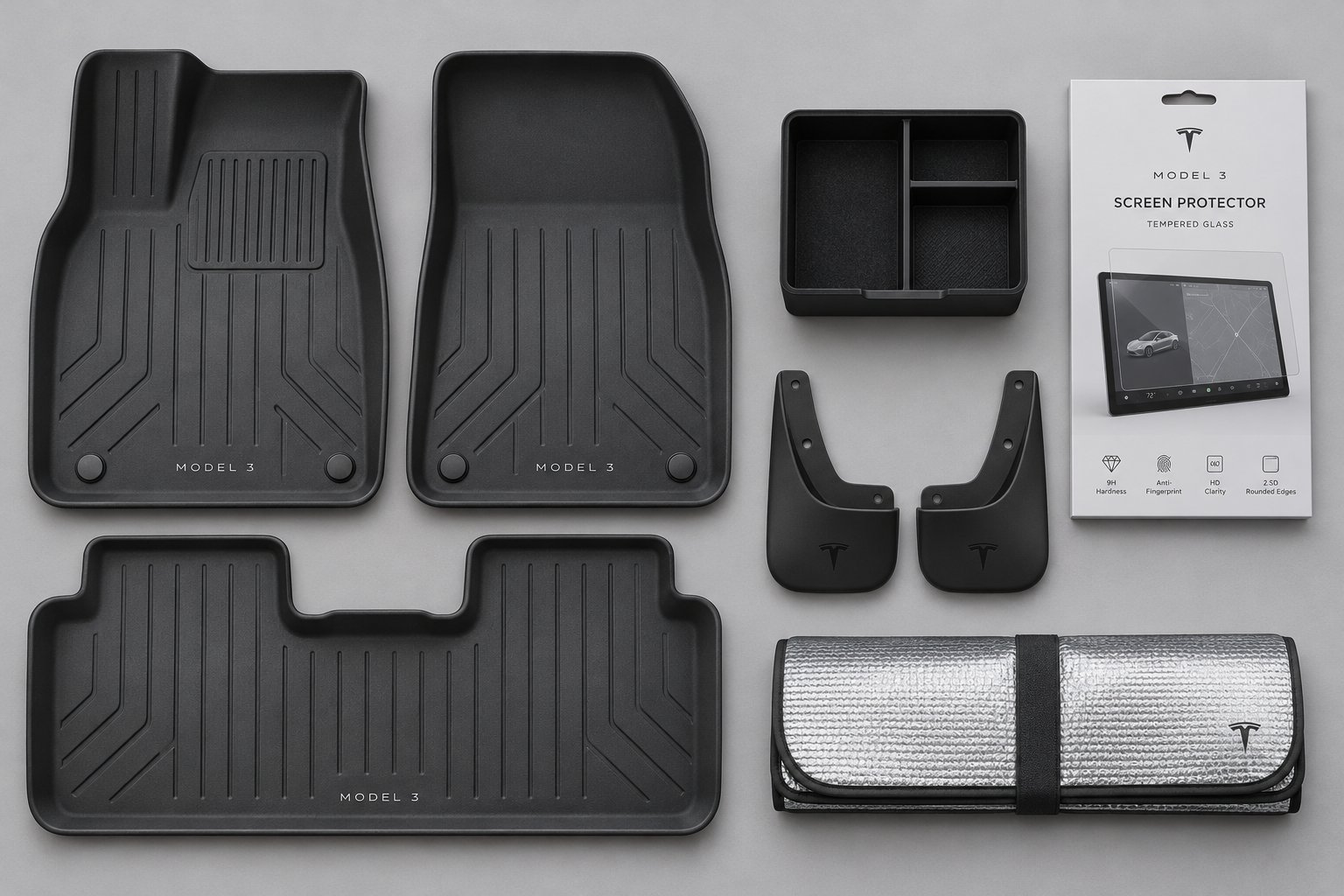
- All-weather floor mats ($80 - $130) — The single most protective accessory you can install. A quality set of 3D-molded TPE mats covers the full footwell, traps water and debris behind raised edges, and prevents carpet staining that's expensive to reverse. This is the one purchase where skipping the budget option and choosing a well-reviewed, year-specific set pays for itself immediately. As noted in Find My Electric's accessory roundup, Tesla's stock floor mats are not stellar — especially in wet or snowy climates — making aftermarket mats one of the most universally recommended upgrades.
- Center console organizer tray ($15 - $30) — Drops into the deep center console bin and creates compartments for sunglasses, cards, keys, and cables. This is a sub-$30 fix for a daily annoyance that every Model 3 owner encounters. You'll use it every single drive.
- Matte screen protector ($20 - $40) — Tempered glass with an anti-glare matte finish protects the touchscreen from scratches while eliminating the sunlight washout that makes navigation nearly unreadable on bright afternoons. Given that a touchscreen replacement can run around $1,500 at a Tesla service center, spending under $40 on a protector is straightforward math.
- Trunk mat ($20 - $40) — A fitted trunk liner prevents cargo from scratching the trunk floor and makes cleaning out dirt, pet hair, or grocery spills a thirty-second task instead of a deep-clean project. Flat-bottomed TPE mats are the most practical option — they catch liquids and wipe clean with a damp towel.
Total estimated cost: $135 to $240 at the high end, though most owners can land comfortably under $150 by choosing well-reviewed mid-range options rather than premium-tier pricing. This tier alone covers the four most common complaints new owners report: dirty floors, disorganized storage, screen glare, and a messy trunk. It's a remarkable return for a modest investment.
Mid-Range Build — $150 to $400 Total
This tier assumes you've already handled the essentials (or you're rolling the essential items into a single, slightly larger purchase). The mid-range build shifts the focus from basic problem-solving to meaningfully enhancing comfort, protection, and daily enjoyment. You're no longer just fixing frustrations — you're upgrading the ownership experience.
- Console wrap or ABS plastic overlay ($30 - $70) — If you have a pre-2021 Model 3 with the piano black console, this is your next priority. A quality wrap or rigid overlay stops further micro-scratching and refreshes the console's appearance. For 2021+ models with the matte finish, a console wrap becomes more about personalization — carbon fiber or wood grain textures are popular for building a tesla model 3 mod aesthetic without permanent modifications.
- Mud flaps — set of four ($30 - $60) — As covered in the exterior section, mud flaps protect rocker panels from road debris, gravel, and salt spray. At this price point, they're one of the best value-to-protection ratios of any exterior accessory. Easy to install, practical in every climate, and directly beneficial for preserving resale value.
- Glass roof sunshade ($40 - $100) — The Model 3's panoramic glass roof is stunning — and punishing on hot days. A lightweight, reflective mesh sunshade installs along the interior roof rails and reduces cabin temperature noticeably. Multiple accessory guides highlight sunshades as essential for summer driving, noting that they effectively reflect UV rays while folding compactly for storage when not in use. If you live anywhere with genuine summer heat, you'll wonder how you drove without one.
- Door seal kit for road noise reduction ($20 - $40) — Aftermarket rubber weatherstripping that supplements the factory door seals, targeting the wind noise that becomes noticeable at highway speeds. Especially valuable for pre-refresh Model 3 owners, where cabin insulation is thinner than the Highland variant. Installation takes about fifteen minutes per door and requires no tools beyond a clean surface.
- Lug nut covers or wheel rim protectors ($15 - $40) — Lug nut covers clean up the wheel appearance for under $20. Rim protectors — polyurethane rings around the wheel lip — create a sacrificial buffer against curb scrapes. Either option adds a polished look while protecting components that are expensive to refinish.
Total estimated cost when layered on top of the essential build: $285 to $460 combined. Even at the higher end, this represents a comprehensive setup that addresses interior comfort, exterior protection, noise reduction, and climate management. Most owners who reach this tier report that their Model 3 feels like a meaningfully different car — the kind of daily-driver refinement that Tesla's minimalist design leaves room for but doesn't deliver out of the box.
Complete Build — $400 and Above
This is where the build moves from practical upgrades into personalization and long-term vehicle preservation. Owners at this tier aren't just solving problems — they're making deliberate choices about how their car looks, feels, and holds its value over years of ownership. The accessories here tend to carry higher price tags individually, but they also deliver the kind of protection and refinement that compounds over time.
- Paint protection film for the front end ($500 - $2,000) — The single largest accessory investment most owners will consider, and arguably the one with the highest long-term financial return. PPF on the front bumper, hood edge, side mirrors, and headlights prevents rock chips and road debris damage that would otherwise require expensive repainting. Owners who plan to keep the vehicle for more than three years or who drive frequently on highways will recoup this investment through avoided repair costs.
- Carbon fiber exterior accents ($80 - $300) — Rear spoilers, mirror covers, and trim accents in carbon fiber add a refined, sporty appearance that complements the Model 3's lines without tipping into aggressive aftermarket territory. These are the visual upgrades that make a modified Tesla Model 3 look intentional rather than accessorized. Quality matters here — real carbon fiber weave patterns and proper UV-resistant clear coats distinguish premium pieces from cheap imitations that yellow within a year.
- Interior ambient lighting upgrade ($40 - $150) — For pre-refresh Model 3 owners whose cabins lack the Highland's factory ambient lighting, aftermarket LED kits add accent illumination along door panels, footwells, and the dashboard. More involved kits integrate with the vehicle's existing controls for a factory-like experience. Highland owners can explore supplementary lighting for areas the factory system doesn't cover.
- Premium trunk organizer system ($40 - $120) — Beyond a basic trunk mat, a dedicated trunk organizer with rigid dividers, collapsible sections, and anti-slip bases turns the cargo area into a genuinely functional storage zone. These are especially valuable for owners who regularly transport groceries, sports equipment, or work supplies.
- Roof rack and lifestyle accessories ($200 - $500) — For owners who bike, ski, kayak, or camp, a Model 3-compatible roof rack opens up an entirely new category of utility. As installation guides from accessory specialists note, the Model 3 has designated mounting points in the roof channels that support up to 150 pounds of cargo. Tesla's official rack is designed for easy installation without drilling, and several aftermarket options offer similar fitment at lower prices. Keep in mind that a roof rack adds aerodynamic drag that slightly reduces range — worth the trade-off for active lifestyles, but something to factor into trip planning.
Total estimated cost for the complete build (including essential and mid-range tiers): $900 to $2,500+, depending heavily on whether you opt for professional PPF installation and the scope of exterior carbon fiber accents. This isn't a spend-it-all-at-once budget — most owners build toward it over months, adding one or two pieces at a time as priorities become clear through real-world ownership.
For owners building across any of these tiers, sourcing from multiple individual vendors can get tedious — different shipping timelines, different return policies, different fitment guarantees. CUTIM's Model 3 accessories collection offers a practical alternative by combining storage solutions, protective accessories, and exterior styling options in one curated catalog. Having a single starting point that covers multiple categories — console organization, cabin protection, exterior upgrades — reduces the friction of assembling a build piece by piece from scattered sellers. It won't cover every niche item on a complete build list, but it streamlines the core shopping process significantly.
The goal isn't to spend the most — it's to spend in the right order. A $150 essential build that solves four daily problems delivers more ownership satisfaction than a $1,000 haul of accessories that look impressive but don't address what actually bothers you behind the wheel.
A structured budget keeps accessory shopping intentional rather than impulsive. But even with the right budget and the right priorities, there's one more trap that catches Model 3 owners at every spending level: buying the wrong products entirely. Cheap screen protectors that kill touchscreen responsiveness, console wraps that peel within weeks, and "accessories" that are actually performance modifications with warranty implications — these are the mistakes worth understanding before they cost you.
Accessories to Avoid and Common Buying Mistakes
Knowing what to buy is valuable. Knowing what not to buy might be even more valuable — because a bad accessory doesn't just waste your money. It can degrade the very experience it was supposed to improve. A screen protector that introduces touch lag makes the car harder to use than it was with a bare screen. A console wrap that peels after three weeks leaves sticky residue that's worse than the fingerprints it was covering. And a product marketed as a simple bolt-on accessory that's actually a performance modification can create warranty headaches you never saw coming.
These aren't hypothetical scenarios. They're the most frequently reported buying regrets across Tesla owner communities. Whether you're shopping deals on Tesla Model 3 accessories or investing in premium upgrades, these are the pitfalls that catch owners at every price point — and the knowledge to sidestep them.
Cheap Screen Protectors That Ruin Touchscreen Response
The Model 3's 15-inch touchscreen controls almost everything — climate, navigation, media, gear selection on Highland models, and even the glovebox latch. You interact with it constantly through taps, swipes, and pinch-to-zoom gestures. That makes it one of the first surfaces owners want to protect. It also makes it one of the easiest surfaces to accidentally sabotage with the wrong protector.
Ultra-thin or poorly manufactured screen protectors are the main culprit. Here's what goes wrong: the touchscreen uses a capacitive sensing system that detects the electrical charge from your fingertip through the glass. When you add a layer of material between your finger and the sensor, the quality of that material determines whether touch input remains crisp or starts to degrade. Cheap protectors — particularly thin plastic films or tempered glass with inconsistent adhesive layers — can introduce noticeable touch lag, reduce sensitivity along the screen edges where swipe-based controls live, and in some cases create unintended "phantom" inputs where the screen registers touches you never made.
Tesla's own documentation reinforces this concern directly. The Model 3 owner's manual explicitly warns against applying screen protectors, stating they "can result in unintended inputs to the touchscreen (phantom inputs), delayed response or unresponsiveness to touches, electrostatic discharge which can damage the touchscreen" — and that any resulting damage is not covered under warranty. That's a strong stance, and it tells you something important: Tesla is aware that low-quality protectors cause real problems.
Does that mean you should skip screen protection entirely? Not necessarily. Thousands of owners use high-quality tempered glass protectors without any touch issues. The key is being selective. Look for protectors that meet these minimum criteria:
- Specifically rated for capacitive touch compatibility — The listing should explicitly confirm this, not just say "touch-friendly."
- 9H hardness rating at minimum — This indicates strong scratch resistance. Lower hardness ratings mean the protector itself will scratch easily, defeating the purpose.
- Designed for your exact Model 3 generation — The pre-refresh and Highland screens have different bezel curves and edge profiles. A protector cut for one generation won't align properly on the other, and misalignment is a direct cause of edge-sensitivity loss.
- Oleophobic coating — This reduces fingerprint buildup and keeps the surface feeling smooth under swiping gestures, which helps maintain responsiveness over time.
If a screen protector costs less than $10 and lists no material specifications, you're gambling with the primary control interface of a $35,000+ vehicle. That's not a gamble worth taking.
Ill-Fitting Console Wraps and Interior Pieces
Console wraps are one of the most popular tesla model 3 accessories 2022 and earlier owners purchase — that piano black center console practically demands protection. But not all wraps survive real-world cabin conditions, and the failures are predictable once you understand what causes them.
Budget vinyl wraps frequently use low-grade pressure-sensitive adhesive. During installation in a comfortable room-temperature garage, they look perfect. Two weeks later — after the cabin has cycled through hot afternoons, cold mornings, and the general thermal stress of daily driving — the edges start lifting. Within a month, corners peel back entirely. Removing the failed wrap often leaves adhesive residue on the original surface that requires careful solvent treatment to clean, and aggressive removal can damage the underlying trim.
As adhesive testing by accessory engineers confirms, most peeling starts before the first drive. Surface contamination from fingerprint oil, interior dressing products, wax, or even dust at the installation site weakens the initial bond. Cold installation temperatures prevent the adhesive from flowing properly into the surface texture. And once an edge lifts and collects dust or stretches, re-sticking it almost never produces a durable result — the adhesive has already been compromised.
Rigid ABS plastic overlays tend to outperform vinyl wraps in longevity for exactly this reason. Instead of relying entirely on adhesive contact across a large surface area, ABS covers use a combination of pre-applied 3M tape on key contact points and the part's own rigidity to hold shape. They resist warping under cabin heat, don't stretch or shrink, and if one does eventually need replacement, it peels off cleanly without leaving the residue problems that cheap vinyl wraps create.
The other common interior mistake is buying generic or "universal-fit" pieces that claim Model 3 compatibility. Imagine purchasing a center console organizer advertised as fitting "Tesla Model 3 and Model Y." Sounds convenient — except the Model 3 and Model Y have different console dimensions, different tray mechanisms, and in the case of model 3 Highland accessories versus legacy versions, entirely different interior layouts. A "universal" organizer that technically drops into the bin but rattles loosely, sits crooked, or leaves gaps at the edges isn't solving the storage problem. It's creating a new annoyance.
The rule of thumb: if a product listing doesn't specify your exact model, year range, and generation (pre-refresh or Highland), treat it as a fitment gamble. Precision-fit interior accessories exist at every price point — there's no reason to settle for vague compatibility claims.
Performance Parts Marketed as Simple Accessories
This is the buying mistake with the highest potential cost, and it trips up owners who are enthusiastic about modifying their car but unclear about where "accessories" end and "modifications" begin.
The distinction matters. A center console organizer, a set of floor mats, or a matte screen protector are accessories — they don't alter how the vehicle's mechanical, electrical, or software systems operate. They snap in, peel on, or drop into place, and they can be removed without any trace. A coilover suspension kit, an aftermarket brake system, or ECU software tuning are performance modifications — they change how the car drives, stops, or manages its powertrain. These are fundamentally different categories with fundamentally different risk profiles.
The problem arises when certain products blur these lines. You'll encounter listings for "suspension upgrades" positioned alongside floor mats in accessory catalogs, or "performance tuning modules" advertised with the same casual tone as a trunk organizer. The marketing language makes them feel like simple add-ons, but the reality is that these products alter vehicle systems in ways that can affect safety, handling characteristics, and — critically — warranty coverage.
Under the Magnuson-Moss Warranty Act, aftermarket parts don't automatically void a vehicle's warranty. Manufacturers must prove that a specific modification caused a specific failure before denying coverage. That's meaningful legal protection. However, the practical reality is less clean-cut. If you install an aftermarket suspension and later experience a drivetrain issue, the burden of proof can become expensive and time-consuming to navigate. ECU tuning leaves digital fingerprints that service technicians can detect, and Tesla's service network has become increasingly attentive to software modifications in particular.
Cosmetic accessories — wraps, covers, organizers, lighting kits, protective films — carry effectively zero warranty risk because they don't interface with the vehicle's operating systems. Performance modifications operate in grayer territory. The safest approach for most Model 3 owners is straightforward: stick to bolt-on, non-invasive accessories unless you fully understand the warranty implications, have budgeted for potential out-of-pocket repairs, and are making an informed choice rather than an impulsive one.
This doesn't mean performance modifications are inherently bad — many owners pursue them deliberately and happily accept the trade-offs. The mistake is buying one without realizing that's what you're doing because the product listing made it look like just another accessory.
Red Flags to Watch for When Shopping
Whether you're browsing a dedicated Tesla accessory store or scrolling through a general marketplace, certain warning signs in a product listing consistently predict a bad buying experience. Before adding anything to your cart, scan for these:
- Missing vehicle-year compatibility details — If the listing says "fits Tesla Model 3" without specifying 2017-2023, 2024+, or Highland, the seller either doesn't know or doesn't care about fitment accuracy. Either way, you're taking on the compatibility risk.
- No customer photos in reviews — Text-only reviews can be fabricated or incentivized. Real customer photos showing the product installed in an actual Model 3 cabin are the most reliable signal of legitimate feedback. If a listing has dozens of five-star reviews but zero photos, proceed with skepticism.
- Vague material descriptions — "Premium material" or "high-quality plastic" without specifying TPE, ABS, tempered glass, carbon fiber, or any identifiable compound is a red flag. Quality manufacturers name their materials because they're proud of them. Vague descriptions often mask cheap alternatives.
- Return policies shorter than 30 days — Many accessory problems — peeling adhesive, loose fitment under heat cycling, touch sensitivity issues — don't surface until weeks after installation. A 14-day or no-return policy effectively means you can't return the product once these defects appear. Reputable sellers stand behind their products with at least a 30-day window.
- Identical product photos across multiple sellers at wildly different prices — This is a hallmark of generic dropshipped products where the same low-quality item gets listed by dozens of sellers using the manufacturer's stock images. If three sellers show the exact same photos but prices range from $8 to $45, you're looking at a commodity product with no real quality control at the listing level.
None of these red flags guarantee a bad product on their own. But when two or three appear in the same listing, the probability of a disappointing purchase climbs sharply. Spending an extra sixty seconds checking these details before checkout is the cheapest quality filter available — and it costs nothing but a moment of attention.
Avoiding bad purchases is ultimately about pattern recognition: recognizing the signals that separate a thoughtful accessory from a regrettable impulse buy. With that filter in place, the final step is putting everything together — a clear, prioritized action plan for what to buy first and how to build a setup that's tailored to the way you actually use your car.
What to Buy First and How to Build Your Best Model 3 Accessories Setup
You've seen the pain points, explored the categories, navigated the Highland compatibility maze, weighed OEM against aftermarket, and learned which products to avoid entirely. That's a lot of information — and it's easy for all of it to blur together into a vague sense of "I should probably buy some stuff." Vague intentions lead to scattered purchases, missed priorities, and the kind of accessory drawer full of impulse buys that never made it onto the car.
This final section cuts through that noise. It distills everything covered in this guide into two actionable frameworks: a definitive first-five list ranked by immediate daily impact, and a phased approach to building a personalized setup over time. Whether you picked up your Model 3 last week or you've been driving one for two years and finally want to address those lingering frustrations, this is your action plan.
The First Five Accessories Every New Owner Should Buy
If you could only buy five accessories and nothing else, these are the five — ranked in the order that maximizes value based on how quickly you'll encounter the problem each one solves. This isn't a "nice things to have" list. Every item here addresses a friction point that surfaces within your first few weeks of ownership, and together they form the foundation of the best tesla aftermarket accessories setup you can build on a modest budget.
- All-weather floor mats — You'll need these before your first rainy commute, your first muddy parking lot, or your first coffee spill. Tesla's factory carpet offers almost no resistance to moisture, and water that soaks through into the padding creates odor problems that are expensive to reverse. A set of laser-measured, 3D-molded TPE liners with raised edges catches everything before it reaches the carpet. This is the single highest-ROI accessory you can buy. As owner-tested guides consistently confirm, all-weather mats are the universal number-one priority across every Tesla model — and for good reason. Just verify your exact model year before ordering, because pre-refresh and Highland fitments are not interchangeable.
- Center console organizer — By day three of ownership, you'll have dropped your sunglasses, key card, and a charging cable into the deep center console bin and watched them all disappear into a single tangled pile. A drop-in organizer tray with dedicated compartments turns that frustrating pit into a functional storage system for under $30. It's one of those upgrades where you notice it every single drive — not because it's flashy, but because reaching for your sunglasses and actually finding them right where you left them is quietly satisfying.
- Screen protector (matte tempered glass) — The 15-inch touchscreen is the primary interface for nearly every vehicle function. It's also the most expensive single component you interact with daily — screen replacement can run well over $1,000 at a service center. A quality matte tempered glass protector eliminates sunlight glare that makes navigation unreadable on bright afternoons while adding a layer of scratch resistance for under $40. That's the kind of math that doesn't require deliberation. Choose matte if you drive in daylight frequently, glossy if you prioritize display clarity above all else, and make sure the protector specifies your exact Model 3 generation.
- Trunk mat or organizer — The Model 3's trunk offers generous cargo volume and zero organizational structure. Groceries slide. Gym bags tumble. Anything with a flat bottom migrates to the opposite side of the trunk during the first turn. A fitted trunk liner protects the cargo floor from scratches and spills, while a collapsible organizer adds compartments that keep items where you put them. Either option costs $20 to $50 and immediately makes the trunk space more functional than Tesla designed it to be.
- Mud flaps — This is the one most new owners skip — and the one most experienced owners wish they'd installed sooner. Without mud flaps, your wheels throw road debris, gravel, and salt spray directly onto the rocker panels and lower body with every mile driven. The damage accumulates quietly over months until you notice the dulled paint, micro-chips, and early corrosion along the wheel wells. A Model 3-specific set costs $30 to $60 and installs in about twenty minutes. It's the least glamorous accessory on this list and one of the most effective at preserving long-term resale value.
Why this specific order? Because it mirrors the sequence in which problems actually surface during ownership. Dirty floors show up immediately. Storage chaos follows within days. Screen glare hits the first time you drive west in the afternoon. Trunk disorganization reveals itself on your first errand run. And rocker panel damage — while invisible at first — compounds silently with every drive until it becomes a visible and costly problem. Buying in this order means you're always solving the most urgent issue next, rather than spending money on something you won't appreciate for months.
The total cost for all five items typically lands between $175 and $300, depending on whether you lean toward budget or mid-range options. For a vehicle that costs $35,000 or more, that's a remarkably small investment to address the five most common 2025 Tesla Model 3 accessories gaps in one focused purchase.
Building a Personalized Setup Over Time
Here's the mindset shift that separates smart accessorizing from impulsive shopping: your ideal Model 3 setup isn't something you assemble in a single checkout session. It's something you build over time, guided by real-world experience with your car, your driving patterns, and your specific pain points.
The first month of ownership is a discovery period. You'll notice things that bother you on your specific commute, in your specific climate, with your specific daily routines. Maybe the glass roof turns your cabin into a sauna during summer, and a sunshade jumps to the top of your priority list. Maybe you park on a narrow street where curb rash is a weekly threat, and wheel rim protectors suddenly matter more than they did on paper. Maybe you drive highways at dawn and dusk, and the screen glare you assumed a matte protector would fix turns out to be a non-issue because of the angle you drive.
Everyone's list looks slightly different after the first thirty days. That's the entire point. Resist the urge to buy everything at once based on someone else's "must-have" list — including this one. Buy the first five essentials, drive for a few weeks, and let your actual experience tell you what comes next.
Seasonal accessories are a natural second phase. Sunshades for the glass roof matter most in summer. All-weather floor mats become critical in regions with wet or snowy winters. Door seal kits for road noise are most appreciated during highway-heavy driving seasons. Timing these purchases to the season when you'll actually use them spreads the cost over the year and ensures you're spending on accessories that deliver immediate, tangible value when they arrive.
For owners who've moved past the essentials and want to explore a broader range of Model 3 storage, protection, and exterior styling options without sourcing from a dozen different sellers, CUTIM's curated Model 3 accessories collection offers an organized starting point. It brings together multiple categories — console organizers, protective accessories, exterior upgrades — into a single catalog, which reduces the friction of assembling a build piece by piece. Having one resource that covers the core accessory categories makes it easier to compare options side by side and build a more personalized, functional cabin setup at your own pace.
One last thought worth carrying with you as you shop. It's tempting to measure your setup against what you see posted online — Instagram builds with every surface wrapped, every accent lit, every gap filled. Those setups look impressive. But the best-accessorized Model 3 you can own isn't necessarily the one with the most add-ons. It's the one where every single piece was chosen because it solves a real problem you actually have.
The best-accessorized Model 3 isn't the one with the most add-ons — it's the one where every piece solves a real problem the owner actually has.
Start with the five essentials. Drive for a month. Let real friction points guide your next purchase. Build deliberately, not impulsively. That's how you turn a great car into one that fits your life perfectly — without a garage shelf full of accessories you never use.
Frequently Asked Questions About Tesla Model 3 Accessories
1. What are the first accessories every new Tesla Model 3 owner should buy?
The five highest-impact accessories to purchase first, in priority order, are: all-weather floor mats to protect carpet from moisture and debris, a center console organizer tray to add structure to the deep storage bin, a matte tempered glass screen protector to eliminate glare and guard the touchscreen, a trunk mat or collapsible organizer to keep cargo from sliding, and mud flaps to shield rocker panels from road debris. This combination typically costs between $175 and $300 and addresses the most common ownership frustrations within your first few weeks of driving. Retailers like CUTIM (cutimauto.com) offer curated Model 3 collections that bundle several of these core categories in one place, simplifying the initial shopping process.
2. Do Tesla Model 3 Highland accessories fit the pre-refresh Model 3?
In most cases, no. The 2024+ Highland refresh introduced extensive design changes — a new front and rear fascia, a redesigned dashboard with integrated ambient lighting, a fixed center console tray replacing the old sliding design, stalkless steering controls, and reshaped footwells. According to accessory fitment specialists, the Highland shares only about 40 percent of its accessory footprint with the legacy 2017-2023 Model 3. Floor mats, console organizers, screen protectors, dashboard covers, and exterior body pieces are generally not interchangeable. However, trunk organizers, frunk accessories, USB drives for Sentry Mode, portable tire inflators, jack pads, and cabin air filters work across both generations since those areas remained largely unchanged.
3. Are aftermarket Tesla Model 3 accessories better than Tesla OEM accessories?
It depends on the category. OEM accessories offer guaranteed fitment, consistent design language, and direct Tesla warranty backing — making them a strong choice for exterior trim, painted body pieces, and charging equipment where color matching and electrical compatibility matter. Aftermarket accessories excel in categories where Tesla offers limited or no options, such as center console organizers, trunk dividers, sunshades, screen protectors, and ambient lighting kits. Reputable aftermarket brands often match OEM quality at 30 to 40 percent lower pricing, and they benefit from thousands of community-verified owner reviews. The smartest approach is evaluating each accessory category independently rather than committing exclusively to OEM or aftermarket.
4. Can Tesla Model 3 accessories void the vehicle warranty?
Cosmetic and organizational accessories — floor mats, console organizers, wraps, screen protectors, mud flaps, and trunk organizers — carry effectively zero warranty risk because they do not interface with the vehicle's mechanical, electrical, or software systems. Performance modifications like coilover suspensions, aftermarket brake kits, and ECU tuning operate in a gray area. Under the Magnuson-Moss Warranty Act, aftermarket parts do not automatically void a warranty; the manufacturer must prove that a specific modification caused a specific failure. However, the practical burden of proof can be costly and time-consuming for owners. Sticking to bolt-on, non-invasive accessories is the safest approach unless you fully understand and accept the potential warranty implications of deeper modifications.
5. How much should I budget for Tesla Model 3 accessories?
A practical budget breaks down into three tiers. The essential build — under $150 — covers all-weather floor mats, a console organizer, a screen protector, and a trunk mat, addressing the four most common daily frustrations. The mid-range build — $150 to $400 total — adds a console wrap, mud flaps, a glass roof sunshade, door seal kits for road noise, and wheel protection. The complete build — $400 and above — includes paint protection film for the front end, carbon fiber exterior accents, ambient lighting, premium trunk organizer systems, and roof rack accessories. Most owners build gradually over several months, letting real driving experience guide which tier to advance to next. Collections like CUTIM's Model 3 catalog help streamline multi-category shopping by combining storage, protection, and styling accessories in one source.