
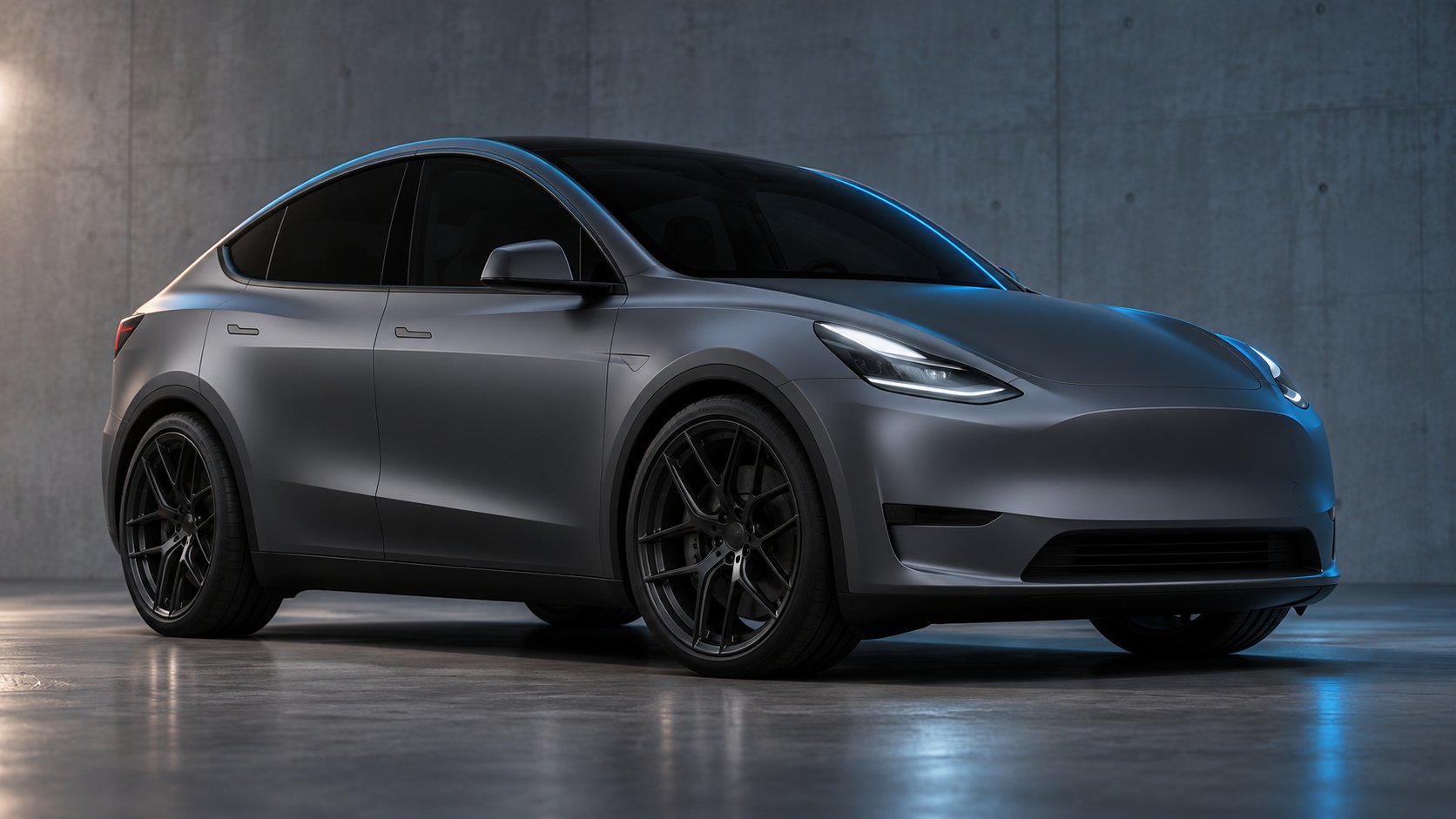
What a Custom Tesla Model Y Really Means
You pull into a parking lot and spot three Model Ys that look exactly like yours. Sound familiar? For many owners, that moment is where the urge to personalize begins.
A custom Tesla Model Y is any owner-driven change to the factory vehicle's appearance, comfort, function, or performance, from simple bolt-in accessories to wraps, wheels, and suspension work.
What Counts as a Custom Tesla Model Y
Customization sits on a spectrum. At the light end, you'll find all-weather mats, console organizers, and interior trim pieces that go in within minutes and come out just as easily. In the middle are vinyl wraps, paint protection film, and aftermarket wheels. At the deep end are aero kits, coilovers, and brake upgrades that change how the car looks and drives. The same spectrum applies whether you drive the Tesla Model Y Performance, the Tesla Model Y Long Range trim (now sold as the Premium Long Range), or the newest Tesla refresh. What changes is which parts actually fit.
Why Model Y Owners Customize
The reasons are usually as practical as they are personal. A popular car blends in, so small touches help yours feel like your own. Owners also want to protect paint and upholstery, add storage the factory layout lacks, and sharpen steering and braking feel for spirited drives. Even tiny fixes count. In one six-month ownership review, the owner found the cupholders too small for reusable bottles and added an adapter. That's customization too, just at its simplest.
How This Guide Is Organized
Most pages about Model Y mods are built around a product catalog. This guide stays brand-agnostic and is organized around what you want the car to do for you:
- Comfort: protection, storage, and everyday usability.
- Aesthetics: wraps, color, wheels, and styling details.
- Performance: tires, brakes, suspension, and aero.
Every path starts from the same spot, though. The lineup now spans Standard, Premium, Performance, and Model Y L configurations, and a part designed for one may not fit another. Before you choose a goal, you need to know exactly which Model Y is sitting in your driveway.
Know Your Exact Model Y Before Buying Anything
Imagine waiting a week for new floor mats, only to find the edges curl up because they were molded for a different Model Y. It's the most common and most costly customization mistake, and it's almost always avoidable with five minutes of homework.
Identify Your Generation Before Ordering Parts
The earlier Model Y and the refreshed Juniper share a name, but that doesn't mean they share accessories. Exterior panels, lighting, interior layout, and trim pieces changed with the refresh. That affects molded mats, console inserts, lighting upgrades, and aero parts. One Juniper fitment guide makes the key point: a listing that just says "Model Y" is not the same as explicit Juniper fitment.
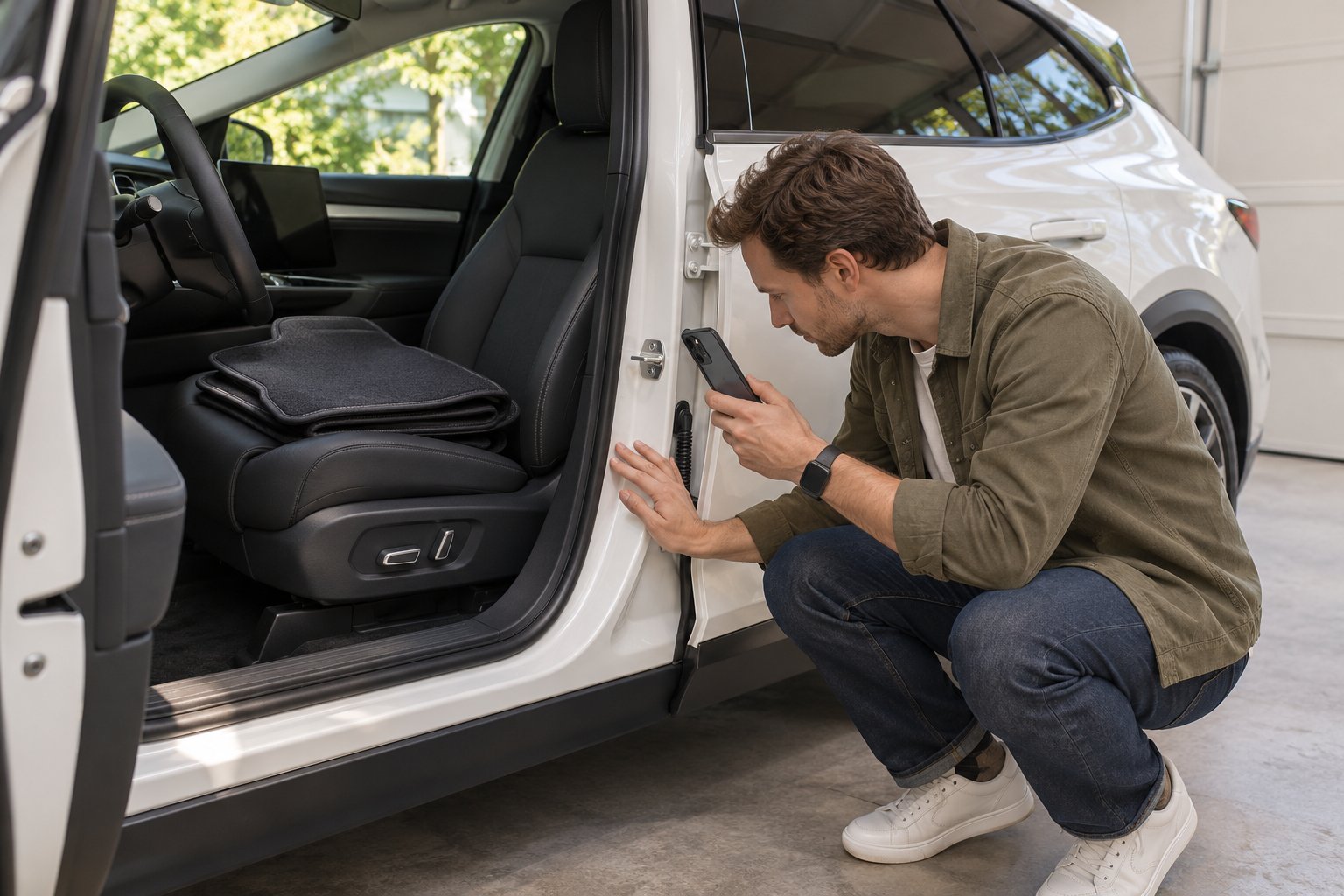
Don't rely on model year alone, either. Model year and calendar year can differ, so a car delivered in late 2024 might be registered as a Tesla Model Y 2025. Check the DATE field on the driver's door-jamb sticker, which shows the month and year of production. You can also confirm your VIN on the vehicle info screen. In a Tesla VIN, the 10th character encodes model year and the 11th identifies the plant. Fremont-built Juniper units carry production dates from January 2025 onward, so the build date tells you far more than the badge does.
Trim and Seating Configuration Matter
Your Tesla build details shape fitment too. The Tesla Model Y Standard rear-wheel drive uses cloth and synthetic leather upholstery, while Long Range versions add full synthetic leather, a front LED lightbar, and a panoramic glass roof, as Edmunds notes. Those differences matter for seat covers, lighting mods, and sunshades.
Drivetrain counts as well. An all-wheel-drive car carries a second motor, so Model Y weight and suspension tuning vary between versions. That's why lowering springs are usually sold per drivetrain. Seating layout changes the rear floor and cargo area, so a liner built for a 5-seat car won't suit one with a Tesla third row.
Wheel and Tire Fitment Basics
Factory wheel sizes vary by trim. Current Edmunds data lists 18- or 19-inch wheels on the Tesla Model Y Standard RWD, 19- or 20-inch wheels on Long Range versions, and 21-inch wheels on the Performance. Brake hardware can also differ by trim, so a wheel that clears one car's calipers may not clear another's.
| Checklist Item | Where to Find It | Why It Matters for Mods |
|---|---|---|
| Production date / generation | Door-jamb sticker DATE field | Earlier and Juniper parts often aren't interchangeable |
| Trim | Tesla app or original order details | Affects upholstery, lighting, and suspension parts |
| Drivetrain | VIN, badge, or order details | Changes weight, spring choice, and suspension fitment |
| Seating | Visual check of rear rows | Determines mat and cargo liner shape |
| Factory wheel size | Tire sidewall or order details | Sets baseline for tire size and brake clearance |
| Paint color code | Original order details or Tesla Service | Needed for touch-up paint and color-matched parts |
A verified spec sheet tells you what will fit. It doesn't tell you what's worth buying first, and that depends entirely on why you want to customize in the first place.
Choose Your Customization Path by Goal
Where do you start when the options feel endless? Start with one question: what do you want your Model Y to do better? The answer points you to a path.
- If your goal is an easier, cleaner daily drive, start with protection and storage.
- If your goal is a head-turning look, start with paint protection or a wrap, then add styling details.
- If your goal is sharper driving, start with tires before you touch anything else.
- If you want a bit of everything, finish step 1 first. Those items are low-risk, easy to undo, and support every other path.
The Daily Comfort Path
This path is about living with the car. All-weather floor mats and frunk or trunk liners catch mud and spills. Cargo organizers keep groceries from sliding around. A screen protector guards the touchscreen against scratches and smudges, and a fitted sunshade helps keep a glass-roof cabin cooler. Seat cushions or covers round it out. You'll notice these upgrades every single day. If you follow Tesla YL USA news because you want the longer Model Y L, remember that its extra row changes mat and liner shapes, so the fitment check still applies.
The Show and Aesthetic Path
Here, visual impact leads. Protect or change the paint first with PPF or a vinyl wrap, because that choice sets the palette for everything else. Many owners wrap over factory Tesla colors to get a finish the factory doesn't offer. Chrome delete usually comes next. On a black Tesla Model Y, blacked-out trim makes the body look seamless. Wheels follow, and few changes transform a car's stance like a Model Y with BBS wheels or another bold design. Lighting accents and interior trim finish the look.
The Performance and Track Path
Tires come first. Every input, whether accelerating, braking, or steering, passes through four small contact patches. A better tire improves all three at once, while a brake or suspension upgrade improves only one. That's why tires deliver the most noticeable change per dollar. You'll replace them eventually anyway, and Consumer Reports notes that four tires plus mounting and balancing commonly cost $800 or more. Choosing performance-minded Tesla Model Y tires at replacement time is the smartest money you'll spend. Confirm your Tesla Model Y tire size and load rating on the sidewall first. After tires, upgrade brake pads and fluid, then suspension, then aero.
DIY-Friendly Versus Professional Installation
Install complexity falls into three tiers. Mats, organizers, screen protectors, and wheel caps need no special skills. Chrome delete and wheel swaps take patience and the right tools. Suspension, brakes, electrical work, and body kits belong with specialists. One Tesla installer warns that incorrect brake installation can compromise safety, and that wiring changes risk conflicts with the car's software or battery.
| Mod Type | Typical Install Difficulty | Reversibility | Primary Benefit |
|---|---|---|---|
| All-weather mats and liners | DIY | Fully reversible | Surface protection |
| Organizers and sunshades | DIY | Fully reversible | Daily usability |
| Screen protector | DIY | Fully reversible | Scratch and smudge protection |
| Chrome delete (vinyl) | Moderate | Reversible with care | Styling |
| Full wrap or PPF | Pro Recommended | Reversible with care | Color change or paint protection |
| Wheels and tires | Moderate | Fully reversible | Grip and stance |
| Brake pads and fluid | Pro Recommended | Reversible | Consistent stopping |
| Lowering springs or coilovers | Pro Recommended | Reversible with care | Handling and ride height |
| Aero and body kits | Pro Recommended | Varies by mounting method | Styling or downforce |
Notice where the comfort path ends: inside the cabin, where seats and trim take the most daily wear. That's also where your choice of materials quietly decides how good the car will still look in a few years.
Interior Upgrades and Material Trade-Offs
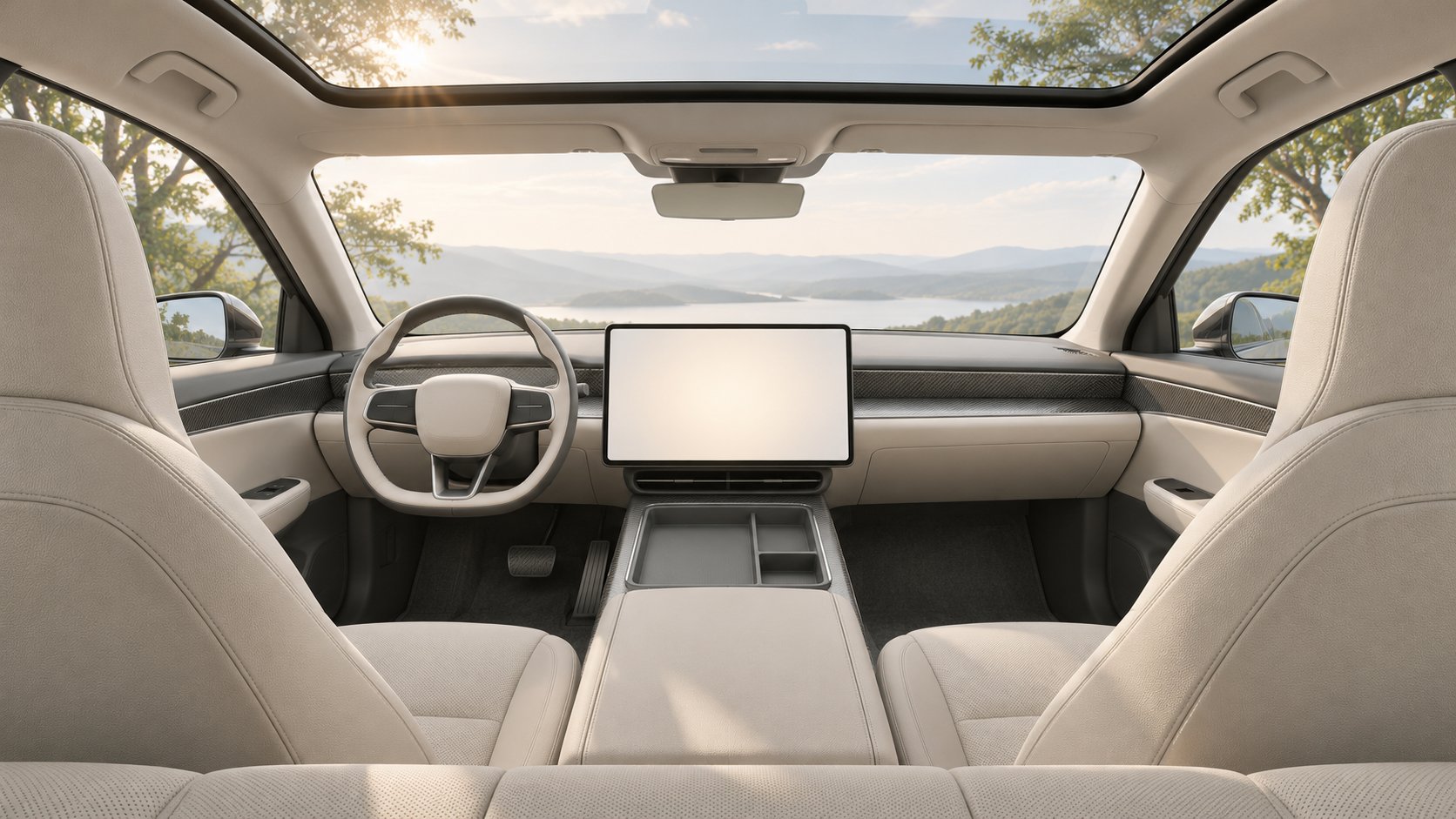
You spend far more time looking at your seats than at your paint. Every coffee run, school pickup, and road trip leaves a mark somewhere in the cabin. The good news? The minimalist Tesla interior is easy to upgrade, as long as you know what each material asks of you in return.
Seat Materials Compared
Most Model Y seats leave the factory in synthetic vegan leather, so aftermarket covers either protect that surface or change its character entirely. One Tesla seat material guide sums up the trade-offs like this:
| Material | Feel | Durability | Maintenance Needs | Best For |
|---|---|---|---|---|
| Nappa leather | Very soft, smooth, upscale | Can wear faster without protection | High: frequent conditioning, careful cleaning | Comfort-first, luxury-focused drivers |
| Standard leather | Smooth, cool, natural texture | Long life when cared for | Moderate: conditioning every few months, UV protection | Long-term owners who want a classic look |
| Alcantara | Velvety, grippy, sporty | Wears well in normal use | Moderate: gentle brushing, no soaking | Performance-themed cabins and accent inserts |
| Vegan/synthetic leather | Sleek, close to factory | Water- and stain-resistant | Low: damp cloth and mild soap | Daily drivers, families, rideshare |
Climate matters too. Smooth leathers can feel hot after sitting in the sun, while suede-like Alcantara stays grippy but absorbs spills that synthetic leather simply sheds.
Protecting a White or Light Interior
A white Tesla interior looks stunning, especially against darker paint like Tesla Midnight Silver Metallic. It also shows everything. New dark denim is the usual culprit, and the Tesla owner's manual admits that dyes and oils from clothing can transfer onto seats and can't always be safely removed.
Tesla's guidance is simple. Wipe spills quickly using a microfiber cloth with warm water and mild soap, then dry with a lint-free cloth. On white seats only, warm water with isopropyl alcohol is a last resort. Overdoing it damages the top coat, and the manual notes that damage from improper cleaning isn't covered by warranty. Skip bleach, citrus, and silicone-based products.
Covers or coatings? Tesla cautions against aftermarket seat covers because they can stain seats, affect occupancy sensors, or restrict airbag deployment. If you still want one, choose a design with side-airbag tear seams. Protectant coatings sit in a similar gray zone, since the manual doesn't recommend protectants on factory seats. That's worth weighing twice in a three-row car like the Model YL USA shoppers have been following, where kids and cargo share more light surfaces.
Practical Cabin Upgrades That Add Daily Value
The best Model Y accessories solve small, daily annoyances. Center console organizers turn a deep bin into usable compartments. Under-seat storage trays hide charging cables and an emergency kit. A matte screen protector cuts glare and fingerprints. Trim wraps refresh scuffed glossy panels without replacing them. Want a carbon look? Know what you're actually buying:
- Real carbon fiber: lightweight and premium, but a trim specialist notes it can yellow or crack with UV exposure if neglected.
- Hydro-dipped: a carbon-pattern film transferred onto a plastic or metal part, then clear-coated. It's a surface finish, usually more affordable, and only as durable as its clear coat.
- ABS with wrap: a plastic overlay covered in carbon-pattern vinyl. It's the budget choice and easy to swap, though edges can lift over time.
Caring for Custom Interior Surfaces
Each surface needs its own routine. Condition genuine and Nappa leather every few months and shade it from harsh sun when you can. Brush Alcantara gently and clean it with a barely damp microfiber cloth, since soaking flattens the nap. Wipe carbon trim with a soft cloth and mild cleaner, and avoid abrasive polishes that haze the clear coat. Whatever the material, apply cleaner to the cloth, never directly onto the seat.
Carbon trim inside often sparks a bigger question about the outside. Should the paint, mirror caps, and even the Tesla wheels carry the same look?
Exterior Styling With Wraps, PPF, and Color
Ever notice how one wrapped Model Y stands out in a lot full of identical ones? Paint is the biggest canvas on the car, so it's where many Tesla Model Y mods begin. Three products dominate the conversation, and people mix them up all the time.
Vinyl Wrap vs PPF vs Ceramic Coating
Each one does a different job. Vinyl wrap changes the color or finish. Paint protection film (PPF) is a thick urethane layer, about 6 to 8 mil, that absorbs rock chips. Quality films can even self-heal light scratches with heat. Ceramic coating is a liquid polymer that adds gloss and makes water bead off, but it can't stop impacts. Standard vinyl, at roughly 3 to 4 mil, offers little chip protection, as one detailing comparison explains.
| Option | Primary Purpose | Changes Color | Protects Against Chips | Reversible | Care Notes |
|---|---|---|---|---|---|
| Vinyl wrap | Color or finish change | Yes | Minimal | Yes, fully removable | Roughly 3 to 7 years. High heat shortens its life. |
| PPF | Impact protection | Clear by default. Colored and satin films exist. | Yes, with self-healing on quality films | Yes, with professional removal | Up to 10 years with proper care |
| Ceramic coating | Gloss and easier cleaning | No | No | No, it must be polished off | Typically 3 to 5 years |
These options also stack. The most common combination is PPF on high-impact areas like the bumper and hood, with ceramic coating over the whole car. Want color and real protection together? Colored PPF does both. A ceramic coat over vinyl helps too, because vinyl is more porous than paint and stains more easily.
Popular Color Directions
Your factory paint is the base you'll either protect or cover. A silver Tesla or a white one hides dirt and light scratches well. Solid black is the hardest color to keep clean, and Find My Electric suggests that black paint should really wear PPF in winter climates. Midnight Silver Metallic reads more grey than silver, while Deep Blue Metallic shines in direct sun. Tesla has also brought back a metallic black, Diamond Black, on the Model 3 and Model Y. Factory palettes change often, so check the configurator for current choices.
The biggest trends lean toward finishes the factory doesn't offer. Matte black gives a black Tesla a stealthy, almost sculpted look. Nardo-style flat grey is another favorite. You can get either one with a vinyl wrap. If you'd rather keep your original color, satin PPF gives you a muted finish plus chip protection.
Chrome Delete, Lighting, and Body Accents
Small details finish the look. Chrome delete covers bright window trim in gloss or satin black. Tinted lighting overlays, blacked-out badges, and lip spoilers add contrast. Carbon accents in the Tesla Model Y interior often inspire matching mirror caps outside. Fitment is generation-specific here. The Juniper refresh reshaped the front and rear lighting, so an overlay or diffuser made for an earlier car won't line up. The stretched three-row Model Y L, which some people search for as the Tesla Model L, has its own body proportions too. Confirm your production date before ordering anything that bolts or sticks to the body.
Maintaining Wraps and Matte Finishes
Films are tougher than they look, but the wrong wash can lift edges or haze a finish. Detailing pros recommend the two-bucket method with pH-neutral soap. Matte surfaces need extra care, because you can't polish out a mistake.
- Do hand-wash with two buckets, a pH-neutral shampoo, and a clean mitt.
- Do rinse at low pressure and dry with a microfiber towel.
- Do park in a garage or in shade when you can, since UV ages films.
- Do wait about a week after a PPF install before the first wash.
- Don't aim a pressure washer at film edges. It can lift the film or force water underneath.
- Don't use automatic brush washes, which wear film surfaces over time. A touchless wash is the safer backup.
- Don't wax or polish matte finishes. Both can leave shiny, blotchy spots.
A flawless wrap can still sit on wheels that look like everyone else's. Changing the wheels transforms the whole silhouette. Unlike a wrap, though, wheels have to fit around brakes, hubs, and suspension geometry.
Wheels, Tires, and Getting Fitment Right
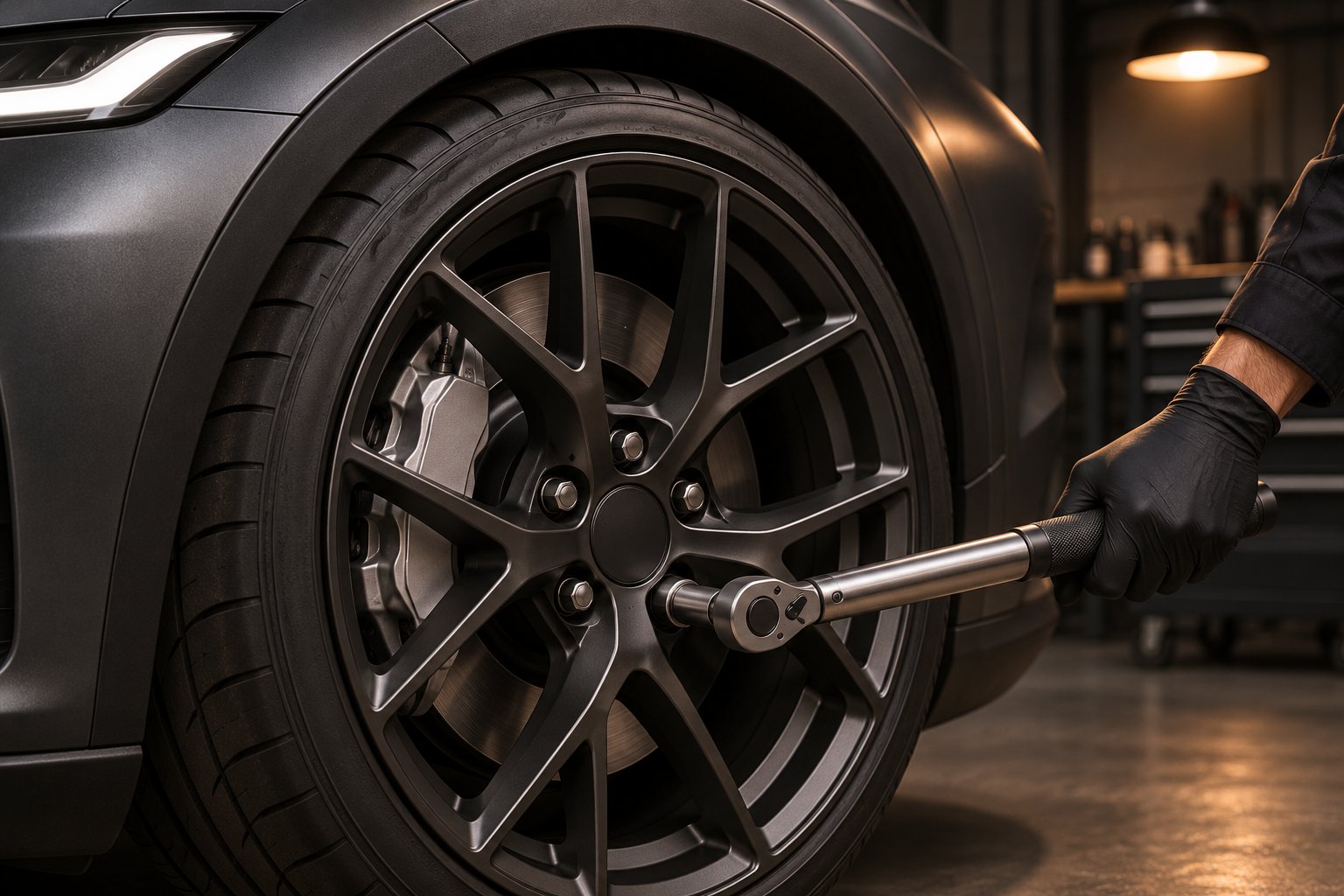
Swap the wheels and the whole car changes character. No other mod alters looks, ride, grip, and range all at once. That's exactly why wheels deserve more homework than anything else on your list of Tesla Model Y modifications.
Bolt Pattern, Offset, and Center Bore Explained
Three measurements decide whether a wheel will mount properly:
- Bolt pattern: the number of lug studs and the diameter of the circle they form. If it doesn't match, the wheel won't bolt on.
- Offset: the distance from the wheel's mounting face to its centerline. It controls whether the wheel sits tucked in or pokes out. It also decides whether the tire rubs the fender or suspension.
- Center bore: the hole that centers the wheel on the hub. If the bore is too large, hub-centric rings fill the gap and help prevent vibration.
Check all three against your owner's manual or a reputable fitment source before you buy Tesla Model Y rims. Tesla's owner's manual is blunt on this point. It says to use only Tesla-approved wheels and states that Tesla isn't liable for damage caused by wheels it hasn't approved. Keep that in mind as you shop.
Choosing Tire Size and Type
Taller sidewalls cushion potholes and soften the ride. Shorter sidewalls sharpen steering response but pass along more harshness. Wider tires put more rubber on the road for extra grip. Performance trims use larger wheels with lower-profile tires for that reason, and the larger wheels also leave room for bigger brakes. Check whether your car has staggered wheels, meaning the front and rear sizes differ. The manual says replacement wheels must be staggered the same way, and staggered setups can only be rotated side to side.
Tire type matters as much as size. Tesla-designed tires often carry a T-mark on the sidewall and are developed for electric drivetrains. Tesla notes that approved alternatives may lack acoustic foam, so you might hear a bit more road noise. Whatever you pick, its load and speed ratings must equal or exceed the original specification.
How Larger Wheels Affect Range, Ride, and Tire Wear
Bigger wheels are usually heavier, and that extra unsprung weight makes the suspension work harder over bumps. Stickier tires add rolling resistance. The range cost can be real. Engineering Explained calculations reported by Green Car Reports found that a Model 3 Performance driven at a steady 75 mph had about 40 miles less range on 20-inch wheels than on 18-inch wheels. Switching from low-rolling-resistance tires to high-performance tires cost the equivalent of 53 miles over 200 miles of driving. Tire width on its own mattered far less.
| Factor | Smaller Aero-Focused Wheels | Larger Styling Wheels |
|---|---|---|
| Range | Better | Lower |
| Comfort | Softer and usually quieter | Firmer and often noisier |
| Appearance | Understated, especially with aero covers | Bold, fills the wheel wells |
| Tire replacement cost | Generally lower | Generally higher |
Browsing Tesla Model Y inventory? The listed wheel size is a quick preview of the range and ride you'll get before you change anything.
Aftermarket Wheel Buying Checklist
Many rims for Tesla models look identical in photos but fit very differently. Run through this list before you check out:
- Confirm generation and trim. Verify your production date, because fitment can change between versions.
- Check brake clearance. Larger calipers on some trims need more room behind the spokes.
- Match the load rating. A load rating is the maximum weight a tire can carry at a given pressure. Never go below the factory spec.
- Plan for TPMS. On cars with direct TPMS, new wheels need sensors, which reset automatically within two minutes of driving over 15 mph. Cars with indirect TPMS need a manual calibration. Either way, update the wheel configuration on the touchscreen so your range estimates stay accurate.
- Get the right lug nuts and hub rings. The lug nut seat type must match the wheel.
- Check aero cover compatibility. Factory covers clip onto specific wheels, so aftermarket designs usually won't accept them.
With the right fitment, the car looks transformed. Lower it to close the fender gap, though, and those perfect wheels start interacting with springs, camber, and brakes in ways no spec sheet can show you.
Suspension, Brakes, and Aero Explained Simply
Lowering a Model Y sounds like a single change. In practice, it sets off a chain reaction through springs, alignment, tires, and even brake choices. Here's how the main performance categories work, without the catalog jargon.
Lowering Springs vs Coilovers
Lowering springs replace the factory springs but keep the factory dampers. The drop is fixed, roughly 21 to 35 mm on the sets covered in one Tesla lowering guide, and the ride stays close to stock. Coilovers replace the whole strut with a threaded, height-adjustable assembly, and most kits also let you tune damping. Spring rates differ between RWD, AWD, and Performance versions, so match any part to your exact Tesla Model Y config.
| Option | Adjustability | Ride Comfort Impact | Install Complexity | Best For |
|---|---|---|---|---|
| Lowering springs | None. The drop is fixed by the spring. | Close to stock, since factory dampers stay | Pro recommended | Daily drivers who just want to lose the wheel gap |
| Coilovers | Ride height, and usually damping | Tunable, from near-stock to noticeably firm | Pro recommended, plus setup time | Owners who want an exact height or occasional track days |
If you only want a cleaner stance, springs are usually enough. Coilovers make sense when you want control over every setting.
Why Adjustable Links Matter After Lowering
When the car sits lower, the suspension arms change angle. On the Model Y, the rear wheels pick up extra negative camber, which means the tops of the tires tilt inward. Rear toe shifts too. Left alone, that combination wears down the inside edges of the rear tires. Factory arms can't adjust far enough to fix it, so most lowered cars need adjustable rear camber and toe arms. Adjustable sway bar end links help as well. Fixed links can preload the bar, making the car feel different in left and right turns. Whatever you install, finish with a four-wheel alignment at your final ride height.
When a Big Brake Kit Is Worth It
Regenerative braking handles much of the slowing in everyday driving, so your friction brakes work less than they would on a gas car. For spirited road use, upgraded pads and high-temperature fluid often do the job. Big brake kits earn their place on track, where repeated hard stops build heat fast. One brake specialist makes the same split for the closely related Model 3. A rotor, pad, and fluid package suits occasional track days, while a full kit with larger calipers targets sustained hot laps. Watch wheel clearance, too. Those kits require 19-inch or larger wheels, and the largest front rotor option needs 20-inch wheels.
Aero Kits and Spoilers
Most aero pieces are about styling. Lip spoilers, side skirts, and diffusers change the look but add little meaningful downforce on public roads. Functional aero, such as splitters and larger wings, is shaped to manage airflow and matters most at track speeds. Generation matters more here than almost anywhere else. Search for a 2020-24 Tesla Model Y Performance full aero kit Model Y owners recommend, and you'll find parts shaped for the earlier body that won't line up on a Juniper. The Tesla Model Y L USA shoppers keep asking about is a 3 row Tesla with its own proportions, so it needs its own parts. If you're browsing Tesla inventory Model Y listings or hunting Tesla Model Y deals with aero plans in mind, confirm the generation first. Specialist tuners such as Unplugged Performance offer suspension, brake, and aero categories, so options exist at every level.
Before you commit, weigh the everyday costs:
- Ride quality: stiffer springs and a lower stance pass more bumps into the cabin.
- Road noise: firmer setups and performance hardware can make the cabin louder.
- Ground clearance: steep driveways, parking ramps, and speed bumps can scrape lips and splitters.
- Repair costs: aftermarket suspension parts wear on their own schedule, and fixing them may fall on you.
That last point is where many owners pause. If a lowered Model Y develops a clunk, who actually pays for the repair?
Warranty, Insurance, Leasing, and Reversible Mods
Here's the reassuring part: bolting on aftermarket parts doesn't automatically wipe out your coverage. The catch is that a modification can shift who pays when something specific breaks. Knowing where that line sits lets you customize with confidence instead of guesswork.
How Modifications Can Affect Warranty Coverage
In the U.S., consumer warranties fall under the federal Magnuson-Moss Warranty Act. FTC guidance, quoted in this warranty explainer, says that simply using an aftermarket part doesn't void your warranty. However, if that part was defective or installed incorrectly and damages a covered component, the manufacturer can deny coverage for that repair. The manufacturer has to show the part caused the problem.
So what about that lowered car with the clunk? If a factory suspension part failed because of the new springs or links, expect to cover that repair yourself. An unrelated fault, like a touchscreen glitch, is a different story. This isn't legal advice, so read your own warranty documents. And keep a paper trail:
- Receipts and part numbers for every mod
- Installer invoices showing who did the work
- Before-and-after photos of the installation
Visiting a Tesla Service Center After Modifying
Mention your mods when you book the appointment, not at the counter. Store original parts like springs, wheels, and trim, since a technician may need to diagnose the car in factory form. Lowered cars need careful lift placement, and low lips or splitters can scrape on ramps. If you run aftermarket wheels, leave the locking lug key in the car. Keeping your Tesla Model Y Performance wheels or other factory set means you can swap back quickly if a tire or TPMS issue comes up.
Telling Your Insurer About Upgrades
To an insurer, a modification is usually anything that differs from factory spec. That includes wraps, decals, wheels, and body kits, not just performance parts. Specialist insurer Adrian Flux warns that undeclared mods can lead to a refused claim or a voided policy, even when the omission was accidental. Its guidance reflects UK law, and U.S. rules vary by state and policy. The same logic still applies. Insurers care most about upgrades that change performance, so anything sold to cut your Tesla Model Y 0-60 time is worth reporting. Disclosure also helps make sure your upgrades are counted if the car is damaged or stolen.
Reversible vs Permanent Mods for Lease Holders and Resale
Tesla Model Y leasing adds another checkpoint. For leases through Tesla Lease Trust, Tesla's lease-end guidance says the company reaches out 30 to 60 days before maturity to schedule a final inspection. It also points lessees to an Excess Wear and Use Guide. Fixing excess wear before the inspection may help you avoid extra charges. If you make repairs after submitting the inspection, keep the receipt. Third-party lessors set their own rules.
Whether you lease a Tesla 2026 Model Y or an earlier car, review these factors in your agreement:
- Clauses that mention modifications or alterations
- Return-condition and wear-and-tear standards
- Whether original parts must be reinstalled
- Your purchase option, if you might keep the car
| Category | Common Mods | Lease and Resale Notes |
|---|---|---|
| Fully Reversible | Floor mats, organizers, sunshades, screen protectors, wheels with originals kept | Remove before return and keep factory items stored |
| Reversible With Care | Vinyl wrap, PPF, chrome delete, lowering springs, coilovers | Use professional removal, reinstall factory parts, and get an alignment |
| Permanent | Drilled panels, cut trim, spliced wiring, repainted parts | May count as damage at lease return and can narrow resale interest |
Look at the first row again. Those items pass every test in this chapter. They're warranty-friendly, easy to explain to an insurer, and simple to remove at lease end. That makes them the most sensible place to start spending.
Building a Practical Starter Kit for Your Model Y
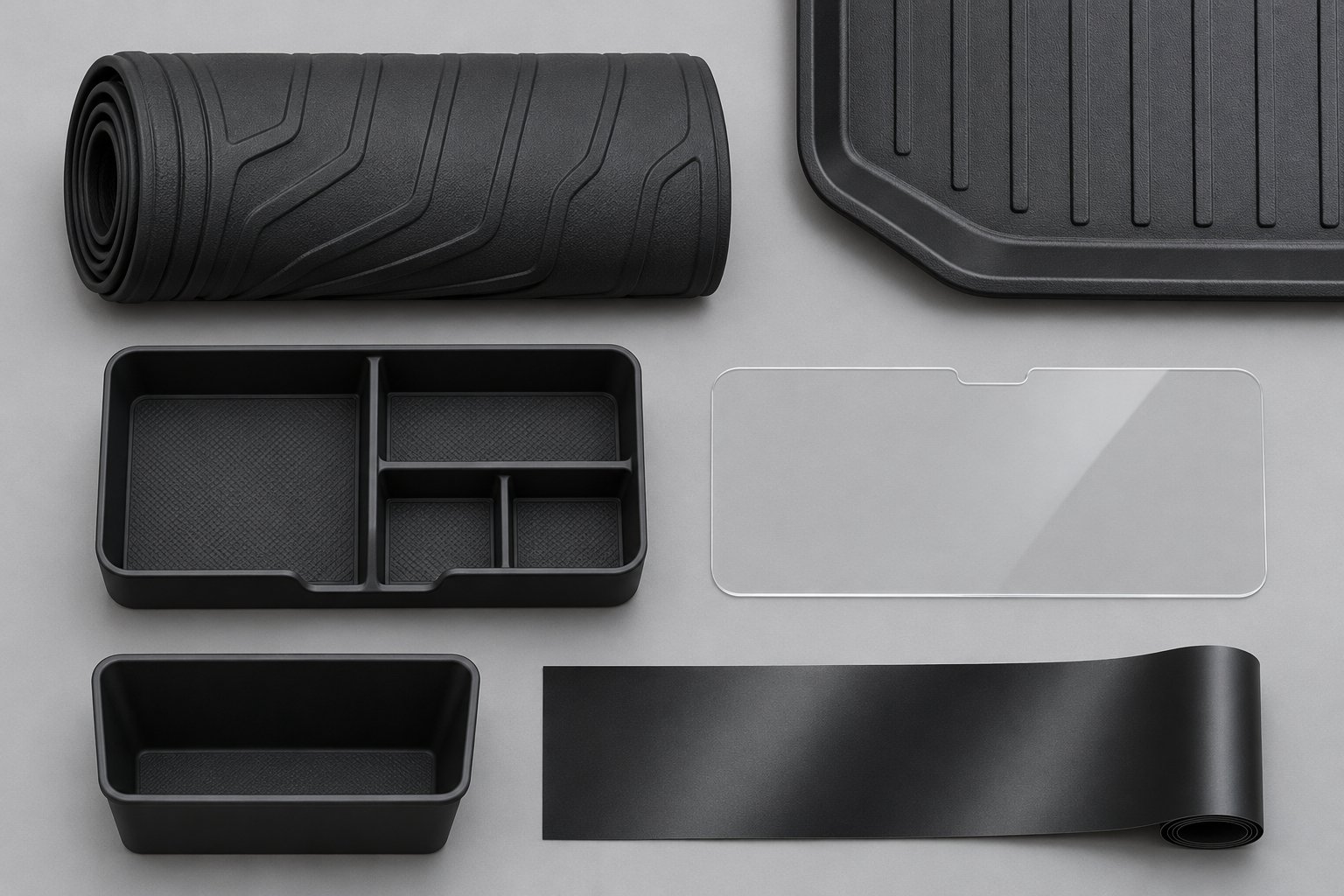
So where should your first dollars go? Start with items that make every drive easier and leave no trace if you change your mind. Wheels and suspension can wait until you know how you really use the car.
Start With Practical Accessories That Earn Their Keep
A smart starter kit protects the cabin, tames clutter, and adds one subtle styling touch. Here's a sensible order:
- Browse a one-stop collection. CUTIM's Model Y accessories collection groups storage, interior protection, and exterior styling in one place, so it's easy to compare options for the daily-comfort path.
- Protect floors and cargo space. All-weather mats and trunk liners come first, especially if your car has a Tesla third row with extra carpet to cover.
- Organize the console. Trays and under-seat bins keep cables, chargers, and snacks in their place.
- Shield high-touch surfaces. A screen protector and seat-back kick mats handle fingerprints and muddy shoes.
- Add one exterior accent. Pick something that complements your Tesla Model Y colors, like satin black trim on a Tesla grey car.
Save Tesla Model Y wheels for later, once you've confirmed the Tesla Model Y bolt pattern, offset, and brake clearance for your exact car.
Matching Accessories to Your Exact Vehicle
Fitment still decides everything. CUTIM's listing advises checking the production year and configuration on each product rather than assuming it fits both the original Model Y and the refresh. Earlier Model Y and Juniper fitments are not interchangeable. One Juniper fitment guide estimates that only about 35% of legacy accessories fit the refreshed car. Floor mats, console organizers, and screen protectors are among the items that don't carry over.
Not sure which you have? A Juniper has a rear passenger touchscreen and a continuous rear light bar. Seating also matters across Tesla Model Y configurations, since 5-seat and 7-seat layouts use different mat and liner shapes.
Your Next Steps
- Identify the car: production date, trim, drivetrain, and seating.
- Choose a goal: comfort, aesthetics, or performance.
- Prioritize reversible mods: they protect your warranty, lease, and resale value.
- Document changes: keep receipts, installer invoices, and original parts.
- Maintain custom surfaces: follow the right care routine for leather, film, and trim.
The best custom Model Y starts with verified fitment and reversible upgrades, then grows one deliberate mod at a time.
Custom Tesla Model Y: Frequently Asked Questions
1. Will modifying my Tesla Model Y void the warranty?
Not automatically. In the U.S., the Magnuson-Moss Warranty Act generally prevents a manufacturer from rejecting all coverage just because you installed aftermarket parts. Tesla can refuse a specific repair if it shows that a modification, or a poor installation, caused the failure. For example, a suspension fault linked to new lowering springs may fall on you, while an unrelated electronics issue should still be handled normally. To stay protected, keep receipts, part numbers, installer invoices, and photos of each install, store your original parts, and read your own warranty booklet. This is general information, not legal advice.
2. How can I tell whether an accessory fits my Model Y or the Juniper refresh?
Go by the production date, not the model year. The DATE field on the driver's door-jamb sticker shows the month and year your car was built, and that is the most reliable way to separate earlier cars from Juniper units. Visual clues help too: the refreshed car has a rear passenger touchscreen and a continuous rear light bar. Then check trim, drivetrain, and whether you have 5 or 7 seats, because mats, liners, and seat covers change with each. A listing that only says Model Y is not proof of Juniper fitment, so look for explicit compatibility notes. Retailers such as CUTIM ask buyers to confirm production year and configuration on each product for this reason.
3. What are the best first mods for a new Model Y owner?
Begin with low-risk upgrades you will use every day and can remove without a trace. All-weather floor mats and trunk or frunk liners protect carpet from mud and spills. Console trays and under-seat bins tame cables and clutter. A screen protector and seat-back kick mats guard high-touch surfaces. Add one subtle exterior accent, such as satin black trim, if you want a styling touch. These items are warranty-friendly, easy to explain to an insurer, and simple to take out before a lease return. A one-stop source like CUTIM's Model Y accessories collection makes it easy to compare storage, protection, and styling options side by side. Hold off on wheels and suspension until you know how you actually drive the car.
4. Do larger aftermarket wheels reduce Model Y range?
Usually, yes. Bigger wheels tend to be heavier, which adds unsprung weight, and they often wear lower-profile or stickier tires that raise rolling resistance. Both effects can cut range, especially at highway speeds, and tire choice can matter as much as wheel diameter. Larger wheels can also make the ride firmer, add road noise, and raise tire replacement costs. If range is your priority, smaller wheels with aero covers and efficient EV tires are the better match. If you do upsize, update the wheel setting on the touchscreen so range estimates stay accurate, and confirm bolt pattern, offset, center bore, load rating, brake clearance, and TPMS compatibility before buying.
5. Should I choose a vinyl wrap, PPF, or ceramic coating for my Model Y?
It depends on your goal. Choose a vinyl wrap if you want a new color or finish, like matte black or a flat grey, but know it offers little defense against rock chips. Choose paint protection film if chip and scratch protection matters most; it is thicker, quality films can self-heal light swirls, and satin or colored PPF can change the look while protecting the paint. Choose ceramic coating for gloss and easier washing, not impact protection. Many owners combine them, putting PPF on the bumper and hood and a ceramic coat over the whole car. Whatever you pick, hand-wash with pH-neutral soap, avoid brush car washes, and never wax or polish a matte finish.